
There are cities that travelers rush through, reduced to a mere weekend postcard, and then there are those whose subsoil, cobblestones, and Renaissance layout demand a prolonged pause. Alcalá de Henares, located just over thirty kilometers from the Spanish capital, rightfully belongs to this second category. It is not merely a nearby getaway, but an enclave where history settles in overlapping layers ranging from Roman military camps to the urban revolution of late-medieval humanism.
Dedication of forty-eight hours is not a touristic caprice, but the bare minimum required to understand how a monastic and academic town managed to transform European thought. Among archaeological remains, cloistered convents, and corrales de comedias that still preserve the creak of original timber, the city invites a leisurely, on-foot exploration where every square narrates a foundational chapter of Hispanic culture.
The invisible trace beneath the asphalt: from Complutum to the Visigothic town
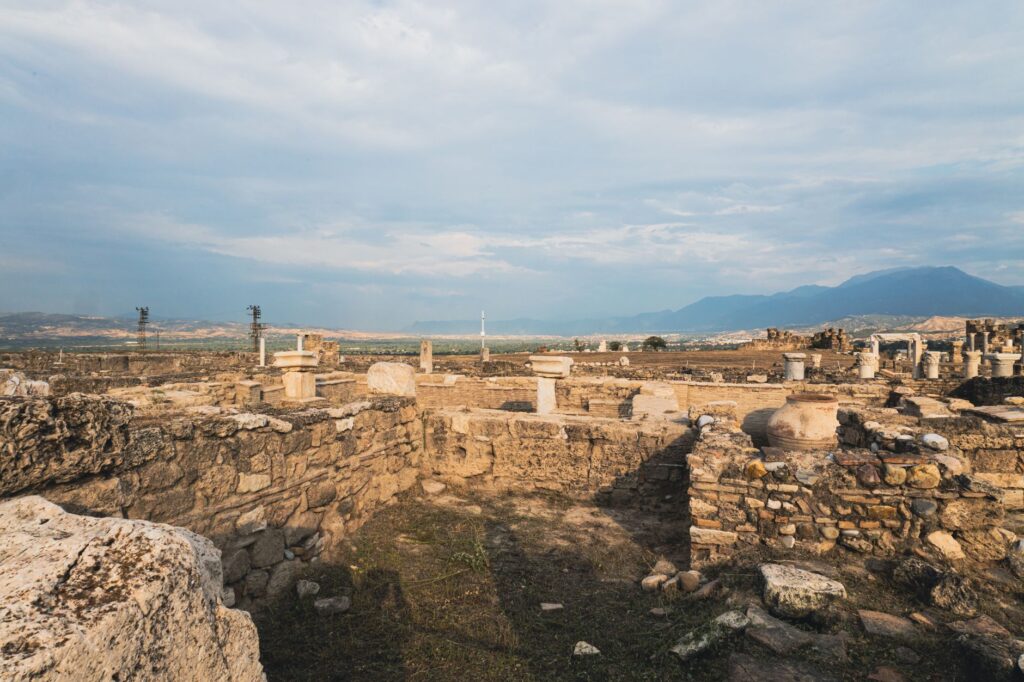
The starting point for any rigorous exploration must be set beyond the current historic center, at the archaeological site of Complutum. Located about two kilometers from the Renaissance core, this ancient Roman city offers a fascinating perspective on the Romanization of the Henares river valley. Unlike other monumental sites, domestic life and daily routines clearly emerge here through the remains of the House of the Griffins and the judicial basilica.
Walking among the foundations of these structures reveals the strategic importance this enclave held within central peninsular trade routes. Archaeologists have documented how the original layout responds to a classic orthogonal grid, skillfully adapted to the floods of the Henares River. The excavations reveal not only extraordinarily crafted mosaics but also underground heating systems that evidence the technical refinement of its ancient inhabitants.
The transition toward the Visigothic era, visible near the hill of San Juan del Viso, brought an urban contraction while maintaining the area’s spiritual centrality. It was within this stratum that the cult of the martyr saints Justo and Pastor would take root, ultimately redefining the religious topography of future medieval Alcalá.
Cardinal Cisneros’s utopian dream: the city made university
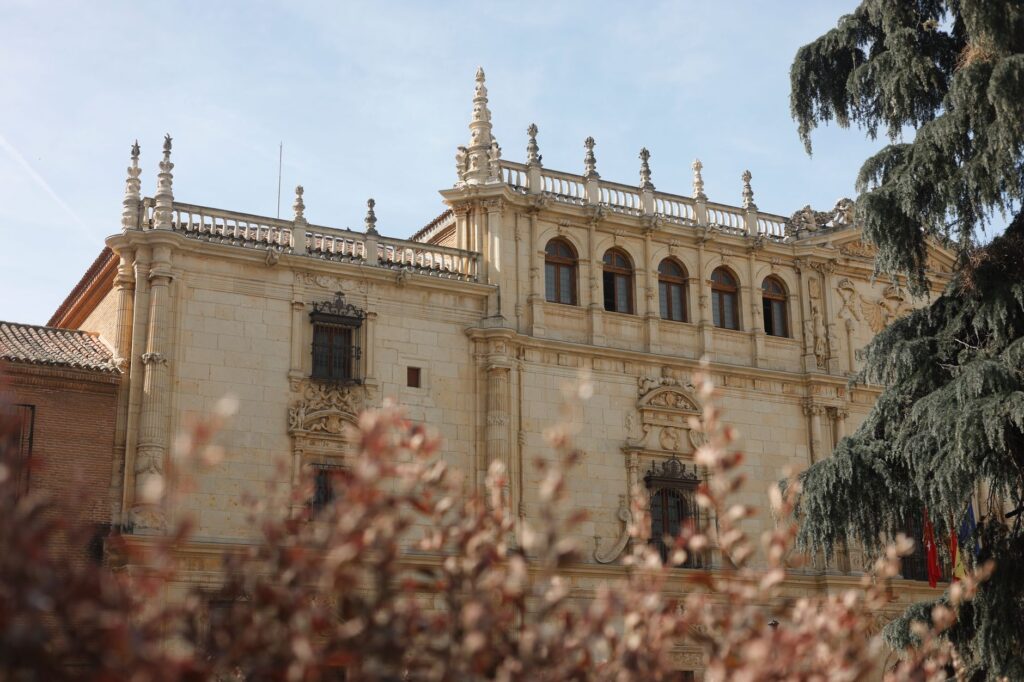
If Roman antiquity provides the material foundations, the 16th century confers upon Alcalá its immortal physiognomy. The figure of Cardinal Francisco Jiménez de Cisneros is indispensable for understanding the transformation of a modest town into a Western cultural beacon. His project did not merely consist of founding a study center, but of conceiving a university-city designed under the canons of Christian humanism.
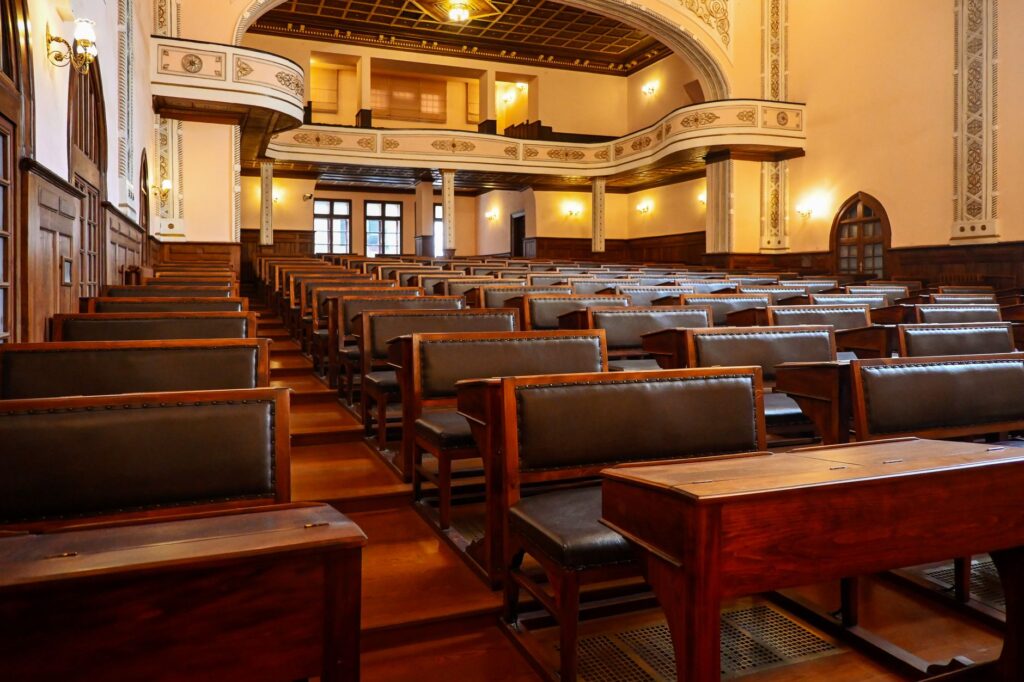
The Colegio Mayor de San Ildefonso, with its imposing plateresque facade designed by Rodrigo Gil de Hontañón, constitutes the heart of this pedagogical utopia. Behind its walls, the celebrated Complutense Polyglot Bible was forged, an unprecedented philological milestone that gathered the era’s finest scholars to collate texts in Hebrew, Greek, Aramaic, and Latin. The historic library and paranymph halls still echo with the theological and scientific discussions that shifted the course of European learning.
Parching through the arcaded streets of the adjacent Jewish and Moorish quarters demonstrates how Cisneros integrated the three cultures into an urban fabric where convents, minor colleges, and hospitals for the poor coexisted under strict urban planning. The result is an ahead-of-its-time orthogonal blueprint, a direct precursor to the ideal cities later projected in the New World.
Following in the footsteps of Miguel de Cervantes: the myth and the Calle Mayor
Few writers have captured the irony and melancholy of the human condition quite like Alcalá’s most universal son: Miguel de Cervantes Saavedra. Although his childhood unfolded across various Castilian and Andalusian cities due to family circumstances, the Complutense imprint shaped his literary sensibility and sharp observation of social types.
The birthplace museum, situated on the bustling Calle Mayor —the longest arcaded street in Europe—, recreates the domestic environment of a modest hidalgo family during the Golden Age. The rooms, furnished with period pieces, transport visitors to the daily universe of apothecaries, surgeons, and scriveners who populated the town during the transition from the 16th to the 17th century.
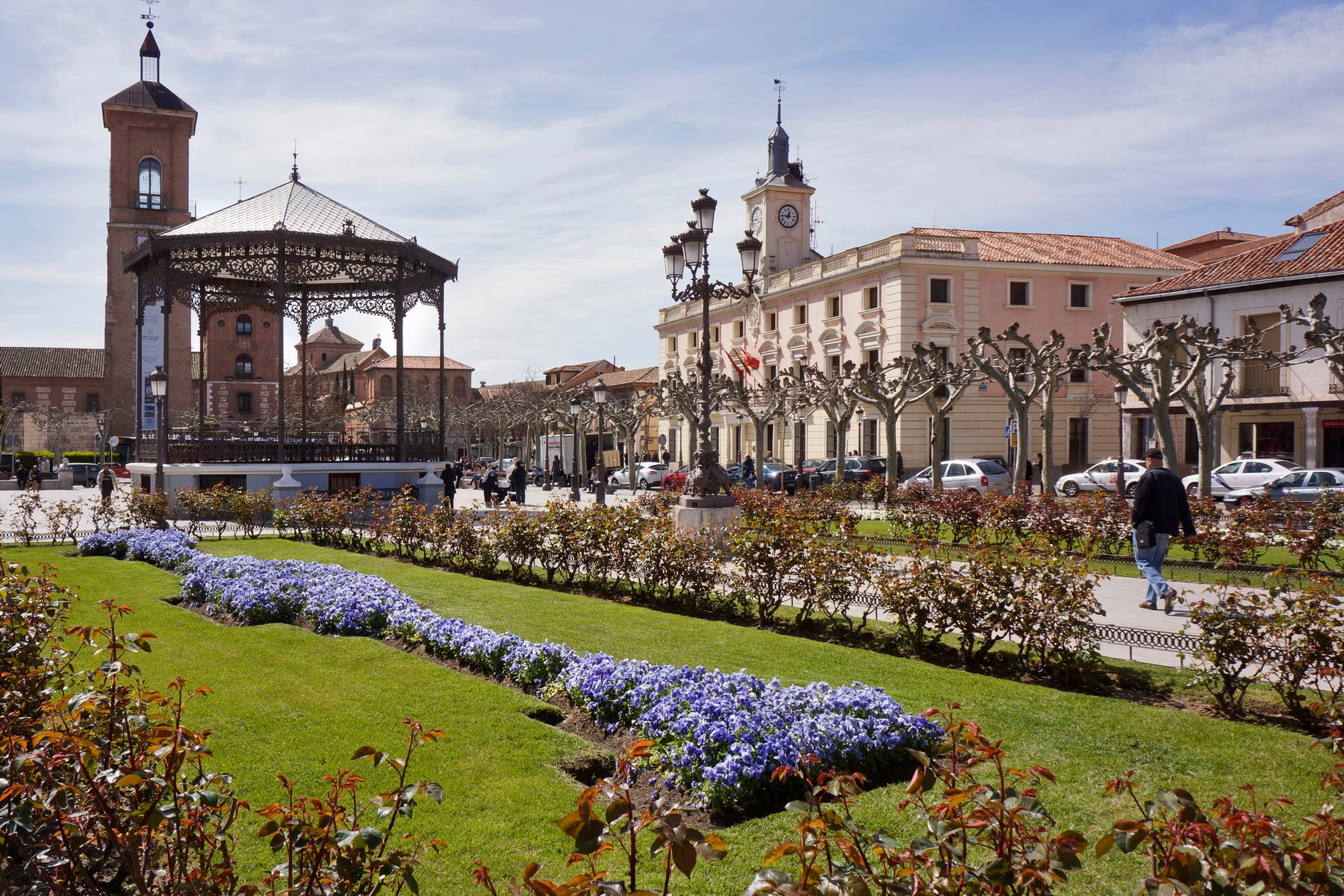
Nevertheless, beyond the biographical museum, Calle Mayor itself functions as a living Cervantine stage. Its wooden porticoes over stone columns once sheltered the bustle of markets and street gatherings, human traffic that the author would later immortalize in his exemplary novels. Walking this commercial axis at dusk, when the porticoes cast long shadows upon the pavement, is the finest way to evoke the atmosphere that inspired the creator of Don Quixote and Sancho Panza.
Theatricality and timber: the secrets of the Corral de Comedias
The architectural heritage of Alcalá de Henares conceals surprises that defy the linearity of centuries. Among them, the Corral de Comedias in Cervantes Square stands out brightly, originally inaugurated in 1601 and successively transformed over time into a romantic coliseum and later a cinema.
Entering its interior is an immersion into Spain’s theatrical archaeology. Unlike grand Italianate theaters, this courtyard retains the original tenement patio structure, where comedies by Lope de Vega, Calderón de la Barca, or Tirso de Molina were performed in daylight, with audiences packed into the central yard or seated in the nooks of wooden galleries.
The careful restoration carried out at the beginning of this century returned scenic functionality to the space without masking the scars of time. Manual machinery, pits, and the arrangement of boxes allow visitors to understand the physical conditions under which Golden Age drama evolved, a living art that still resonates today upon the boards of this historic theater.
Convent flavors and the sweet legacy of sugared almonds
A forty-six or forty-eight-hour experience in Alcalá would remain incomplete without exploring its monastic gastronomy and a confectionery tradition dating back several centuries. Cloistered convents scattered throughout the historic center have kept ancient recipes alive, blending Castilian pastry-making with Mudejar influences.
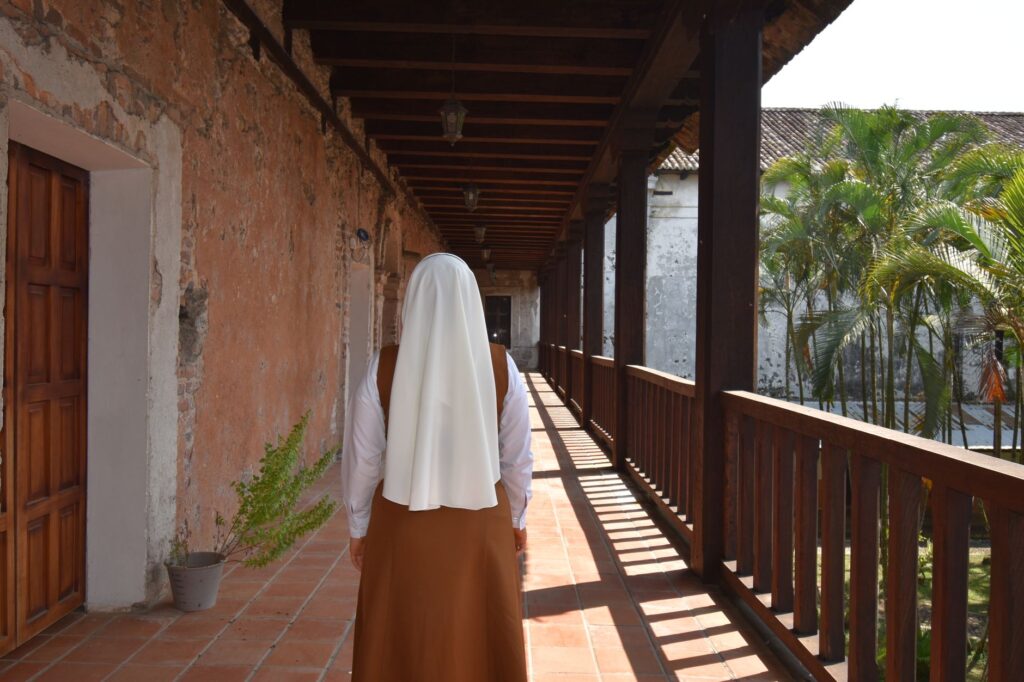
Among the most emblematic products are sugared almonds (almendras garrapiñadas), handcrafted by the Claretian nuns of the Convent of the Purísima Concepción. The acquisition ritual, through a traditional wooden revolving hatch without direct visual contact, adds a layer of mystery and respect for a tradition that survives untouched by modern haste.
Likewise, the culinary offerings of traditional local taverns allow diners to sample hearty dishes such as Complutense-style breadcrumbs, garlic soups, or Castilian roasts, always paired with wines from the Madrid region. This roots-based cuisine, built upon local ingredients and secular techniques, complements the cultural immersion and provides an indispensable sensory anchor for understanding the character of the land.
Spaces of modern knowledge: the Botanical Garden and contemporary university life
Twenty-first-century Alcalá does not live exclusively on its monumental past; it maintains a vibrant pulse thanks to its university community. The historic campus shares space with cutting-edge research centers and green areas designed for scientific outreach and environmental conservation.
The Juan Carlos I Royal Botanical Garden, located on the Science campus, represents a green lung of great ecological value, housing collections of Mediterranean flora and threatened species of the Iberian Peninsula. This space fulfills a dual function: on one hand, it serves as an open-air laboratory for biology students; on the other, it offers visitors a didactic journey regarding biodiversity and the need to protect vulnerable ecosystems from climate change.
This coexistence between humanistic tradition and contemporary science defines Alcalá’s unique personality. Here, the classrooms where Quevedo or Jovellanos studied coexist with advanced biotechnology laboratories, proving that the city’s educational vocation remains as alive as the day Cisneros signed its foundational charter.
Practical guide
How to get there: The Cercanías commuter train (line C-2) connects Atocha station in Madrid with Alcalá de Henares in approximately 35 minutes, with high daily frequency. By private vehicle, access is via the A-2 highway.
When to go: Spring months (May and June) and autumn (September and October) offer optimal temperatures for touring the historic center on foot without stifling summer heatwaves.
Where to stay: The Parador de Turismo, housed in a former college-convent of Santo Tomás de Villanueva, combines monumental architecture with avant-garde interior design. Numerous boutique hotels in rehabilitated townhouses are also available in the center.
Essential visits: It is advisable to purchase the tourist card that includes access to the Complutum archaeological site, the Corral de Comedias, Cervantes’ Birthplace, and institutional guided tours of the Colegio Mayor de San Ildefonso.
Emotional epilogue: the echo of millennial stones
As the sun begins to set over the tower of the church of Santa María la Mayor and the last golden rays caress the centuries-old stones of Cervantes Square, the city undergoes a subtle metamorphosis. This is the moment when daytime bustle gives way to a reverent silence, interrupted only by the distant murmur of students crossing the university courtyards.
Alcalá de Henares is not merely a catalog of notable monuments in travel guides; it is a living organism where stones preserve the memory of Roman empires, the boldness of humanist reformers, and the immortal word of Spanish literature’s great creators. Dedicating two full days is an act of poetic justice toward a city that, far from settling for contemplating its past, projects it toward the future every day with firm steps and serene elegance.
Source in El Viajero (El País): If Alcalá de Henares has been there since the Romans… the least we can do is give it two days.