
At the westernmost edge of Iceland, where the North Atlantic Ocean beats with ancestral fury against the basaltic cliffs of the Snæfellsnes Peninsula, mobility has ceased to be a simple transit exercise and has become a manifesto of ecological survival. In the shadow of the glacier that inspired Jules Verne’s journey to the center of the earth, local fishing communities, in collaboration with the Vesturland Regional Council and sustainable naval engineering consortia, have completed the transition toward a net-zero emissions transport model that defies the traditional geographical and climatic barriers of the insular Arctic.
This report examines the technical, social, and economic framework that has enabled the replacement of older fossil-fuel-powered ferries with a fleet of high-capacity electric trans-bypasses, powered entirely by local geothermal and hydroelectric energy. Throughout this journey, we will analyze how spatial planning has successfully shielded the peninsula’s fragile ecosystem against the pressure of mass tourism, proving that true transport innovation lies not in speed, but in the harmonious integration between the traveler, the territory, and the host community.
The Geography of Isolation and the Need for a New Paradigm
Geographically, the Snæfellsnes Peninsula functions as a miniature of Iceland: in less than one hundred kilometers of length, it concentrates millennia-old lava fields, deep fjords, black sand beaches, and the majestic volcanic cone of the Snæfellsjökull. Historically, this landscape diversity has posed a major logistical challenge for permanent residents in fishing enclaves such as Stykkishólmur and Grundarfjörður. During the winter months, Atlantic storms systematically disrupted main land routes, isolating entire hamlets and creating an asphyxiating dependence on private transport based on petroleum derivatives.
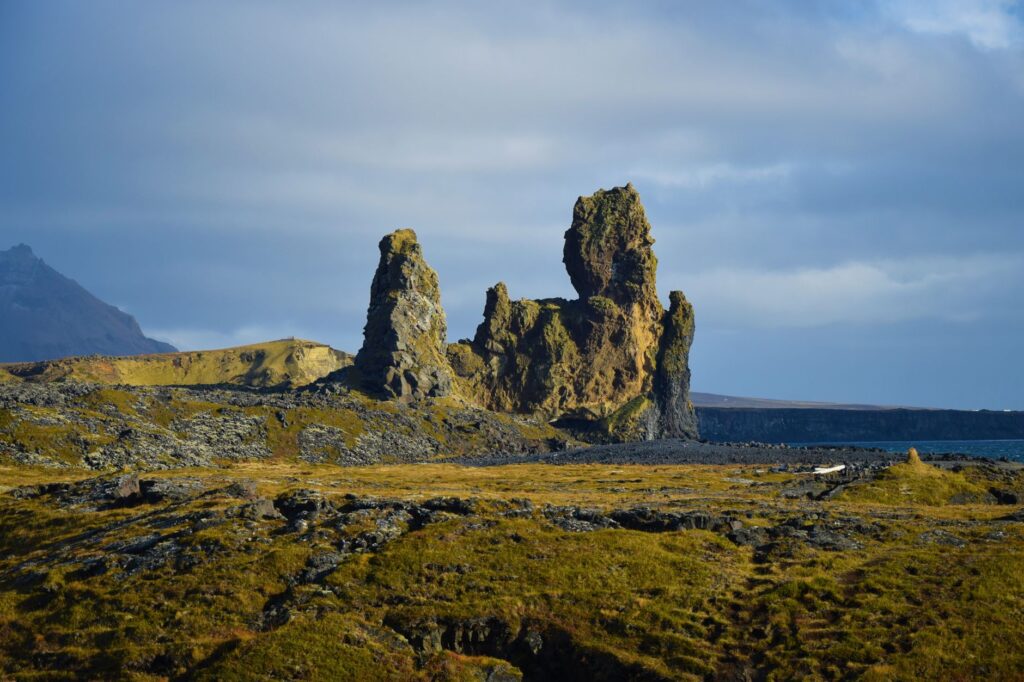
The turning point began to take shape when local governments recognized that the massive influx of summer visitors in combustion vehicles was irreversibly eroding fragile volcanic grasslands and collapsing the secondary road network. Summer congestion not only degraded the traveler’s experience but threatened the socio-economic stability of fishing villages, forcing a complete rethinking of access infrastructure. The response was not the construction of new highways, but the radical optimization of existing routes through speed limits, the implementation of multimodal lanes for all-terrain bicycles, and the creation of intermodal transfer hubs at the gateway to the peninsula.
The Naval Revolution: From Diesel Roar to Electric Silence
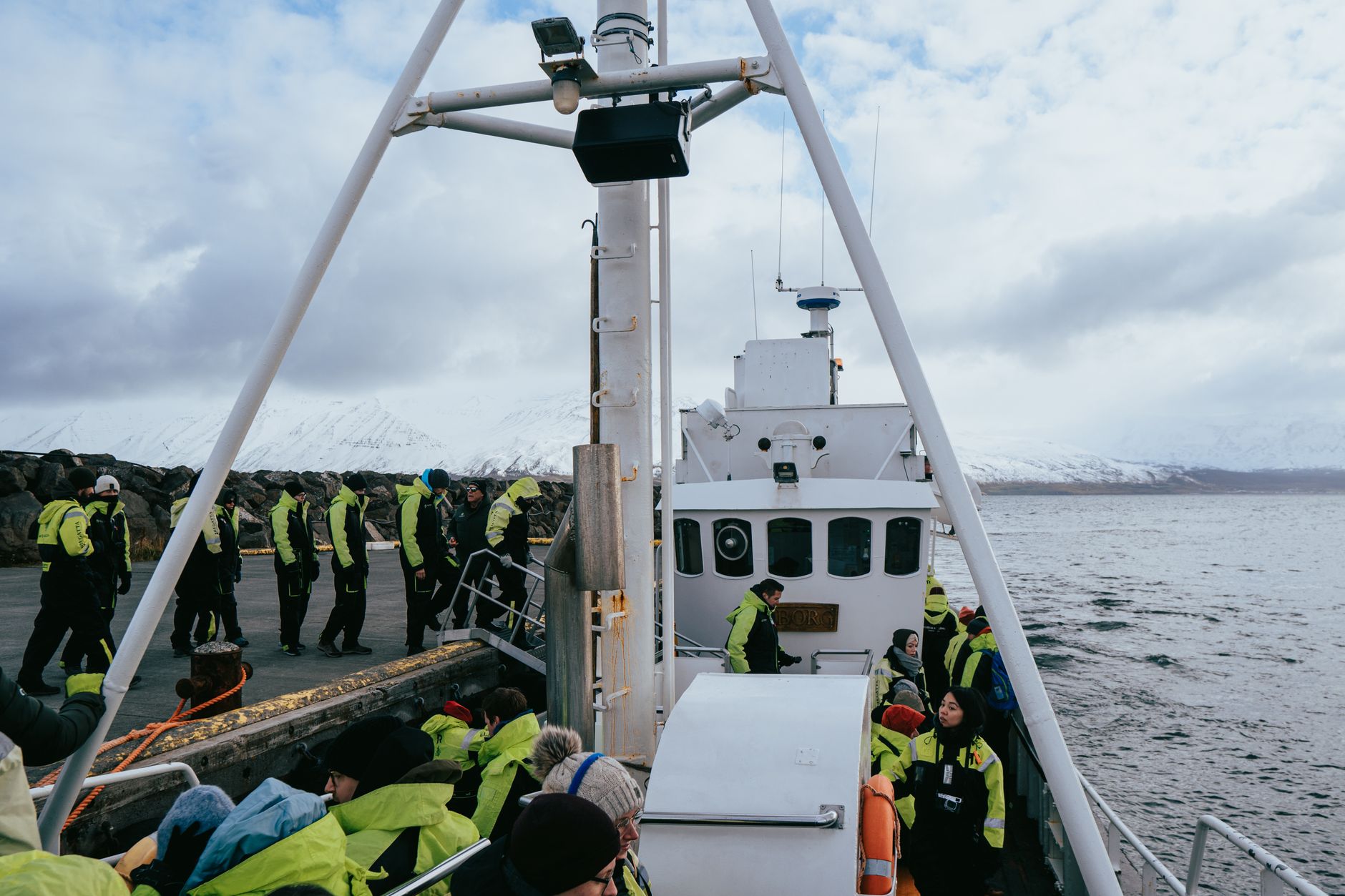
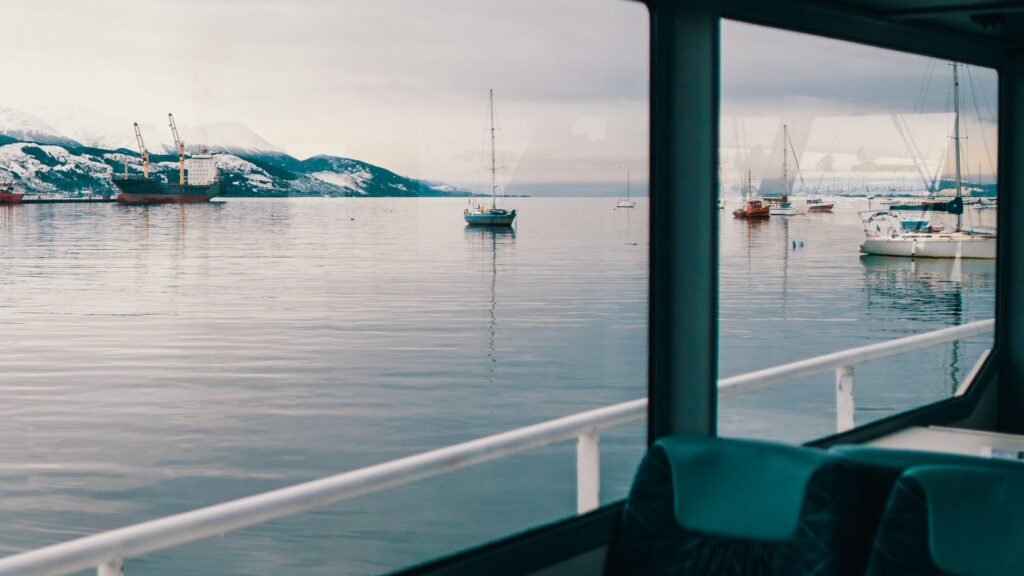
The heart of this transformation lies in the waters of Breiðafjörður Fjord, where the new generation of electric ferries connecting Snæfellsnes with the Westfjords operates. These vessels, designed with recycled aluminum hulls of low hydrodynamic resistance, represent a marvel of contemporary naval engineering. Equipped with high-energy-density battery banks recharged in port via high-power connections fed by the national geothermal grid, these ships can complete multi-hour journeys without emitting a single gram of carbon dioxide.
The acoustic impact of this substitution has been as significant as the environmental one. The elimination of low-frequency noise from traditional diesel engines has restored tranquility to navigation routes, allowing local populations of minke whales, porpoises, and seabirds to recover their natural feeding and breeding patterns within the fjords. Silent navigation has radically transformed the maritime journey, turning it into an experience of contemplative observation where the only perceptible sound is the friction of the hull against the water and the northern wind.
True sustainability in insular transport is not about moving more people in less time, but about ensuring that every kilometer traveled respects the biological rhythm of the territory and strengthens the economy of local communities.
Ports of call have had to undergo profound technical retrofitting. In Stykkishólmur, historic docks have been equipped with automated fast-charging stations operating via magnetic induction connection systems, reducing turnaround times to less than twenty minutes. This technological deployment has required close coordination between municipal electricity cooperatives and transport operators, serving as a pioneering testbed for the future decarbonization of cabotage throughout the North Atlantic.
Human-Scale Land Corridors and Soft Mobility
On land, the transport strategy is based on the concept of guided speed and the disincentive of individual private vehicle use. Route 54, which circumvents the entire peninsula, has been surgically intervened to reduce speed limits in sections of highest ecological and scenic value. In parallel, a complementary network of extended-range electric shuttle buses has been deployed, coordinated through a unified digital platform that optimizes frequencies based on real hotel occupancy and ferry arrivals.
This flexible public transport mesh is complemented by the conditioning of ancient bridle paths and mining tracks into a network of cycling and pedestrian greenways. The maintenance of these trails is carried out using traditional dry-stone and natural drainage techniques, avoiding soil sealing with asphalt. The use of electric mountain bikes has established itself as the preferred method for exploring the volcanic interior, allowing travelers to access interior valleys and hidden waterfalls without leaving an erosion footprint on the terrain.
The Circular Economy of Transport: Geothermal Energy and Local Maintenance
One of the most rigorous aspects of the Snæfellsnes model is its energy self-sufficiency applied to mobility. All transport infrastructure—from port chargers to bus fleets and maintenance workshops—is supplied through 100% renewable energy contracts certified of local origin. Low-enthalpy geothermal energy extracted from surrounding volcanic aquifers not only heats the peninsula’s homes but also feeds secondary green hydrogen plants destined for heavy commercial freight and supply vehicles.
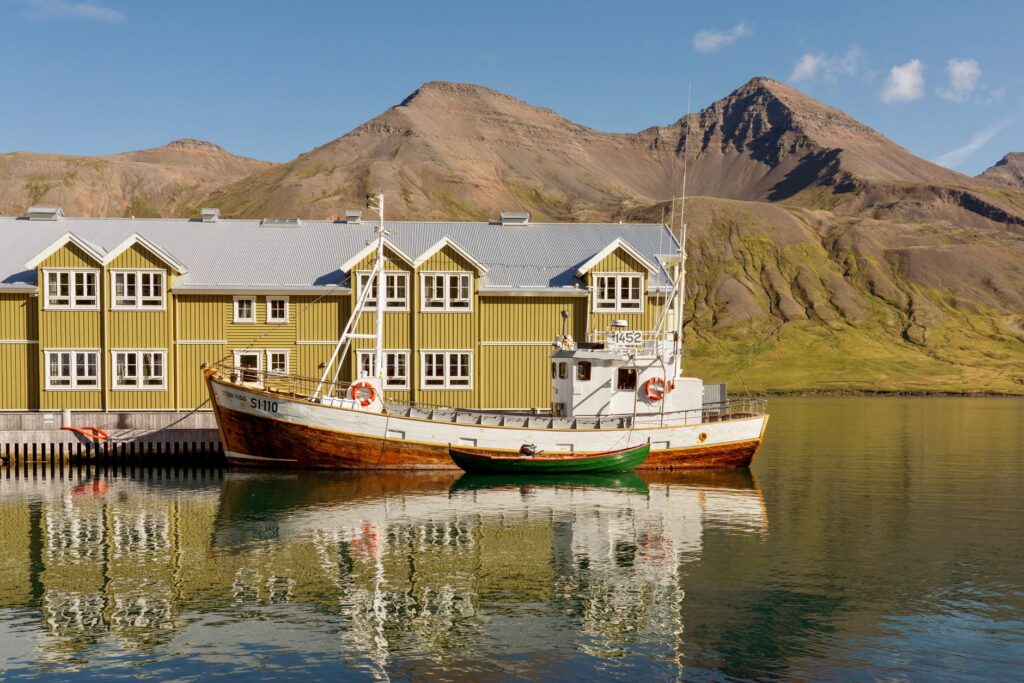
Likewise, the economic model associated with transport management prioritizes the retention of value within the territory. Local mechanical workshops, traditionally dedicated to repairing fishing boats, have been certified and trained in the maintenance of electric propulsion systems and high-voltage batteries. This has avoided dependence on external technical assistance, generating high-paying, qualified technical employment for young people in the region and halting the historical depopulation of the area.
Community Governance and the Voice of Residents
The success of this transformation is not explained solely through technology, but through a pioneering participatory governance system known as the Snæfellsnes Mobility Forums. Quarterly, representatives of fishing guilds, sustainable hospitality associations, transport operators, and climate scientists meet to audit traffic impact, adjust integrated public transport fares, and decide on infrastructure investments.
This citizen control has made it possible to veto pharaonic road expansion projects that threatened to fragment the migratory corridors of the arctic fox and wading bird populations. The direct participation of the local community ensures that mobility decisions respond to the real needs of residents, preventing tourism development from dictating public investment priorities. The result is a fragile yet extraordinarily resilient balance between openness to the outside and the preservation of insular identity.
Practical guide
Planning a sustainable trip to the Snæfellsnes Peninsula requires understanding and respecting its integrated mobility system, designed to minimize reliance on conventional rental cars.
How to get there
The main zero-emission access route from Reykjavik is the combined long-distance electric bus service to the port of Stykkishólmur, followed by the high-capacity electric ferry crossing Breiðafjörður Fjord. For those opting for the land route from the south, electric vehicle rental and pedal-assist bike stations are available in the towns of Borgarnes and Búðardalur, equipped with fast-charging networks.
When to go
The optimal months to experience soft mobility in Snæfellsnes range from May to September, when daylight hours maximize the efficiency of photovoltaic charging systems and mountain passes remain free of accumulated snow. Winter offers high scenic value but requires flexibility due to temporary weather restrictions on secondary passes.

Where to stay
It is recommended to stay in establishments adhering to the region’s sustainable tourism label, located mainly in Stykkishólmur, Ólafsvík, and Arnarstapi. These accommodations feature zero-emission energy certification and offer direct discounts on combined maritime transport and land shuttle passes.
Behavioral tips
Leaving marked paths with vehicles or bicycles is strictly prohibited to protect the fragile layer of volcanic moss, whose recovery can take decades. Always use local unified transport apps to book seats on shuttle buses and ferries at least seventy-two hours in advance during the summer season.
Visual and Human Epilogue Facing the North Atlantic
As evening falls in the small port of Hellnar, when the midnight sun paints the basalt columns emerging from the sea in copper tones, the silence enveloping the coast summarizes the essence of this journey. On the dock, a group of local fishermen and travelers who have toured the peninsula by bicycle share hot coffee in a wooden shelter rehabilitated with bioclimatic criteria. Here there are no stridencies or signs of mechanical congestion; only the constant murmuring of the waves and the silent certainty that it is possible to inhabit the ends of the planet without destroying them. The Snæfellsnes Peninsula proves that the future of sustainable transport is not a distant futuristic promise, but a daily reality built with respect, precision engineering, and community memory.