
Situated in the vast and often untamed marine stretch separating southern Kyūshū from Amami Ōshima, the Tokara Islands form a volcanic necklace of profound isolation within the Japanese archipelago. This island chain, comprising twelve islands of which only seven are permanently inhabited, represents one of the most complex logistical challenges in contemporary coastal navigation. Far from mass tourism routes and the high-speed networks defining mainland Japanese transport, life in Tokara depends on a thread of steel and salt: the Ferry Toshima 2, the sole official vessel regularly connecting this string of communities with the port of Kagoshima, located hundreds of kilometers to the north.
Analyzing connectivity in Tokara is not merely an exercise in port logistics, but an exploration of the demographic and economic survival of extreme territories. Through this report, we examine how volcanic geography, the fury of summer typhoons, and the scarcity of adequate infrastructure shape a transport system where every port of call is a millimeter-precise operation, and where the absence of operational airports forces residents and visitors to submit entirely to the whims of the ocean.
The Geography of Volcanic Isolation in the East China Sea
The Tokara archipelago stretches for roughly one hundred and sixty kilometers in a southwest direction, drawing a geological line of intense active volcanism. Islands such as Suwanosejima, with its imposing and constantly active crater, or Nakanoshima, the largest in the chain, emerge from abyssal depths with steep slopes plunging abruptly into the water. This volcanic topography lacks natural flat platforms, historically conditioning the construction of terrestrial and port transport infrastructure.
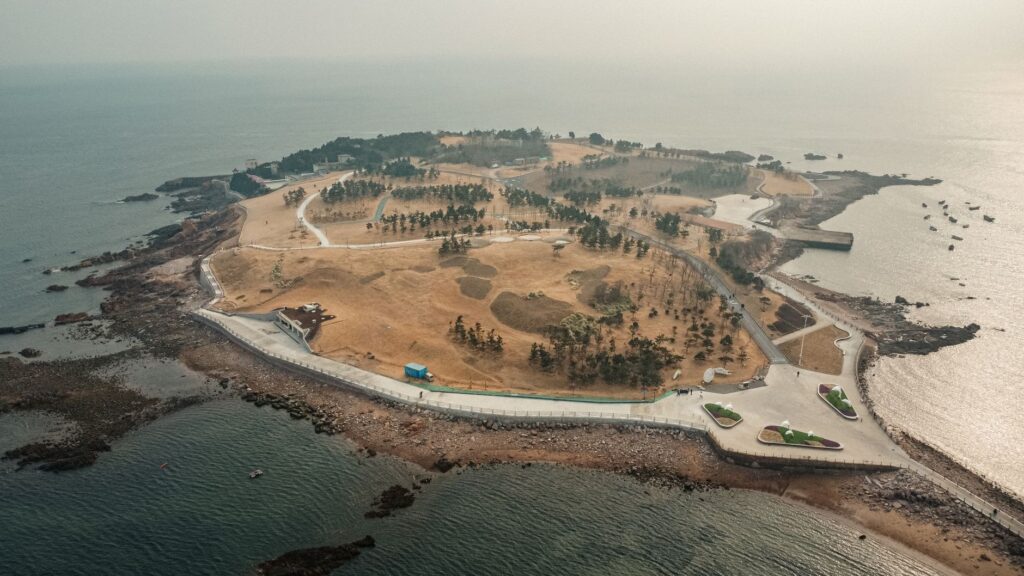
The absence of coastal plains has prevented the development of commercial airstrips on most islands in the group. Unlike other Japanese archipelagos featuring short runways for fixed-wing aircraft, Tokara depends exclusively on the maritime domain. Volcanic topography acts as a natural barrier fragmenting the insular territory into small communities disconnected from one another by land, making the creation of an inter-island road network impossible and forcing any travel between neighboring islands to take place across the sea as well.
The Backbone: Anatomy and Operation of the Ferry Toshima 2
At the center of this transport ecosystem lies the Ferry Toshima 2, a vessel specifically designed to withstand the harsh navigation conditions of the East China Sea and to operate within the region’s meager docks. This ship is not merely a passenger transport medium; it functions simultaneously as a cargo carrier for perishable goods, a medical supply ship, a postal carrier, and the sole administrative link with the Kagoshima prefecture. Each round trip spans several days and requires exhaustive planning by the crew and local authorities.
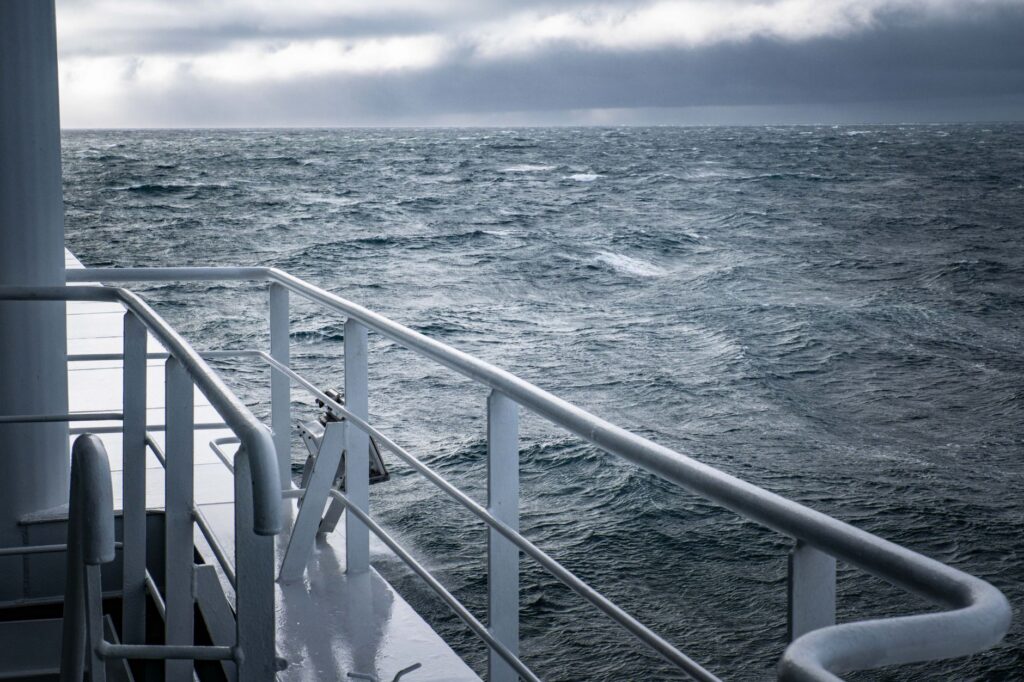
The vessel’s design incorporates a high-capacity deck crane, an indispensable element given that many Tokara ports lack fixed land-based cranes. Open-sea loading and unloading operations represent moments of peak technical tension. Containers, vehicles, gas cylinders, and fresh supplies must be transferred from the ship’s hold to docks frequently battered by strong currents and lateral swells, utilizing maneuvers where the margin for error is virtually nonexistent.
Port Engineering Against the Waves: Tokara’s Exposed Docks
Port infrastructure in the Tokara Islands constitutes a triumph of civil engineering against a hostile marine environment. Due to the lack of protected natural bays or extensive coral reefs acting as breakwaters, the ports of islands such as Akajima, Taira, or Kodakarajima are essentially straight reinforced concrete breakwaters built directly onto basaltic volcanic rock.
These docks are frontally exposed to northern winds and swells generated by tropical typhoons sweeping the northwestern Pacific during summer and autumn months. The structural resistance of these moles is constantly put to the test, demanding nearly continuous maintenance work to repair damage caused by material fatigue and the erosive force of wave action. When meteorological conditions deteriorate, the captains of the Ferry Toshima 2 must make the difficult decision of skipping entire ports of call, leaving entire communities isolated for weeks waiting for a weather window.
The Meteorological Factor: Typhoons, Currents, and Climatic Tyranny
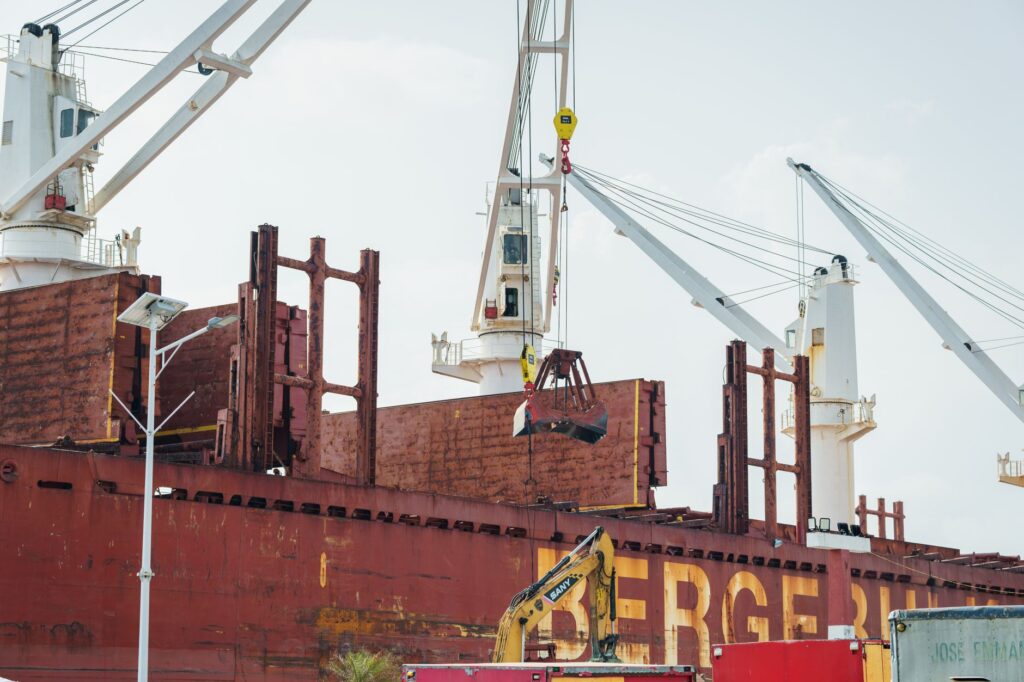
The rhythm of life in Tokara is not dictated by clocks, but by meteorology. The region lies within one of the most active tropical cyclone tracks on the planet. The arrival of a typhoon not only immediately suspends ferry navigation but also cuts off radio and satellite communications during critical operational moments.
Beyond extreme phenomena, marine currents converging between the islands are remarkably violent, complicating docking maneuvers even on seemingly clear days. The unpredictability of ocean conditions fosters an insular culture based on resilience and preventative pantry management. Local inhabitants store provisions and fuel in anticipation of transport interruptions, well aware that a delay of five or six days in the ferry’s arrival is a frequent scenario accepted within the territory’s normalcy.
Supply and Subsistence: The Logistical Umbilical Cord
Sustaining daily life in such a remote archipelago requires a precise logistical chain where the Ferry Toshima 2 acts as the only viable link. From medicines requiring cold storage to the fuel needed for the islands’ diesel electric generators, all provisioning depends on the ship’s cargo capacity.
Local economies, based on small-scale artisanal fishing, beef cattle farming, and limited cultivation of subtropical products like sugarcane or citrus fruits, depend entirely on this transport system to market their surpluses on the mainland. The profitability of these productive activities is constantly threatened by high maritime transport costs and vulnerability to any unforeseen mechanical breakdown of the cargo and passenger vessel.
Fragmented Insular Mobility: The Absence of Interconnected Roads
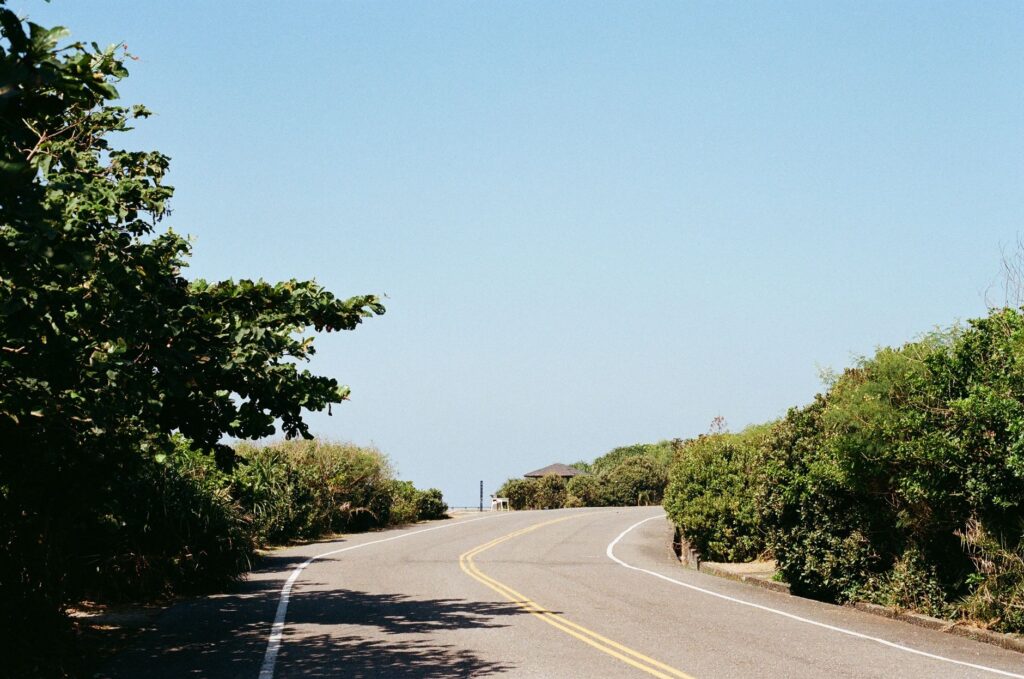
Once passengers and cargo manage to set foot on solid ground in any of the Tokara islands, they face a very particular internal mobility reality. Regular public transport systems, such as buses or taxis, do not exist due to low demographic density and scarce transient population. Travel within each island is conducted via private vehicles, community vans, or on foot along winding mountain roads connecting small coastal urban settlements with elevated agricultural farming hubs.
Digital connectivity, although improved in recent years through submarine fiber optic cables and mobile phone repeaters, contrasts sharply with the slowness and isolation of physical transport. This duality—the immediacy of information versus the extreme slowness of material travel—defines the contemporary experience of residing or conducting research in this insular outpost, where physical distance remains an unrelenting magnitude.
Practical guide
- How to get there: The only regular access is via the Ferry Toshima 2, departing from Kagoshima port (Honko wharf) with an approximate frequency of two to three trips weekly, depending on the season and weather conditions. The full journey to the most distant island can exceed ten hours.
- Time planning: It is essential to allow for at least a week of flexibility in travel plans. Cancellations and delays due to bad weather or typhoons are common and do not automatically entitle travelers to compensation from local operators.
- Permits and accommodation: Several Tokara islands lack formal hotel infrastructure or commercial guesthouses. Visitors typically stay in traditional family-run minshukus, whose availability must be arranged months in advance through municipal offices.
- Supplies and cash: Operational ATMs connected to international networks do not exist on most islands in the archipelago. Carrying sufficient cash in Japanese yen is mandatory to cover all stay expenses.
- Local norms and environmental respect: Being small and fragile communities, travelers must strictly respect local waste management regulations, prohibitions on accessing restricted volcanic areas, and traditional customs of the inhabitants.
The Tokara Sea is not merely a body of water crossed to reach a destination; it is a constant presence dictating the cadence of thoughts, the architecture of docks, and the patience of those who have chosen to plant roots at the edge of the volcanic abyss.
As the sun descends behind the East China Sea horizon, tinting the ridges of the volcanoes in grayish and ocher tones, the silhouette of the Ferry Toshima 2 blurs into the distance as it completes its southward voyage. On Tokara’s concrete docks, silence reclaims its territory following the bustle of unloading. Local families return to their homes along roads flanked by subtropical vegetation, knowing that over the coming days the only dominant sound will be the steady murmur of waves against the basalt. In this outpost where modernity is measured by the resilience of a steel hull against surging swells, life continues its tenacious course, suspended with elegance between the fury of the earth and the immensity of the ocean.