
More than six hundred kilometers off the continental coast of Chile, the Juan Fernández archipelago stands as a bastion of volcanic solitude amid the vastness of the South Pacific. This geographical isolation is not merely a cartographic curiosity, but a daily struggle for logistical survival for its inhabitants, where connectivity relies on a fragile balance between turbulent seas and capricious skies. Robinson Crusoe Island, the only permanently inhabited territory alongside the remote Alejandro Selkirk Island, concentrates all the tensions of a transport system where modernity collides head-on with the fierceness of the ocean.
Understanding the dynamics of this oceanic outpost requires examining how goods, critical patients, and rare travelers overcome a natural barrier that has remained virtually unchanged since the days of whalers and solitary navigators. Far from conventional tourist routes, Juan Fernández operates as a microcosm where every ton of cargo and every liter of fuel represents a victory over distance. The absence of a sheltered deep-water pier in Cumberland Bay forces a complex choreography of offshore transfers that defines the identity of an entire community.
The Hostile Geography and the Challenge of the El Yunque Airstrip
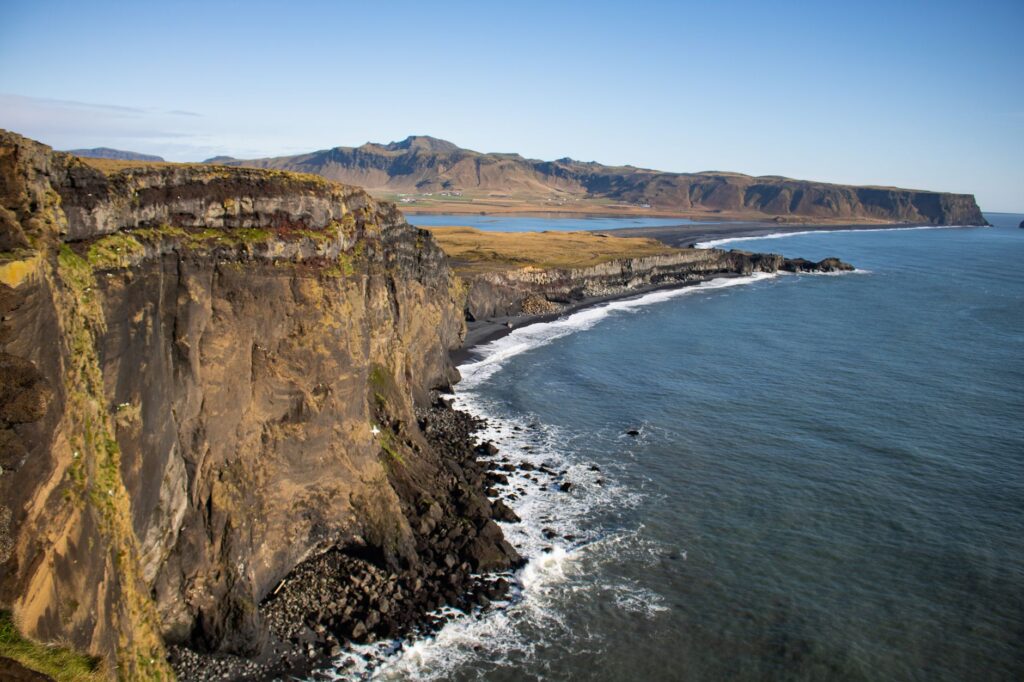
The first major hurdle in connecting the archipelago with the mainland lies in its own morphology. The islands are submerged volcanic peaks that emerge with vertical cliffs and rugged valleys, making the construction of conventional airports impossible. The only available airstrip is located in the Tierra Blanca sector, atop an elevated plateau at the southwestern tip of Robinson Crusoe Island, permanently exposed to crosswinds descending from the surrounding peaks.
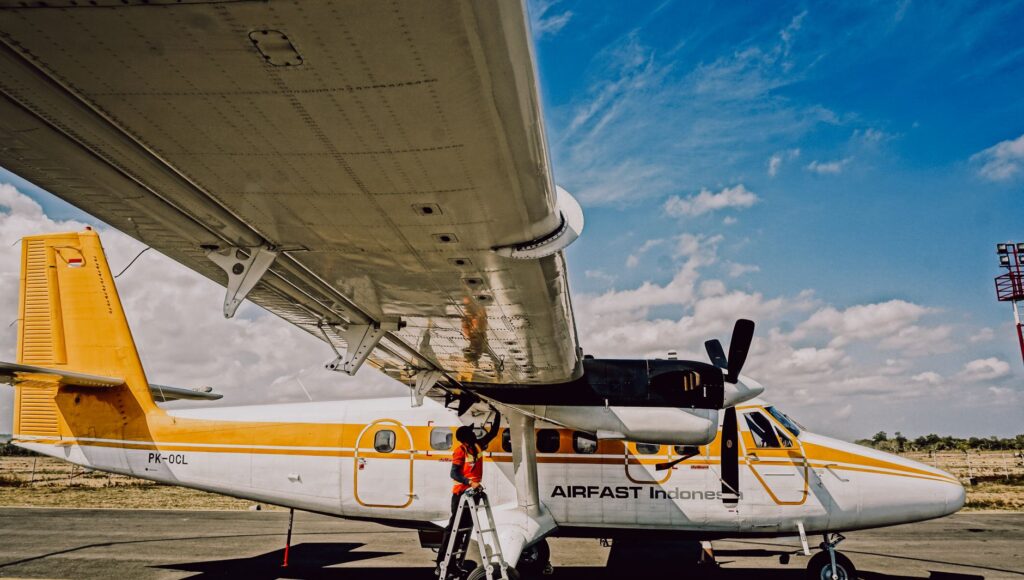
This dirt airstrip with its steep slope drastically limits the types of aircraft capable of operating there. Only twin-engine high-wing turboprops with STOL (Short Take-Off and Landing) capabilities can risk touching down on this challenging terrain. Unpredictable gusts turn every approach into a test of skill for pilots, forcing frequent suspensions that can last for several days if oceanic weather fronts worsen without warning.
The Eternal Intermodal Journey: From Air to Fiberglass Launches
Reaching the airstrip does not mean having arrived at the island’s vital core, the picturesque village of San Juan Bautista on Cumberland Bay. Lacking a road network that cuts across the island’s abrupt relief, passengers and mail face a second and dreaded leg: the mandatory maritime transit.
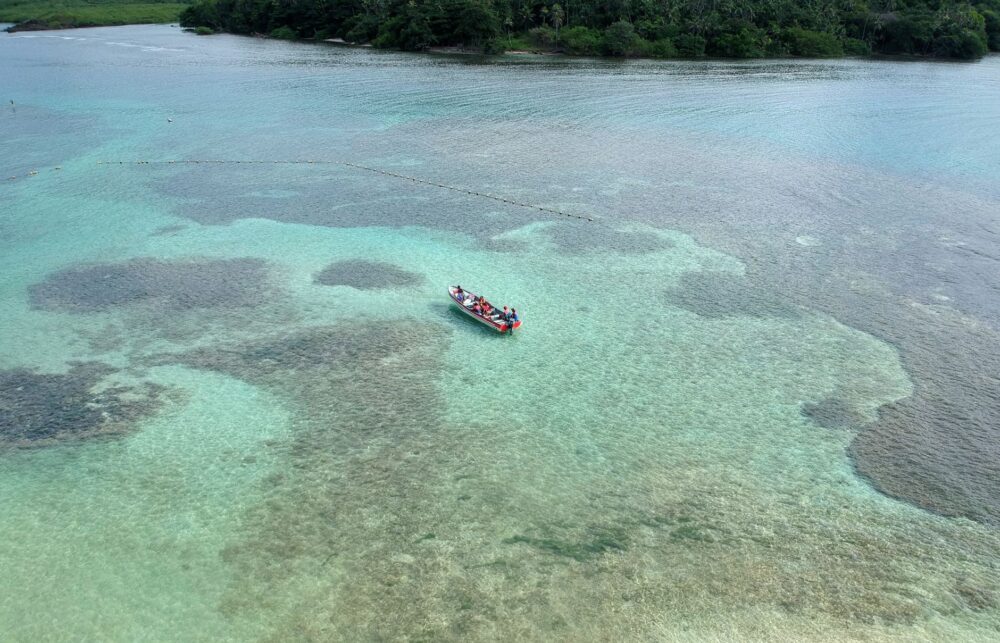
Once the descent at Tierra Blanca is completed, travelers must hike down a winding trail to a precarious dock where artisanal fishing boats, adapted for passenger transport, await. From this southern point, a coastal journey of approximately two hours begins across the open waters of the Pacific, frequently churned by cold currents and unexpected swells. This intermodal stretch tests the physical endurance of visitors and demonstrates the community’s absolute reliance on its small vessels.
The Fishing Fleet as a Logistical and Commercial Lifeline
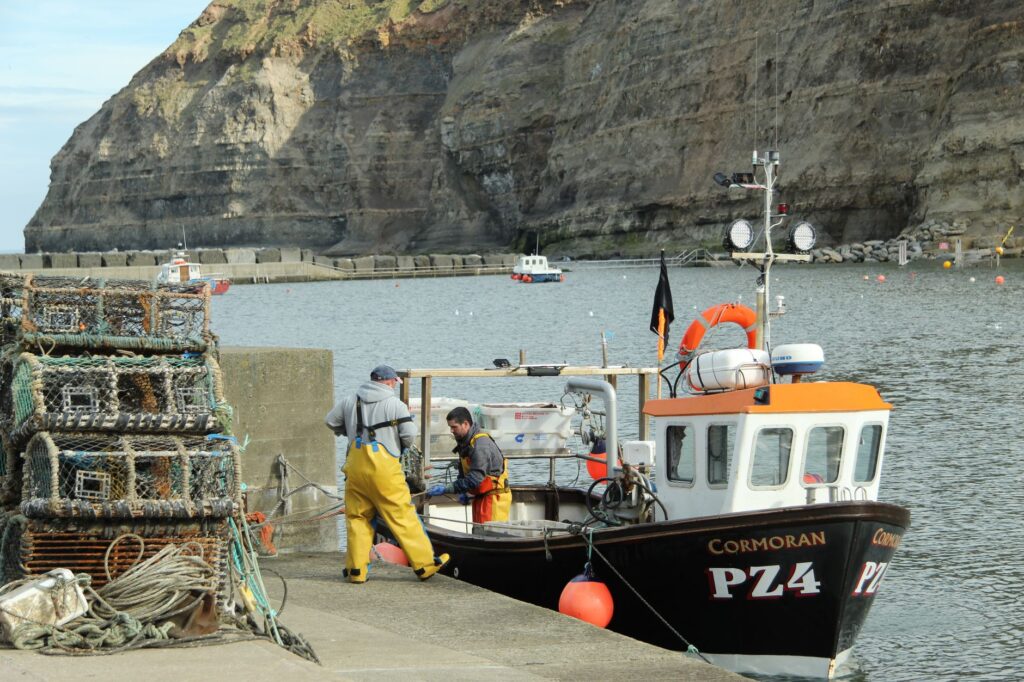
The economy of Juan Fernández revolves around the prized Juan Fernández rock lobster (Jasus frontalis), an endemic resource captured using traditional traps. The very boats that set sail at dawn during the season to harvest this crustacean act as the archipelago’s true circulatory system. These wooden and fiberglass vessels transport fresh provisions, construction materials, and liquefied gas from cargo ships anchored in the bay.
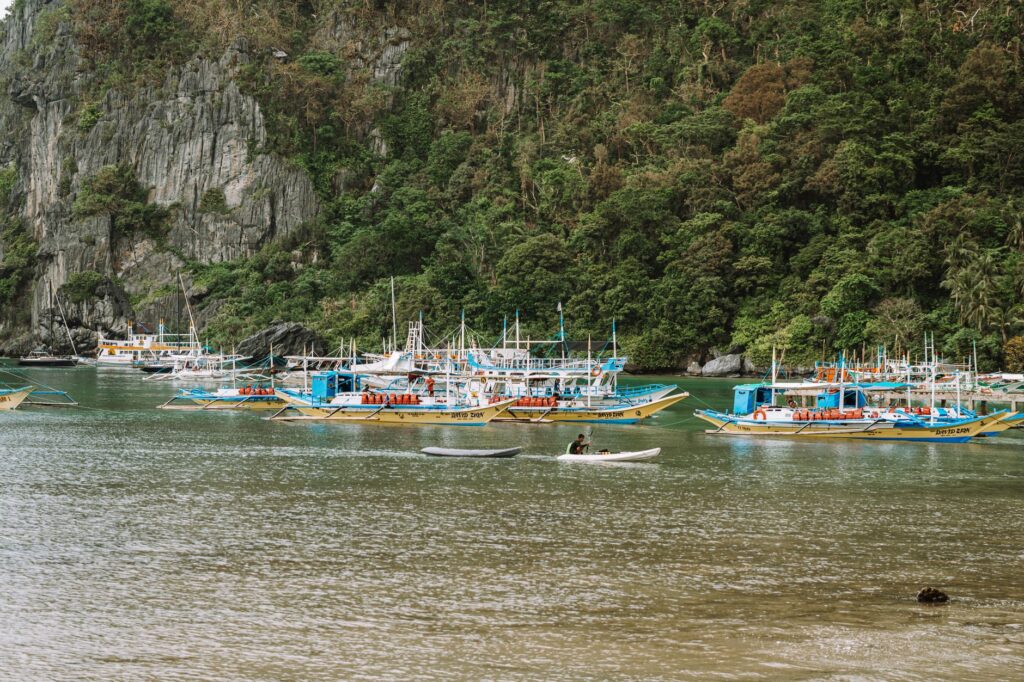
This symbiosis between artisanal fishing and supply logistics gives insular transport a deeply communal character. There are no major shipping lines with automated schedules; the frequency of cargo voyages is dictated by fishing quotas, tides, and sea conditions. When bad weather locks down Cumberland Bay for weeks, the specter of shortages hangs over the island, recalling the fragility of a system dependent on coastal navigation.
Dependence on Major Maritime Transport and the Isolation of Alejandro Selkirk
If the connectivity of Robinson Crusoe Island is complex, the situation of Alejandro Selkirk Island, located more than 180 kilometers to the west, borders on absolute isolation. This island, inhabited seasonally only by fishermen during the lobster season, completely lacks airstrips or secure port infrastructure.
Alejandro Selkirk’s only link to the outside world is a logistical support vessel contracted by fishing cooperatives or the Chilean state, which calls a few times a year to relieve families and supply them with basic provisions. The landing maneuver on this island requires launching inflatable boats from the ship and negotiating the surf on a coast devoid of protected beaches, a true seafaring feat reflecting the extreme limits of human mobility in the southern Pacific.
Technological Innovation Against Isolation: Telecommunications and Telemedicine
Given the impossibility of guaranteeing rapid medical transfers to continental hospitals due to frequent air interruptions, digital connectivity has gained vital importance in the archipelago. The installation of high-speed satellite communication systems has enabled the implementation of advanced telemedicine protocols at the local health clinic in San Juan Bautista.
This invisible infrastructure does not replace physical transport, but it mitigates the impact of health emergencies when planes and launches are immobilized by southern windstorms. General practitioners on the island can consult in real time with specialists in Santiago, coordinating medical evacuations only when the weather window opens exceptionally, saving lives in an environment where response time is measured in hours of patience and risk.
Pending Port Infrastructure and Debates on Sustainable Development
For decades, national and local authorities have debated the need to build a breakwater pier in Cumberland Bay to protect vessels and facilitate cargo unloading without current risks. However, any large-scale project collides with strict conservation regulations protecting the Juan Fernández Archipelago National Park and its fragile marine ecosystem.
Environmentalists and scientists warn that massive port infrastructure could alter local currents, encourage the arrival of invasive species, and distort the pristine character of the territory. Meanwhile, residents demand decent working and port safety conditions. This dilemma between environmental preservation and secure connectivity remains open, turning Juan Fernández into a laboratory on the limits of development in protected wilderness areas.
Practical guide
How to get there: The main access is via charter flights operated by authorized local airlines from Eulogio Sánchez airfield (Tobalaba) or Santiago airport in Chile, taking approximately three hours to Robinson Crusoe Island, strictly dependent on weather conditions.
Travel requirements: All visitors must register their itinerary in advance with the National Forestry Corporation (CONAF) and the local municipality, as tourist quotas are regulated to protect the island’s ecological carrying capacity.
Currency and payments: The official currency is the Chilean peso. Although some businesses accept credit cards, internet connectivity can fail, so carrying sufficient cash is strongly recommended.
Best time to visit: Between November and March, the oceanic climate offers the most stable windows of winds and lower probability of storms that could suspend flights or boat navigation.
Accommodation: Lodging is limited to small family-run guesthouses and local cabins in San Juan Bautista, which must be booked months in advance due to low bed availability.
blockquote editoriale breve: The true measure of distance in Juan Fernández is not calculated in nautical miles, but in the infinite patience required to wait for the ocean to decide to open its doors.
blockquote editoriale breve dos: Amid basaltic rock cliffs and relentless swells, the survival of this insular community proves that connectivity is, above all, a daily act of human endurance.
The sun begins to set over the Pacific horizon, dyeing the rugged cliffs of Robinson Crusoe Island with flashes of copper and fire, while local fishermen check the engines of their boats one last time in peaceful Cumberland Bay. In this outpost where geography seems to conspire to maintain isolation, every arrival and departure encapsulates a profound narrative of collective effort and adaptation to nature. The sound of the sea crashing against the natural breakwater reminds us that, despite technological advances and intermittent air routes, the sovereignty of this Chilean archipelago belongs entirely to the ocean.