
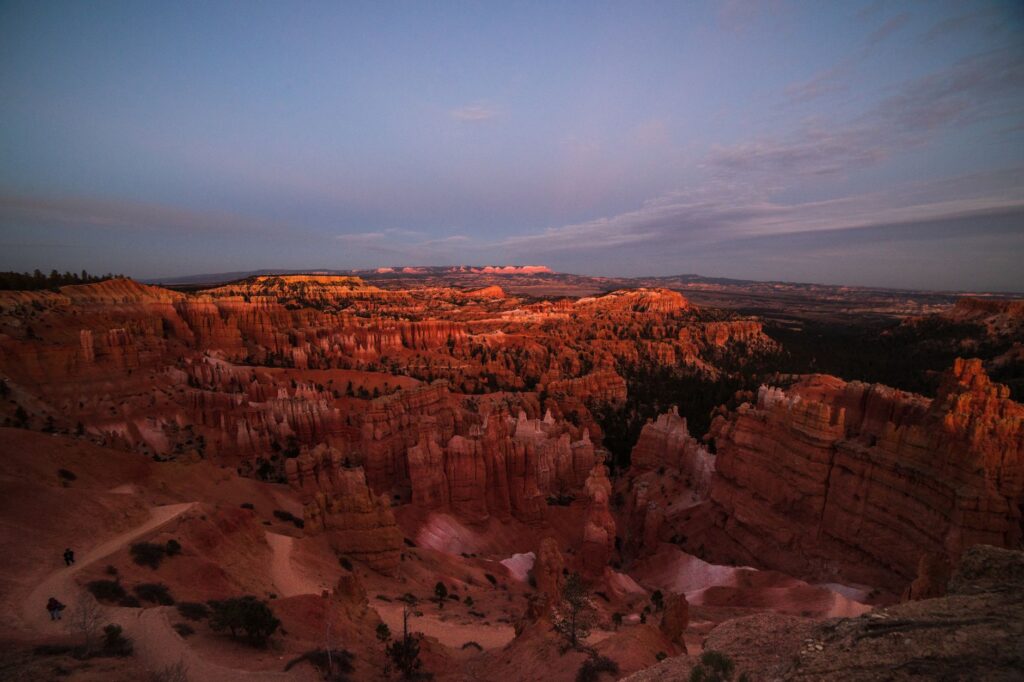
Arriving at the rim of the Paunsaugunt Plateau in the pale light before dawn is to encounter an almost absolute mineral silence, broken only by thermal updrafts whispering from the depths of the basin. Laid out before the traveler is not a single canyon carved by a roaring river, but a colossal natural bowl where frost, water, and deep-time weathering have chiseled thousands of limestone and mudstone spires known as hoodoos. Perched at elevations exceeding eight thousand feet in southwestern Utah, this landscape takes on an entirely different weight when the journey moves beyond hurried daytime sightseeing and settles into the geographical margins where hospitality actively engages with the alpine desert.
In recent years, lodging options surrounding Bryce Canyon have evolved far beyond standard roadside motels toward architectural concepts that prioritize immediate visual communion with the surrounding wilderness. The search for shelter here is driven by two elemental conditions: the urgent need for warmth against the dramatic temperature plunges of high altitude, and the desire to witness one of the darkest, most immaculate night skies remaining in North America. From wood-stove-warmed safari tents to restored homesteads hidden in fertile folds of the plateau, pernoctating across Garfield County has become an exercise in deliberate stillness.
The Vertical Geography of the Claron Amphitheater
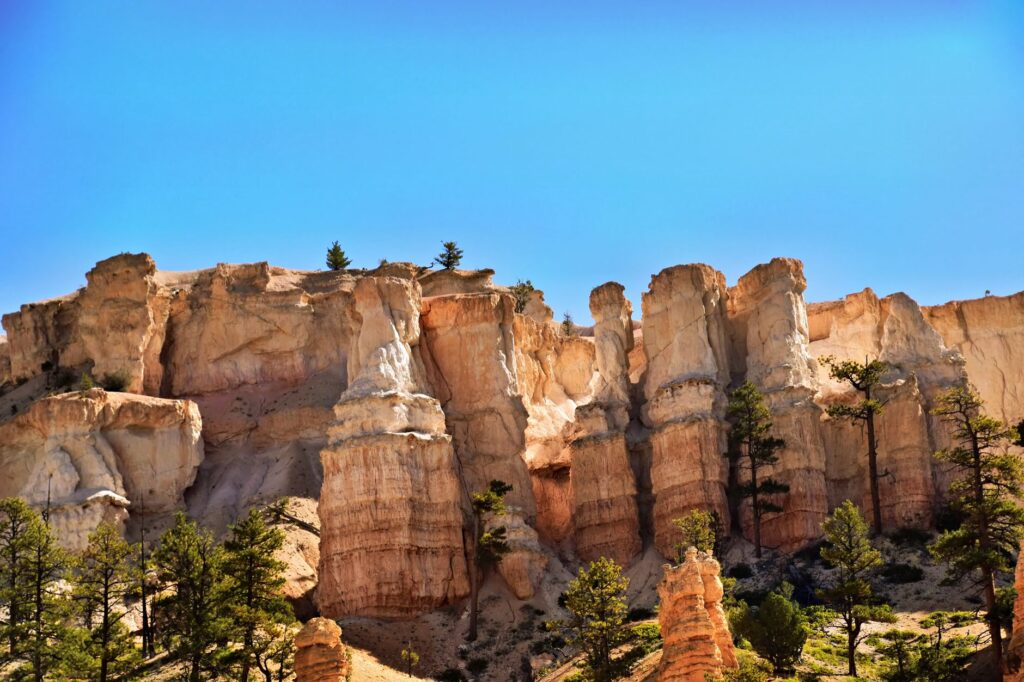
Understanding where and how to stay near Bryce Canyon requires a clear grasp of its structural geology. Unlike the Grand Canyon, whose vastness astounds through depth and distance, Bryce is an intricate labyrinth of sedimentary filigree. Its striking pink, amber, and chalky white strata belong to the Claron Formation, deposited between forty and sixty million years ago across ancient freshwater lakes and floodplain systems. Subsequent tectonic uplift elevated the Colorado Plateau, exposing these layered rocks to merciless freeze-thaw cycles that occur up to two hundred times each year, prying fractures apart from within.
The physical outcome is a dynamic progression of rock fins that gradually weather into individual pillars capped by harder magnesium-rich dolomite. Historically, human builders avoided placing permanent infrastructure directly along the eroding rim, choosing instead the sheltering ponderosa forests above or the broad, protected valleys dropping eastward toward the Paria River. This geological framework dictates the guest experience today: travelers either wake nestled in highland evergreen groves or look out from low-elevation valleys like Tropic and Cannonville, where the eastern faces of the cliffs ignite like live embers at dusk.
Elevation remains the defining reality of every stay. With viewpoints topping nine thousand feet at Rainbow Point, the air is dry, crisp, and thin. Guests resting near the rim must adjust to increased exertion along the steep canyon paths and rapid dehydration, making climate-controlled, well-insulated accommodations a matter of fundamental comfort rather than passive luxury.
Lodging Beneath the Celestial Canopy: The Rise of High-Desert Glamping
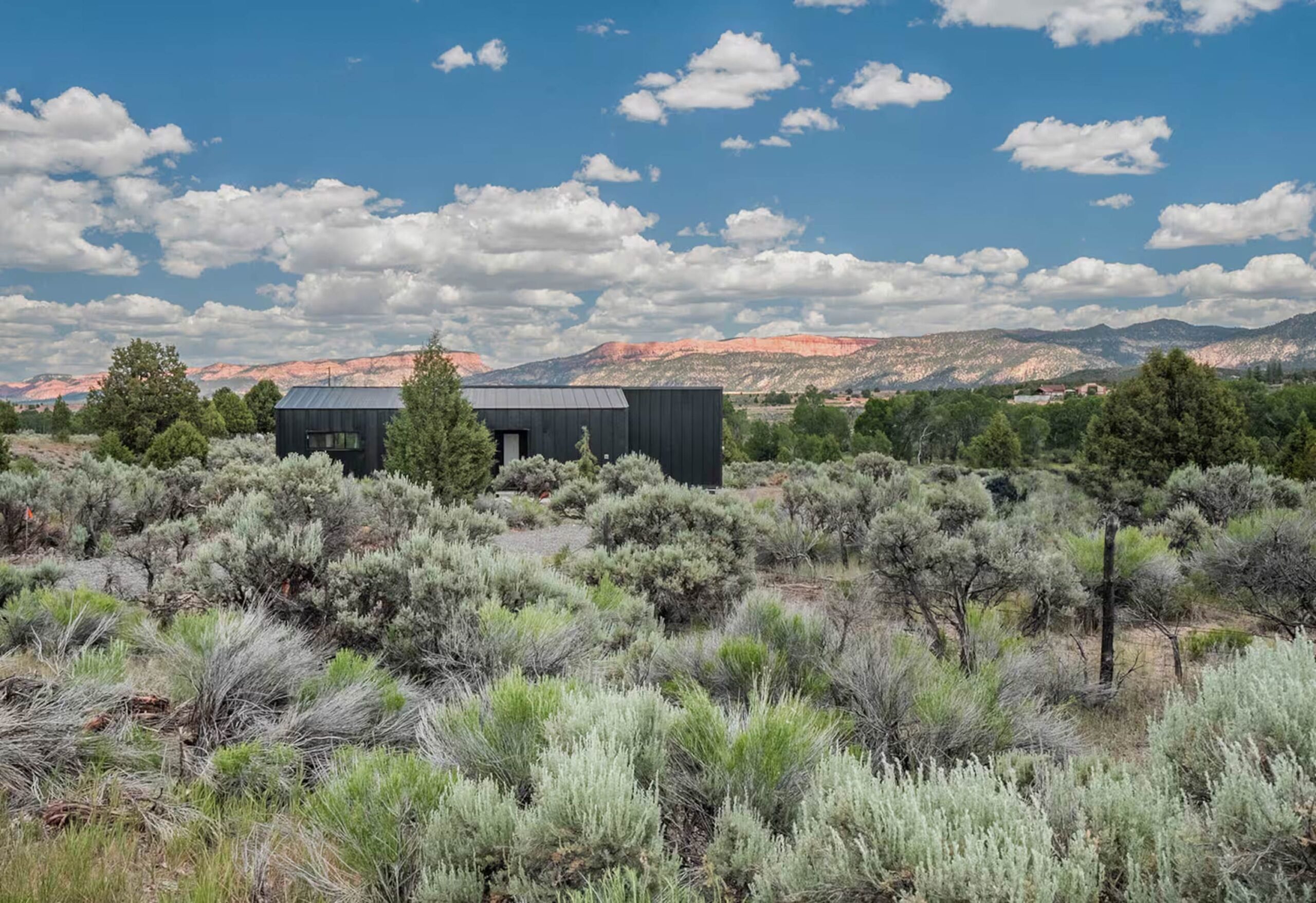
The rise of elevated outdoor hospitality in southern Utah has achieved its most refined balance through luxury tented encampments. Independent operators and specialist retreats have erected seasonal canvas pavilions over timber decks set amidst sagebrush plains and open stands of pinyon and juniper. These structures deliberately eschew heavy stone construction, minimizing landscape disruption while letting the nocturnal murmurs of the desert drift through the walls.
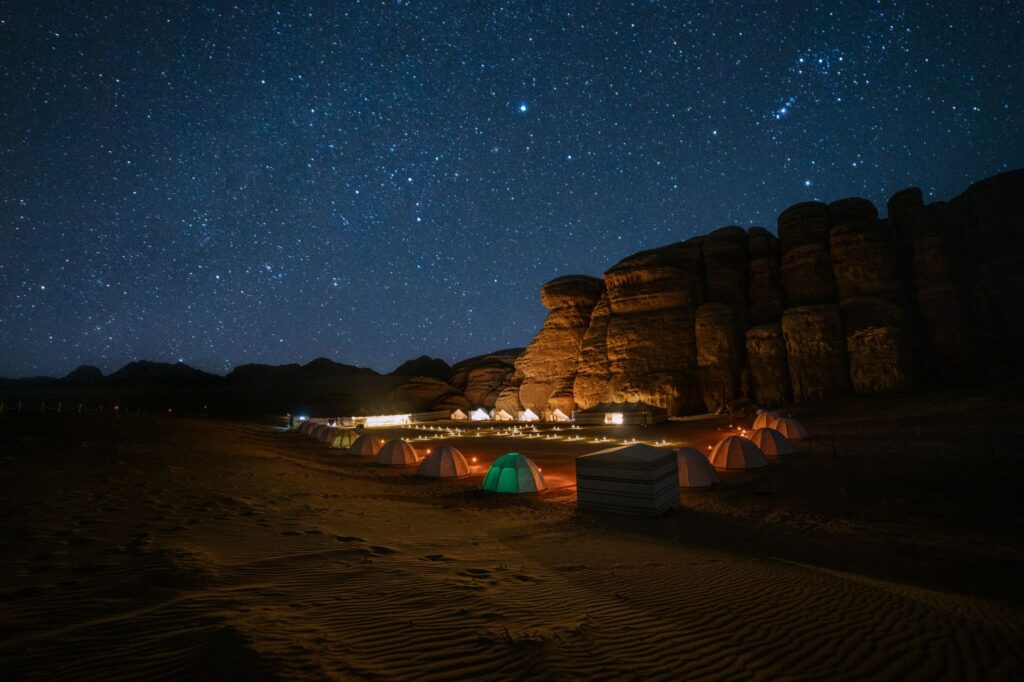
At properties like Under Canvas Bryce Canyon, secluded on a gentle flat within striking distance of the park gates, interior design merges rugged restraint with full-service hospitality. King-size beds draped in weighted linens sit alongside compact wood-burning stoves that take the edge off cold mountain dawns, accompanied by en-suite bathrooms equipped with water-saving fixtures. Ambient artificial lighting is rigorously suppressed in deference to the region’s International Dark Sky Park designation, allowing travelers to contemplate celestial mechanics directly from private wooden verandas.
«Sleeping beneath taut canvas on the Paunsaugunt Plateau returns travel to an elemental rhythm: wind in the guy lines replaces street noise, and constellations dictate bedtime.»
This lodging philosophy fosters a communal yet peaceful environment. Shared spaces often coalesce around open fire pits where hikers converge at sunset to exchange route observations. The ephemeral architecture demonstrates that luxury in the Great Basin does not depend on opulent finishes, but rather on expansive panoramic vinyl windows or clear skylight crowns positioned directly above the pillows to track falling meteors against an inky void.
Rustic Havens and Yurts in the Neighboring Valleys
Beyond the elevated tableland, along the meandering corridor of Scenic Byway 12, an alternate lodging aesthetic has taken root around circular yurts and minimalist homestead cabins. Settlements such as Tropic, Cannonville, and Henrieville—first established by nineteenth-century pioneers seeking arable land—maintain a calm, agrarian pace whose green pastures contrast vividly with the sheer red cliffs towering above.
Adapting Central Asian Dwellings to the Cold Desert
The deployment of circular yurts across the Utah plateau represents an inspired piece of pragmatic engineering. Lattice-wood framing encased in heavy-duty insulation sheets ensures even heat distribution, creating exceptionally resilient shelters against the sudden squalls that roll across the high basin. In working ranches and rural boutique outposts along Bryce Creek, these dwellings have been outfitted with integrated kitchenettes, solid timber flooring, and generous central skylights that flood the interior with soft daylight.
Working Ranches and Private Cabin Escapes
Travelers seeking seclusion often find it on private ranchlands operating quietly down unpaved spur roads. Reserving a cabin or guest quarters on a working spread offers tangible insight into the historic coexistence of public wilderness preservation and generational cattle grazing. These accommodations typically feature deep, shaded front porches facing the sunrise breaks of the canyon’s eastern flank, affording travelers private, uncrowded vantage points over the morning color shifts.
- Acoustic stillness: The deliberate separation between ranch cabins yields an absence of mechanical or vehicular noise.
- Direct trail access: Multiple private outposts border Bureau of Land Management (BLM) territory or the Dixie National Forest, facilitating trail walks far from established tour paths.
- Self-contained flexibility: Fully equipped kitchens provide complete autonomy from the region’s sparse and seasonally constrained dining establishments.
Historic Lodges and the Legacy of Parkitecture
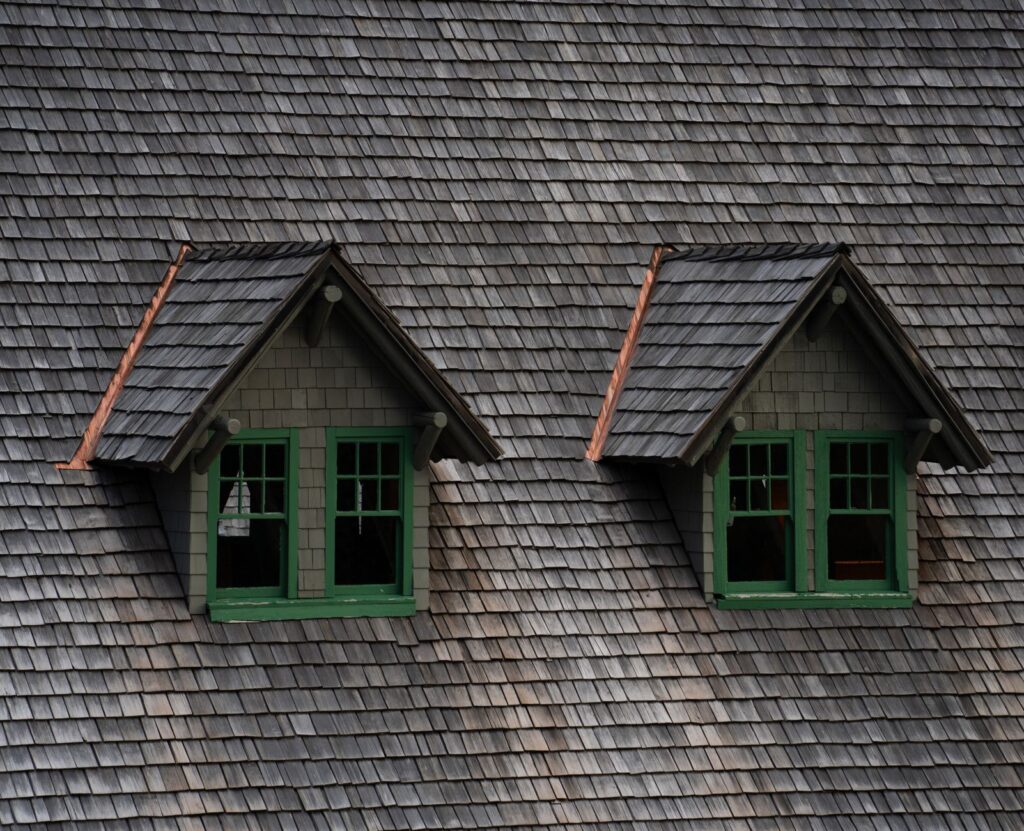
At the opposite end of the lodging spectrum stands the architectural legacy that inaugurated modern tourism across the plateau. The Lodge at Bryce Canyon, designed in the 1920s by architect Gilbert Stanley Underwood under the aegis of the Union Pacific Railroad, stands as a prime exemplar of the National Park Service rustic style, often termed «parkitecture». This movement mandated the exclusive use of native materials—primarily rough-hewn pine logs and locally quarried limestone boulders—ensuring that human structures appeared as natural outcroppings of the forest floor.
Residing within the main historical pavilion or its satellite timber cabins transports travelers back to an era when reaching southern Utah demanded arduous rail-and-coach journeys. Underwood’s layout features steep pitched gables, exposed dark-timber trusses, massive stone hearths, and an earthy color scheme that echoes the surrounding ponderosa bark. While interior retrofits have added contemporary safety and climate systems, the complex maintains its atmospheric creaking floors, purposefully omitting televisions from guest rooms to direct awareness toward the forest and sky.
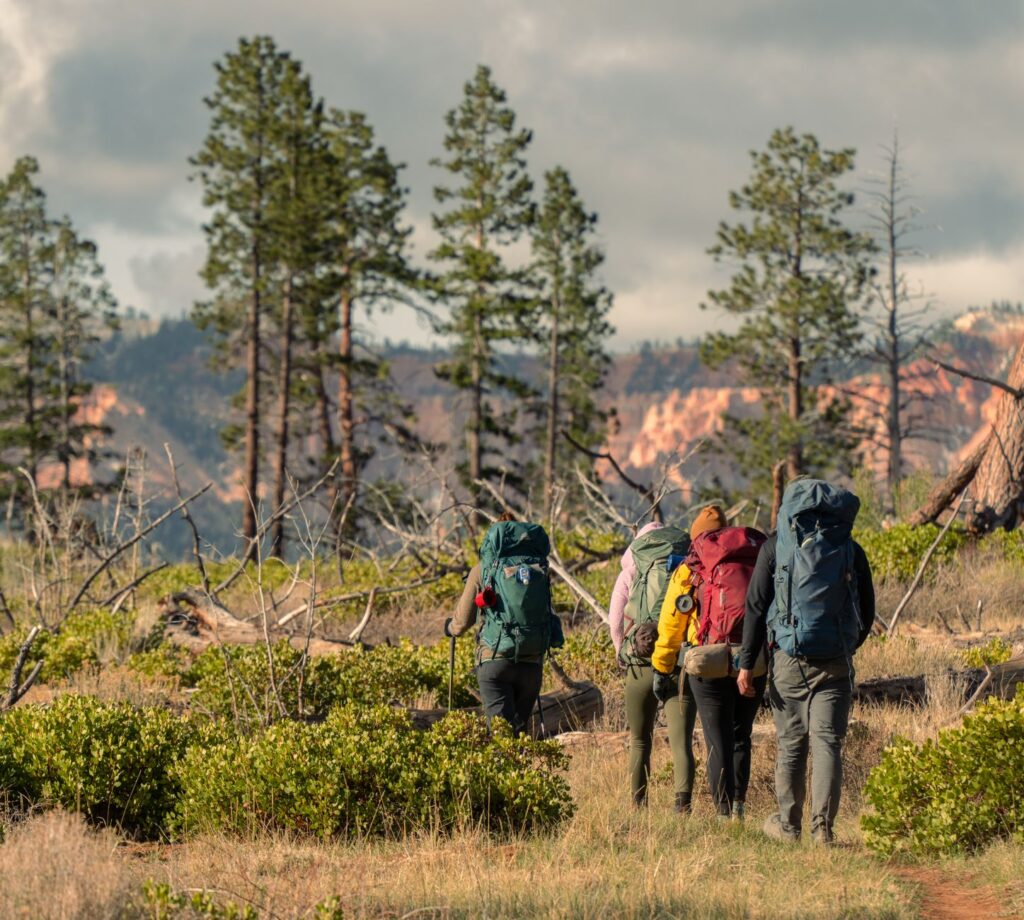
The geographic proximity of this historic property to the canyon rim remains completely unmatched. Staying just steps away from the rim path connecting Sunrise and Sunset Points provides an undeniable logistical edge: guests can begin their descent into the hoodoo maze at first light, completing strenuous climbs before shuttle buses deliver mid-morning crowds.
Transition Between Subalpine Forest and the Mineral Maze
The chosen location of one’s stay substantially dictates how travelers perceive the territory’s stacked ecological zones. The high plateau is covered by a continuous evergreen canopy dominated by ponderosa pine, instantly recognizable by its puzzle-piece bark and subtle scent of butterscotch and vanilla, alongside Douglas fir and white fir. At the highest extremities, stands of ancient bristlecone pines—some exceeding fifteen centuries in age—endure upon exposed dolomite knolls swept by winter winds.
As one descends toward the cabins tucked into Tropic’s pastoral floor, the vegetative mantle alters drastically. Ponderosa groves yield to piñon pine, Utah juniper, and sagebrush scrub, creating an arid transitional zone where afternoon sun radiates intensely off clay banks. Choosing a base camp along this boundary provides close encounters with indigenous wildlife: mule deer foraging between tents at dawn, golden-mantled ground squirrels darting through timber, and ravens tracing aerial arcs over hidden slot canyons.
Light Dynamics: From Sunrise Point to Moonless Skies
Color throughout Bryce Canyon is fundamentally temporal, choreographed by sun angle, atmospheric dust, and air purity. Oxidized iron and manganese compounds embedded within the ancient sediment respond dramatically to shifting wavelengths. At daybreak, horizontal light shafts penetrate the fractured amphitheater, setting the spires ablaze in intense carmine, copper, and amber hues, while narrow ravines linger in cold periwinkle shadow.
«As the sun slips beneath the plateau’s western rim, the hoodoos briefly retain a soft, furnace-like glow before dissolving into the darkest night in the American West.»
By late afternoon, the process reverses, softening into muted golds that transition into an extended, high-altitude violet dusk. It is during these hours that accommodations designed for stargazing prove their value. Designated an International Dark Sky Park with Gold Tier status, Bryce Canyon presents conditions where up to 7,500 stars can be distinguished by the naked eye on clear, moonless nights, alongside the radiant spine of the Milky Way spanning the sky from edge to edge.
Astrophotography and Night Vision
For night photographers and astronomy enthusiasts, avoiding the light blooms of central Bryce Canyon City is paramount. Tented outposts set back on rural plateaus or cabins situated along the floor of Tropic Valley maintain uninterrupted natural darkness, enabling precise long-exposure captures of the hoodoo horizons framed against shimmering cosmic dust.
Routes and Trails: Venturing Beyond the Rim
The placement of one’s base camp fundamentally shapes day-to-day route planning across the park. While casual visitors gravitate almost universally to the combined Navajo and Queen’s Garden trail—a steep descent through the towering rock walls of Wall Street framed by centuries-old Douglas firs—longer journeys await travelers who establish multi-day bases nearby.
The eight-mile Fairyland Loop winds through the quiet northern sector of the park, introducing travelers to solitary rock formations and emerging spires far from the shuttle corridors. For guests staying in the valley floor near Tropic, the historic Mossy Cave trail offers an exceptional uphill perspective: hikers follow an alpine stream diverted in the 1890s by Mormon pioneers who routed water from the East Fork of the Sevier River to sustain their desert crops.
Practical Guide
Arrival and Transit
The primary international gateways serving Bryce Canyon are Las Vegas Harry Reid International Airport (LAS), located roughly 260 miles to the southwest (a four-hour drive), and Salt Lake City International Airport (SLC), situated approximately 270 miles to the north. Drivers travel along Interstate 15 before connecting to US Highway 89 and Utah State Route 12, officially designated an All-American Road for its sweeping vistas.
From spring through autumn, the National Park Service operates a complimentary shuttle service linking major canyon rim viewpoints with parking plazas and gateway hotels in Bryce Canyon City. Boarding the shuttle eliminates parking strain at high-traffic overlooks and makes point-to-point one-way hikes feasible without vehicle shuttling.
Seasonal Accommodation Strategy
- Early Spring and Late Autumn: Nighttime temperatures regularly drop below freezing. Reserve insulated cabins equipped with central heating or wood-burning stoves, or rooms in the historic lodge, to ensure comfort during abrupt mountain cold fronts.
- Midsummer (July and August): The prime season for canvas glamping and yurts. Secure reservations six to nine months ahead. Travelers should remain alert to sudden afternoon monsoon storms, which can generate flash floods in narrow rock gullies.
- Winter: Snow-clad hoodoos present an astonishing visual spectacle against cobalt skies. Lodging options contract significantly, with select properties operating year-round near the park entrance. Four-wheel-drive vehicles or snow chains are strongly recommended during storm cycles.
Essential Preparation and Gear
The pairing of high elevation and negligible humidity requires disciplined hydration; carry at least one gallon of water per person per day when hiking. Sturdy boots with pronounced lug treads are critical for descending crumbly scree and weathered limestone paths. During winter and transitional spring months, compact traction cleats (such as microspikes) are indispensable for navigating packed snow on steep switchbacks. Broad-spectrum sun protection, UV-blocking sunglasses, and layered wind-resistant outerwear complete an adequate mountain kit.
When darkness settles over the jagged terraces of the Paunsaugunt, the fierce glow of the hoodoos subsides into tranquil mountain solitude. Those who choose to sleep in close proximity to this broken earth discover that Bryce Canyon’s greatest secret is not merely its morning color, but the deep, undisturbed quietude that rises from the canyon floor to greet the stars.
Source: Condé Nast Traveler (cntraveler.com)