
Origins and Geography of North Africa’s Stone Giants
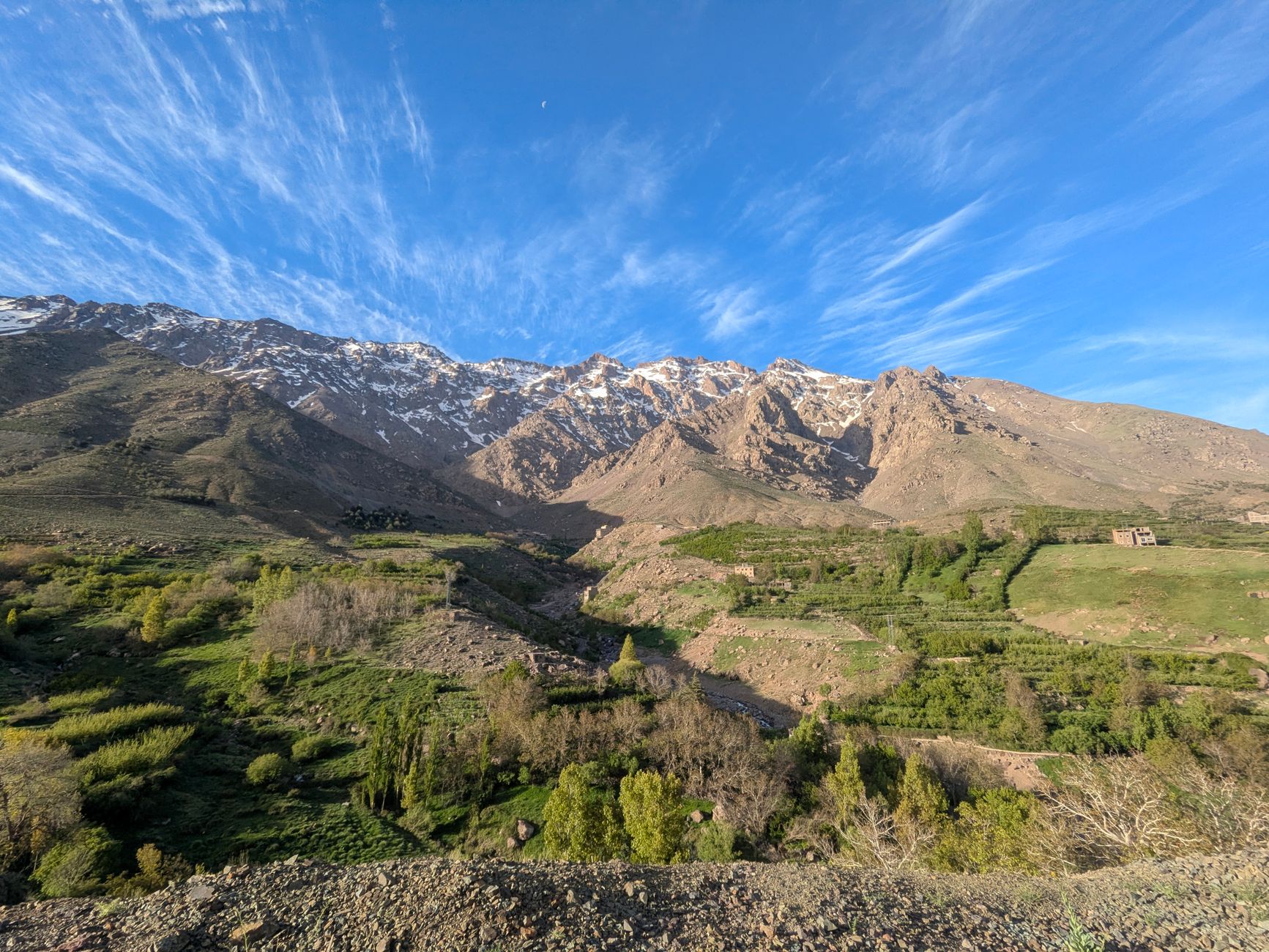
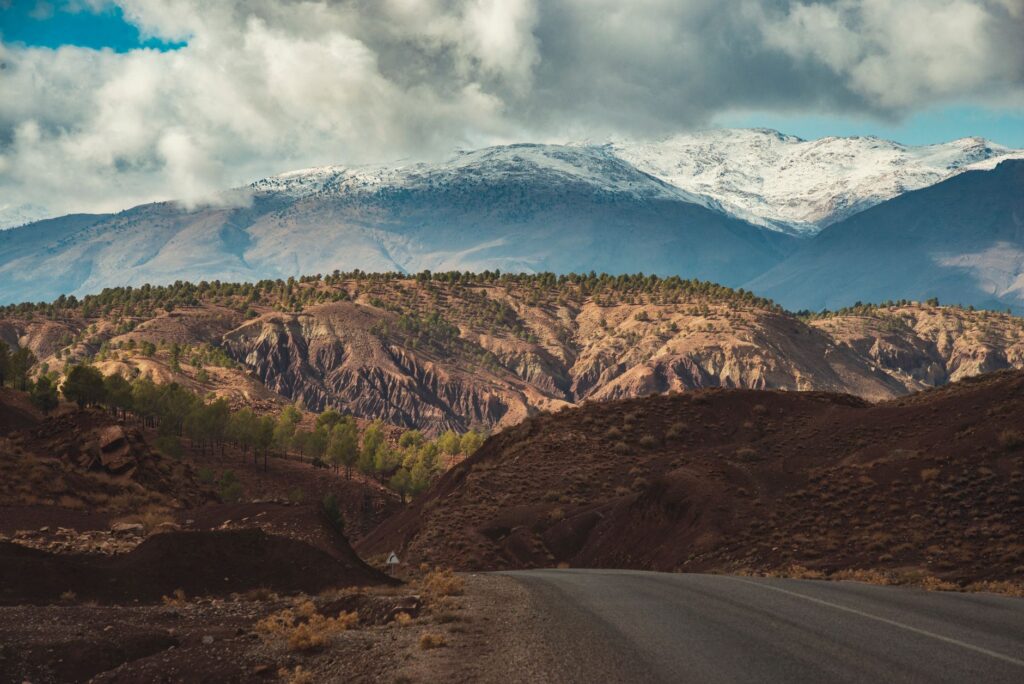
The Moroccan High Atlas rises as an imposing climatic and geological barrier separating the Mediterranean and Atlantic coastal strips from the arid expanse of the Sahara Desert. Molded by intense tectonic processes and constant glacial and fluvial erosion, this mountain range shelters the highest summits in all of North Africa, anchored by Mount Toubkal at 4167 meters of elevation. Executing a trekking expedition across these granite and schist massifs demands an understanding of a terrain where the aridity of the lower slopes contrasts sharply with meltwater torrents and persistent snowfields crowning the peaks throughout much of the spring.
The history of high-altitude routes in this region is inextricably linked to the Berber (Amazigh) communities that have inhabited the canyons and high plateaus for centuries. Trails that once functioned strictly as commercial routes connecting isolated valleys have transformed into high-alpine exploration itineraries. Unlike European mountain ranges, mountain hut infrastructure here is limited, and self-sufficiency remains an essential prerequisite for any serious expedition attempting to breach cols situated above three thousand meters.
Planning a traverse in this environment requires detailed study of available cartography and a thorough grasp of local meteorology. Winds sweeping up from the Sahara can drastically alter thermal conditions in hours, generating extreme heat in deep gorges or intense electrical storms on high summits. Proper high-altitude acclimatization becomes the critical safety factor to prevent acute mountain sickness, as ascents routinely accumulate substantial positive elevation gains over consecutive days of trekking on loose terrain.
Community Logistics and the Support of Local Berber Guides
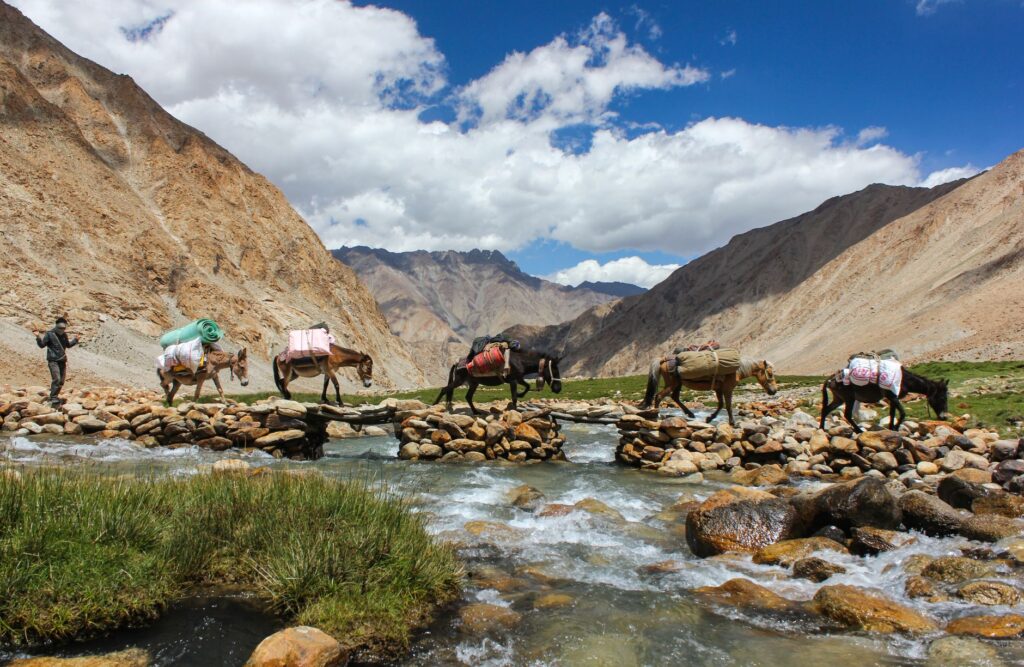
The success of a self-supported expedition in the High Atlas depends heavily on close collaboration with local families and official guides licensed by the Moroccan Ministry of Tourism. Hiring local porters and mules not only lightens personal loads—enabling the transport of technical equipment, high-rating sleeping bags, and multi-day ration supplies—but also injects vital economic support into remote mountain villages like Imlil, Aroumd, or the scattered settlements of the Ouirgane valley and the Mgoun massif.
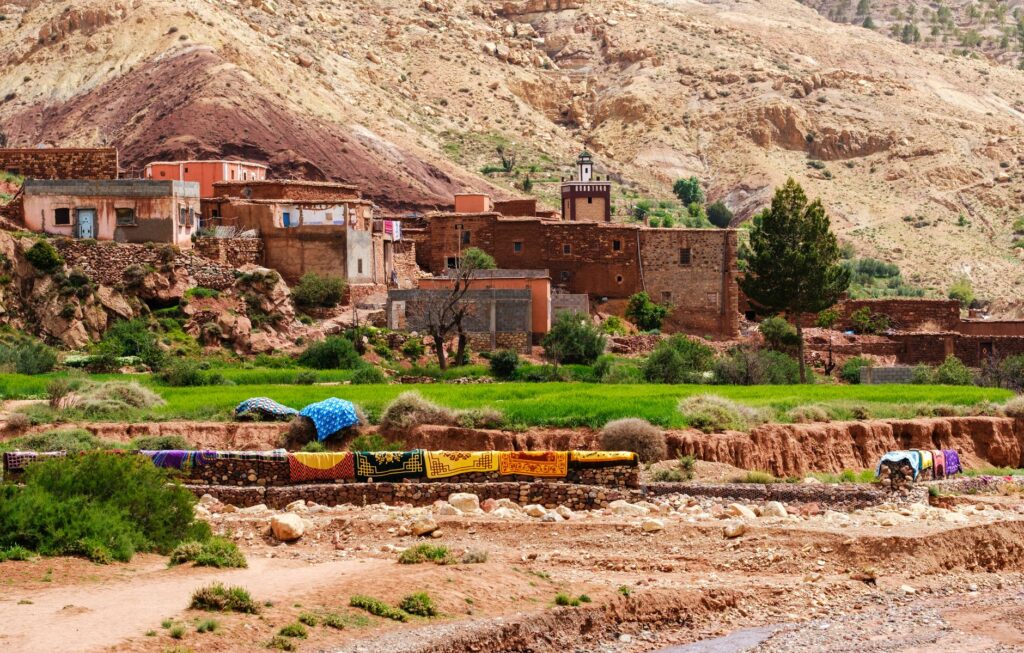
Mountain refuges, managed mostly by the French Alpine Club or local cooperatives, offer basic overnight lodging in shared bunkrooms and rudimentary cooking facilities. However, in more isolated hamlets, Berber hospitality reveals itself through traditional adobe and stone houses, where travelers share mint tea and couscous crafted from local harvests. Establishing fair budgets and clear agreements with muleteers regarding maximum permitted animal loads is crucial to ensure ethical and sustainable treatment of the pack animals supporting alpine transport logistics.
Water management and nutrition represent another foundational pillar in logistical planning. Although meltwater streams rush powerfully down valley floors, the presence of livestock grazing during summer pastures makes the systematic use of chemical purification or high-efficiency micro-filtration mandatory. Expedition rations must prioritize lightweight, calorie-dense foods, supplemented by the nutritious traditional stews available along the route thanks to the infrastructure of mountain settlements.
Technical Equipment and Altitude Risk Management
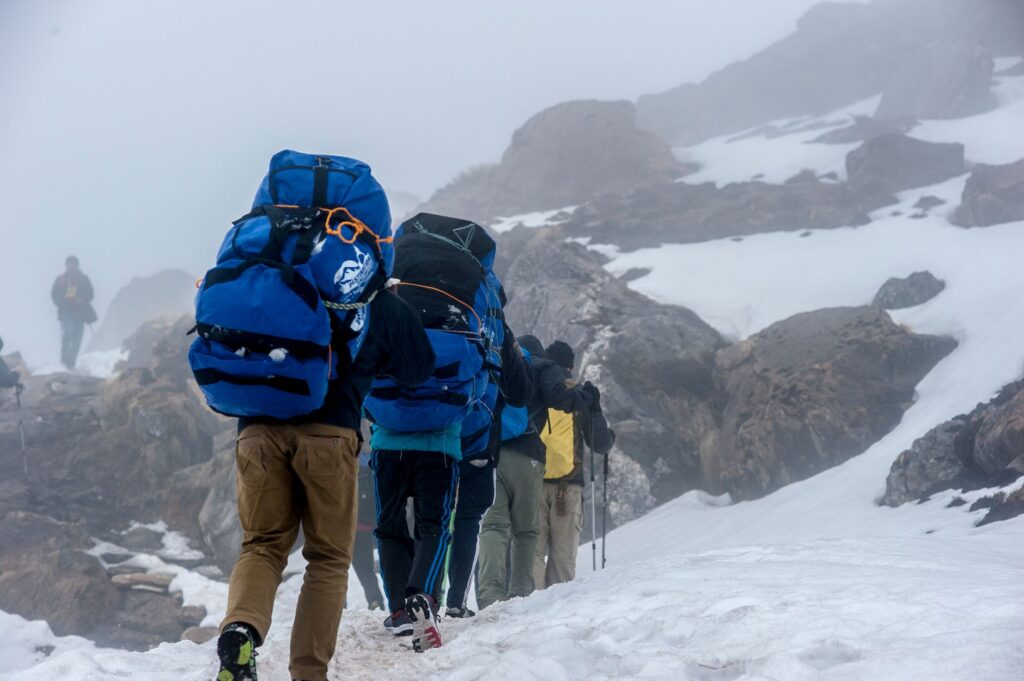
Confronting the high-mountain passes of the Moroccan Atlas demands rigorous technical gear capable of withstanding extreme thermal swings, shifting from thirty degrees Celsius during midday hours to freezing temperatures at dawn on exposed high cols. Mountain boots must feature high ankles, high-traction rubber soles, and waterproof membranes to safely navigate river crossings and residual snowfields. Additionally, trekking poles are indispensable for protecting joints during prolonged descents over unstable scree slopes.
The mountain yields to no one’s haste; it demands the silent respect of the traveler who comprehends its scale and accepts its ancient rules.
The layering system in apparel is the only effective strategy for managing intense physical exertion against cold mountain winds at altitude. A breathable thermal base layer, a lightweight down or synthetic insulation mid-layer, and a top-tier waterproof shell are recommended. Furthermore, because solar radiation in North African massifs is exceptionally aggressive, category 4 glacier glasses and broad-spectrum sunscreen are mandatory items in every trekker’s individual kit.
Risk management also encompasses satellite communication and familiarity with emergency evacuation points. Mobile phone network coverage is virtually nonexistent in the vast majority of deep canyons and high plateaus of the Atlas. Consequently, carrying a satellite messaging device and an advanced first aid kit—including specific medication for altitude sickness and limb immobilization supplies—constitutes a mandatory standard for independent expedition leaders and guides.
Route Planning: Classic Itineraries and Off-the-Beaten-Path Variants
The array of routes in the High Atlas is vast, ranging from rapid ascents of Toubkal to ten- or fifteen-day traverses connecting diverse valleys via technical cols. The classic Toubkal ascent route departs from Imlil, climbs the Mizane valley to the Neltner refuge (the operational basecamp situated at 3207 meters), and culminates at the summit via either the southern or northern route. This option, though heavily trafficked during peak season, provides a perfect introduction to the range’s elevation profiles and altitude.
For expeditions seeking greater isolation and technical exploration, the full traverse of the Mgoun massif in the Central High Atlas offers a radically different landscape. This journey combines panoramic ridge crossings with descents through narrow river gorges where trekking waist-deep in water becomes necessary. Planning such variants demands precise knowledge of seasonal water flows and local weather forecasts to avoid hazardous flash-flood scenarios driven by distant storms.
Inter-valley connections also enable structured cultural traverses where hiking merges with observing traditional *igherman* architecture (fortified communal granaries) and direct interaction with nomadic pastoralists moving their goat and sheep herds according to high-pasture cycles. This duality between alpine challenge and ethnographic immersion defines the true identity of major expeditions on foot across Moroccan territory.
Sustainability and Traveler Ethics in Fragile High-Mountain Ecosystems
The steady rise of adventure tourism in the High Atlas has generated significant environmental and socioeconomic challenges that responsible expeditioners must address with rigor. Solid waste management in areas devoid of municipal collection services remains a critical issue. The golden rule of modern expeditioning is packing out all non-biodegradable waste to the starting point of the journey and eliminating single-use plastics through personal water bottles and individual purification systems.
Similarly, respecting local customs, wearing appropriate clothing in rural villages, and seeking prior permission before photographing local residents are courtesies that guarantee harmonious coexistence. Berber communities have preserved their culture over centuries through an intimate relationship of mutual respect with the natural environment—a balance that foreign visitors have an ethical responsibility not to disrupt or invasively commercialize.
Impacts on local pastures and water resources must be minimized by utilizing designated camping zones and moderating firewood consumption, prioritizing portable gas stoves for meal preparation. Supporting local conservation initiatives and community-based tourism ensures that the economic benefits of the expedition directly reach the families safeguarding these fragile high-mountain valleys.
Practical guide
- Getting There: Marrakech-Menara International Airport serves as the primary air entry point. From there, the road journey to the alpine village of Imlil—the gateway to Toubkal National Park—takes approximately one and a half hours via shared taxis (grands taxis) or pre-arranged private transfers.
- Best Time for Expedition: Spring months (April to May) offer an optimal balance of moderate temperatures, flowing stream water, and blooming landscapes, though crampons may still be required on the highest summits. Autumn (September to November) features stable skies and lower tourist density, ideal for valley-to-valley traversing.
- Permits and Regulations: No special trekking permit is required to access most High Atlas valleys, but registering at the gendarmerie checkpoints located at the entrance to Imlil and hiring certified local guides for ascents above three thousand meters is mandatory.
- Currency and Payments: The official currency is the Moroccan Dirham (MAD). In rural zones and mountain refuges, cash is the sole accepted payment method, so carrying sufficient physical currency exchanged in major cities prior to departure is strongly recommended.
- Health and Vaccinations: No mandatory vaccinations are required to enter the country from the European Union or Latin America, but keeping general immunization schedules up to date and consulting a travel medicine clinic regarding basic digestive prophylaxis and altitude medication is advised.
Silence and Summit: The Eternal Echo of African Peaks
When an expedition finally attains the final meters of the summit ridge and the North African horizon unfolds in a symphony of arid crests and deep valleys, the accumulated physical effort of steady marching dissolves into a profound sense of mental clarity. The High Atlas does not offer the green lushness of other mountain ranges on the planet, but rather the severe, timeless beauty of stone sculpted by the elements. Here, time is measured by the slow cadence of mule caravans and the twinkling of stars over high camps.
Reflecting upon the experience lived within these schist and granite gorges reveals that the true magnitude of a high-mountain traverse resides not exclusively in the conquest of altitude, but in the traveler’s capacity to blend into the environment, listen to the stories of its people, and return with a perspective transformed by the vastness of desert and mountain united on a single horizon.