
Introduction to the Baltic Labyrinth of Aland
In the heart of the Baltic Sea, between the coasts of Sweden and Finland, lies an archipelago composed of more than six thousand five islands and islets known as Aland. This autonomous, Swedish-speaking region represents one of Northern Europe’s most fascinating logistical challenges. Connectivity here is not merely an administrative service, but a vital daily pulse dependent on a millimeter-precise intermodal network where deep-draft ferries, ice barges, raised highways over granite embankments, and small local airports converge. Understanding this territory means delving into an ecosystem where a fragmented geography dictates every movement of goods, residents, and travelers.
For decades, the economic and social survival of the outer islands has relied on human capacity to defy winter frosts and the unpredictable currents of the Gulf of Bothnia. While the summer months open the archipelago to nautical tourism with deceptive navigational ease, winter imposes a regime of relative isolation that tests the solidity of public and private fleets. This report examines the complex transport architecture keeping this Baltic outpost alive, unraveling the technical, human, and environmental keys of its connectivity network.
The Maritime Backbone: Southern Route Ferries
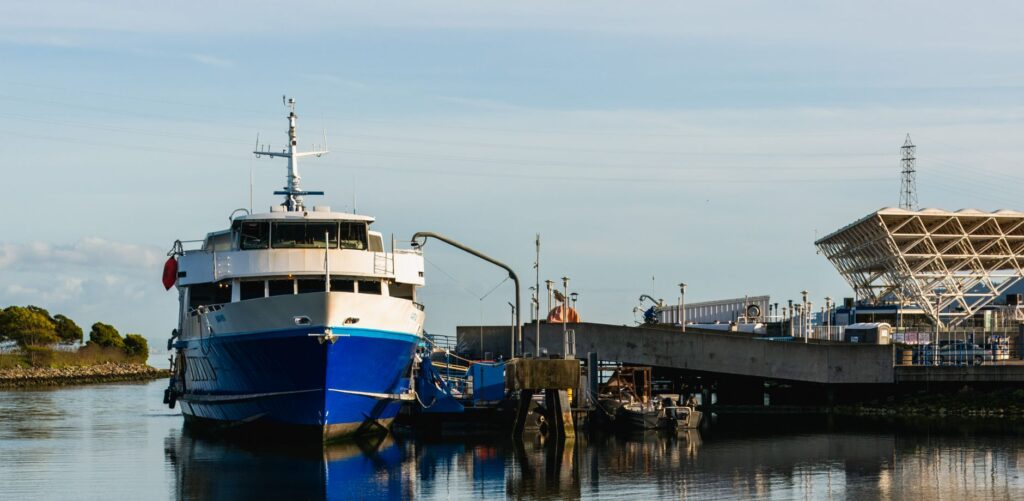
Aland’s circulatory system rests fundamentally on its regional ferry fleet, locally known as skärgårdsfärjor. These vessels are not mere tourist transport mediums, but true floating hospitals, school buses, and cargo trucks adapted to operate in shallow waters plagued by granite hazards. Main routes connect the port of Mariehamn and continental enclaves with peripheral islands such as Brändö, Kumlinge, and Föglö.
The operation of these vessels requires millimeter precision from captains who must contend with wind-induced tides and the sudden formation of ice floes during transitional seasons. Unlike the large ferries crossing the Baltic between Helsinki and Stockholm, the interior island ships are designed with reinforced hulls and azimuth propulsion systems enabling them to maneuver in tiny docks carved directly into living rock. This floating infrastructure ensures that the supply of food, fuel, and medical assistance is never entirely interrupted.

Engineering Over Water: Bridges, Embankments, and the Insular Road Network
The consolidation of Aland as a fluid transit space is not limited to the sea; it has demanded a radical transformation of the landscape through the construction of small-scale monumental civil works. The main highway system, known as Route 1 and Route 2, winds through a succession of viaducts, cable-stayed bridges, and artificial embankments uniting major islands such as Main Island, Lemland, and Lumparland.
Civil engineers designing these connections faced the fragility of the seabed and the necessity of preserving traditional navigation channels for local sailing and fishing boats. The result is a road network that appears to float upon the water, where each bridge represents a critical maintenance point against marine corrosion and extreme northern wind loads. This terrestrial infrastructure drastically reduces transit times, allowing local populations to travel between island municipalities as if navigating a continuous continental territory.
The Ice Challenge: When the Baltic Freezes and Ephemeral Roads Emerge
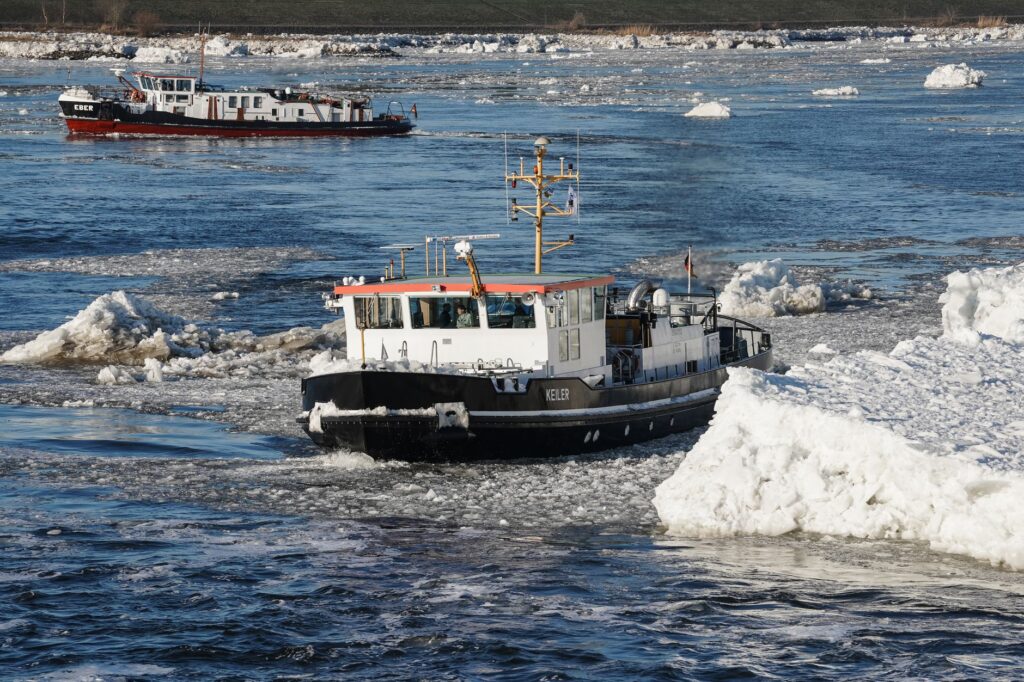
When the Baltic winter reaches its zenith, the waters between the islands partially solidify, creating a landscape of floating ice floes and dark water channels. At this critical juncture, conventional transport mutates into an ancient and highly specialized modality: ice roads and hovercraft or air-cushion vessels.

Aland’s transport authorities rigorously supervise the thickness of the ice sheet over traditional routes. Once the ice achieves structural safety, temporary roads marked with spruce boughs are opened, permitting light vehicle traffic between smaller islands. When ice conditions are unstable yet prevent traditional ferry navigation, air-cushion sliding vehicles enter service, capable of gliding over both frozen and open surfaces. This seasonal transition demonstrates the adaptive flexibility of a system in direct dialogue with natural laws.
Transport in Aland is not a matter of speed, but of resilience; every nautical mile and granite bridge represents a daily pact against geographic isolation.
Proximity Aviation: Mariehamn Airport and Insular Runways
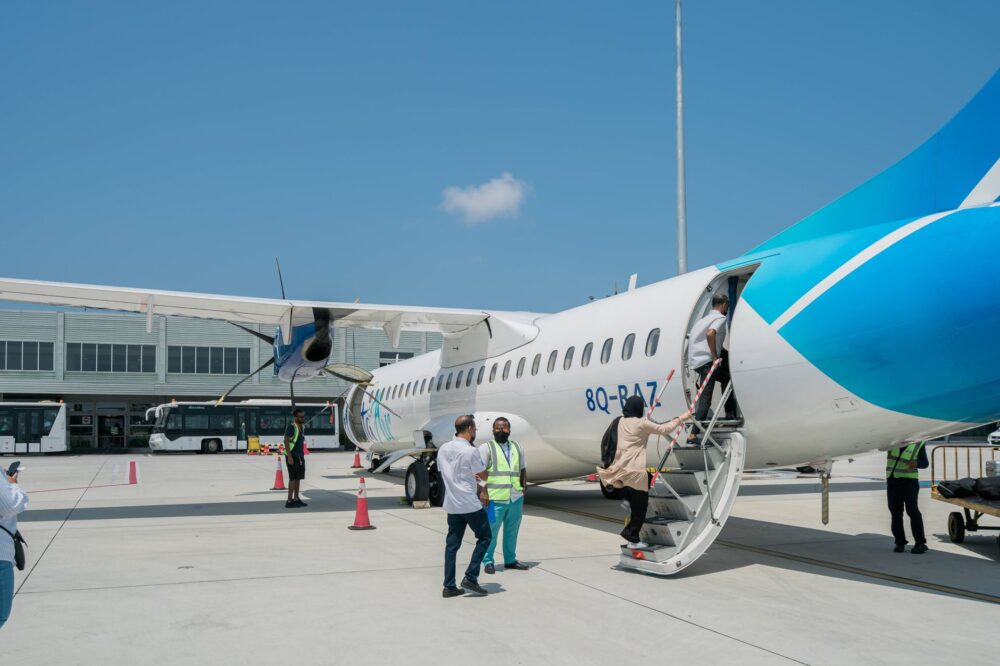
Although water and asphalt dominate daily mobility, air transport plays an irreplaceable role in high-priority connectivity. Mariehamn Airport, situated in the south of the main island, acts as the aerial umbilical cord to the Finnish and Swedish mainlands, hosting scheduled flights operated by regional airlines using turboprop aircraft adapted for adverse weather conditions.
Beyond the main terminal, the archipelago features small emergency airstrips and medical helicopter services on outer islands. These aerial resources are vital during autumn and winter storms, when ferries must suspend operations due to hurricane-force winds. Coordination between airport authorities and maritime rescue services ensures that no resident goes unattended during an urgent medical emergency.
Sustainability and Energy Transition in the Baltic Fleet
In recent years, Aland’s transport system has initiated a profound transformation aimed at decarbonization and energy efficiency. Given that the archipelago heavily relies on its pristine natural environment, local administrations and shipping operators have invested in modernizing the fleet toward hybrid and electric propulsion systems.
New ferries serving interior routes incorporate high-capacity batteries recharged via wind and solar energy generated locally on the islands. This transition not only reduces the carbon footprint of the transport network but significantly diminishes acoustic pollution in fragile seabird nesting zones. The current challenge lies in maintaining autonomy during the darkest, coldest winter days when energy demand for onboard heating and icebreaking propulsion spikes.
Practical guide
Planning a journey across Aland’s intermodal system requires understanding the logistical particularities of its insular geography. Below are the essential guidelines for moving effectively through the archipelago.
Ferry Route Planning: Reservations for vehicles on regional ferries must be made in advance, especially during the busy summer season and holiday weekends. Schedules change drastically between summer and winter timetables.
Fares and Payment Systems: Many smaller inter-island routes form part of the public road network and are free of charge for foot passengers, whereas vehicles and long-distance segments require distance-based fares.
Weather Monitoring: Checking local weather services and maritime and road traffic alerts daily is essential, as strong winds or sudden ice formation can alter scheduled timetables.
Sustainable Mobility: Aland is an excellent destination for cycling. Most ferries allow bicycles to be boarded free of charge or at a low cost, facilitating active intermodality between islands.
Accommodation and Supplies: On the outer islands, commercial services are limited. Stocking up adequately in Mariehamn before venturing into the archipelago’s most remote cays is strongly recommended.

The Human Factor: Captains, Lighthouse Keepers, and Outpost Operators
Behind every radar screen, diesel engine, and hydraulic gangway lies a community of professionals whose work often goes unnoticed by the casual visitor. Captains with decades of experience in the freezing Baltic waters, marine mechanics repairing parts in makeshift midnight workshops, and operators of locks and movable bridges make up the human fabric sustaining this complex web.
For these workers, maintaining connectivity is a matter of civic pride and cultural survival. In a territory where local communities deeply value their autonomy and linguistic heritage, ensuring that mail arrives, children attend central school, and local products reach mainland markets is the pillar upon which their lifestyle rests. Their faces reflect the serenity of those who have learned to negotiate constantly with the elements, turning insularity into a stronghold of ingenuity and community collaboration.
Visual Epilogue of Granite Waters and Salt
As evening falls, the golden light of the northern latitude slides over the polished surfaces of the granite islets, casting long geometric shadows on wooden docks and the steel decks of the ferries. On the horizon, the silhouette of a solitary lighthouse marks the confín where maritime routes merge with the immensity of the Baltic Sea. It is in this moment of apparent stillness that the true dimension of Aland’s transport system reveals its full magnitude: a fragile yet tenacious thread uniting thousands of fragments of solid land into a single living community.