Newfoundland beyond the postcards: Paul Theroux’s sharp lens
Travel is never merely a geographical displacement; for a chronicler of Paul Theroux’s stature, crossing borders involves decoding the invisible folds of collective memory and exposure. In his latest book, True North, the author embarks on a monumental journey across Canada, stripping the territory of its usual tourist-postcard attire to plunge into the core of its most remote communities. Among all the stops that shape this emotional map, none resonates with such force or exerts such a magnetic pull as Newfoundland, that rugged island battered by the North Atlantic where geography itself seems to carve the character of its inhabitants.
The premise guiding this journey does not seek the comfort of Canada’s large metropolises, but rather the harsh truth of the frontiers. Theroux, known for his lucid skepticism and relentless street-level curiosity, lands in a land where the climate dictates routines and isolation has forged an uncompromised insular culture. Far from the bustle of Toronto or Vancouver, Newfoundland presents itself as a bastion of oral histories, cathedral-like silences, and a human warmth that defies the harshness of its natural surroundings. It is here that the chronicler finds a resounding answer to his quest: a lineage of men and women whose hospitality contrasts vividly with the frozen vastness surrounding them.

The geography of the edge: harshness sculpted by the Atlantic
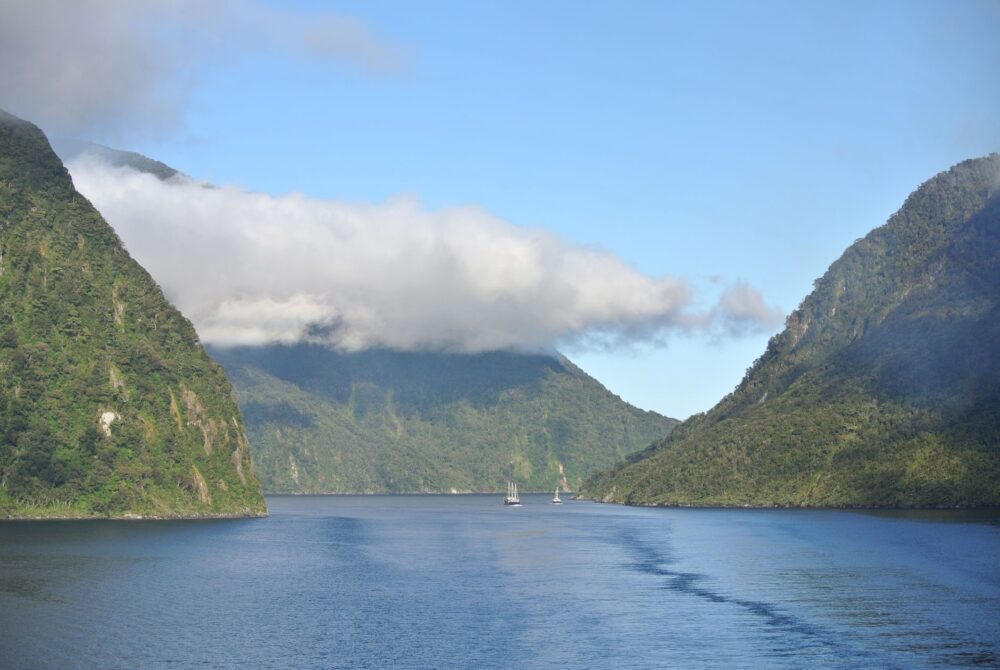
Understanding Newfoundland requires accepting the rules of a landscape that offers no concessions. Black granite cliffs drop sheer into a raging ocean, fjords wind inland like glacial scars, and the fog—known locally as sea fog—frequently devours the coastline without warning. In this theater of titanic beauty, survival has historically depended on fishing and the ability to read the signs of sky and sea. Theroux observes this environment not as a mere picturesque backdrop, but as the shaping agent of a singular mindset, where frugality and resilience are not chosen virtues, but conditions of existence.
Throughout his pages, the author walks along salt-cured docks and converses with retired fishermen whose hands hold the memory of times when cod reigned supreme on the Grand Banks. The fishing moratorium that devastated the local economy in the 1990s left deep wounds that still resonate in the human landscape today. Yet, far from succumbing to bitterness, coastal communities have successfully reinvented themselves through respectful tourism and the tenacious preservation of their cultural heritage. The dignity of these communities lies in their refusal to disappear, transforming the memory of loss into an anthem of permanence.
The human pulse: why Newfies are different
«Newfies are special people», Theroux writes in True North, condensing a complex network of affections, irony, and community spirit into a simple sentence. Unlike other hyper-connected urban societies, conversation remains the fundamental social glue in Newfoundland. In small fishing settlements known as outports, the arrival of a foreign traveler generates no suspicion, but rather genuine curiosity accompanied by an immediate invitation to share a cup of tea or a chat by the wood-burning stove. Hospitality here is not a commercial service; it is a moral imperative inherited from generations who knew that a neighbor’s help could mean the difference between life and death during a storm.

The true measure of a remote place is not found in the magnificence of its landscapes, but in the promptness with which a stranger is welcomed into the kitchen of a house lit by a kerosene lamp.
The locals’ humor, often tinged with self-deprecating irony and sharp wit, functions as a protective shield against climatic and economic adversity. Theroux lingers in local pubs where traditional music—a vibrant mix of Irish, Scottish, and English roots—bursts forth in accordions and fiddles. In these community spaces, the boundary between local and visitor dissolves with surprising speed. There are no tourist artifices; instead, there is an honest celebration of shared survival through song and oral poetry.
Architecture of survival and the rhythm of outports
Newfoundland’s architecture is a faithful reflection of its economic history and its struggle against the elements. Brightly painted wooden houses—red, yellow, bright blue—do not respond to a contemporary aesthetic whim, but rather to a practical necessity: fishermen used leftover boat paint to protect their homes from saline corrosion and to easily distinguish them amid dense layers of snow and fog. These coastal settlements, many accessible only by sea or winding secondary roads, maintain a human scale that sharply contrasts with the monumentality of the surrounding nature.

Strolling through towns like Bonavista or Trinity is walking through living museums where every wooden dock creaks underfoot and every lighthouse projects a light that is both warning and welcome. Theroux documents how the island’s vernacular architecture tells the story of an economy based on self-sufficiency. Net sheds, elevated warehouses on stilts, and white wooden churches dominating the marine horizon form a cohesive cultural landscape that has remained virtually unaltered for decades. The preservation of this material heritage is a testament to the deep attachment of its inhabitants to a land they consider irreplaceable.
Living culture: language, music, and insular memory
One of the most fascinating aspects the author addresses in his journey is Newfoundland’s unique dialect, a linguistic melting pot preserving expressions and accents of old English and Irish that have almost completely disappeared in their places of origin. Listening to a local speak requires attention, but rewards the listener with unusual metaphorical richness. Words related to the sea, weather, and moods acquire precise nuances that reveal an intimate, detailed connection with the surrounding environment. This distinct language acts as an unbreakable marker of identity against global cultural homogenization.

Musical tradition accompanies every significant moment in island life. Work songs, sea shanties, and dance rhythms are passed down from generation to generation not through academic scores, but in kitchens and community halls during long winter nights. Theroux attends these gatherings with the attitude of a respectful anthropologist, understanding that music in Newfoundland is not entertainment product, but the very heartbeat of the community. It is the channel through which the tragedies of the sea are processed and small daily triumphs celebrated.
Practical guide
Planning a trip to Newfoundland requires preparation and respect for the island’s natural rhythms. The essential recommendations to follow in Paul Theroux’s footsteps with rigor and safety are detailed below.
- When to go: The optimal season spans the summer months, from late June to early September, when temperatures are milder and icebergs migrate down the east coast.
- How to get there: St. John’s International Airport (YYT) is the primary air gateway. To explore the coast, renting a vehicle with appropriate traction is essential.
- Transportation: Main roads are paved, but many routes to small outports are secondary and demand cautious driving, especially due to local wildlife (moose) and sudden fog banks.
- Accommodation: It is recommended to alternate historic boutique hotels in cities like St. John’s with family-run bed and breakfasts in coastal villages.
- Gastronomy: A must-try is fresh cod, local wild berry tarts (such as bakeapples or cloudberries), and craft beer brewed with iceberg water.
- Cultural respect: Conversation is part of the social fabric; approach locals with patience, a willingness to listen, and without urban haste.
Emotional epilogue: the echo of northern shores
At the end of the day, when the evening light dyes the dark waters of the bay a copper tone and the cliff profiles merge with the horizon, Newfoundland reveals its most intimate dimension. It is not a destination designed for fast consumption or the impatient traveler seeking standardized attractions. It is a territory that demands time, a willingness to listen, and a sincere openness toward others. In the pages of True North, Paul Theroux reminds us that the most remote places on the planet are often those that best return our own humanity, reflected in the firm and generous gaze of those who have chosen to live at the edge of the world.

The experience of traveling through these landscapes leaves an enduring mark on the spirit of those who cross them. The saline wind, the unhurried tempo of conversations on the docks, and the silent vastness of the Atlantic Ocean compose a symphony of solitude and community that defies contemporary tourism conventions. Closing the book and contemplating the wave-battered coast once more, we understand that the true journey never ends on the map, but in how we transform our perspective on the planet’s borders.
Source in EN: Condé Nast Traveler