
In the heart of Oviedo, where the chime of cathedral bells weaves effortlessly into the clatter of teaspoons against steel in busy coffee bars, the Central Market of El Fontán pulses with a vitality that defies the passage of centuries. This is far more than a municipal provisioning hall for perishable goods; it is the grand theater of Asturias’ culinary memory. Beneath its wrought-iron and glass structures, inaugurated in the late nineteenth century but rooted in an arcaded plaza of aristocratic baroque heritage, a community of land-bound artisans and discerning diners gathers every morning, united by the understanding that eating is an act of cultural preservation. Here, produce does not bow to the whims of global standardization, but rather follows the stern, generous rhythms of a geography defined by limestone peaks, river gorges, and pastures of an emerald intensity bordering on the surreal.
The history of this commercial landmark traces back to the ancient drained lagoons of El Fontán—meaning fountain in the local tongue—a marshy expanse that early Ovetenses transformed into a vibrant hub for fairs and theatrical performances. Crossing its doors today plunges the visitor into a sensory fog woven from the aromas of rendered butter, fresh cow’s milk cheese, and smoky cured pork. The stalls lay out an edible cartography stretching from the alluvial vegetable plots of the Vega valley to the high-altitude meadows where roxa and casina cattle graze. It is a living ecosystem where the weathered hands of vendors guard wisdom passed down through generations, explaining with an apothecary’s precision why a specific wild mushroom or turnip stew requires an exact cooking time to achieve earthly glory.
The Architecture of Iron and Light in El Fontán
The building housing the market today stands as a masterwork of industrial architecture applied to public service. Designed by municipal architects in the closing decades of the nineteenth century, its blueprint prioritized hygienic functionality without sacrificing the formal elegance required to harmonize with Oviedo’s historic core. The metallic trusses and expansive windows allow natural northern light to flood the aisles, casting shifting chiaroscuro patterns across the white marble slabs where freshly caught fish from the Cantabrian Sea rest on ice. This spatial transparency is far from trivial; it fosters trust in every transaction and turns the routine act of shopping into a luminous aesthetic experience.

Strolling down the central corridors reveals a meticulous choreography. Fruit and vegetable stalls, aligned like Renaissance still lifes, showcase the biodiversity of smallholder farming resisting the tide of mass distribution. Here, ugly yet honest produce is celebrated: the Reineta apple with its sharp acidity and firm bite, the robust collard greens forming the skeleton of the Asturian pote, and the delicate coastal garden peas prized as green gold in spring. Every vendor acts as an ambassador for their own harvest, advising patrons with the authority born of walking the muddy furrows and scanning the sky each morning to outsmart valley frosts.
Guardians of the Meadow: Husbandry and the Dairy Miracle
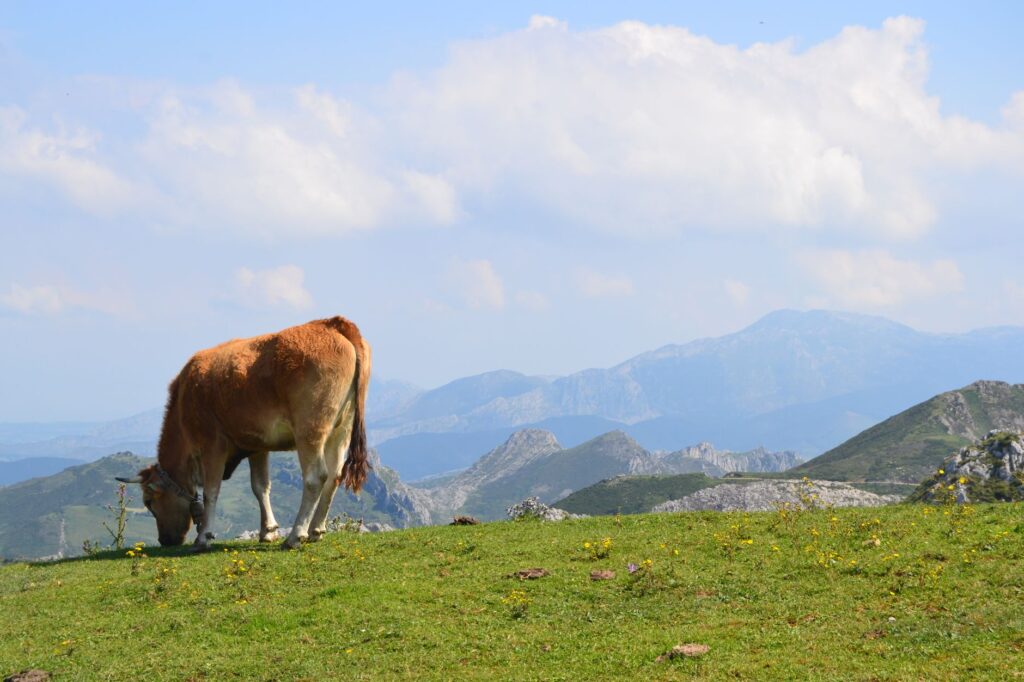
Just a few kilometers beyond the urban halls, ascending into the foothills of the Cantabrian Mountains, lies the cradle of the raw materials sustaining the market’s stalls. Extractive and free-range livestock farming in Asturias is much more than an economic sector; it is the primary engine for landscape maintenance and wildfire prevention. Native cattle breeds roam freely across high mountain passes, feeding on flora-rich grasses that are miraculously translated into rich, complex milk. This raw milk, carefully coaxed and processed in family-run dairies nestled in the Lena and Quirós valleys, populates the cold rooms and maturing cellars of Oviedo’s artisan mongers.
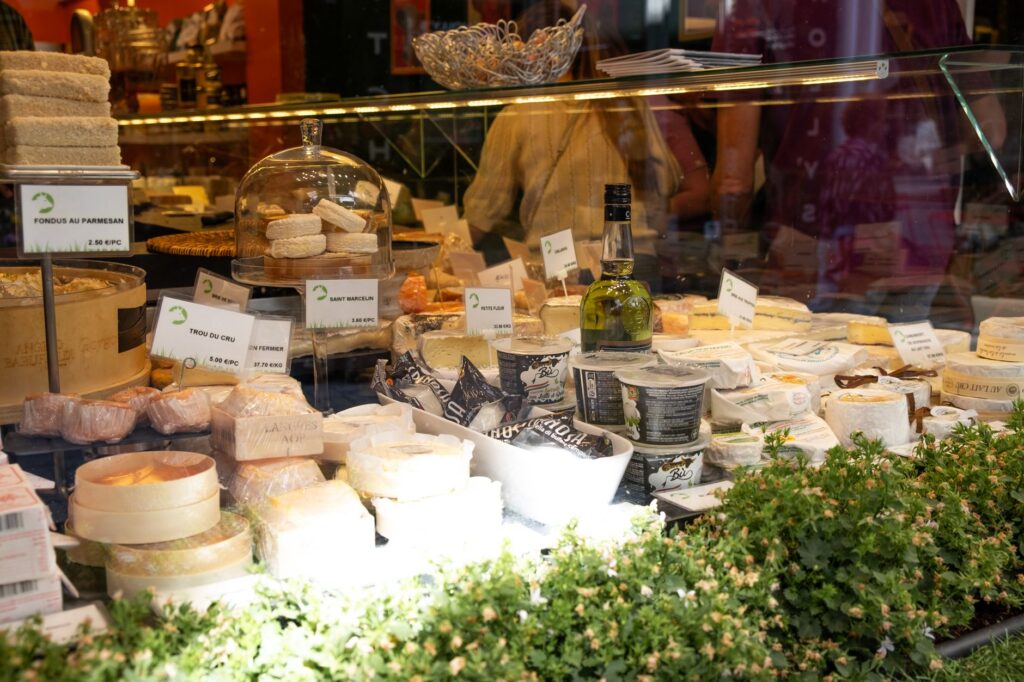
The offspring of this unbreakable bond between animal, pasture, and human hand materializes in one of Europe’s most remarkable cheese cultures. In El Fontán, counters dedicated to artisanal cheeses serve as shrines of secular pilgrimage. There is no single Asturian flavor, but rather an infinite constellation ranging from the lactic subtlety of Afuega’l Pitu—featuring its signature paprika dusting in the roxa variety—to the earthy, assertive punch of Cabrales or the enveloping, smoky embrace of Gamonéu del Puertu. Each wedge tells a tale of damp natural limestone caves and weeks of manual turning, a heroic endeavor defying the logic of industrial mass production.
The Art of the Cantabrian Sea in the Indoor Fishmonger Row
Although Asturias is a land of sheer mountains and enclosed valleys, its ties to the Cantabrian Sea are visceral and profound. The market’s fishmongers receive daily catches hauled in by artisanal fleets from ports such as Cudillero, Avilés, and Gijón. The offerings shift according to tides and biological quotas, reminding urban consumers that the ocean is not an infinite warehouse. Inspecting hook-caught hake, scarlet rockfish, or clinging barnacles is akin to examining a marine biodiversity catalog that demands absolute culinary respect, rooted in minimal intervention and maximum reverence for natural cooking points.
blockquote class=»editorial-quote»>«Eating in Asturias is not an exercise in ostentation, but a solemn pact with the memory of the land; every bite demands an understanding of those who defy slope and tide.»
Conversations between fishmongers and their regular patrons typically revolve around marine weather patterns and the delicate art of cleaning a catch without losing a drop of natural juices. Wild seabass, rock-dwelling monkfish, and tender baby squid inspire recipes passed down through families with scarcely any modification. There is no room here for avant-garde foams or laboratory gimmicks; the market’s culinary philosophy relies on the evocative power of a slow onion soffritto, a splash of natural cider, and a clean stock brewed from the bones of the morning catch.
The Backstage of the Spoon Dish: Legumes and Compango
If fish and cheese provide finesse and contrast, hearty spoon dishes form the robust foundation upon which the Principality’s gastronomic identity rests. In the quietest corners of El Fontán, open burlap sacks reveal legumes of perfect caliber: the Asturian fabana bean, buttery-skinned and meltingly tender, cultivated in small alluvial patches where water flows undisturbed. Its culinary value stems from its exceptional capacity to absorb the intense aromas of compango—smoked chorizo, blood sausage, and pork belly cured over oak and beechwood fires in the interior mountains.
The ritual of crafting fabada or turnip stew requires monkish patience. Market vendors proudly explain that the secret lies not solely in the bean’s quality, but in the soft local mineral water and the gentle caress of a slow fire. These ingredients, equally accessible to lifelong locals and curious travelers, epitomize the democratization of good eating: a high-calorie cuisine designed to endure harsh mountain winters, now consumed with devotion year-round thanks to the resilience of traditional distribution networks.
The Culture of Cider as a Cohesive Element
No journey through Oviedo’s Central Market and its surroundings is complete without acknowledging the amber liquid that underpins Asturian sociability: natural cider. While direct bottle sales occur primarily in specialized cellars and llagares, cider culture permeates the market atmosphere via the numerous taverns surrounding El Fontán plaza. Here, pouring from on high—el escanciado—is neither mere technique nor simple showmanship, but a kinetic ritual designed to shatter natural carbonation against the rim of a wide glass, releasing the primary aromas of fermented apples.

In Asturias, cider is understood as both a liquid foodstuff and an unbreakable social connector. It is shared in circles, consumed in small sips known as culines, and invariably accompanied by tapas of robust cheeses, cured beef, or stuffed bread rolls. Surrounding the market, historic tavern bars function as natural extensions of the food stalls, where patrons consume ingredients they have just purchased after asking the bartender to toast, clean, or dress them on the spot. It is the ultimate expression of a neighborhood circular economy standing proud against global tourist uniformity.
Practical guide
How to get there: Oviedo is well connected by regular train services and major highways. The Central Market of El Fontán is located right in the historic center, accessible exclusively on foot.
Opening hours: The market operates Monday through Saturday from 08:00 to 15:00 hours, with early morning hours offering peak activity and maximum product freshness.

Essential products: Artisan valley cheeses (Afuega’l Pitu, Gamonéu, Casín), local harvest fabes beans, smoked charcuterie for compango, and fresh Cantabrian fish.
Shopping advice: Talk to the vendors; their expertise regarding exact product origins and traditional recipes is an irreplaceable asset. Carry cash for smaller stalls and bring reusable bags.
Emotional Epilogue in the Porticos of Time
When the afternoon light begins to soften the ochre tones of the baroque facades and the morning hustle of El Fontán yields to the respectful silence of cleanup, the square reclaims a dimension that is almost ghostly yet deeply moving. Beneath the porticos shielding against the sharp wind, an elderly man patiently hones the blade of a knife while mentally tallying the day’s accounts. In that quiet gesture, repeated for decades beneath the same stone arches, lies the true essence of this land: an unwavering loyalty to manual crafts and the slow pulse of the seasons. The traveler who leaves the market with the aroma of aged cheese and the memory of smoldering oak in mind realizes they have not merely visited a tourist landmark, but a living sanctuary where Asturias narrates its own story through flavor.