There are geographies where silence is not an absence of sound, but a physical presence pressing against the ears, a constant reminder of vastness and human fragility. In Argentina’s northwest, the Puna is not merely visited; it is crossed like turning the pages of a geological book opened millions of years ago. At over three thousand five hundred meters above altitude, the dry, diaphanous air offers a palette of colors where the ochre of the earth converses with the cobalt blue of an unobstructed sky—a stage that for decades remained reserved for bold explorers and locals hardened by climatic rigor.
However, the recent participation of specialized operators like Uma Travel at the International Tourism Fair (FIT) marks a turning point in how this corner of the planet is conceived. The commitment to consolidating regular departures under the overland format responds to a profound transformation in global demand: contemporary travelers no longer seek static postcards or the packaged comfort of traditional circuits. They demand autonomy, environmental respect, and above all, the certainty of stepping onto genuine terrain where mass tourism has yet to erase the authenticity of the experience.
Redefining Travel: The Rise of the Overland Format in Extreme Geographies
The concept of overland travel—understood as autonomous journeys where the vehicle is not merely transportation but the primary tool for exploration and survival—has gained traction in demanding international markets. In regions like the Puna, where distances are colossal and urban infrastructure is virtually nonexistent, this format proves to be the only logical path to access the most secluded folds of the high plateau. It is not about speed, but about endurance, adaptability, and the ability to read the landscape.
The vehicles employed for these journeys are specifically outfitted to withstand extreme thermal amplitude, gravel roads, and high-altitude demands. Far from ostentatious luxury, the value of these units lies in mechanical reliability and a design meant to minimize environmental impact. Autonomy in fuel, water, and supplies allows travelers to venture into suspended valleys and infinite salt flats without altering the fragile dynamics of local communities inhabiting these latitudes since pre-Columbian times.
Living Geology: When the Earth Tells the Story of Deep Time
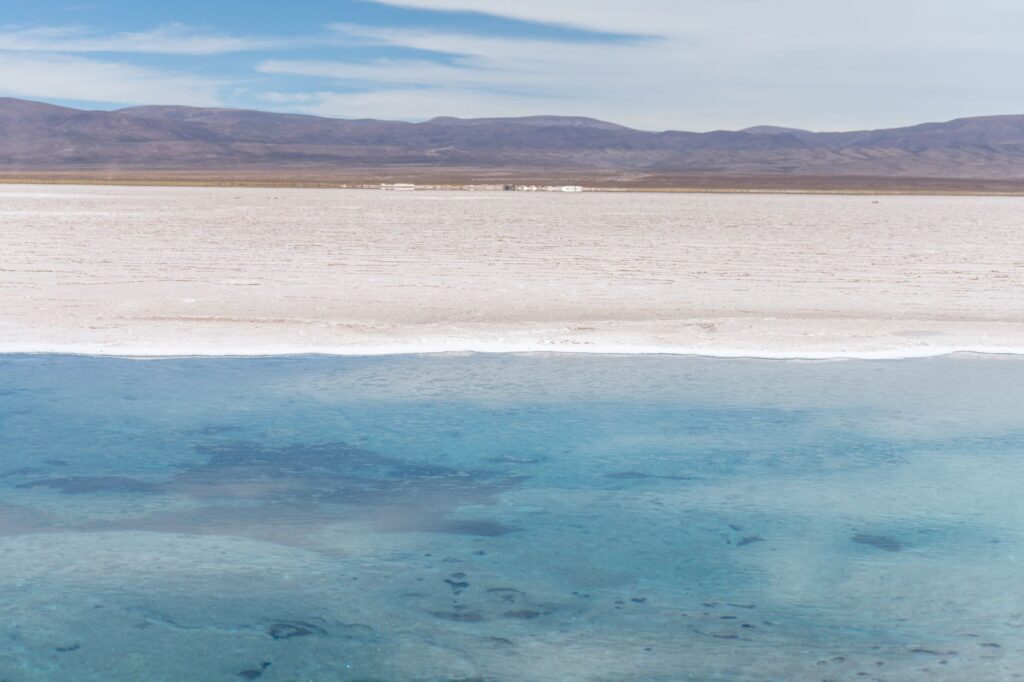
Traversing the Puna in overland style is, above all, an exercise in visual archaeology. With every kilometer, the landscape shifts with unsettling aesthetic violence. Mountain ranges follow one another like petrified waves of reddish, greenish, and yellowish tones, mute testimony to ancient tectonic processes and intense volcanic activity. The Atacama salt flats, Salinas Grandes, or brackish water springs welling up in the middle of nowhere serve as geological milestones that command equal respect and admiration.
In this high-altitude ecosystem, flora and fauna have developed fascinating survival strategies. Bofedales—small Andean oasis ecosystems irrigated by subterranean snowmelt—act as biodiversity magnets where travelers can spot pink flamingos, wild vicuñas, and red foxes. Respectful observation of these species constitutes a fundamental pillar of contemporary expeditions, guided by the overarching premise of leaving no trace other than fleeting tire tracks on mineral dust.
The Human Pulse: Communities Resisting and Dialoguing with the Wind
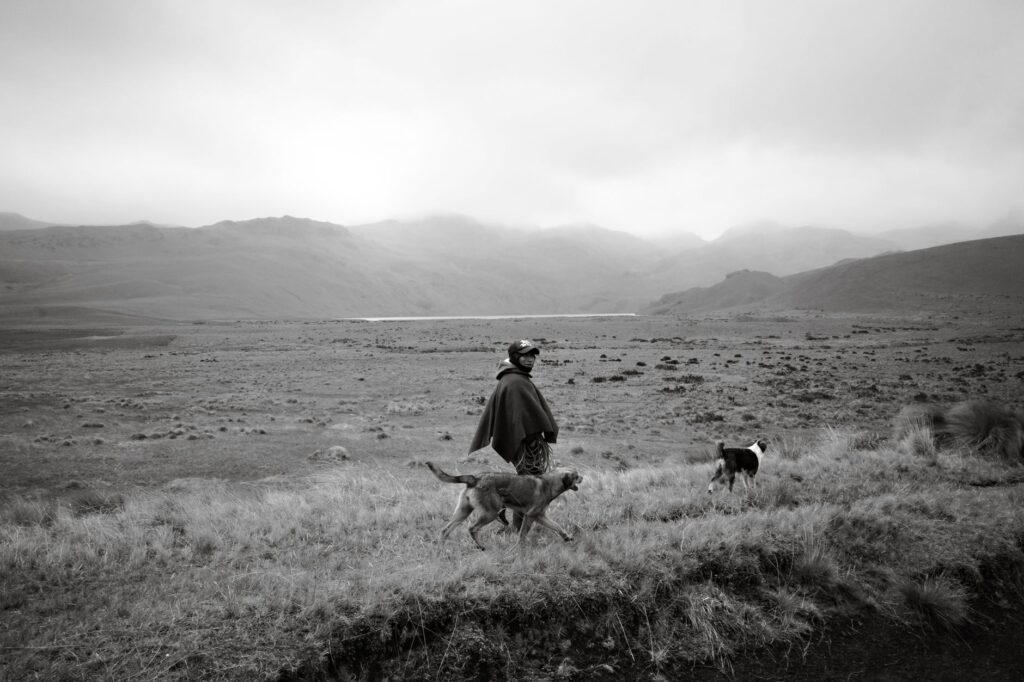
It would be a monumental error to view the Puna as an uninhabited desert. In mountain folds and around scarce freshwater sources, pastoral communities and indigenous peoples keep alive a cultural legacy that defies climatic hostility. Subsistence economies based on camelid herding and Andean potato cultivation intertwine with a worldview where the Pachamama is not a resource to be exploited, but a tutelary divinity with whom a constant pact of reciprocity is established.

The high plateau does not tolerate haste; it demands an acclimatization period that is both physical and spiritual, a mandatory pause to attune with the earth’s mineral heartbeat.
New tourism proposals presented in venues like FIT aim to structure this bond from a perspective of mutual respect and fair remuneration. Far from ethnographic voyeurism, planned overland routes encourage horizontal exchange, allowing travelers to stay in community outposts, taste traditional dishes based on llama meat and quinoa, and understand firsthand the daily challenges of inhabiting the roof of America.
Engineering and Logistics: The Invisible Challenges of High Mountains
Behind the apparent simplicity of an altiplano journey lies complex logistical machinery involving weather planning, satellite mechanical assistance, and rigorous health safety protocols. Driving above four thousand meters requires specific technical expertise: engines lose power due to lower oxygen concentration, tires demand variable pressures depending on terrain, and orientation can become challenging due to the absence of conventional road markers.
The guides and drivers leading these expeditions act as true route captains, capable of reading subtle shifts in atmospheric pressure, anticipating summer storms during the dry season, or plotting alternative routes when rivers flood or rocks slide. This technical competence grants passengers the peace of mind needed to surrender entirely to the aesthetic enjoyment of the landscape.
Aesthetics of the Horizon: Photography and Contemplation on the Plateau
For the trained eye, the Puna offers one of the most powerful luminous experiences on the planet. Altitude and extreme atmospheric dryness eliminate coastal haze, generating sharp shadows, violent contrasts, and sunsets of chromatic intensity that push the limits of any photographic sensor. The silhouettes of extinct volcanoes cutting against a sky shifting from magenta to deep indigo are indelible postcards justifying hours of road travel.
The value proposition of overland expeditions lies precisely in granting the necessary time for contemplation. It is not about accumulating sunsets on a checklist, but about halting movement in the middle of an infinite pampa, turning off the engine, and allowing absolute silence to penetrate the senses—an increasingly scarce luxury in the hyperconnected twenty-first century.
Practical guide
How to get there: The usual starting point for overland expeditions into the Argentine Puna is the city of Salta or San Salvador de Jujuy, both connected via regular flights from Buenos Aires. From there, operators coordinate the start of journeys in specialized 4×4 vehicles.

Best time to visit: April through November offers the most stable season, characterized by clear skies and low rainfall probability, though nighttime temperatures can drop significantly below freezing.
Health and acclimatization requirements: It is essential to allow at least two days of acclimatization in towns located between 2,000 and 3,000 meters (such as Purmamarca or Cachi) before ascending sectors exceeding 4,000 meters. Constant hydration is recommended along with prior medical consultation.
Recommended packing: Layered technical clothing (onion system), windbreaker outerwear, sturdy trekking boots, broad-spectrum sunscreen, high-category UV-certified sunglasses, and lip balm.
Sustainability: Prioritize operators with neutral environmental impact certifications, consume local products, and strictly adhere to leave-no-trace principles in protected areas.

The Echo of the Road: When Travel Becomes Inner Transformation
Some journeys conclude when the vehicle stops at the final destination, while others continue to resonate in memory long after returning to urban asphalt. The Argentine Puna undoubtedly belongs to the latter category. Bidding farewell to white salt flats and horizons where earth and sky merge into a single mineral substance, travelers understand that the true conquest was not the distance covered, but the inner stillness acquired.
The high-altitude desert does not empty man; on the contrary, it strips away the superfluous and restores the exact measure of his place in the world.
In this delicate balance between the audacity of overland exploration and reverent respect for nature and its inhabitants lies the enduring validity of a travel ethos that champions wonder as its primary engine. New routes toward the high plateau are not merely commercial offers; they are bridges extended toward the purest, most resilient part of our geography, invitations to rediscover the planet through the lens of slowness, beauty, and truth.
Source in EN: Ladevi