
Introduction to the iron bridge between two oceans
The narrow strip of land linking North and South America has been, since the era of Iberian exploration, the epicenter of commercial ambition and geographical challenge. Amidst the dense jungles, rushing rivers, and unforgiving climate of Panama, one of the most audacious engineering feats in modern history was erected in the mid-19th century: the Panama Railroad. This transcontinental railway not only predated the famous interoceanic canal by more than half a century, but it also laid the logistical and human groundwork necessary to tame a landscape that once seemed impassable. Analyzing its current layout and contemporary significance means understanding how rail transport remains a vital artery for global connectivity, adapting to 21st-century cargo flows without losing the pulse of its nineteenth-entury legacy.
The geopolitical context driving its construction responded to the California Gold Rush, a phenomenon that urgently demanded rapid, secure transit between the Atlantic and Pacific Oceans. Navigating around Cape Horn involved months of perilous voyaging, while crossing the Panamanian isthmus on mule-back or in wooden pirogues proved unsustainable for the surging volume of travelers and freight. Government concessions, American capital, and a multi-ethnic workforce composed of Chinese, Jamaicans, Irishmen, and locals shaped a seventy-seven-kilometer track that defied mortality and yellow fever. Today, traveling along its tracks is an immersion into a corridor where high-tech logistics engage in direct dialogue with the vestiges of an epic past.
The original layout and the unrelenting geography of the jungle
Overcoming the isthmus required charting a route that avoided the steepest grades and impassable swamps. Engineers John Trautwine and George Totten faced a capricious topography where the rainy season transformed gentle streams into destructive torrents. Every kilometer won from the jungle represented a victory against subtropical vegetation that seemed to devour wooden ties and earthworks almost as soon as they were laid. The initial technical solution demanded the massive importation of materials from Europe and the United States, turning the project into a pioneering testing ground for railway logistics under extreme conditions and severe tropical climates.
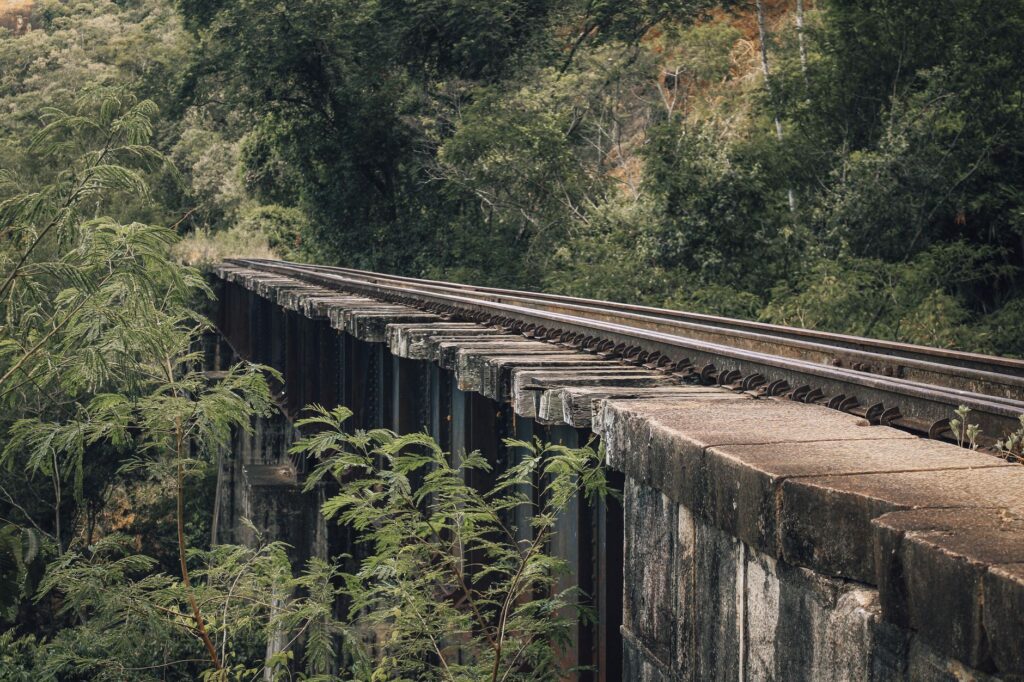
The environmental and human toll of these works left an indelible mark on the region. Building the railway was not merely an exercise in topographic alignment, but a stark reminder of human vulnerability in the face of tropical pathogens and geographical isolation. Yet, once the line was completed in 1855, transit time between both oceans was reduced to under four hours—a revolutionary milestone for the era. Traces of that foundational infrastructure can still be observed in certain stretches of the current route, where hand-cut stone foundations resist the relentless onslaught of humidity and saline corrosion.
The transition to the modern era and coexistence with the Canal
Upon the inauguration of the Panama Canal in 1914, many predicted the obsolescence of the transcontinental railway. History, however, proved them wrong. Far from being mutually exclusive, both infrastructures developed an essential symbiotic relationship crucial for multimodal transport. By the late 20th century, the concession granted to private operators enabled a comprehensive modernization that included the installation of high-specification rails, the introduction of high-power diesel-electric locomotives, and the optimization of marshalling yards on both coasts, directly connecting the ports of Balboa and Colón.
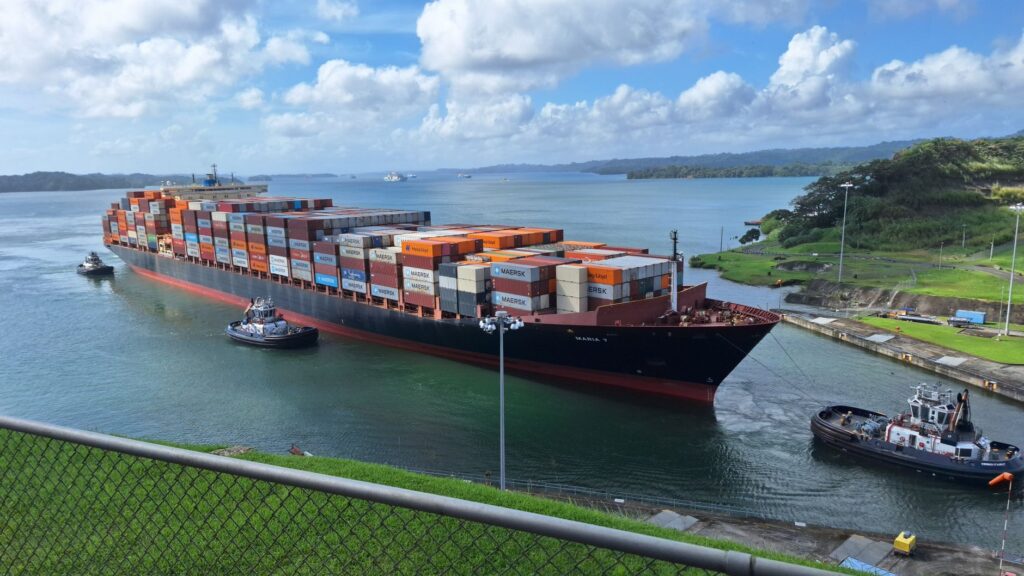
This symbiosis was further consolidated with the introduction of specialized container transport. While mega-container ships transit the canal locks, the railway offers a high-speed complementary alternative for priority cargo, reducing transfer times and easing congestion in the waterways during periods of heavy seasonal traffic. Port terminals operate in synchronized harmony with freight trains, allowing a container unloaded on the Atlantic side to be shipped toward the Pacific within hours, thus streamlining international supply chains.
Railway architecture and station design in the tropics
The architectural heritage linked to the Panama Railroad reflects a functional adaptation to the climatic demands of the intertropical zone. Historic stations—though many have been transformed or replaced by contemporary logistics hubs—followed canons where wide overhangs, cross-ventilation, and treated hardwoods mitigated suffocating heat and torrential rainfall. The railway aesthetic blended American industrial solidity with the necessity of blending into the surrounding green landscape, creating urban landmarks that structured the growth of intermediate settlements along the route.
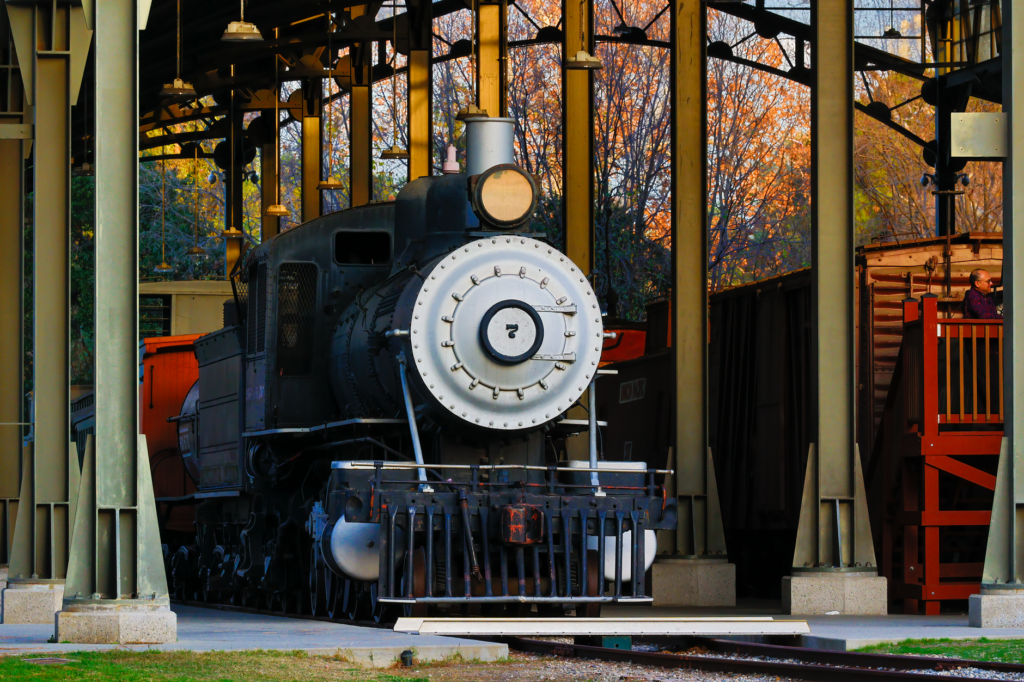
Today, passenger and freight terminals combine operational sobriety with advanced rail traffic control systems. Dispatch centers supervise every kilometer of track through telemetry and satellite communication, ensuring safety in a corridor where heavy freight traffic density demands millimeter precision. The preservation of certain heritage elements, such as vintage steam locomotives displayed in workshop yards, bears witness to the technological evolution experienced by this corridor over more than a century and a half of uninterrupted operations.
Intermodal logistics and the pulse of contemporary commerce
The daily operation of the Isthmus Railway is a masterclass in multimodal logistics integration. Unlike continental rail lines dedicated to long-distance hauls, this corridor operates as a high-capacity land bridge linking two seas in a journey of approximately one hour. Double-stack container trains—a technical rarity across much of Latin America due to the clearance limitations of traditional tunnels and bridges—run regularly along this route thanks to structural upgrades undertaken in recent decades.
Operating companies manage freight flows originating from major global maritime trade lanes, connecting Asian markets with the United States East Coast and Europe. The efficiency of this land bridge mitigates bottlenecks caused by water restrictions in the canal or seasonal spikes in maritime traffic. Thus, the railway functions as a strategic logistics safeguard for the global economy, proving that nineteenth-century infrastructure can be successfully reinvented to sustain twenty-first-century commerce.

The traveler’s experience: crossing the jungle on rails
For the contemporary traveler, the Panama Railway offers a unique perspective that transcends mere touristic utility. The executive train running daily along the route allows passengers to witness the transition between the bustling urban activity of Panama City and the pristine wilderness of Soberania National Park and Gatun Lake. The railcars, restored with a nod to mid-twentieth-century elegance and equipped with large panoramic windows and outdoor observation platforms, invite a contemplative experience of the natural environment and the rich biodiversity inhabiting the canal banks.
The train journey across the isthmus is not a conventional commute, but a voyage through the superimposed layers of American history, where yesterday’s steam converses with the metallic roar of modern logistics.
Throughout the trip, passengers cross iron bridges spanning historic rivers and glide alongside waters where giant merchant ships navigate. Specialized guides and onboard signage contextualize the importance of the surroundings, explaining how the tropical rainforest has reclaimed spaces once altered by human intervention, creating a delicate balance between heavy engineering and environmental conservation. This rail experience has established itself as one of Latin America’s most singular travel journeys, prized by those seeking to understand the geographical essence of the continent beyond standard routes.
Practical guide
Planning a journey and an analytical exploration of the Isthmus Railway requires keeping in mind several fundamental logistical and operational guidelines to ensure an optimal experience.
Routes and schedules: Passenger services generally operate from Monday to Friday with morning departures from Panama City (Albrook Station) toward Colón, and afternoon return trips. It is essential to check current schedules in advance, as operational priority remains subject to freight train traffic.
Ticket reservations: Tickets can be purchased online or directly at station ticket counters. Advance booking several weeks ahead is strongly recommended, especially during peak tourism seasons, due to high demand for seats in the panoramic observation cars.
Luggage and restrictions: The train accommodates standard hand luggage. Given the short duration of the trip, heavy bags are not checked, but visitors should verify current regulations regarding oversized items or professional photography gear.
Multimodal connection: Upon arrival at the Colón terminus, secure ground transportation must be prearranged to reach free zones or historical landmarks, avoiding improvisation in restricted-access port zones.
Climate and attire: Conditions on the isthmus are hot and humid year-round. Lightweight cotton clothing, comfortable walking shoes for station platforms, and rain protection are strongly advised, regardless of the meteorological season.
Visual epilogue by Gatun Lake
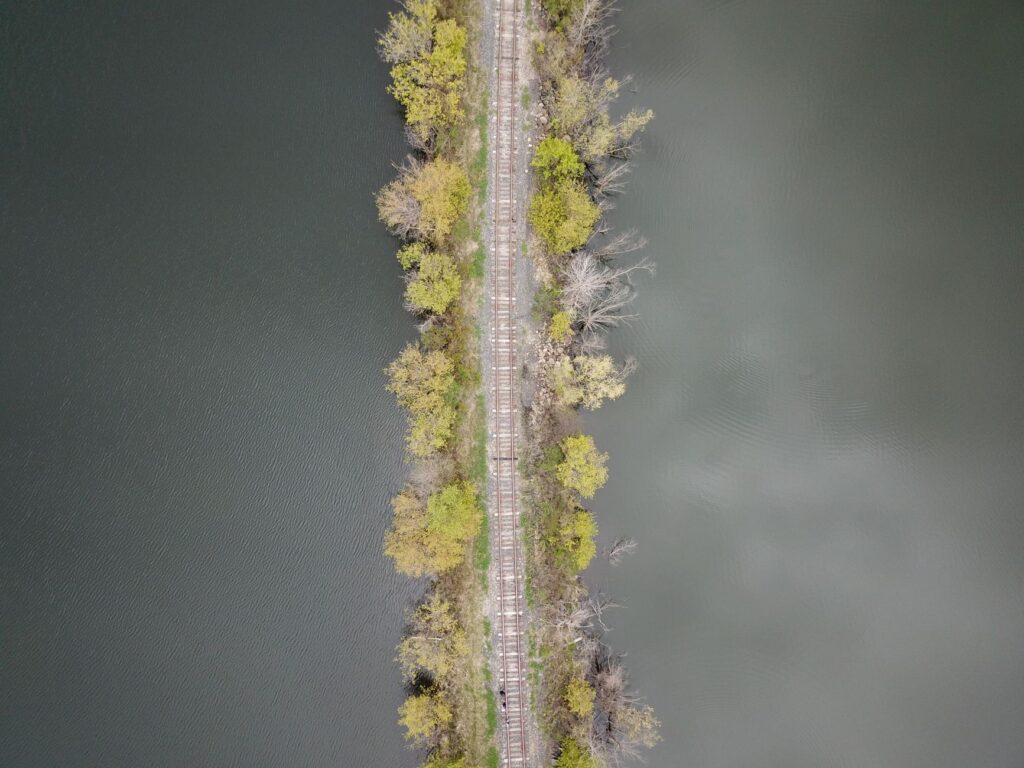
At dusk, when the golden tropical light reflects across the calm waters of Gatun Lake, the passage of a freight train along the embankment evokes a sense of timelessness. The metallic rumble of wheels against steel rails merges with the distant call of jungle birds and the low hum of a passing cargo vessel. In that fleeting moment, the hostile geography that once claimed countless lives is revealed as tamed by technical perseverance and human vision. The Panama Isthmus Railway thus remains steadfast upon its ties, an indelible testament that connecting worlds has always been engineering’s noblest task.