
The Invisible Scar Beneath the Northern Waves
There are engineering works whose greatest triumph lies not in what they display to the sky, but in the profound and perpetual silence with which they defy nature. In the northernmost reaches of Japan, where the frigid waters of the Sea of Japan collide with the Pacific Ocean through the Tsugaru Strait, lies one of the most complex and least celebrated arteries of global transport: the Seikan Tunnel. Spanning a total length of 53.85 kilometers, with more than 23 of those miles plunging beneath the seabed at a maximum depth of 240 meters below sea level, this structure represents a foundational milestone in the connectivity of the Japanese archipelago. It is not merely a conduit of concrete and steel, but a hyper-technological subterranean ecosystem where volcanic geology, constant seismicity, and hydrostatic pressure converge in a delicate balance maintained twenty-four hours a day.
For decades, the crossing between the main island of Honshu and the northern island of Hokkaido depended entirely on the ferries of the Seikan line. However, frequent storms and, most tragically, the sinking of five vessels during Typhoon Marie in 1954—which claimed the lives of more than 1,500 people—accelerated the search for an underground alternative. The question guiding engineers at the time was not simply whether technology permitted drilling such a distance underwater, but whether the structure would survive a seabed fractured by active tectonic faults and unpredictable marine currents. The result was an excavation that took over two decades to complete, marked by unexpected floods, saltwater seepage, and the continuous stretching of twentieth-century civil engineering limits.
Hostile Geology and the Art of Submarine Drilling
Drilling the Tsugaru Strait required understanding that the earth beneath the sea is not a solid, homogeneous block, but an unstable mosaic of sedimentary rocks, volcanic tuffs, and permeable faults. Unlike the Channel Tunnel, which cuts through layers of impermeable and uniform chalk, the Seikan was built through highly fractured formations where high-pressure water constantly threatened to collapse the excavated galleries. To neutralize this danger, engineers resorted to massive injections of cement grout and stabilizing chemical agents, a meticulous process that often advanced at a pace of just a few centimeters per day.
Water control is, in fact, the operational heart of the tunnel. Two main drainage shafts, located at the stations of Tappi Kaitei and Yoshioka Kaitei—formerly the world’s most unique underground railway stations and now converted into critical emergency points—continuously pump thousands of liters of filtered water to prevent moisture from compromising the tracks and electrical systems. This invisible battle against marine infiltration requires permanent inspection via fiber-optic sensors and acoustic analyses that detect any micro-fissure in the reinforced concrete lining before it poses a structural threat.
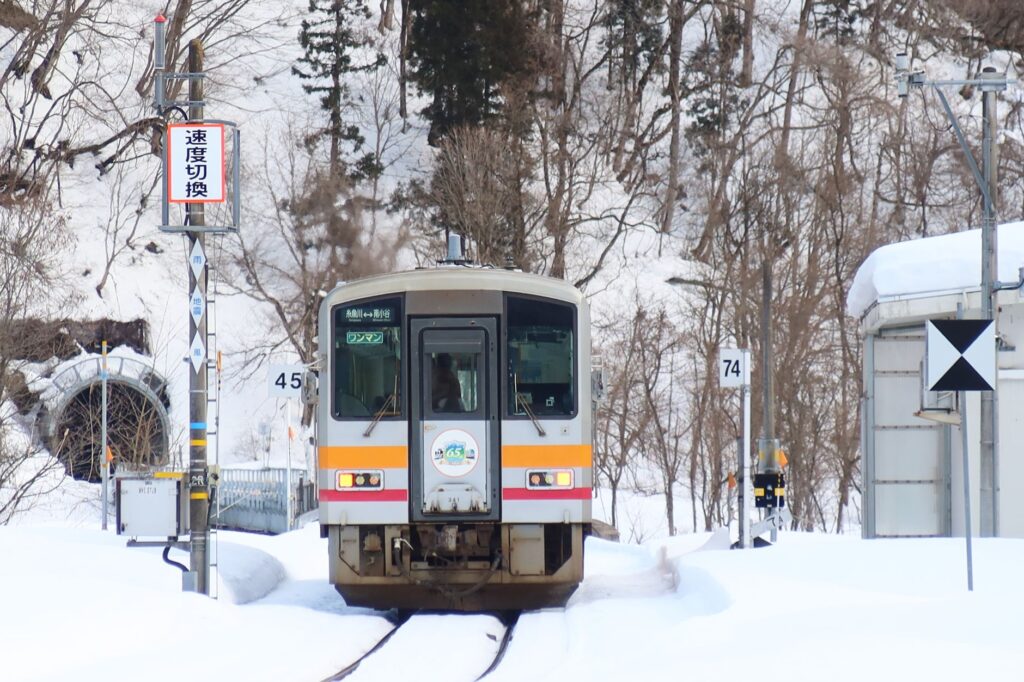
The true measure of underground engineering does not lie in the volume of rock removed, but in the invisible capacity to keep the ocean’s fury at bay through decades of operational silence.
The region’s seismicity adds another layer of technical complexity. Northern Japan sits in one of the most tectonically active zones on the planet, prompting the design of a structure capable of withstanding major earthquakes without suffering catastrophic deformation. The railway tracks are mounted on floating concrete slabs and elastic damping systems that absorb both the vibrations generated by high-speed convoys and sudden tectonic shifts. Every metallic component, from anchor bolts to high-tensile rails, has been selected to resist corrosion caused by saline moisture and extreme mechanical fatigue.
The Coexistence of Dual Gauges and the Arrival of the Shinkansen
The operational history of the Seikan is also the chronicle of constant railway evolution. For its first twenty-eight years of operation, the tunnel was used exclusively by conventional passenger trains and freight services running on narrow-gauge tracks (1,067 mm). However, the national ambition to extend the legendary Shinkansen network—Japan’s bullet train—to the city of Hokkaido’s Hakodate posed an unprecedented logistical challenge: how to allow high-speed trains, which require standard international gauge tracks (1,435 mm), to share the same underwater tube with heavy diesel freight trains without collapsing the system.
The solution adopted was the implementation of a triple-rail track, an ingenious design that superimposes both gauges inside the tunnel. This was complemented by the development of precision traffic control technology, as the difference in speed and aerodynamics between a bullet train crossing the strait at over 140 kilometers per hour—speed restricted inside the tunnel due to air pressure and safety reasons—and a heavy freight train generates shock waves capable of destabilizing convoys if not managed with absolute synchronicity.

To mitigate the phenomenon known as piston compression wave—the sudden buildup of air in front of the train upon entering the narrow tunnel—the entry portals feature flared designs and relief shafts that dissipate atmospheric pressure. This technical deployment ensures that the daily transit of passengers and cargo proceeds with a smoothness that completely masks the extreme violence of the natural forces operating mere meters from the carriage windows.
The Logistics of Maintenance in Perpetual Darkness
When the last daylight fades beyond the portals of Honshu or Hokkaido, the Seikan Tunnel enters its most critical phase: nighttime maintenance. Unlike surface railway lines, where repairs can be scheduled with some flexibility, the underwater tunnel operates under a strict time window wherein commercial trains halt operations to make way for inspection and conservation machinery.
Ultrasonic rail inspection: Automated equipment patrols every kilometer of track during the early morning hours to detect micro-cracks invisible to the human eye.
Continuous hydrological control: Real-time monitoring of water inflow rates into sumps to prevent unexpected saturation.
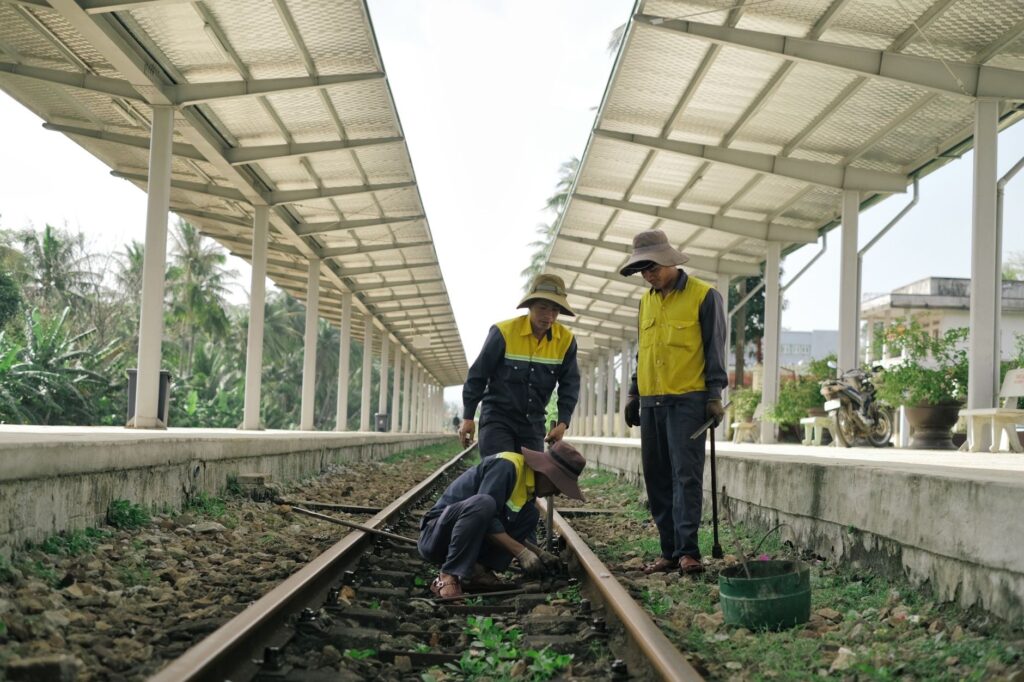
Electrical system verification: Checking high-security signaling circuits and emergency ventilation systems that guarantee air renewal in the event of an incident.
Fire suppression system maintenance: Reviewing high-pressure water pipes and pressurized shelters deployed along the route.
This silent army of technicians and engineers works in absolute isolation, guided by safety protocols as strict as those of a nuclear power plant. Supply logistics and the rapid evacuation of personnel in an emergency depend on a network of parallel service and rescue galleries, connected to the main tunnel by watertight doors that isolate any affected sector within seconds.

Economic and Territorial Impact on the Northern Island
The opening of the Seikan Tunnel was not merely a triumph of civil engineering, but a profound transformation in the demographics and economy of Hokkaido. Before its inauguration in 1988, the island lived in relative isolation from the economic core of Tokyo, dependent on an air transport system vulnerable to frequent winter snowfalls and slow, costly maritime shipping.
With the arrival of rail connectivity, Hokkaido’s agricultural goods, fishery products, and manufacturing industry found a direct and punctual route to Honshu markets, drastically cutting delivery times. Years later, the advent of the bullet train consolidated this integration, allowing travelers to cover the distance between the capital and southern Hokkaido in just over four hours. However, this flow has also posed demographic challenges, accelerating the exodus of young people toward southern metropolitan areas and forcing local communities to rethink their economic development strategies around sustainable tourism and the enhancement of their natural heritage.
Practical guide
How to get there: The primary access to the Seikan Tunnel is via the Hokkaido Shinkansen line. The departure station in Honshu is Shin-Aomori, directly connected to Tokyo via the Tohoku Shinkansen service. The journey traverses the underwater tunnel before arriving at Shin-Hakodate-Hokuto station in Hokkaido.
When to travel: Service operates year-round, but winter months (December to February) offer exceptional snowy landscapes in the north, though checking weather alerts for potential regional transfer restrictions is advisable.

Ticket planning: Reservations for the Shinkansen through the tunnel are mandatory. It is recommended to purchase tickets weeks in advance, especially during periods of high domestic mobility such as Golden Week or New Year holidays.
Supporting infrastructure: In towns near the tunnel portals, such as Aomori and Hakodate, visitors will find technological exhibition centers and railway museums detailing the construction history and geological challenges overcome during excavation.
The Eternal Echo in the Depths of the Strait
Ultimately, the Seikan Tunnel transcends its utilitarian function as transport infrastructure to become a monument to human perseverance against the vastness of the natural environment. While modern trains cross the invisible border between two insular worlds in mere minutes, beneath the muffled roar of wheels on steel persists the steady murmur of an ocean that never rests. It is in this contrast between the controlled velocity of technology and the blind immensity of submarine geology that the true value of the work is revealed: an iron bridge cast in shadows, destined to unite the destinies of a country fragmented by water yet stitched forever by the will of its engineering.