
Introduction to the Forgotten Arteries of the Gulf of Guinea
The geography of equatorial Central Africa has historically imposed an unyielding law of isolation upon its coastal and interior communities, where the dense canopy of pristine rainforest and the capricious network of estuaries and lagoons drastically hinder the layout of continuous overland infrastructure. Across this vast mosaic of mangroves, sand, and clay deposits, the transport of heavy cargo and passengers has depended for decades on unpredictable river routes or costly air connections. Yet in the western strip linking the foothills of the lower basin to the Atlantic ports of Gabon, a penetrative railway system has acted as the true backbone of the regional economy. These are not merely metallic tracks laid upon firm earth, but complex engineering corridors winding through waterlogged terrain, withstanding the onslaught of torrential rains and constant saline corrosion.
The study of this infrastructure reveals a fascinating narrative of human adaptation to environmental hostility. Far from the large commercial rail networks of the continent’s southern regions, the branches traversing the departments of Ogooué-Maritime represent a superlative technical challenge. Every kilometer of track won from the swamp demands meticulous maintenance, a steady supply of stone ballast transported from distant quarries, and rigorous monitoring of the wooden and concrete foundations supporting the passage of convoys laden with tropical timber, minerals, and essential supplies for isolated communities. This report examines the operational, social, and economic reality of one of the most singular and least documented rail connections in the African continent.
The Genesis of the Layout: Between Inundated Jungle and Atlantic Coast
To understand the logistical complexity of the Omboué branch and its ramifications toward the Nkomi lagoon complex, one must look back to the early decades of the 20th century, when colonial powers and timber companies conceived the urgent need to extract coveted okoume logs from the heart of the dense forest down to Atlantic shipping points. The initial tracks, constructed crudely with local tropical hardwood ties and lightweight rails imported from Europe, suffered constant deformations due to the soil’s hydrological saturation during the rainy season. The gauge, conceived under strict criteria of extractive profitability, frequently ignored the region’s hydrological dynamics, leading to frequent structural collapses and the temporary isolation of entire settlements.

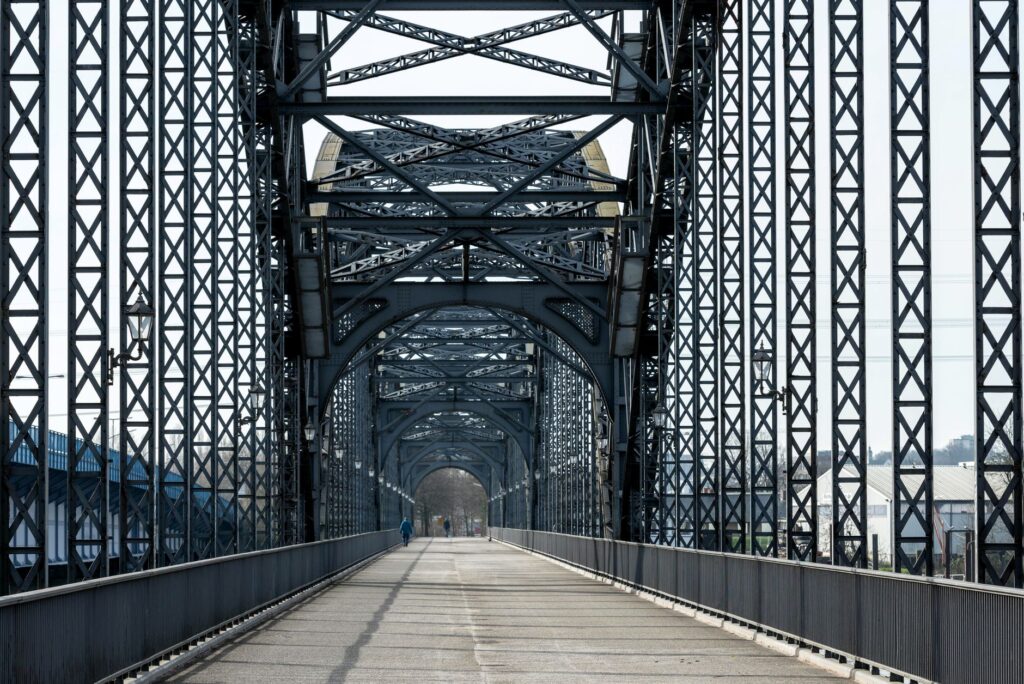
Over the decades, the transformation of these lines toward more robust industrial standards demanded the massive replacement of plant foundations and the introduction of elevated embankments made of limestone and compacted clay. Local and foreign engineers had to devise innovative solutions to prevent the terrain from yielding under the weight of diesel locomotives. Large-capacity culverts were installed, and lattice steel bridges were designed to withstand the tremendous pressure of seasonal floods from the Ogooué River. This technical evolution was not without immense human and economic sacrifices, shaping a landscape where industrial footprints coexist tensely with exuberant and fragile biodiversity.
The railway in this region is not a mere instrument of economic transit; it is the artificial dike enabling demographic survival against the relentless advance of mangrove and tide.
Daily Logistics: The Pulse of Mixed Convoys
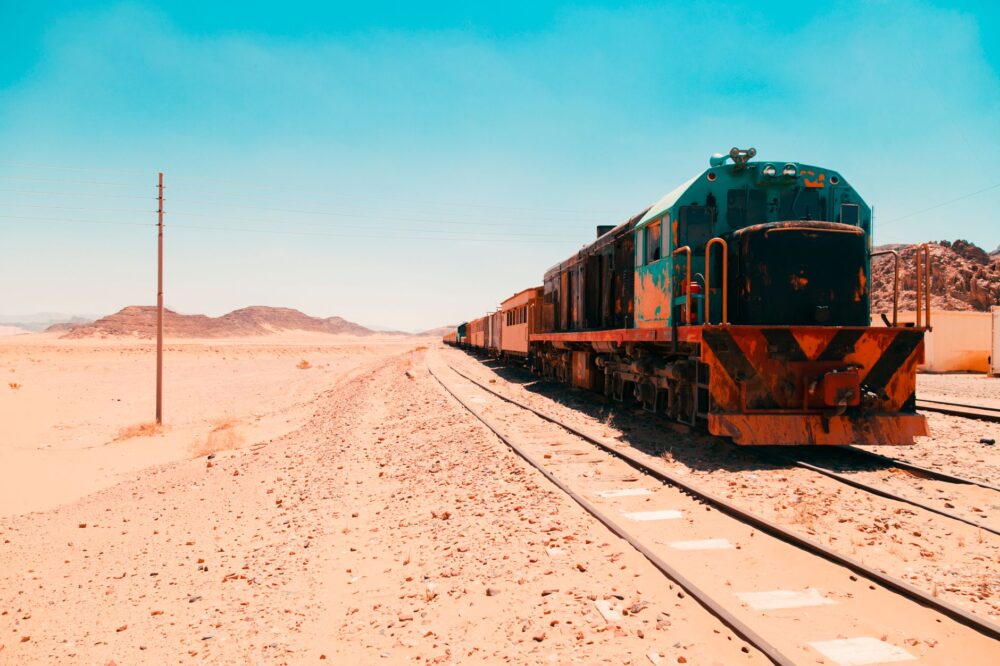
Today, the daily operation of this railway system relies on a fleet of veteran yet extremely robust locomotives capable of operating under conditions of extreme humidity and elevated temperatures. Unlike European high-speed trains or South Africa’s heavy-haul freight corridors, service in this part of Gabon operates under a regime of mixed convoys. Flatbed cars intended for sawn timber transport, hopper cars carrying gravel for track maintenance, and passenger coaches adapted with wooden benches and natural ventilation are coupled onto the same train, connecting jungle outposts with coastal markets.
This improvised multimodality responds to an imperative need: the absence of parallel paved roads for hundreds of kilometers around makes the train the only reliable mass transport medium during the months when dirt roads turn into impassable mud pits. Station masters and train drivers operate in an environment where radio communications frequently fail due to jungle density and tropical thunderstorms, forcing them to maintain traditional safety protocols based on strict punctuality and manual switch control. Every journey is a test of endurance where the skill of local operators proves just as decisive as the mechanical power of the engines.
Architecture of Resistance: Bridges, Embankments, and Saline Corrosion
The greatest enemy of railway infrastructure in this Atlantic strip is not solely the weight of cargo, but the relentless chemistry of the environment. The proximity of the Atlantic Ocean, combined with vast expanses of brackish water in interior lagoons, generates a highly corrosive marine environment that unceasingly attacks metallic bridge components, rail fastenings, and rolling stock chassis. Maintenance crews must apply anticorrosive treatments almost permanently, scraping away oxidation and replacing bolts and splice bars before material fatigue causes a catastrophic derailment.

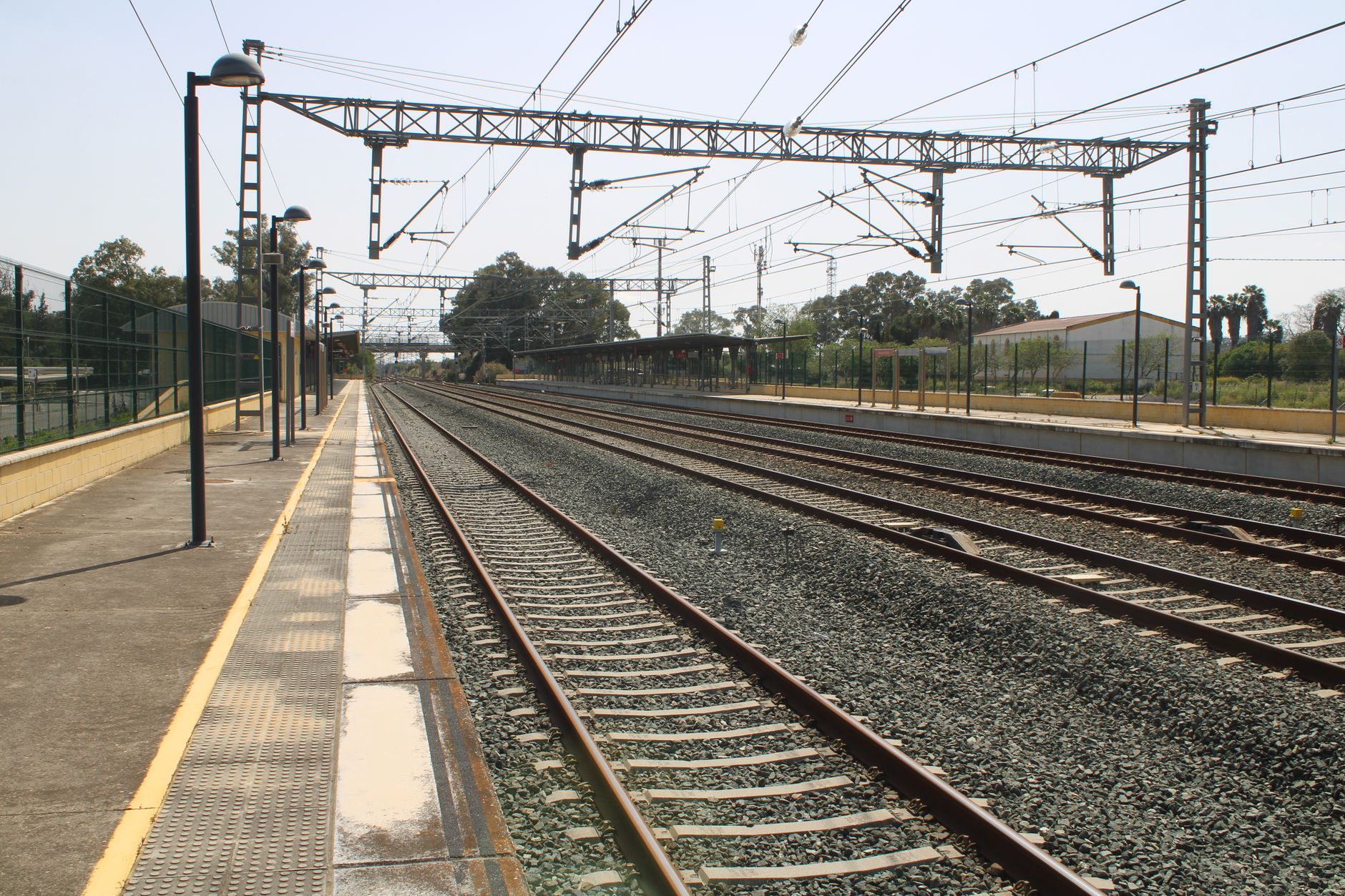
Likewise, the engineering of embankments on clayey and mobile soils requires complex geotechnical stabilization techniques. In many sections, the track literally floats on a bed of geotextiles and superimposed layers of imported volcanic rock that prevent the ballast from sinking into the mud. Visual inspections are conducted on foot or via adapted track vehicles, patrolling every meter of the layout in search of differential settlements caused by underground erosion or local fauna activity. This continuous silent conservation labor ensures that the flow of freight remains uninterrupted.
Socioeconomic Impact: Communities at the Track’s Edge
The presence of the railway line has definitively shaped the demography and social structure of the settlements along its route. Far from being mere transit points, secondary stations function as the true nerve centers of commercial and community life. Around each improvised flag stop, informal markets unfold where local farmers and lagoon fishermen trade cassava, plantains, smoked fish, and non-timber forest products with train passengers and track maintenance crews.
For riverine communities, the passage of the daily convoy sets the temporal rhythm of the day. Children gather near the track to wave at engineers, while local merchants take advantage of brief technical stops to load perishable goods destined for coastal urban centers. However, this dependency model also generates economic and social tensions, especially regarding the distribution of benefits generated by the timber industry and the lack of alternative investments in local sanitary and educational infrastructure to accompany transport corridor development.

Sustainability and Conservation in the Green Frontier
The balance between the industrial activity of railway transport and the preservation of the rich ecosystems crossed by the branch constitutes one of the region’s most complex environmental debates. The tracks traverse areas of high ecological value serving as habitats for protected species of forest mammals, water birds, and dense endemic flora. The opening of transport corridors has historically facilitated access by poachers and illegal loggers to previously inaccessible areas of pristine jungle, increasing pressure on local wildlife.
In response to these challenges, various government agencies and international organizations collaborate in implementing stricter environmental management regulations for transport concessionaires. Night traffic circulation schedules have been restricted to reduce accidental collisions with wildlife, and timber companies are required to certify the sustainable origin of transported wood. Nonetheless, effective oversight in such remote and inaccessible areas remains a colossal challenge, where local authorities’ willpower frequently clashes with a scarcity of logistical resources and trained personnel.
Practical guide
How to get there: The primary access to the rail and lagoon region is through Port-Gentil International Airport, from where travelers can connect to the starting points of railway and river services toward the interior using coordinated local transport.
Best time to visit: Planning trips during the relative dry seasons (December to February and June to August) is strongly recommended, when rainfall decreases and the operational conditions of tracks and adjacent roads are more stable.
Permits and formalities: Transit through operational railway zones and forest enclaves requires formal authorizations issued by ministerial authorities and transport concessionaires. Official documentation must be in order before initiating any journey into the interior.
Transport logistics: No regular luxury rail tourism services exist. Travel occurs via mixed freight and passenger trains, requiring high operational flexibility regarding potential delays derived from weather or technical conditions.
Health and safety: International yellow fever vaccination certificates are mandatory, along with recommended malaria prophylaxis. Extreme caution must be exercised with bottled drinking water and insect protection in mangrove and jungle areas.

Accommodation: Hotel supply is almost entirely limited to Port-Gentil and modest guesthouses in main administrative centers. Conventional tourist infrastructure does not exist in remote jungle outposts.
Recommended equipment: Lightweight long-sleeved cotton clothing, water- and mud-resistant hiking boots, moisture-protection systems for electronic gear, and a basic medical kit adapted for remote areas.
The Echo of the Whistle in the Green Immensity
As evening falls over the marshes of Omboué and the Atlantic breeze blends with the dense aroma of humid tropical vegetation, the distant sound of a diesel locomotive’s horn breaks the solemn silence of the landscape. That metallic echo, resonating through mangroves and dark lagoon waters, embodies the persistence of an umbilical cord refusing to be severed. Despite climatic challenges, relentless corrosion, and economic shifts, the railway branch continues fulfilling its silent mission to vertebrate a territory where nature imposes its own rules. It is the tangible testimony that engineering, when allied with a deep understanding of the terrain, can carve a viable path through Earth’s most impassable jungle labyrinth.