
Conquering the Driest Territory on the Planet
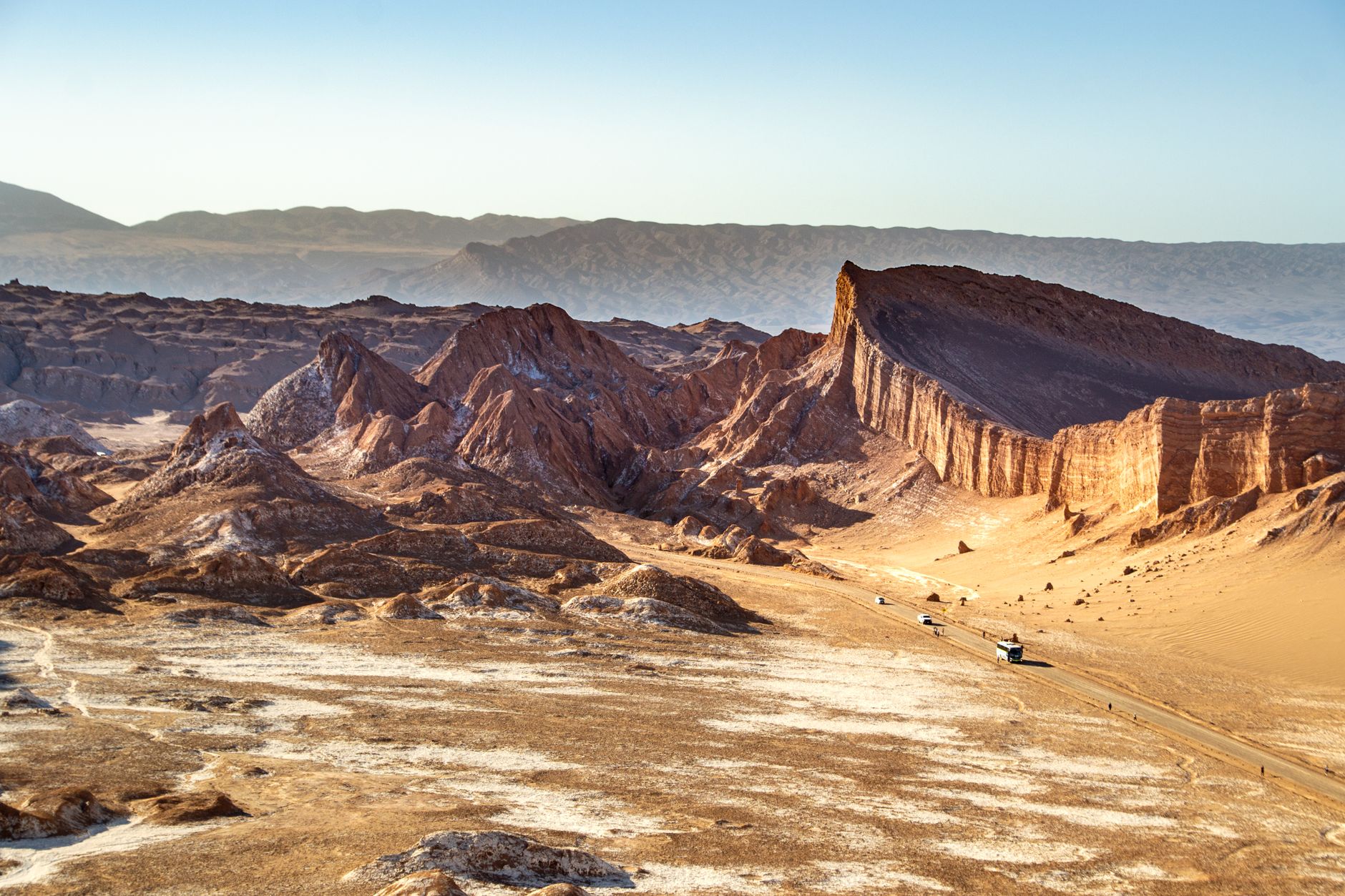
The Atacama Desert is not merely a vast expanse of minerals and crystal-clear skies; it is, above all, a direct challenge to the laws of physics and human logistics. During the second half of the 19th century, the saltpeter boom transformed this inhospitable tract into the economic engine of Chile and a cornerstone of South American commerce. In this context of extractive urgency and geographical isolation, the railway emerged not only as a transportation tool, but as the sole lifeline capable of connecting interior deposits with Pacific ports. The railway network linking Antofagasta with high-altitude mining centers represented one of the most audacious engineering epics on the continent, overcoming impossible grades and an absolute scarcity of fresh water.
Today, tracing the route of these historic convoys reveals how the landscape was shaped by iron and timber. The rail journey across northern Chile exposes a monumental industrial heritage, where abandoned stations and period machine shops evoke an era when steam and coal conquered extreme dryness. Far from being a mere relic of the past, the railway infrastructure of Atacama establishes the foundation for understanding the technological development of one of the most productive mining regions on the globe, where every wooden tie buried in the brine preserves the memory of thousands of workers from every corner of the world.
The Genesis of the Route: Between Guano, Saltpeter, and the Pacific
The urgent need to move tons of caliche toward the coast spurred the creation of private railway companies in the 1870s. The Antofagasta and Bolivia Railway Company (FCAB) consolidated itself as the structuring axis of a network that penetrated relentlessly into the desert pampa. British and Chilean engineers designing the route had to contend with an unforgiving terrain, where extreme thermal swings and saline corrosion tested both operators and rolling stock. Steam locomotives had to carry essential water supplies for their own boilers—a resource as valuable as the mineral they hauled back down to the loading docks.

This logistical deployment required millimeter-level coordination between receiving ports and nitrate offices located hundreds of miles inland. Intermediate stations were not mere stops, but veritable urban oases in the middle of nowhere, equipped with storage tanks, repair shops, and housing for railway personnel. The industrial architecture of these facilities, characterized by Oregon pine structures and corrugated galvanized iron, still withstands the test of time and wind erosion today, standing as a tangible testimony to a golden age of civil engineering applied to extreme environments.
Architecture of Isolation: Stations, Workshops, and Nitrate Camps
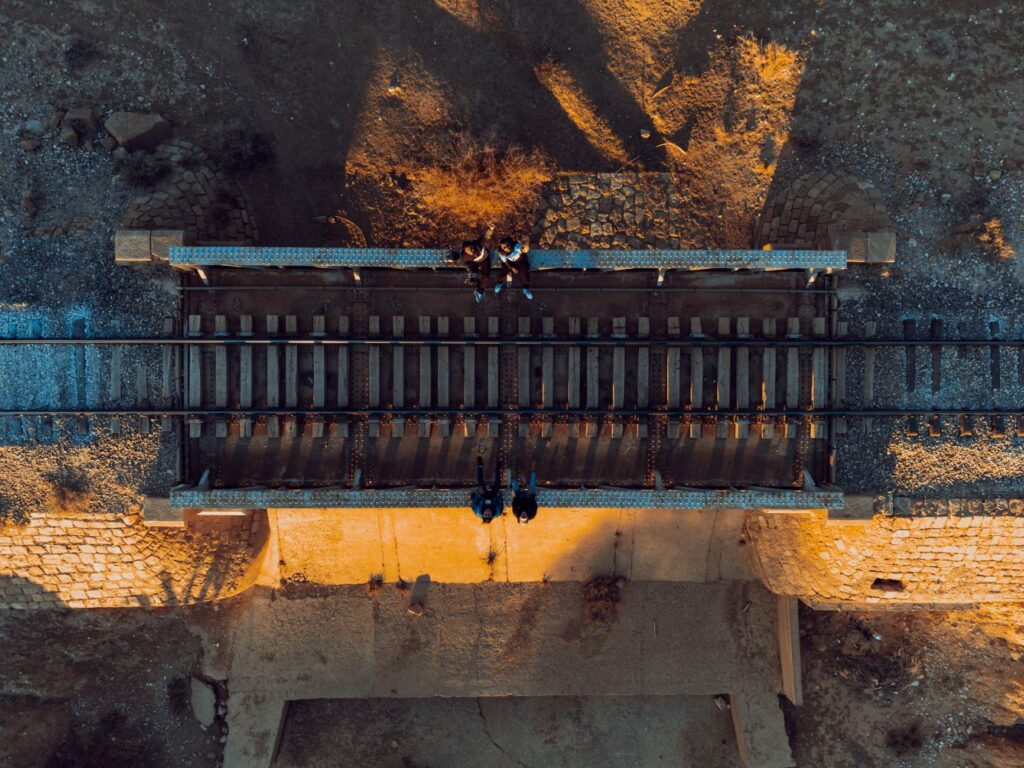
Exploring the railway traces in Atacama requires close attention to surviving infrastructure. Former nitrate camps, many now designated as sites of heritage interest, depended entirely on the regular arrival of the train. From the machine shops in Antofagasta to remote switch stands in the middle of the pampa, every component of the track responded to strict operational logic. Metal structures imported from Europe demonstrated surprising durability, adapting effectively to thermal expansion caused by the brutal temperature swings typical of the coastal and Andean desert.
The desert does not forgive improvisation; every kilometer of track laid over salt was a victory of technical precision over hostile vastness.
Preserving this railway heritage today faces numerous challenges, from scavenging to the relentless corrosive action of the environment. Nevertheless, local and international initiatives promote the valuation of technical archives and material remains. Railway preservation associations work tirelessly to document metal lattice bridges, viaducts, and turntables still dotting the landscape, ensuring future generations understand the magnitude of human effort that made connectivity possible under such adverse geographic conditions.
The Logistics of Water and Coal in the Heart of the Pampa
Keeping a railway line operational in an absolute desert required solving monumental logistical problems, with water supply being the most critical of all. Steam locomotives consumed colossal volumes of water pumped from distant mountain springs through miles of piping networks. This hydraulic system running parallel to the railway constituted, in its own right, an engineering work as complex as the track alignment itself. Without water, the system collapsed within hours; without coal imported from Wales or Lota, machinery ground to a halt against the grades of the pampa.
Railway traffic management under these conditions demanded absolute mastery of telegraphic communication and ironclad schedule discipline. Dispatchers coordinated single-track meets with millimeter precision, preventing collisions on stretches where visibility was impaired by dust storms or heat shimmering on the saline soil. This complex network of technical and human support transformed the Atacama Desert into a pioneering laboratory for modern industrial logistics in South America, whose operational lessons continue to be studied by transport and regional economy historians.
The Decline of Steam and the Shift Toward Contemporary Mineral Freight
With the gradual introduction of diesel engines in the mid-20th century and the definitive collapse of the synthetic nitrate international market, the Atacama railway had to reinvent itself entirely. Old steam locomotives were replaced by powerful internal combustion machines capable of hauling much heavier compositions toward new copper extraction centers. This technological transition allowed the infrastructure to survive obsolescence, adapting with agility to the demands of modern large-scale mining that drives Chilean and global economies today.

Today, freight trains continue to traverse the same historical corridors, hauling copper cathodes and industrial supplies under strict safety and efficiency standards. Although passenger traffic has been relegated to occasional tourist and commemorative trains, the iron backbone continues to beat strongly in the desert. The coexistence between archaeological vestiges of the nitrate past and cutting-edge mining trains constitutes one of the most eloquent images of historical continuity in Chilean territory.
Living Heritage and Railway Tourism in the Far North
Interest in industrial and heritage tourism has opened new avenues for valuing the Atacama railway. Specialized travelers and transport history enthusiasts arrive in northern Chile each year to tour accessible sections of the old track, explore site museums, and contemplate the majesty of the pampa from the rail perspective. This form of tourism not only invigorates local economies in interior communities, but promotes critical awareness regarding the conservation of material legacy defining the cultural identity of the region.
Cultural routes designed around the FCAB and its historical branch lines allow visitors to delve into the sub-history of mining camps, understanding complex social and labor dynamics characterizing the golden age of nitrate. Regional authorities and cultural foundations collaborate in signing heritage milestones, restoring emblematic stations, and creating educational itineraries connecting industrial past with environmental and touristic challenges of the current century.
Practical guide
Getting there: Antofagasta is served by Cerro Moreno International Airport (ANF), connected by daily direct flights from Santiago de Chile. From the terminal, all-terrain vehicles can be rented or private transport services used to access main railway and historical enclaves in the pampa.
When to go: Months between October and April offer the best meteorological conditions, with completely clear skies ideal for photography and outdoor exploration. Central hours of the day should be avoided due to intense solar radiation and high summer temperatures.
Logistics and local transport: Touring former railway alignments and interior nitrate camps requires a 4×4 vehicle, a reliable GPS navigation system, abundant drinking water, high-spectrum sunscreen, and appropriate clothing for extreme thermal shifts between day and night.

Accommodation: Hotel supply is concentrated mainly in the city of Antofagasta, featuring international-category establishments and full services. Inland, in smaller towns like Baquedano or María Elena, overnight options are very limited, so round-trip excursions from the coast are recommended.
Health and safety precautions: Extreme environmental dryness and altitude in certain pre-cordilleran sections require caution against dehydration and altitude sickness. Registering itineraries before venturing into areas far from main routes and strictly respecting conservation regulations in protected heritage sites is essential.
The Echo of Iron Under the Atacama Sky
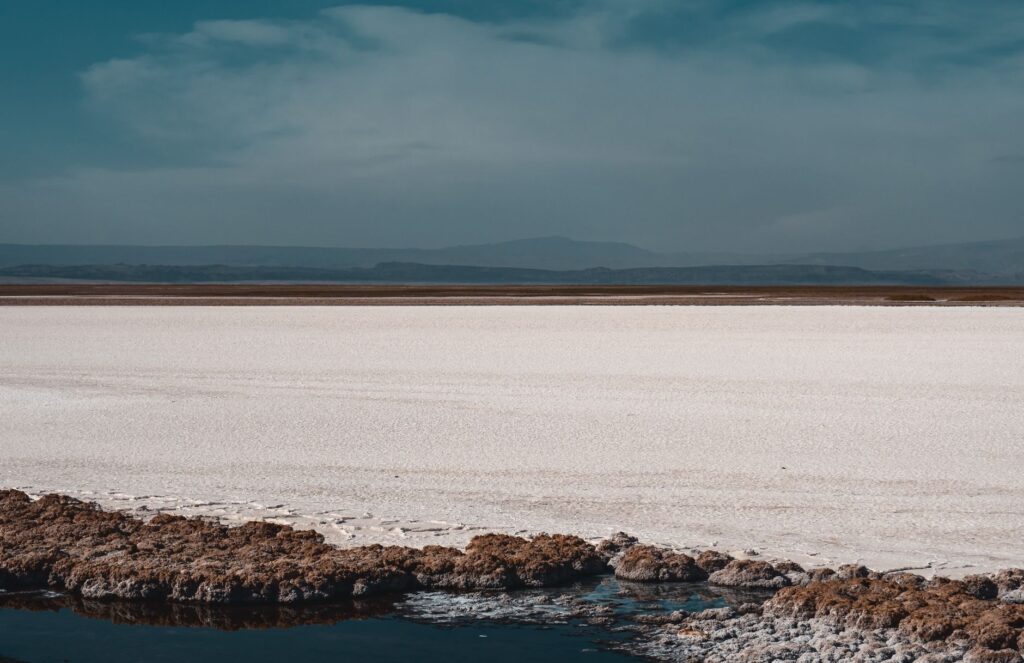
Standing in silence beside dead tracks winding through white mantles of salt and ocher hills allows one to tune into the deepest and most contemplative dimension of travel. The Atacama Desert, with its apparent immutability, jealously guards the traces of those men and women who, armed with iron, steam, and unshakeable will, managed to articulate a territory fragmented by geographical hostility. Today, as contemporary travelers witness the fleeting passage of a modern freight train cutting against the twilight horizon, they understand that the true magic of these places lies in that persistent capacity to bridge impossible distances, keeping alive a steel memory that tirelessly defies the oblivion of time.