The relationship between humanity and the natural environment has found in Costa Rica one of its most demanding and fascinating laboratories. Far from the mass hotel development that transformed other tropical coastlines, the Central American nation has consolidated a network of accommodations where architecture submits entirely to the landscape. From the cloud forests of Talamanca to volcanic slopes, hotels, resorts, and eco-lodges operate under a premise as ambitious as it is inescapable: proving that high-end hospitality can serve as an active engine for biological regeneration. This feature examines how tourist infrastructure dialogues with mountainous biodiversity and what criteria define a truly sustainable stay in the Costa Rican highlands.
This phenomenon is not a recent commercial whim, but rather the result of decades of public policies aimed at decarbonization and watershed protection. Nevertheless, the true pulse of this transformation is driven by the private sector and local communities, which have reinterpreted the concept of refuge. Here, the mountain is not a static backdrop, but a dynamic ecosystem imposing its own rules of access, design, and consumption. Analyzing where to stay in Costa Rica thus implies understanding how to inhabit a territory where water, mist, and steep slopes determine every square meter of construction.
The Geography of Altitude: Understanding the Costa Rican Range
To comprehend the accommodation offerings in Costa Rica’s highlands, a precise geomorphological map is indispensable. The country’s spine is composed of three main mountain systems: the Guanacaste Volcanic Cordillera, the Central Volcanic Cordillera, and the Talamanca Cordillera. Each possesses specific microclimates that condition both the traveler’s experience and the engineering of the shelters. In Talamanca, home to towering peaks like Cerro Chirripó, cloud forests impose constant humidity that demands highly resistant building materials and bioclimatic designs capable of maximizing sunlight without disrupting airflow.
Altitude radically conditions architectural typology, forcing designers to dispense with artificial air conditioning systems by using certified timbers, pilings that prevent soil erosion, and sloped roofs to channel intense seasonal precipitation. Unlike beach resorts, mountain eco-lodges operate as isolated enclaves where energy self-sufficiency and waste management are not value-added features, but operational conditions sine qua non. Sector sources indicate that the transition toward stricter sustainable building regulations has drastically reduced the carbon footprint of these establishments over the past decade.

Bioclimatic Architecture and the Art of Blending into the Forest
Architectural design in Costa Rica’s mountain reserves has evolved from mid-20th-century rustic cabins to contemporary low-impact structures. Local and international architects prioritize sustainably harvested timber and volcanic stone to erect structures that appear to emerge organically from the understory. This approach seeks to minimize the fragmentation of biological corridors, allowing native fauna—from coatis to quetzales—to move freely beneath the elevated walkways of the complexes.
True sophistication in mountain ecotourism lies in the invisibility of human impact, ensuring luxury is defined by quietude and unhindered observation.
Exterior lighting systems are rigorously engineered to prevent light pollution, thereby protecting the biological cycles of insects and nocturnal birds. Likewise, cross-ventilation completely replaces air conditioning, while hot water is generated primarily through high-efficiency solar thermal panels. These technical solutions demonstrate that contemporary comfort is perfectly compatible with the rejection of excessive energy consumption, a standard that experienced travelers increasingly demand when planning their itineraries.
Food Sovereignty and Zero-Kilometer Gastronomy
The concept of staying in Costa Rica’s mountain eco-lodges and resorts inevitably extends to the table, where gastronomy functions as an extension of the surrounding landscape. The adoption of short-circuit supply chains is not a gourmet marketing strategy, but a logistical necessity and ethical commitment. On-site organic gardens or direct partnerships with farmers from neighboring communities ensure complete traceability of the ingredients consumed by guests.

Traditional dishes interpreted with modern techniques—such as fresh heart of palm, Andean root vegetables, and shade-grown high-altitude coffee—form seasonal menus that drastically reduce emissions associated with food transport. This culinary philosophy educates visitors on the country’s agricultural wealth, linking gastronomic pleasure with the preservation of local agrobiodiversity and direct support for the rural mountain economy.
Local Communities and Participatory Conservation
No analysis of accommodation in the Costa Rican highlands is complete without examining the social fabric sustaining it. Numerous ecotourism projects in regions like Monteverde or around Arenal Volcano are owned by farming cooperatives or communal development associations. This management model ensures that economic benefits derived from tourism remain within the territory, funding local schools, rural roads, and community reforestations programs.
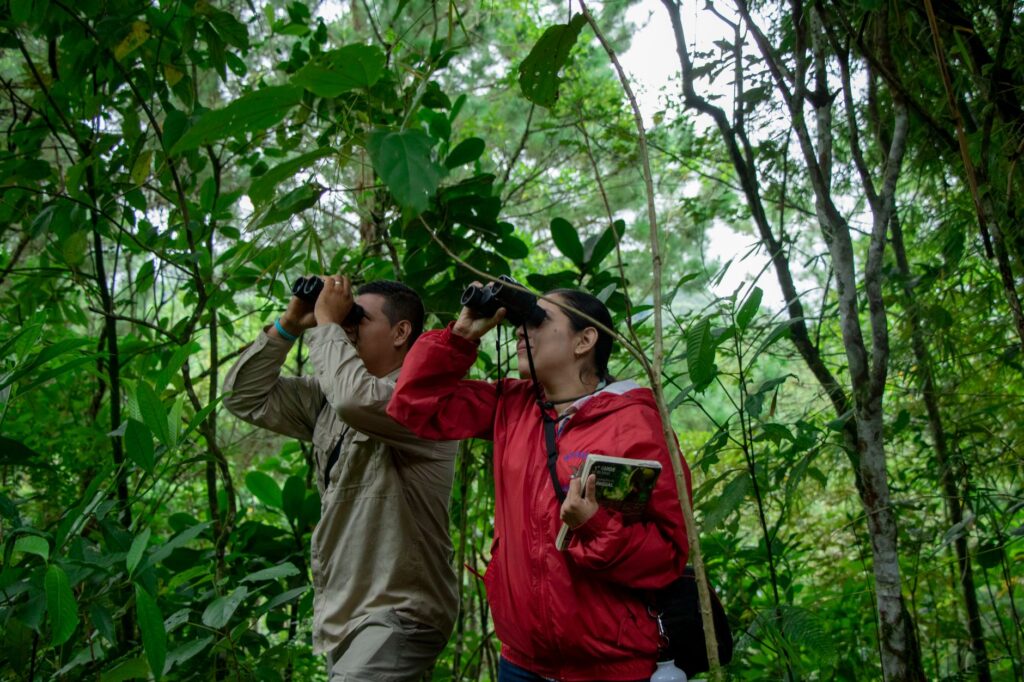
The active participation of local communities as naturalist guides and field researchers enriches the traveler’s experience, transforming a simple vacation into a meaningful cultural exchange. Citizen science programs promoted by these lodgings allow guests to collaborate in fauna monitoring through camera traps and botanical data collection, forging a solid bridge between mass tourism and scientific research applied to conservation.
Integral Wellness and Forest Therapy
In tune with the global trend toward health tourism, mountain shelters in Costa Rica have integrated physical and mental well-being into their core offerings, moving away from conventional spas to embrace the philosophy of *shinrin-yoku* or forest bathing. The atmosphere charged with negative ions, the constant sound of fast-flowing rivers, and the gloom filtered through dense foliage create an environment conducive to digital disconnection and neurological recovery.
Regenerative Practices for the Conscious Traveler
- Participation in reforestation workshops utilizing high-altitude native plant species.
- Dawn yoga and meditation sessions on platforms suspended above the forest canopy.
- Interpretive hiking trails guided by local biologists for epiphyte identification.
- Culinary workshops focused on zero-waste organic cooking and fermentation.
These activities are designed to foster a receptive and respectful attitude in visitors, transforming resting time into a process of active learning regarding the fragility and resilience of high-altitude tropical ecosystems.
Contemporary Challenges: Climate Change and Tourist Pressure
Despite notable advancements in sustainability, the hotel and ecotourism sector in Costa Rica’s mountains faces monumental challenges driven by global climate change. Altered rainfall patterns, gradual increases in average temperatures, and extreme weather events test the resilience of physical infrastructure and the stability of surrounding ecosystems. Managers of these spaces must constantly rethink their contingency and water management plans to prevent overexploitation of local aquifers.

Furthermore, growing international demand poses the risk of tourism saturation in fragile enclaves such as cloud forests. Strictly regulating carrying capacity through advance booking systems and limited quotas is the only effective tool to prevent habitat degradation. The industry thus grapples with the tension between economic growth necessary to maintain high conservation standards and the urgent need to impose physical limits on real estate development along mountain slopes.
Practical Guide
Planning a stay in Costa Rica’s mountain accommodations requires understanding the country’s climatic and logistical particularities. Unlike sun-and-beach destinations, the highlands demand rigorous preparation regarding equipment and transit times.
Getting There: The vast majority of mountain eco-lodges are located between a two- and four-hour drive from Juan Santamaría International Airport (SJO) in San José. Renting a four-wheel-drive (4×4) vehicle is highly recommended, especially during the green or rainy season.
When to Visit: Although the country is accessible year-round, the dry season (December through April) offers better conditions for high-altitude trekking. However, the green season (May through November) guarantees more lush landscapes, lower visitor density, and more competitive lodging rates.

Essential Gear: It is indispensable to pack technical waterproof clothing, mountain footwear with high-traction soles, thermal layers for cold altitude nights, and good-quality binoculars for birdwatching.
Booking Criteria: Travelers are advised to verify that accommodations hold the Certificate for Sustainable Tourism (CST) issued by the Costa Rican Tourism Board (ICT), thereby guaranteeing their genuine commitment to the environment and local communities.
The Embrace of Mist: Epilogue in the Cloud Forest
As the sun begins to dip behind the peaks of the Talamanca Mountain Range, the temperature drops rapidly and a dense mist, known locally as cat’s hair, wraps around the wooden structures and elevated walkways of the eco-lodges. It is the moment when the forest reclaims its absolute prominence, quieting daytime hustle and giving way to the nocturnal concert of amphibians and insects. In this instant of utter quietude, the traveler understands that the true value of these refuges lies not in material luxury, but in the privilege of bearing silent witness to a natural world that still preserves its mystery and primordial balance. Source in EN: Respect My Region (https://www.respectmyregion.com/best-places-to-stay-in-costa-rica-hotels-resorts-and-eco-lodges-for-every-type-of-trip/).