

In the heart of Lower Saxony, where dense forests seem to absorb the echoes of the modern world, acoustic precision is not merely a science—it is an almost philosophical pursuit. From modest beginnings in postwar Europe to its consolidation as a global benchmark in audio engineering, the firm founded by Fritz Sennheiser has transformed how humanity experiences the soundscape. It is not simply about manufacturing devices to reproduce frequencies, but about building an invisible bridge between the creator’s intent and the listener’s sensitivity.
This feature invites readers into the workshops where silence is custom-designed and technical innovation merges with industrial craftsmanship. Through testimonies from engineers, musicians, and sound archivists, we examine how the quest for acoustic neutrality has influenced contemporary culture, revealing a universe where every decibel tells a story about the evolution of our relationship with our environment.
The Foundations of Listening in Postwar Europe
The year 1945 marked an absolute turning point for Europe and, very particularly, for Germany. Amid material rubble and profound social uncertainty, a group of engineers led by Fritz Sennheiser set out to rebuild something more tangible than buildings: the clarity of communication. In the improvised laboratories of Wennebostel, the first major success was not a luxury item, but a tube voltmeter. However, the urgent need for reliable testing equipment and microphones soon led the team to pour their talent into capturing sound.

The scarcity of raw materials forced these pioneers to develop extraordinary resourcefulness, recycling components and redesigning parts from scratch. This spirit of resilience laid the groundwork for a corporate culture that prioritizes durability and functional performance over passing trends. The DM 1 microphone, launched in 1948, not only solved an immediate technical problem for German broadcasting networks but established a standard of ruggedness that would define the brand’s identity for decades to come.
The Open-Capsule Revolution and Spatial Sound
During the 1960s, the personal listening market was dominated by heavy, closed-back headphones designed almost exclusively for studio monitoring. The arrival of the HD 414 model in 1968 represented a radical break from this tradition. By introducing the concept of open-back design, Sennheiser allowed sound waves to interact with the ambient air, eliminating listening fatigue and delivering an unprecedented three-dimensional soundstage.
Sound is not merely physical vibration striking the eardrum; it is an emotional territory that requires space to breathe and expand naturally.
This commercial milestone—which sold millions of units entirely unexpectedly—transformed the habit of listening to music. For the first time, young people could enjoy audiophile-grade quality in the intimacy of their homes without becoming isolated from the outside world. The lightness of the materials and ergonomic comfort proved that high fidelity did not have to be an exclusive privilege of professional studios or concert halls.
The Sanctuary of Design: Ergonomics and Acoustics in Wennebostel
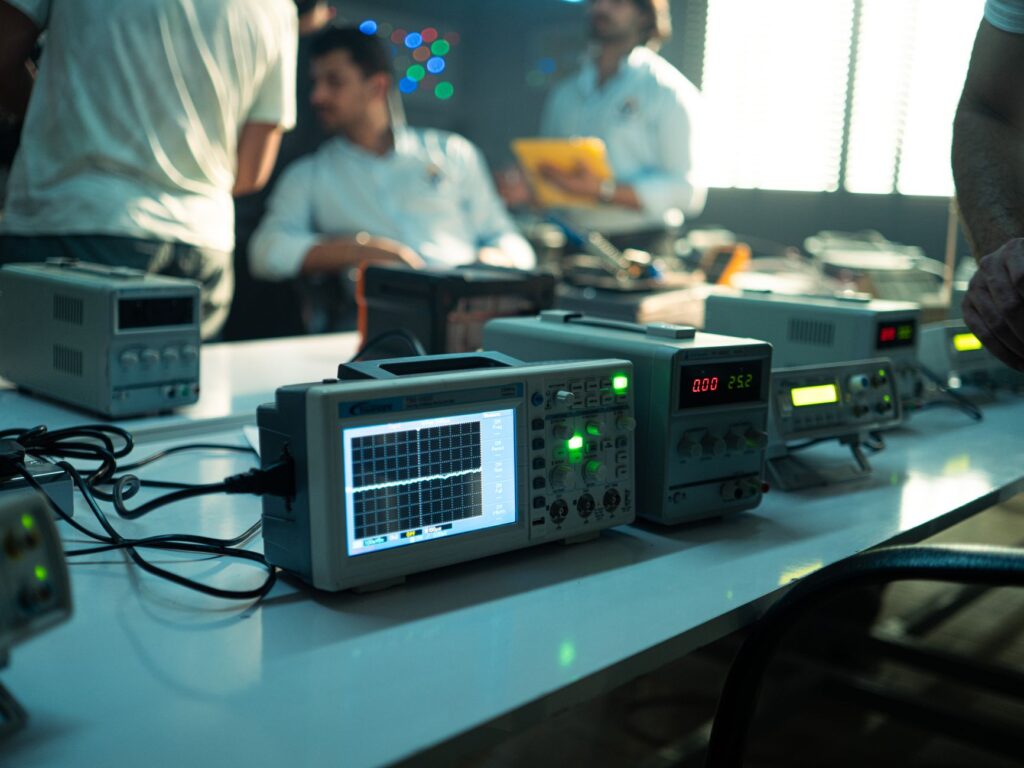
Visiting the brand’s development and innovation center in Wedemark is stepping into a realm where time seems to flow at a different pace. The anechoic chambers, designed to completely absorb any sound reflection, offer a disquieting sensory experience: absolute silence. In these spaces, multidisciplinary teams analyze the frequency response of prototypes using laser measurements capable of detecting nanoscale vibrations in transducer diaphragms.
The obsession with detail is evident in every phase of the manufacturing process, from selecting advanced polymers to the manual winding of voice coils in reference models. Acoustic engineers work hand in hand with industrial designers to ensure aesthetics never compromise physical performance. Every curve on the headband and every angle on the ear cushions stems from rigorous studies in anthropometry and applied acoustics.
The Voice of the Stage: Microphones That Wrote History
If high-fidelity listening is an intimate art, amplifying live vocals is a constant battle against physics. In packed stadiums, open-air festivals, and television studios across the globe, microphones from the evolution series and wireless systems have become indispensable tools for artists of all genres. Resistance to acoustic feedback and tonal fidelity allow the human voice to cut through ambient noise barriers with absolute clarity.

Top music legends and touring sound engineers agree that a good microphone does not add artificial color, but rather respects the performer’s natural texture. In this arena, the brand has maintained continuous collaboration with worldwide tour sound engineers, incorporating direct feedback into the design of dynamic and condenser capsules capable of withstanding extreme weather conditions without losing performance.
The Digital Transition and the Challenge of Active Cancellation
With the arrival of the 21st century, the audio industry faced the greatest challenge in its history: mass digitization and the compression of music files. While many competitors chose to sacrifice quality for extreme portability, Sennheiser’s strategy consisted of democratizing high-resolution audio. The integration of ultra-low-distortion analog-to-digital converters and the development of advanced spatial processing algorithms allowed the studio experience to transition into the wireless format.
The development of active noise cancellation (ANC) technologies posed another major hurdle for German engineers. Unlike commercial approaches that drastically alter frequency response to mask aircraft cabin noise or urban traffic, the priority was always to preserve the tonal integrity of the original music. The result is an artificial silence that acts as a clean canvas, allowing subtle nuances to be appreciated that would otherwise be buried under modern acoustic pollution.

The Sound Archive of Cultural Heritage
Beyond commercial entertainment and the music industry, high-precision transducer technology plays a crucial role in preserving intangible heritage. Anthropologists, marine biologists, and musicologists use binaural recording equipment and ultra-high-sensitivity microphones to document endangered languages, natural soundscapes in protected reserves, and ancestral musical traditions in remote corners of the planet.
Recording sound with absolute fidelity is an act of historical responsibility; it ensures future generations can hear the world as it existed in our time.
This specialized division routinely collaborates with international universities and scientific institutions. The recordings obtained serve not only for academic study but also for immersive exhibitions in natural history museums, where visitors can auditively immerse themselves in pristine ecosystems or the soundscape of long-gone historical cities.
Practical guide
For those interested in delving deeper into the universe of high-fidelity sound and selecting appropriate acoustic equipment, fundamental criteria for selection, maintenance, and optimization are detailed below.
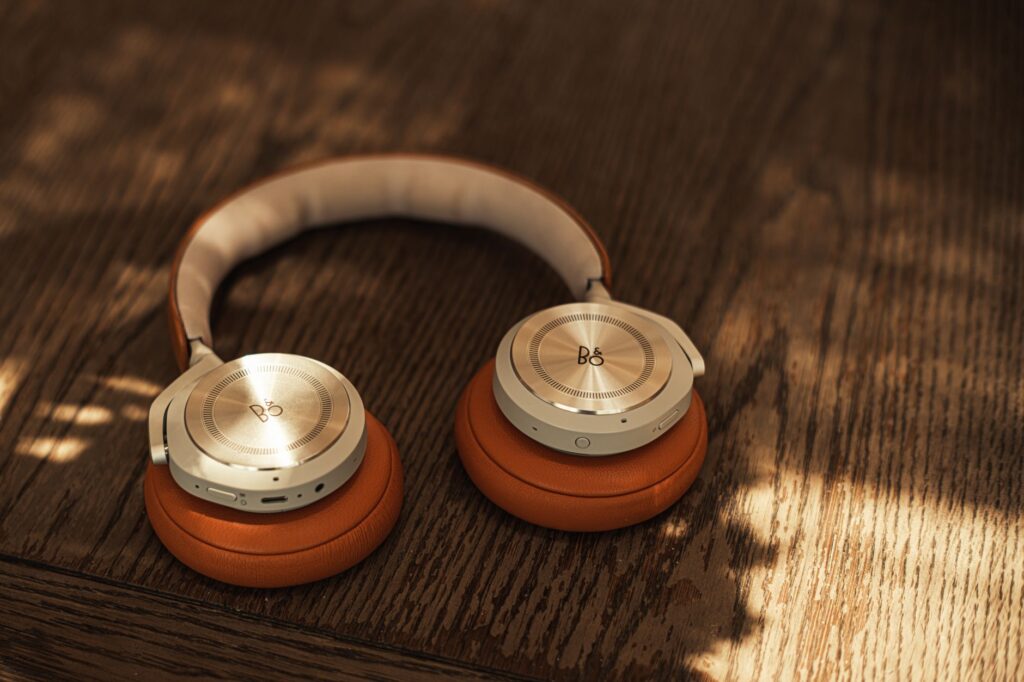
- Defining Use: Determine whether your priority is critical listening in silent environments (wired open-back headphones), urban mobility (wireless models with noise cancellation), or content production (condenser microphones and monitoring headphones).
- Verifying Specifications: Analyze frequency response, impedance, and sensitivity. High-end equipment often requires dedicated amplifiers to deploy its full dynamic potential.
- Care and Maintenance: Regularly clean ear cushions with slightly damp microfiber cloths without abrasive chemical products. Store headphones in rigid cases to prevent mechanical stress on the headband.
- Warranty and Support: Always purchase products through authorized dealers to ensure the validity of the official warranty and access to original spare parts, such as replacement cables and cushions.
The Human Legacy Behind Technology
Ultimately, the value of any technological advancement lies in the people who make it possible and those who enjoy it. Behind every printed circuit board diagram and every computational acoustics simulation at the Wedemark facility lies the deep conviction that sound has the power to move, educate, and unite communities. The history of this house is living testimony to how technical discipline, when guided by aesthetic passion, can elevate everyday experience and turn a simple physical stimulus into a moment of profound emotional resonance.
As we step into new eras of augmented reality and immersive soundscapes, the commitment to acoustic authenticity remains the beacon guiding every new development. At the end of the journey, the goal of audio engineering is not to impress with artifice, but to quietly disappear, leaving the listener alone with the pure emotion of music.
Source in EN: Condé Nast Traveler – Sennheiser Coupon Guide (https://www.cntraveler.com/story/sennheiser-coupon)