In the golden stone labyrinth of Salamanca, where time seems suspended beneath the arches of Villarroel and antiquarian bookstores guard centuries of printed silence, a craft survives that defies the planned obsolescence of our era. Handcrafted leather bookbinding is not merely a technique of conservation, but an act of cultural resistance. In these discreet workshops, where the scent of beeswax, starch paste, and tanned goatskin impregnates the walls, master binders continue to sew gatherings with hemp thread over leather cords, exactly as it was done in the monastic scriptoria of the Renaissance. Every volume that enters these workshops battered by use and the passage of decades emerges transformed into a unique piece of bibliographical engineering, where structure and aesthetics dialogue in perfect harmony.
Far from mass tourism circuits, the Salamanca workshops operate as sanctuaries of detail. Here, haste is strictly prohibited. A broken-down volume requires meticulous diagnosis: evaluating paper pH, checking the strength of original threads, and deciding whether the spine should be half-parchment or full leather with hot-stamped gold tooling. This report delves into the secrets of these contemporary artisans who combine rigorous guild tradition with advanced material research, proving that the physical book remains the most perfect technological artifact ever created to transmit human memory.

The Anatomy of the Antique Book: Diagnosis and Rescue
The first step in any high-end bookbinding workshop is never manual intervention, but clinical observation. Masters analyze the degree of degradation in the gatherings, identifying whether damage stems from wood-boring insect attacks, iron-gall ink oxidation, or simply mechanical fatigue at the joints. This phase demands encyclopedic knowledge of book history. A 15th-century incunabulum is not treated the same way as a 19th-century romantic edition. Each medium requires specific solvents for chemical cleaning and varying weights of Japanese paper for millimetric grafts in acid-devoured margins.
In this process, respect for original materiality constitutes an unshakeable dogma. Restorers avoid replacing original elements whenever possible, preferring consolidation over substitution. Marbled endpapers, hand-stamped titles with movable printing type, and hand-woven two-tone silk headbands become silent witnesses of an invisible intervention. Technical skill is measured precisely by the ability to pass unnoticed: a masterfully restored book is one that appears never to have been touched at all, yet recovers all its structural integrity to endure for another century.
The Ritual of Folding and Sewing over Cords
Once cleaning and consolidation are complete, the loose sheets are reordered according to their signatures and subjected to mechanical pressing to eliminate deformations accumulated over decades of humidity and poor storage. Next comes one of the most beautiful and demanding moments of the craft: sewing. The gatherings are aligned with millimetric precision against the bookbinding sewing frame, where the cords or leather strips that will form the characteristic visible raised bands on the spine are positioned.
The artisan inserts the needle with an internal tension guide, interlacing the linen thread around each cord with constant tension. Excessive force would break the fragile cotton-fiber paper; insufficient tension would leave the spine flaccid and prone to shifting when opening the volume. This repetitive and meditative rhythm requires years of practice until the gesture becomes instinctive. It is a physical dialogue between human hands and organic matter, where every stitch seals an invisible pact against oblivion and the fragility of paper.
The Magic of Tanning and Leather Shaping
The choice of cover defines the definitive character of the work. Traditional workshops prioritize leathers tanned through vegetable methods, free from acidic salts that accelerate paper decomposition across seasons. Calfskin, goatskin (known as morocco or tafilete), and Merino sheepskin undergo baths of natural dyes extracted from tree barks and roots. Each hide presents irregularities, minor scars, and unique textures that, far from being considered defects, are celebrated as a hallmark of authenticity.
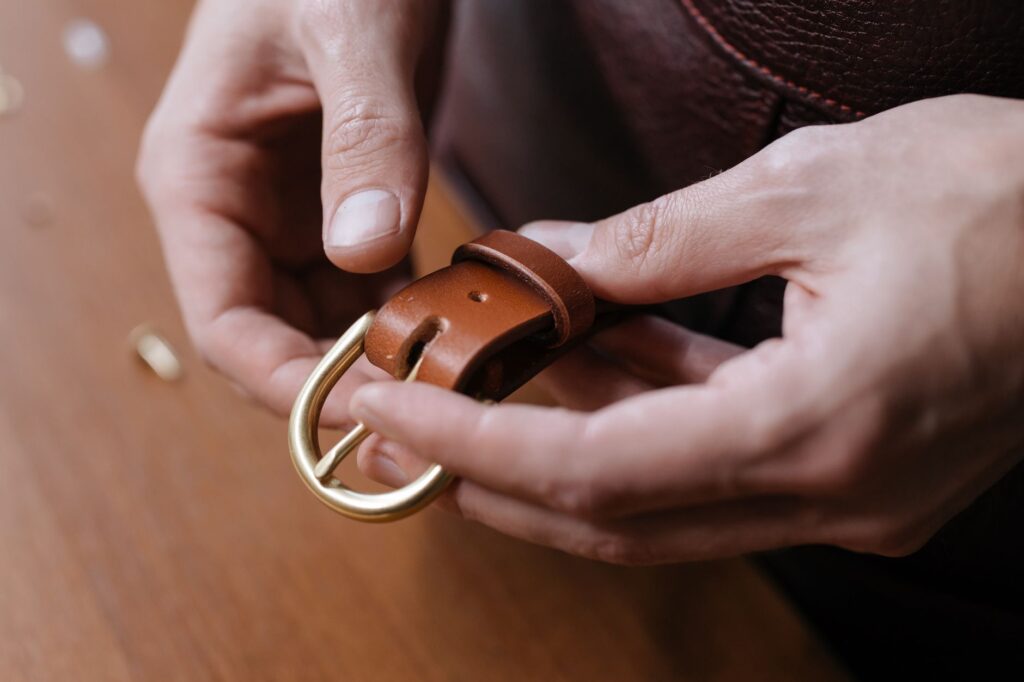
To line the spine, the artisan thaws the leather edges using a paring knife with a razor-sharp blade, achieving an almost imperceptible beveling that allows perfect coupling at corners and joints. The leather is slightly dampened to gain elasticity and adhered to the binding board using organic glues that allow future reversibility. With the help of bone folders and boxwood spatulas, the leather is molded millimeter by millimeter around the cords, embossing the book’s own backbone in relief.
Tooling in Gold: Gold Leaf and Heated Tools
The aesthetic climax of artistic binding lies in stamping titles and ornamental motifs using hand-engraved metal plates, rolls, and palettes. This technique, inherited from Mudéjar and Renaissance workshops, requires absolute mastery of temperature and pressure. The artisan heats the tools on an electric stove until reaching the exact point of incandescence. If the tool is too cold, the gold leaf will not adhere to the surface; if too hot, it will hopelessly scorch and char the leather.
Over the leather previously prepared with a thin layer of egg white (albumen) or primer varnishes, a sheet of authentic 22-karat gold is carefully laid out. The tool is applied with a swift, confident, and perpendicular strike, releasing a characteristic scent of toasted skin and revealing—upon removing excess residues with an alcohol-soaked cotton ball—an eternal metallic shine. Geometric compositions, blind fillets, and floral frets confer sober dignity to the volume, turning an everyday object into a portable work of art.
The Synergy between Guild Tradition and Contemporary Design
Far from anchoring itself in museum nostalgia, contemporary leather binding in Salamanca actively engages with current graphic design, architecture, and the visual arts. New creators and young restorers trained at the city’s School of Applied Arts are incorporating alternative materials such as technical textiles, hand-dyed abaca fiber papers, and exposed Japanese binding structures, where stitches become the primary decorative element.
This openness does not reject classical canons; rather, it expands them. Commissions are undertaken for contemporary bibliophiles seeking to bind experimental poetry works, contemporary art catalogs, or artist editions with ultra-low print runs. The coexistence between medieval parchment and minimalist aesthetics proves that the craft enjoys enviable creative health, capable of attracting international collectors who travel expressly to Castile and León in search of this unrepeatable manual excellence.
Handcrafted bookbinding is the only art capable of healing the wounds of time on paper, returning to the book its physical dignity and narrative soul.
Practical guide
Planning a visit to the handcrafted bookbinding workshops in Salamanca requires understanding the unhurried rhythms of these studios, where mass production does not exist and appointments must be arranged with respectful advance notice.
- Getting There: Salamanca features excellent high-speed rail connections (Alvia) from Madrid-Chamartín, with a journey time of approximately one and a half hours. The bus station is located a ten-minute walk from the historic center, ideal for exploring downtown on foot without private transport.
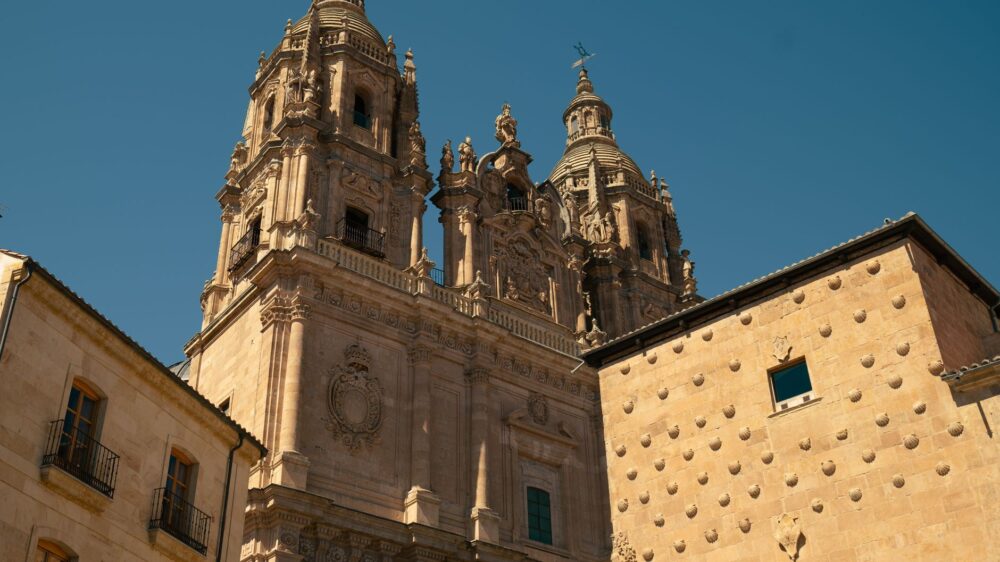
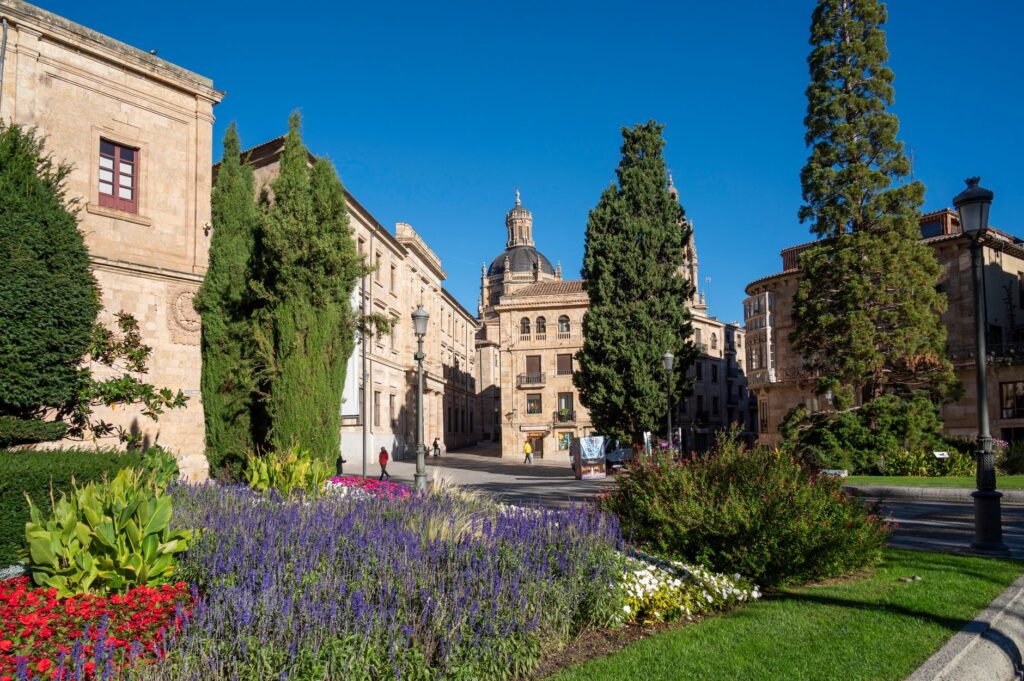
- Workshop Locations: The highest concentration of restoration and bookbinding art studios is located around Libreros street, Compañía street, and the vicinity of the Pontifical University. Visitors are encouraged to stroll unhurriedly through the alleyways adjacent to La Clerecía.
- Visits and Commissions: Most workshops are compact workspaces. Guided tours or sewing and gold-tooling demonstrations must be requested via email or phone weeks in advance. Not all maintain a street-level retail shop open to the general public.
- Bibliographic Conservation Tips: If traveling with antique books or acquiring volumes in Salamanca’s secondhand bookstores, avoid transporting them in backpacks without rigid protection. Protect them with breathable cotton sleeves and keep them away from direct sunlight and indoor humidity exceeding sixty percent.
As evening falls, when the setting sun sets Villamayor stone ablaze across the facade of the Escuelas Mayores and student chatter begins to fade through cobblestone alleys, Salamanca reveals its true nature as a bibliographical refuge. Inside these silent workshops, beneath the soft light of an adjustable desk lamp, a master craftsman continues smoothing the pages of a forgotten tome with devotion. He seeks neither fame nor immediate profit; he pursues the silent miracle of keeping written memory alive, reminding us that as long as there are hands willing to sew a leather spine, civilization will continue to have a future worth reading.