
The calendar has gifted travelers this year with one of those rare temporal alignments that completely transforms travel planning. With Saturday, October 31, Sunday, November 1, and Monday, November 2 forming a natural long weekend, the opportunity to immerse oneself in one of Mexico’s most universal traditions arrives with an unusual logistical advantage. However, this perfect arrangement of time has not gone unnoticed by the domestic and international tourism market, making the current reservation window a critical juncture to secure competitive rates and availability in key destinations.
As millions prepare to experience one of the most colorful and profound celebrations on the planet—declared Intangible Cultural Heritage of Humanity by UNESCO—the tourism industry is already registering early movements. The key to capitalizing on this long weekend lies in understanding the specific dynamics of demand, the nuances of labor regulations, and the urgency of securing both transportation and accommodation before saturation drives up the cost of every mile of the journey.
The Calendar Paradox: Why Monday, November 2 Sets the Pace
The temporal structure of this festive period conceals a fundamental nuance that every traveler must consider in their reservation strategy. Although October 31 and November 1 coincide with the conventional weekend, Monday, November 2 concentrates the symbolic and ceremonial core of the Day of the Dead festivities. It is the day when souls, according to popular belief, return to commune with the living.
However, from a strictly legal and corporate perspective, there is a relevant detail regarding that Monday. Mexico’s Federal Labor Law does not classify November 2 as a general mandatory day of rest. This means that, unlike November 16—the official holiday for the Mexican Revolution—millions of workers will need to negotiate personal days, request vacation time, or rely on the flexibility policies of their workplaces to extend their getaway.
This duality generates a distinct pattern in passenger flows. On one hand, those with greater job flexibility or remote work capabilities will attempt to align their entire stay starting the previous Friday. On the other, a considerable mass of local travelers will opt for express weekend getaways, compressing the transportation supply into very tight windows and increasing pressure on tourism services.
Destinations Under Scrutiny: Beyond the Traditional Circuit
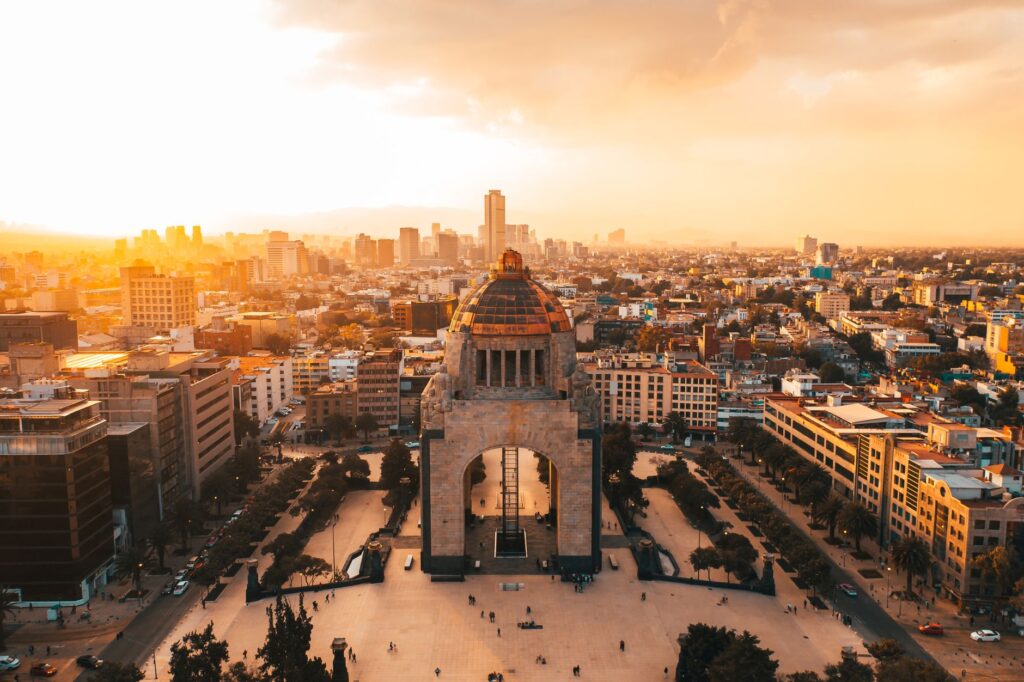
When discussing the Day of the Dead in Mexico, the collective imagination immediately flies toward Michoacán and Oaxaca. Janitzio, Pátzcuaro, and Tzintzuntzan along the shores of Lake Pátzcuaro, alongside the illuminated cemeteries of the Oaxacan Central Valleys, are indisputable global icons. Yet, focusing an entire travel strategy exclusively on these epicenters can become an economic and logistical trap.
High demand for these specific spots causes hotel capacity to sell out months in advance and drives exponential price hikes for flights to Morelia or Oaxaca. For this reason, travel experts recommend looking toward alternative geographies that maintain a profound ritual authenticity while offering slightly more manageable tourism pressure.
Places like the Huasteca Potosina with its Xantolo celebration, indigenous towns in the State of Mexico such as Malinalco, or traditional neighborhoods within cities like Puebla and Guadalajara offer exceptionally rich experiences without the extreme saturation of traditional sanctuaries. In these locations, early booking remains indispensable, but the maneuvering room in terms of budget and lodging variety expands significantly.
The Anatomy of Airfares: When and How to Secure Your Seat
The airline market operates under highly sensitive algorithms where timing is the decisive cost factor. For a high-demand cultural long weekend of the magnitude of Day of the Dead 2026, domestic airlines like Aeroméxico, Volaris, and Viva Aerobus open their inventories months ahead, but seats with promotional base fares disappear during the earliest commercial phases.
Waiting until September or October under the false premise of finding last-minute deals is, in this context, a major financial miscalculation. Tourism industry statistics demonstrate that for cultural peak weekends, prices experience a sustained upward trend that accelerates drastically thirty days prior to departure.
Additionally, regional flight seasonality must be taken into account. Destinations with small airports—such as Uruapan or Huatulco, if connecting to the coast or mountains—operate with limited frequencies. This means physical aircraft capacity is a scarce resource that runs out quickly, compelling travelers to evaluate alternative airports and complementary overland routes.
Early planning is not merely a matter of economic savings, but the only true insurance to guarantee availability in destinations whose physical hosting capacity is constrained by their own traditional architecture.
Lodging with Soul: Boutique Hotels, Country Houses, and the Rental Platform Trap
Choosing where to sleep during the Day of the Dead transcends the simple search for a comfortable bed; accommodation becomes an active part of the cultural experience. In colonial cities and magical towns, boutique hotels set inside former viceregal mansions offer an unmatched atmosphere, where central courtyards are adorned with monumental altars, marigold flowers, and copal incense.
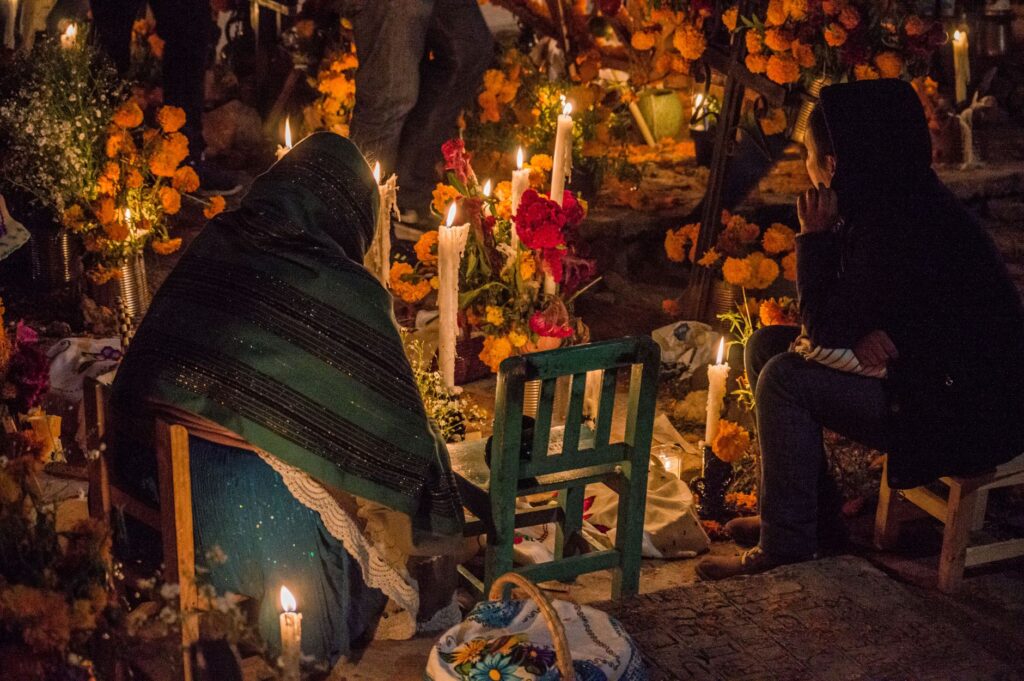
Nevertheless, the supply of such properties is intrinsically limited. Unlike large beach resorts, traditionally oriented towns lack mega-hotels, reducing available bed capacity to just a few dozen rooms per locality. Consequently, this week’s booking window represents the ideal moment to secure these spaces before they are snapped up by wholesale agencies or early-bird travelers.
On the other hand, the use of vacation rental platforms like Airbnb or Vrbo requires careful reading. While they broaden the range of options, it is essential to verify the exact location of the property. During festivities of this nature, road closures, nocturnal processions, and massive crowds in historic centers can turn a centrally located rental into an acoustic and mobility challenge if one lacks proper context regarding the urban dynamics of the chosen destination.
The Pulse of the Experience: Community Rituals Versus Mass Tourism
Planning a trip for these dates also demands an ethical and anthropological reflection on the nature of the visit. The Day of the Dead is neither a theme park nor a folkloric spectacle designed exclusively for the photographic delight of foreign or national visitors; it is an intimate manifestation of grief, family memory, and indigenous worldview.
The exponential growth of tourism in cemeteries and public squares has generated tensions in various communities that see the solemnity of their rites altered. For this reason, current travel recommendations insist on the need to adopt a respectful role: consulting local guides, understanding restrictions on taking photographs during specific private rituals, and consuming goods directly from community markets and local businesses.
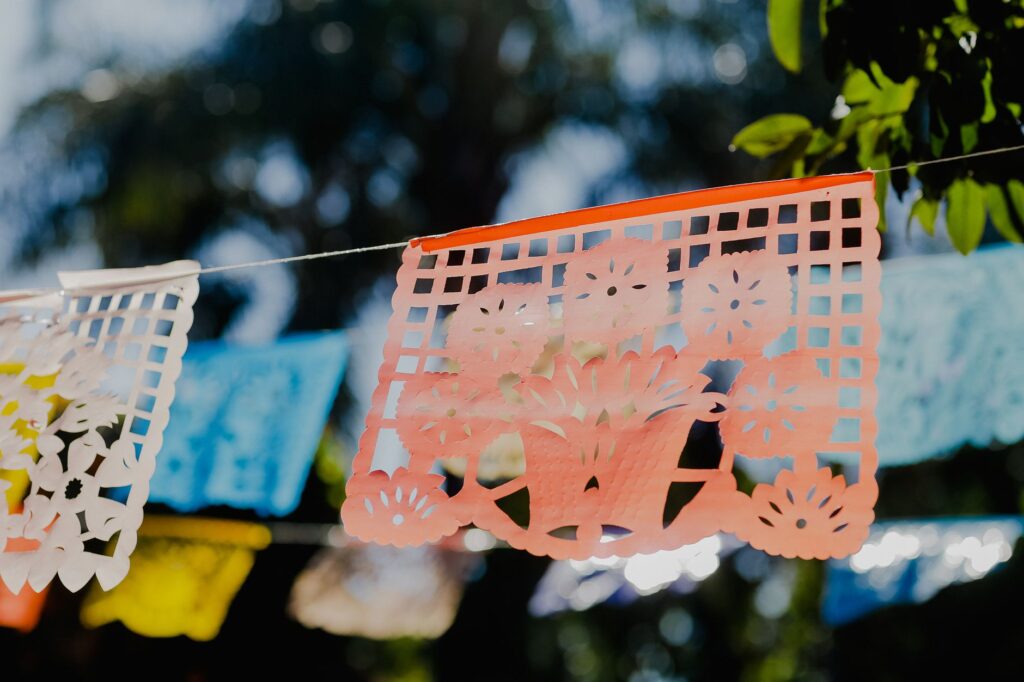
Integrating this sensitivity into planning not only enriches the personal experience, but ensures that the economic impact of tourism benefits local inhabitants fairly and equitably, as they are the true guardians and custodians of this millenary tradition.
Practical guide
Ideal booking window: Purchase your flights and lock in your lodging during this exact week to avoid the price surges that will activate entering the final quarter before the event.
Air transport strategy: Monitor routes to secondary airports (such as Toluca or Puebla for central regional access, or Morelia instead of hyper-local destinations) and compare total costs by adding ground transfers.
Lodging selection: Prioritize hotels with flexible cancellation policies while ensuring your initial deposit secures your rate; if choosing vacation rental platforms, confirm hosts have recent reviews and verified locations.
Workplace management: If you plan to take full advantage of Monday, November 2, discuss with your workplace well in advance to coordinate vacation days or remote work arrangements.
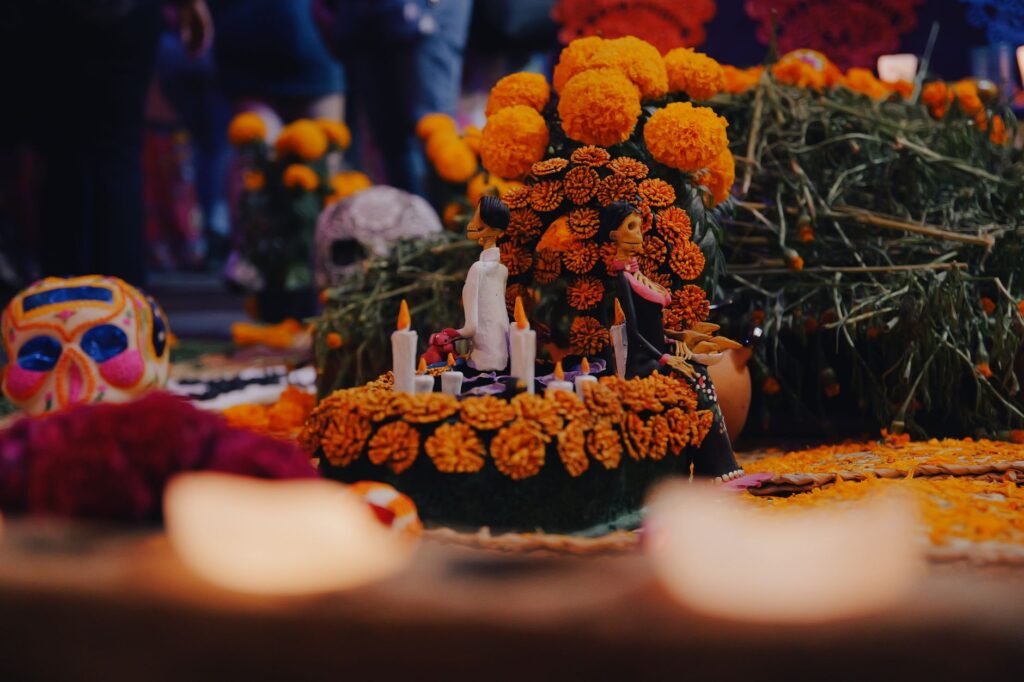
Respect and local etiquette: Inform yourself regarding community regulations on photography in cemeteries and ceremonial spaces to avoid violating the intimacy of family mourning.
The Echo of the Absent in the Traveler’s Memory
Traveling during the Day of the Dead is, ultimately, an exercise in collective introspection. While streets become saturated with orange petals, the scent of copal, and distant brass or violin music, the traveler who has known how to anticipate their steps finds something more valuable than a mere photograph for the memory: they find a space of pause where death ceases to be a Western taboo and becomes a luminous bridge of emotional continuity.
Securing tickets and lodging this week is not a mere bureaucratic formality of the modern era, but the first act of respect toward a celebration that demands time, calm, and profound attention. In the end, when the smoke of the candles begins to dissipate in the cold early morning air and families retire in silence after the overnight vigil in the graveyard, the reward will belong entirely to those who knew how to arrive on time, with prudence, strategy, and an open heart to the vastness of this living culture.
Source: Adapted from Alan x el Mundo (alanxelmundo.com/puente-dia-muertos-2026-fechas-destinos-reservar)