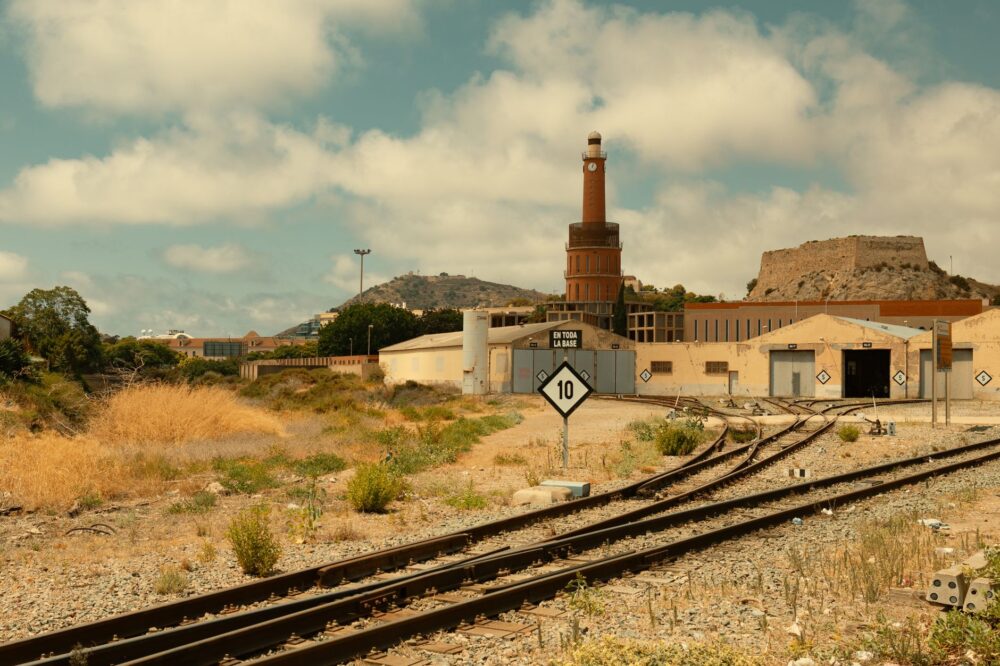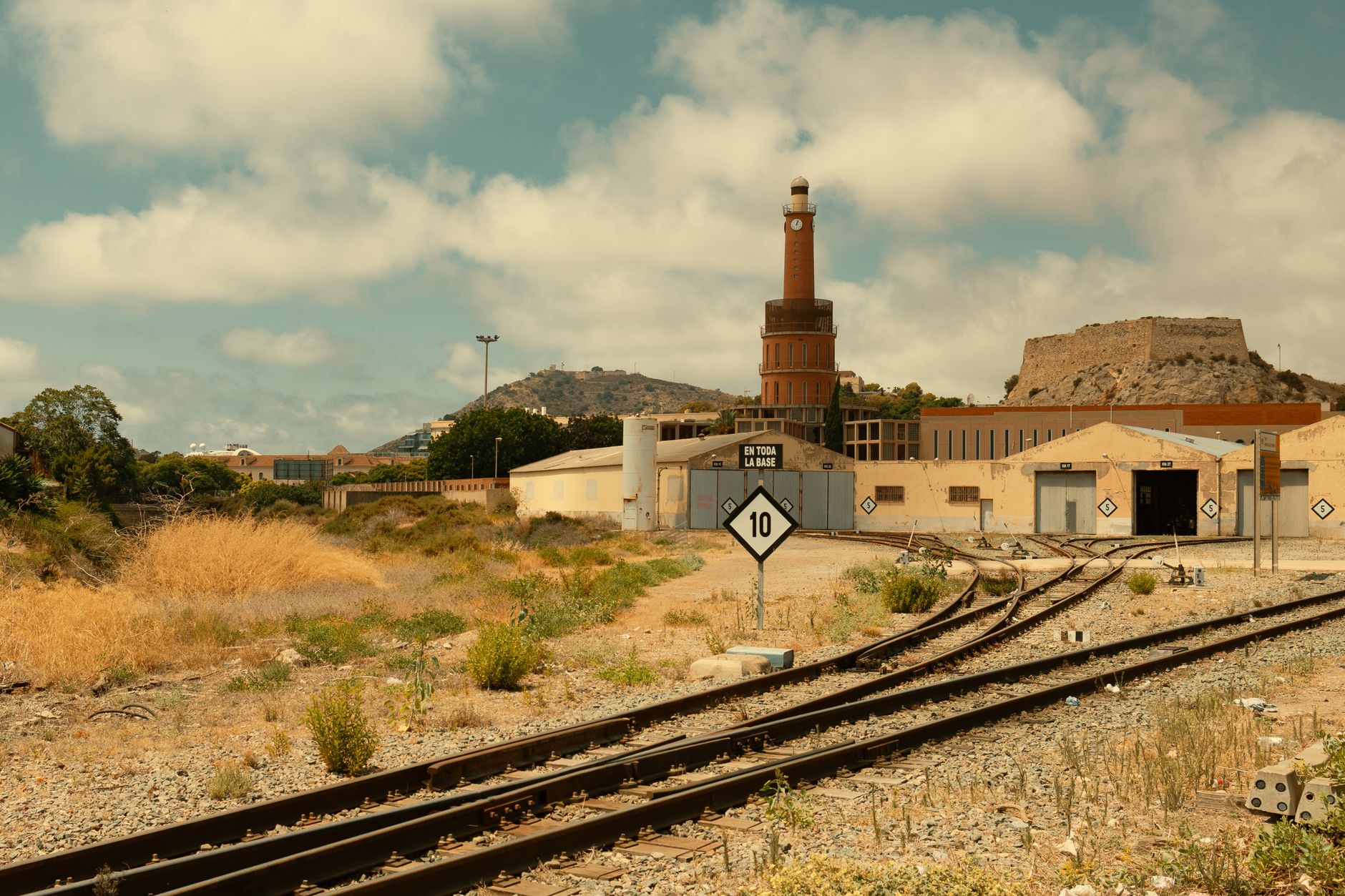

There are cities that surrender to the visitor with the docility of a perfectly framed postcard, and then there is Murcia. On the banks of the Segura River, the Levantine capital deploys a borderland character, brimming with poorly concealed historical layers, impossible urban contrasts, and a popular pride that oscillates between irony and devotion. It neither courts easy applause nor hides behind the filters of monumental perfection; instead, it prefers to show itself as it is: vibrant, excessive, profoundly human, and the owner of an affective vocabulary where the local adjective bonica encapsulates a very particular way of understanding beauty.
This report delves into the daily pulse of a city that defies the clichés of the Spanish southeast. Between the millennial agricultural plain known as the huerta and the asphalt of a sometimes disconcerting modernity, Murcia invites travelers to wander without a compass, decode the codes of its baroque architecture, understand the devotion to traditional farming, and sit at a terrace to verify that time, here, has a completely different consistency. A journalistic journey through the scars and flickers of a capital as puzzling as it is unforgettable.
The geography of harmonic chaos
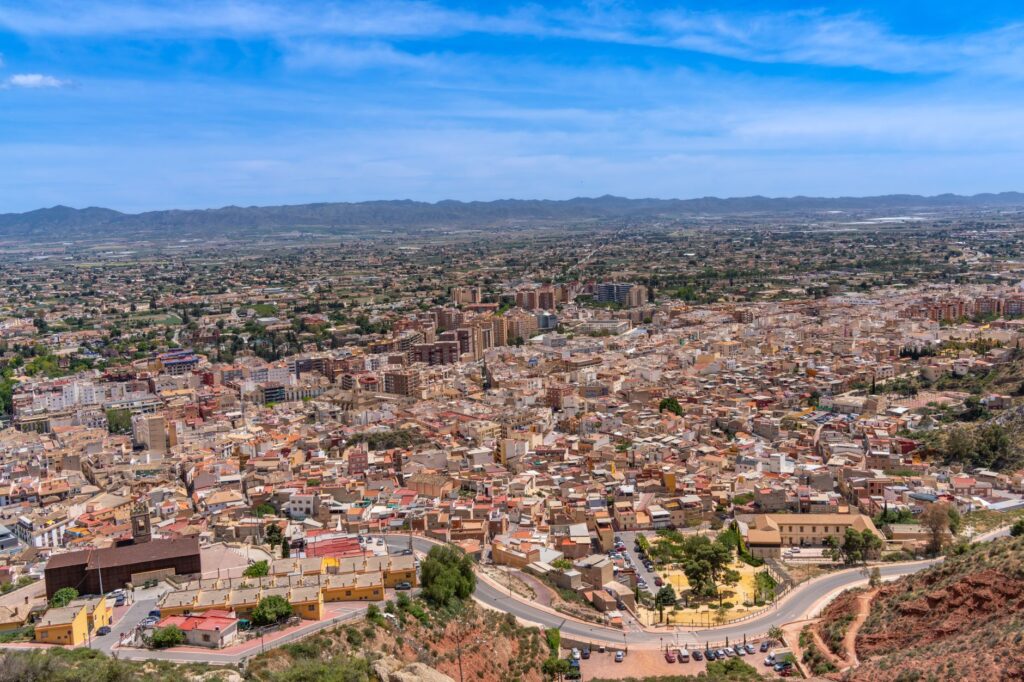
Approaching Murcia requires stripping away aesthetic prejudices. The urban layout is the result of centuries of superposition, from the Andalusian settlement of Mursiya to twentieth-century developmentalism that did not always respect the seams of the past. However, that apparent disorder hides a very precise organic logic. The streets of the old town meander following the capricious course of irrigation channels and ancient suburbs, creating corners where eighteenth-century palaces coexist with nondescript party walls and century-old shops resisting the push of large franchises.
The Segura River acts as both backbone and scar. Far from being the idyllic stream sung by popular poets, the river crosses the city with a sobriety of concrete and retaining walls that recalls recurrent floods and the eternal human struggle to tame water. Walking along its riverside promenades allows us to understand the true dimension of a city that lives both turning its back on and embracing its current, an axis dividing two worlds: the historic city and the contemporary expansions.
The cathedral and the triumph of Murcian baroque
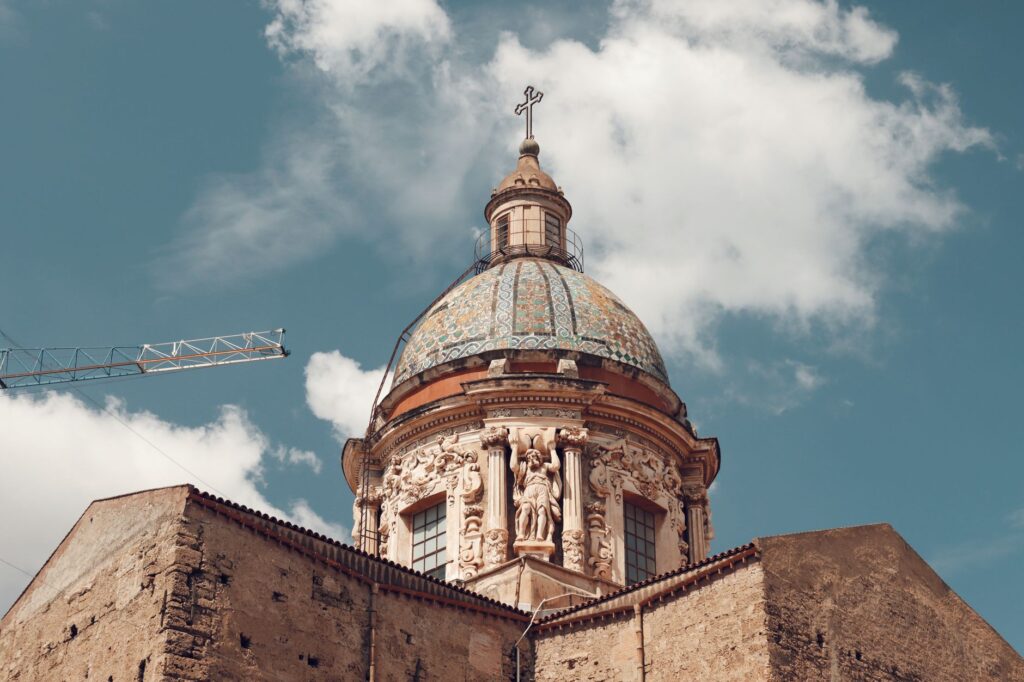
If there is one landmark defining the urban profile of the capital, it is the tower of its cathedral. Built over the remains of the main mosque, the Cathedral of Santa María is a fascinating exercise in architectural hybridization. Its main facade is an authentic masterpiece of Spanish baroque, a stone altarpiece sculpted with a sumptuousness that contrasts with the medieval sobriety of its interior or the Renaissance elegance of the Junterones chapel.
Yet the undisputed protagonist is its bell tower. Standing at ninety-three meters high—the second tallest in Spain after Seville’s Giralda—its construction spanned more than two centuries, explaining the fascinating transition of styles from the Renaissance of its first body to the Rococo and Neoclassical touches of the upper finishes. Climbing its bell tower is not merely a physical exercise, but the best way to comprehend Murcia’s urban geography: a sea of clay tile roofs dotted with glazed ceramic domes shining under the relentless southeastern light.
Squares that serve as living rooms
The social pulse of the locals beats in the open air, in squares that function as authentic extensions of private homes. Cardenal Belluga Plaza, flanked by the imposing cathedral facade and the bold city hall building designed by architect Rafael Moneo, is the paradigm of this daring contrast between tradition and avant-garde. Here, eighteenth-century golden stone coexists without complexes with the minimalist and refined lines of contemporary concrete, generating an architectural dialogue that once sparked controversy and now forms an undisputed part of the city’s visual identity.
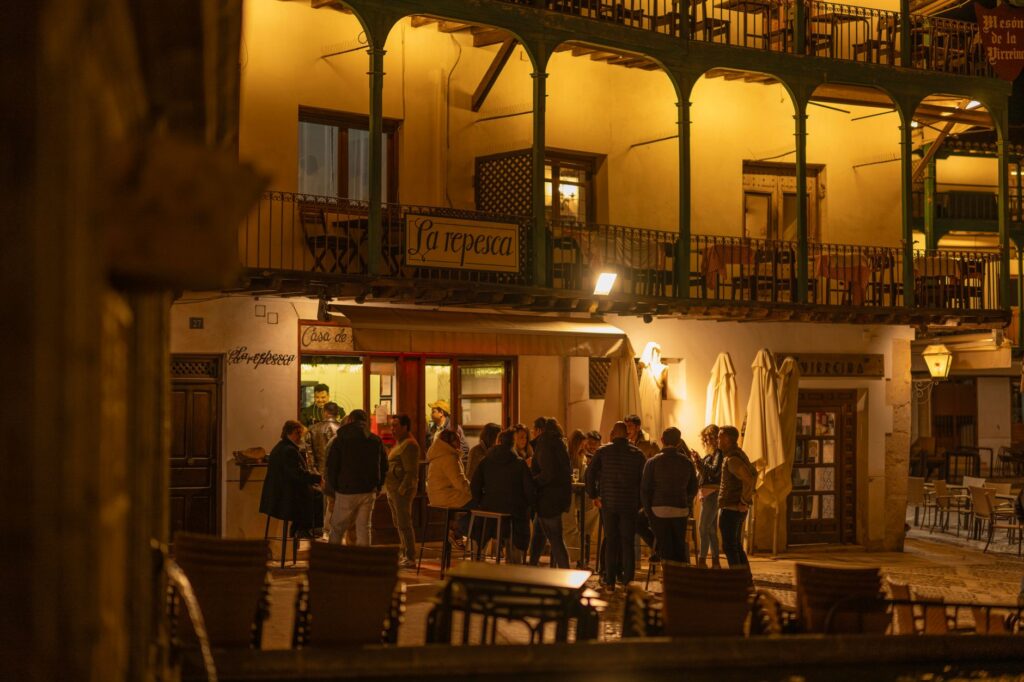
A few meters away, Plaza de las Flores offers a completely different, much more intimate and earthy register. This pedestrian widening, permanently scented by flower stalls and the bustling movement of waiters, is the unofficial epicenter of the local aperitif. It is here that the hospitable and lively character of the city materializes, a space where hierarchies disappear around a cold beer and a plate of marineras—the iconic bread ring topped with Russian salad and an anchovy.
The Andalusian legacy and the secret of narrow alleys
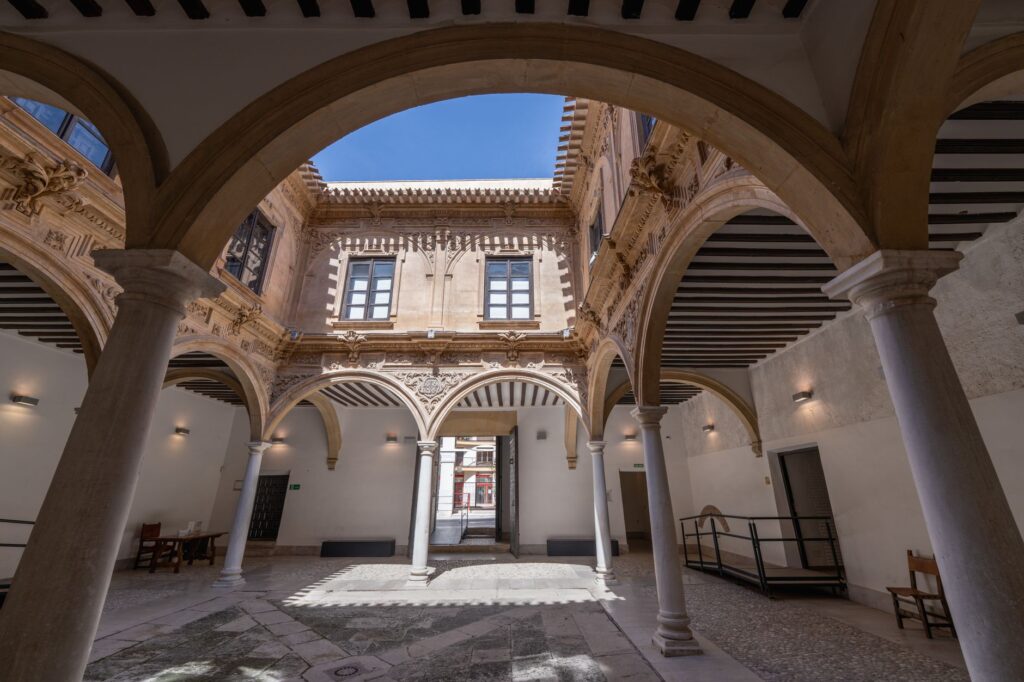
To scratch the surface of medieval Murcia, one must venture into the network of alleys stemming from Plaza de Santa Catalina and Calle Trapería. This commercial axis, traditionally the guild heart of the city, preserves emblematic buildings such as the Real Casino de Murcia, a private club founded in 1847 whose neoclassical facade conceals a breathtaking eclectic interior.
Crossing its threshold is a direct journey to the Belle Époque via an Arabian courtyard inspired by Granada’s Alhambra, a Louis XVI-style ballroom, and a library paneled in noble wood. The Casino is not merely a sight to be visited, but a living testimony of the mercantile bourgeoisie that drove the economic modernization of the region in the late nineteenth century, combining ornamental ostentation with a taste for conversation and social gathering.
The beauty of Murcia does not lie in the symmetrical perfection of its monuments, but in the capacity of its people to turn everyday life into a constant exercise of aesthetic and vital resistance.
The huerta: The invisible lung
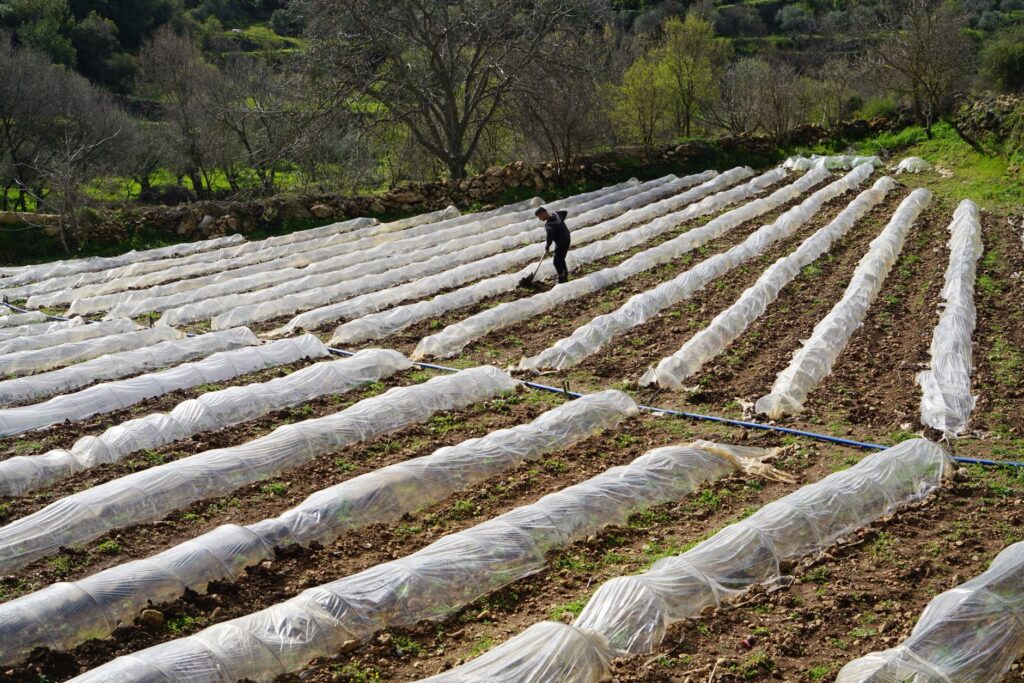
To speak of Murcia without mentioning its surrounding agricultural plain is to understand only half of its soul. Although urban expansion has voraciously bitten into much of this agricultural territory, the network of ditches, irrigation channels, and drainage systems inherited from the Andalusian era still beats strongly in peripheral districts and natural landscapes bordering the municipality. This irrigation system, declared intangible cultural heritage by UNESCO, is a masterpiece of popular hydraulic engineering.
Walking along the paths of the huerta in spring, when fruit trees are in bloom and the scent of orange blossom impregnates the atmosphere, allows visitors to connect with a millennial agrarian tradition. This is where the produce defining local gastronomy is cultivated: exceptional vegetables and greens starring hearty dishes like zarangollo, rice with vegetables, or paparajotes, the lemon leaf coated in sweet fried batter that serves as the playful and ephemeral climax of any meal.
The art of street living
Murcia’s semi-arid Mediterranean climate, boasting over three hundred days of sunshine per year, absolutely conditions collective psychology. Life happens outside four walls. Terraces occupy every walkable corner, conversations stretch out unhurriedly, and the constant murmur of the street constitutes the official soundtrack of the capital. This everyday hedonism finds its maximum expression during the patron saint festivities of the Murcia Fair or the celebration of the Bando de la Huerta, when thousands of citizens take over public spaces dressed in traditional attire or decked out for the occasion.
That festive exuberance might shock the methodical traveler seeking rigid itineraries, but it is precisely that spontaneity which endows the city with genuine charm. There is no pretentiousness in the Murcian character; there is a direct hospitality, sometimes rough in form but extraordinarily warm at heart, disarming any attempt at distant sociological analysis.
Practical guide
How to get there: The International Airport of the Region of Murcia is located about thirty kilometers from the capital, although many travelers choose to fly into Alicante-Elche airport and continue by train or bus. Murcia del Carmen station features high-speed AVE and Alvia connections linking Madrid to the city center in just over two and a half hours.
When to go: Spring (April and May) and autumn (September and October) offer the most pleasant temperatures for walking without suffering the extreme heat of summer months. Coinciding with the Spring Festivities or the September Fair guarantees total cultural immersion, albeit with higher hotel occupancy.
Where to stay: The historic center concentrates the best selection of boutique hotels and charming establishments, many located in rehabilitated old palaces. For more functional stays, the surroundings of the railway station offer good mid-range options.
Essential gastronomy: It is essential to try the marinera, the flaky meat pie—featuring its characteristic topping and hard-boiled egg inside—, zarangollo, and, of course, the caldero rice from the Mar Menor during excursions toward the coast.
Local tip: Forget your digital map for a few hours. Murcia’s best surprises hide in seemingly dead-end alleys, small squares tucked behind baroque churches, and traditional taverns where the daily menu is a lesson in popular history.
Epilogue: The final flash under the Segura sun
When evening falls and the last rays of sunlight set fire to the cathedral facade and the glazed domes of the city, Murcia acquires an almost cinematic dimension. It is the moment when commercial bustle gives way to the luminous calm of twilight, an instant where urban contradictions blur and the city reveals itself in its barest truth. Murcia is not visited merely to check monuments off a list; it is experienced with all five senses, accepting its indomable rhythm, its endearing chaos, and that unique capacity to make any traveler feel, after just a few hours, like a local neighbor in its inexhaustible and lovely geography.
Source: Condé Nast Traveler Spain – La belleza desordenada de la ciudad de Murcia (https://www.traveler.es/articulos/la-belleza-desordenada-de-la-ciudad-murcia)