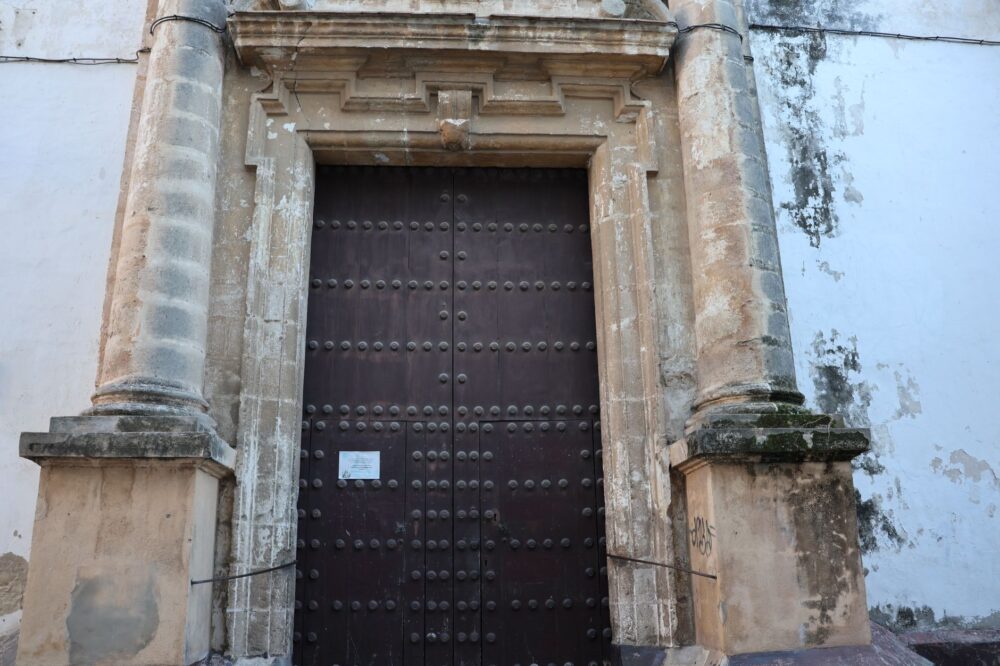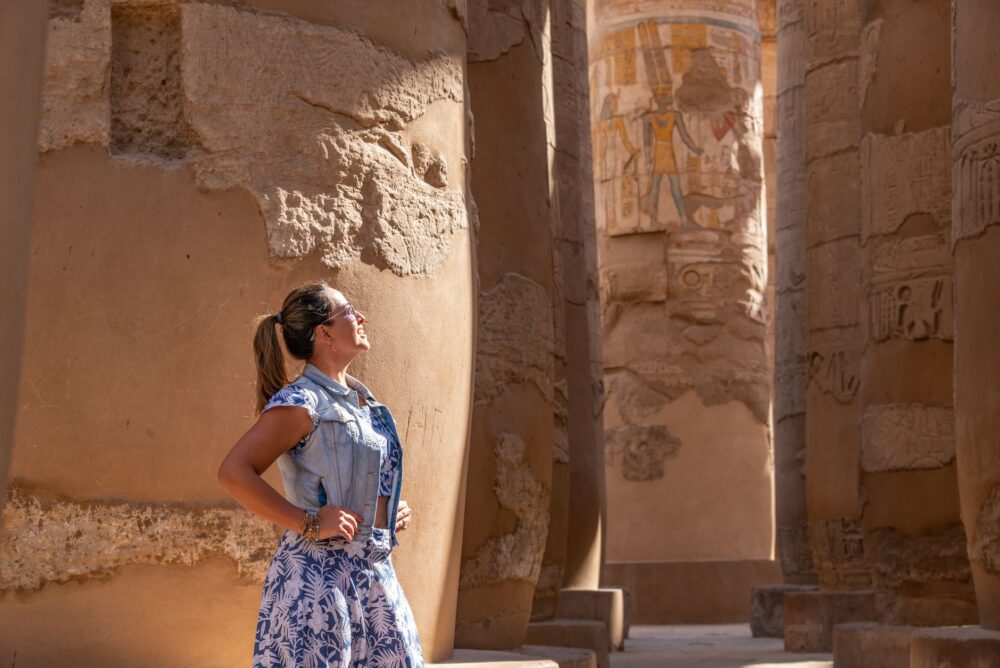

In the university lecture halls of Hanoi and Ho Chi Minh City, a silent yet profound shift is altering how new generations relate to their past. Far from traditional leather-bound textbooks and school visits marked by rigorous silence, Vietnamese students are taking control of the collective memory. Armed with smartphones, graphic tablets, and an insatiable curiosity, these young creators have set out on a mission as ambitious as it is urgent: to transfer the country’s rich and fragile cultural heritage into the digital ecosystem. This is not simply about scanning old documents or uploading static photographs to social networks, but about endowing historical relics with a contemporary pulse that resonates among their peers.
This phenomenon does not arise in an institutional vacuum, but as a natural response to the urgency of preserving traditions that fade under the relentless weight of urbanization and globalization. While the great metropolises of Southeast Asia grow dizzyingly toward the sky with glass and steel skyscrapers, the alleyways of ancient craft guilds and rural villages suffer the exodus of their most veteran artisans. It is here that the creative gaze of students intervenes as an indispensable bridge. By reinterpreting ancestral techniques, oral legends, and secular architectures through the perspective of modern design and interactive technology, young people not only save the past from institutional oblivion, but turn it into a living, dynamic, and deeply relevant territory.
The creative spark in the modern classroom
The laboratory where this transformation germinates is usually an austere space, illuminated by the bluish light of computer screens and populated by 3D models, tablets, and external hard drives. Here, students of design, art history, and audiovisual communication collaborate on interdisciplinary projects that challenge traditional academic boundaries. Far from conceiving history as a static discipline, they analyze it as a vast open-source archive available for artistic reinterpretation.
Subjects focused on heritage preservation have ceased to be theoretical to become incubators of cultural innovation. Professors act as mentors guiding students in the use of three-dimensional modeling tools, augmented reality, and interface design, allowing a 17th-century temple or a ceremonial robe of the Nguyễn dynasty to be studied down to the last thread through advanced digital simulations.
Digitization as an act of cultural resistance
For this generation, technology is not a tool for distraction, but a mechanism of resistance against oblivion. In a digital environment saturated with ephemeral content, these young designers apply principles of usability and refined aesthetics so that cultural heritage competes on equal terms with commercial entertainment.

«We do not want our monuments to be dead museum pieces, but interactive stories that invite us to be lived.»
The digitization process involves rigorous documentary exhaustiveness. Students consult national archives, interview elders in rural communities, and collaborate with historians before writing a single line of code or tracing the first graphic vector, thus ensuring that visual innovation never betrays historical truth.
Rebuilding the temples of time in 3D
One of the most notable achievements of this student initiative is the virtual reconstruction of architectural complexes that have suffered the ravages of the tropical climate and armed conflicts. Through the use of photogrammetry and low-cost laser scanners, students have managed to recreate with millimetric precision wood and stone structures that today only exist in ruins or colonial chronicles.
This reconstruction work not only has aesthetic value, but constitutes a first-order archaeological research tool. By superimposing old plans onto three-dimensional digital models, academic teams can study how sunlight illuminated altars during solstices or how the acoustics of a pagoda favored the recitation of Buddhist sutras.
The technical challenge versus material fragility
The technical challenge is no small feat. Students must deal with scarce budget resources, optimizing the performance of models so they can be explored fluently from any basic mobile phone, without the need for state-of-the-art computer equipment that would limit public access to the project.
This economic limitation has stimulated commendable ingenuity. Young people have developed proprietary algorithms and simplified workflows that allow everyday photographs taken with amateur cameras to be converted into dense three-dimensional meshes with surprising visual fidelity.
Voices of the archive: oral stories in multimedia format
Architecture and material objects are only part of the equation. Aware that immaterial memory is the most fragile of all, students have poured their efforts into documenting Vietnam’s oral heritage. Recorders in hand, they travel through the provinces to record lullabies of ethnic minorities, fishing techniques in the Mekong delta, and stories of the last traditional lacquer artisans.

These testimonies are later transformed into immersive podcasts, interactive documentaries, and geolocated sound experiences. In this way, a visitor walking through the streets of Hoi An can activate, via their mobile device, the recorded voice of a master carpenter explaining the secrets of jacaranda wood right in front of the workshop where he has worked for six decades.
Empathy as a rescue methodology
Direct contact with the depositaries of oral tradition generates a profound transformation in the students themselves. What begins as an academic requirement usually turns into a personal and intergenerational commitment.
- In-depth interviews with master artisans at risk of disappearing.
- Transcription and translation of folk songs into contemporary visual languages.
- Creation of interactive sound maps accessible for free on the network.
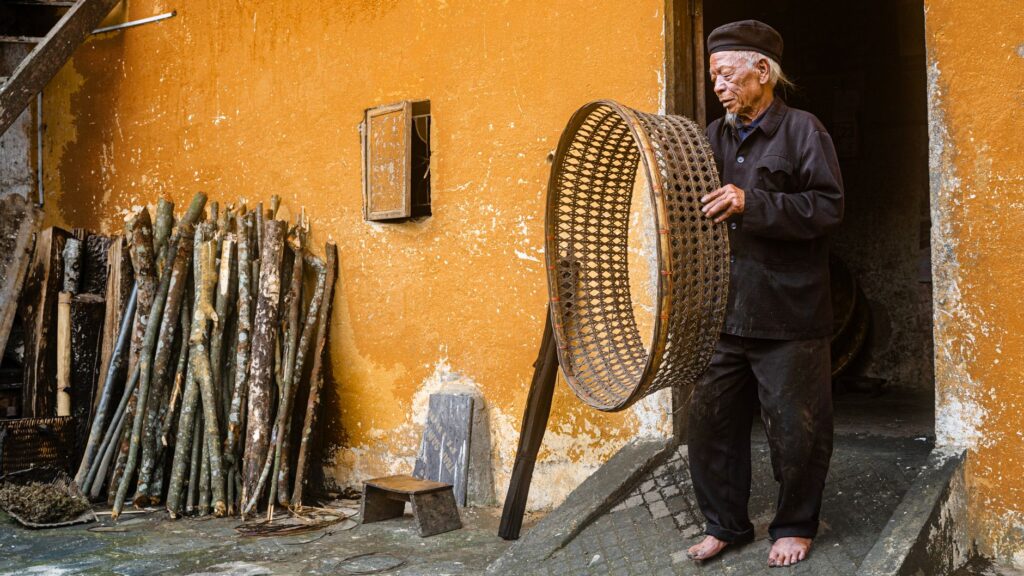
This participatory methodology guarantees that the transfer of knowledge is not unidirectional, but a respectful dialogue between the accumulated experience of the elders and the technical skill of youth.
Gamification and learning: playing not to forget
One of the most successful strategies of these student collectives has been the adoption of gamification. Transforming historical data into educational video games and interactive experiences has proven to be the most effective method to connect with younger audiences, those who rarely cross the threshold of a traditional museum.
Historical exploration video games set in the ancient imperial capital of Huế or the battlefields of resistance allow users to solve puzzles based on classical poetry, manage economic resources of the Lê dynasty, or decipher inscriptions in Chữ Nôm characters.
The balance between academic rigor and entertainment
Designing these gamified experiences requires a delicate balance. Creators must avoid the banalization of history or the stereotypical representation of conflicts, constantly consulting university scientific committees to validate every visual and narrative detail.
«The game is the gateway; historical knowledge is the final destination we want to lead the user to.»
The success of these proposals has caught the attention of ministries and cultural foundations, which are beginning to finance and scale projects initially conceived as simple undergraduate thesis works.

Economic and social impact on local communities
The digitization of cultural heritage driven from the classrooms is not limited to the virtual sphere; it generates tangible ripple effects in the local economies of the represented regions. By equipping artisan villages and rural enclaves with an attractive digital identity, the arrival of more conscious, sustainable, and respectful cultural tourism is facilitated.
Interactive maps and immersive guides designed by students direct travelers toward small family workshops, traditional restaurants, and community accommodations that usually fall outside mass tourism circuits, redistributing economic benefits directly among local inhabitants.
Toward a sustainable cultural development model
This decentralized approach prevents the harmful effects of tourist gentrification suffered by major national monuments. Technology thus becomes an instrument of territorial equilibrium, allowing remote rural areas to compete in digital visibility with large cities.
In addition, local communities participate in the co-creation of content, deciding which aspects of their cultural identity they wish to show the world and which traditions they prefer to keep in the strictly private sphere, guaranteeing respect for cultural sovereignty.
Practical guide
For those interested in exploring the impact of these digital initiatives and experiencing Vietnam’s cultural heritage firsthand through new technologies, essential recommendations for a conscious journey are detailed below.
How to access digital archives: Most projects developed by students are hosted on public access platforms such as Vietnam.vn, Hanoi university repositories, and cultural portals of the Ministry of Culture. It is recommended to use simultaneous translation tools integrated into browsers to explore texts in Vietnamese.

Immersive cultural tourism routes: Plan visits to cultural innovation centers in Ho Chi Minh City and Hanoi, where temporary augmented reality exhibitions created by university collectives are frequently organized.
Rules of respect and participation: When visiting rural communities collaborating with these digital projects, maintain a discreet attitude, ask permission before photographing local artisans, and support the area’s economy by purchasing pieces directly in traditional workshops.
Recommended technological infrastructure: Make sure to have a local SIM card with stable mobile data to download and use interactive maps, geolocation applications, and augmented reality experiences in real time during your travels through the country.
The echo of the future in the memory of stone
When the sun slips behind the silhouettes of the pagodas and the computer screens in the university laboratories finally turn off, the work of these young creators remains suspended in the digital ether, waiting to be activated by the next curious mind. In a world obsessed with speed and planned obsolescence, the effort to freeze time and restore splendor to stone, fabric, and spoken word acquires a profoundly poetic and necessary dimension.
The digitization of heritage is not, ultimately, an exercise in cold technological archaeology, but an act of civic love. Through their creations, Vietnam’s students demonstrate that a people’s identity is not a mausoleum guarded with fear, but a rushing river that must be channeled with intelligence, creativity, and respect for the future. Source: Vietnam.vn.