
Origins and Genealogy of Cordoban Leather
The history of Córdoba is written not only on the ashlar stones of its Mosque-Cathedral or within the labyrinthine layout of its Jewish Quarter, but also on the flexible, warm, and noble surface of cured hide. Since the Umayyad Caliphate, the city established itself as the undisputed epicenter of leatherworking in the western Mediterranean. Andalusi artisans perfected two distinct techniques that would bring universal renown to their manufactures: cordobán, goat leather meticulously tanned and finely worked, and guadamecí, characterized by a delicate sheet of beaten silver or gold applied to its surface, subsequently polychromed and embossed with geometric and vegetal motifs.
This legacy does not belong to the dusty past of museum display cases, but beats strongly within workshops hidden behind the whitewashed walls of Cordoban courtyards. Here, time seems governed by different rhythms. The raw material arrives unworked, carefully selected for its thickness and texture, before undergoing softening processes that have remained essentially unchanged for a thousand years. Modern masters, direct heirs to a lineage of guadamecí makers, combine the philological rigor of historical archives with an aesthetic audacity that dialogues on equal terms with contemporary interior design and international high-end leather goods.
The transmission of knowledge occurs through strict oral tradition and obsessive practice. Apprentices spend years dampening the skin, learning to recognize the exact tension the natural grain can withstand without tearing. As master artisan Ramón García notes in his workshop in the Axerquía district: Leather possesses its own memory; if you fail to respect its molecular structure when dampening it, the hide will betray the original design the moment environmental humidity shifts. This deep comprehension of the material separates mere decorative craft from high cultural creation.
Anatomy of a Workshop: Tools and Millimetric Gestures
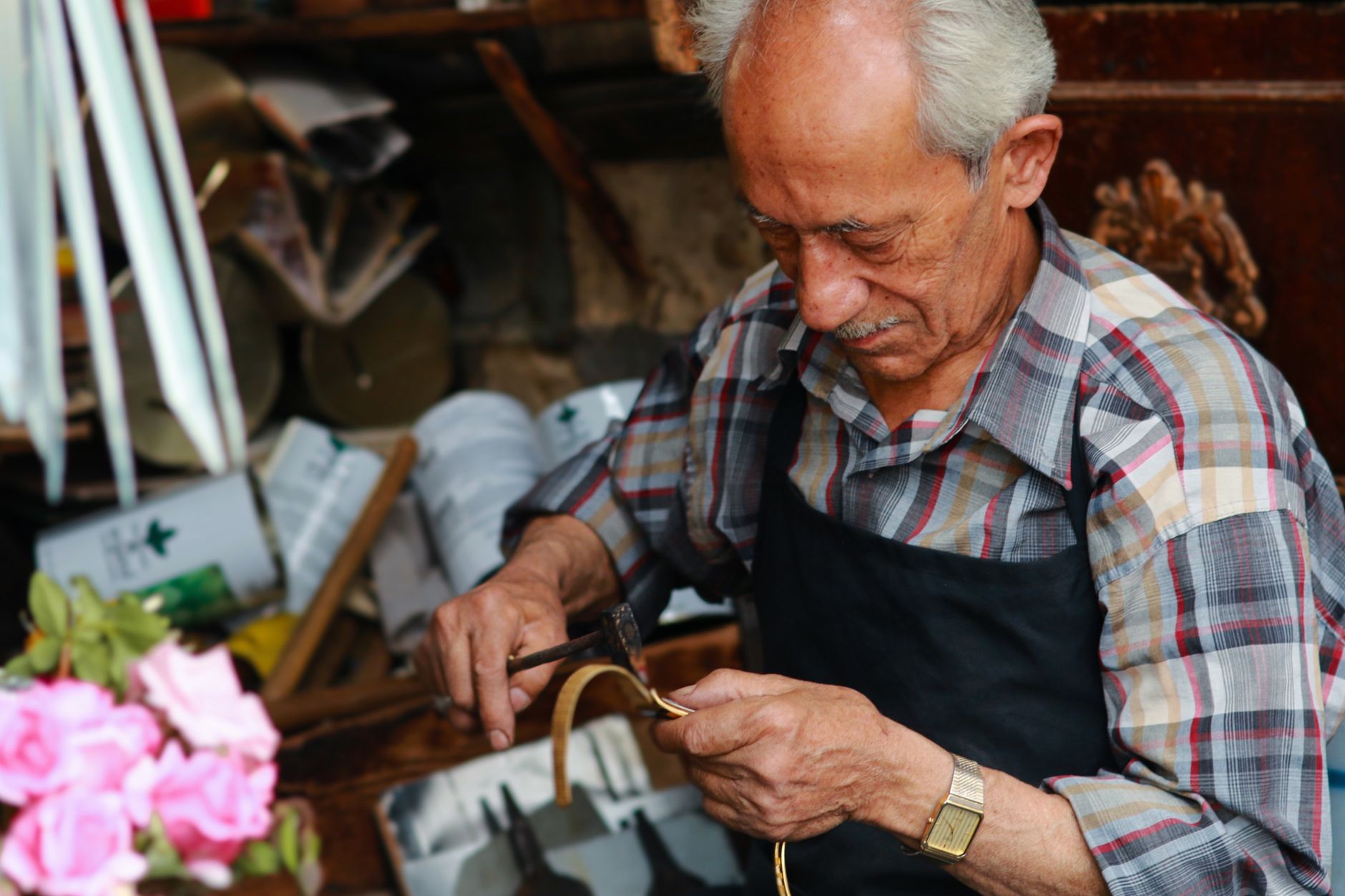
Entering a traditional guadamecí workshop in Córdoba is stepping into a territory where metal, fire, and organic matter forge an indissoluble alliance. On wooden tables worn down by decades of use, gouges, hand-forged steel punches, and boxwood mallets align in precise order. Each tool serves a singular function and has often been designed by the artisan to solve a specific problem of relief or contouring.
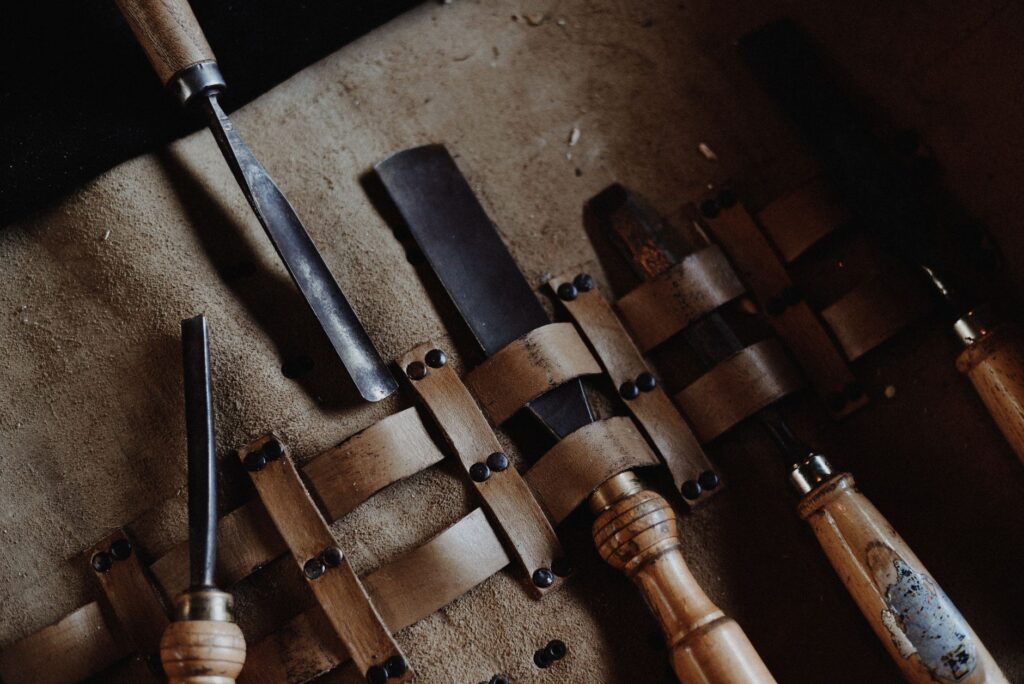
The creation process of a guadamecí piece demands an unbroken sequence of technical steps. First, the skin is stretched over a wooden frame, ensuring homogeneous tension. Next, a thin layer of silver or gold leaf is applied to the leather, which has been prepared with natural glues. It is at this exact moment that the engraver’s expertise comes into play: through the precise pressure of punches, the backgrounds are depressed to make the arabesques, interlaced patterns, and floral motifs characteristic of the Caliphate repertoire flourish.
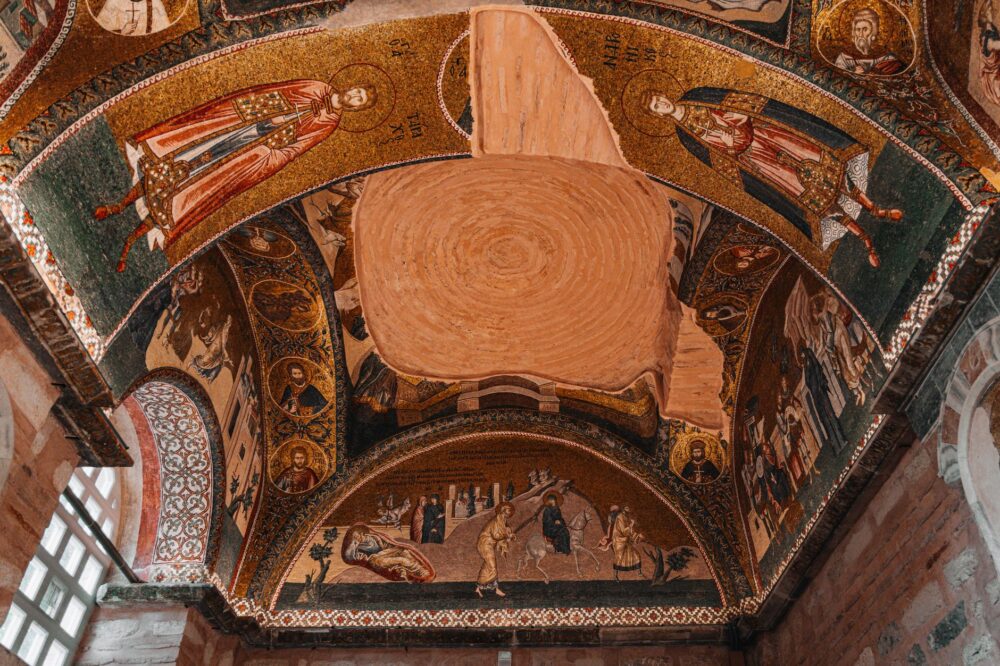
Polychromy constitutes the most delicate and coloristically demanding step. Utilizing mineral pigments mixed with oils and tempera, artisans apply primary and secondary colors with single-hair marten brushes. The light reflected by a polychrome guadamecí on a silver background is not flat; it shifts subtly according to the angle of incidence, mimicking the vibration of Byzantine mosaics. This luminous complexity has recently attracted the attention of interior architects and industrial designers worldwide, who seek to integrate these textured surfaces into sustainable luxury residential and hospitality projects.
The Geometry of Relief: From Ataurique to Contemporary Minimalism
One of the liveliest debates within the Cordoban artisan community revolves around the limits of tradition. While a conservative current defends the strict reproduction of historical patterns documented in Umayyad and Mudéjar repertoires, new generations of creators drive a radical formal renewal. These young designers and tanners replicate traditional techniques but strip the designs of superfluous ornamentation, opting for clean volumes, abstract geometries, and monochromatic palettes.
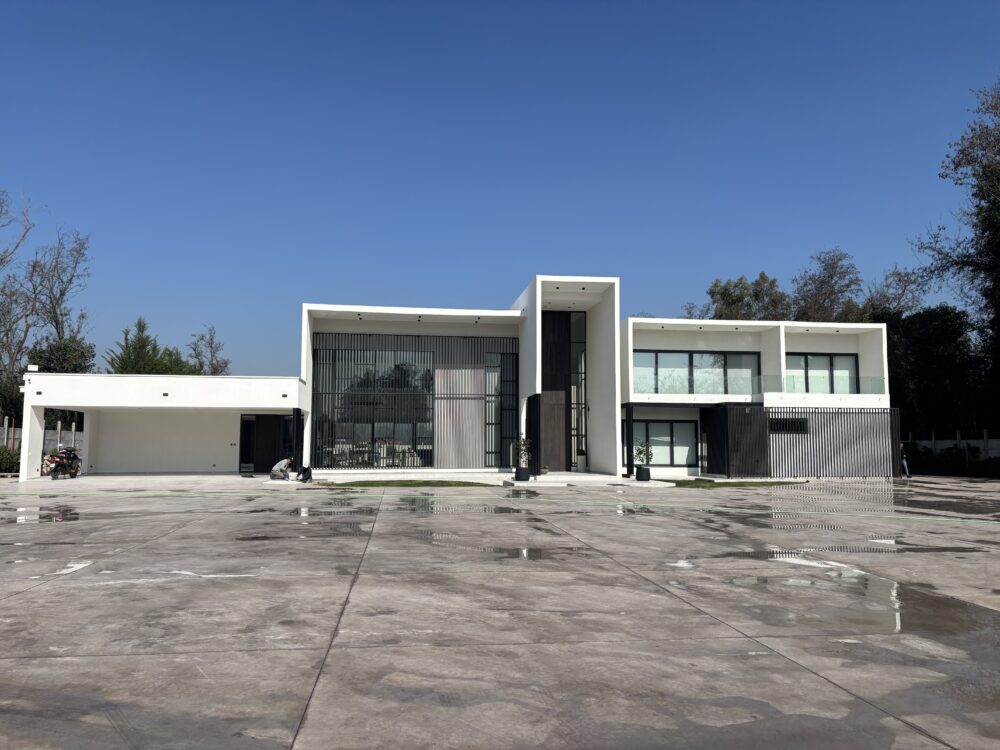
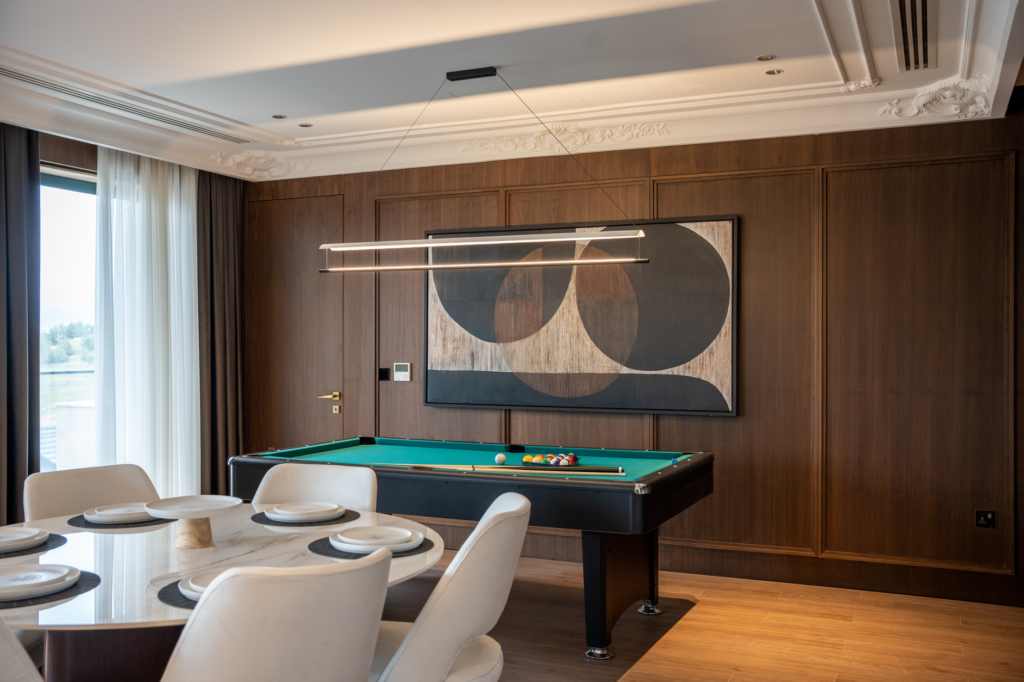
This dialogue between past and vanguard materializes in collaborations with European design schools and internationally renowned architectural studios. Embossed leather panels are no longer destined solely to line noble chests or large institutional salons; instead, they transform into acoustic wall coverings, sculptural screens, and interior urban furniture. The natural resilience of Cordoban leather, combined with heavy-metal-free vegetable tanning treatments, guarantees exceptional durability that meets the stringent standards of contemporary architecture.
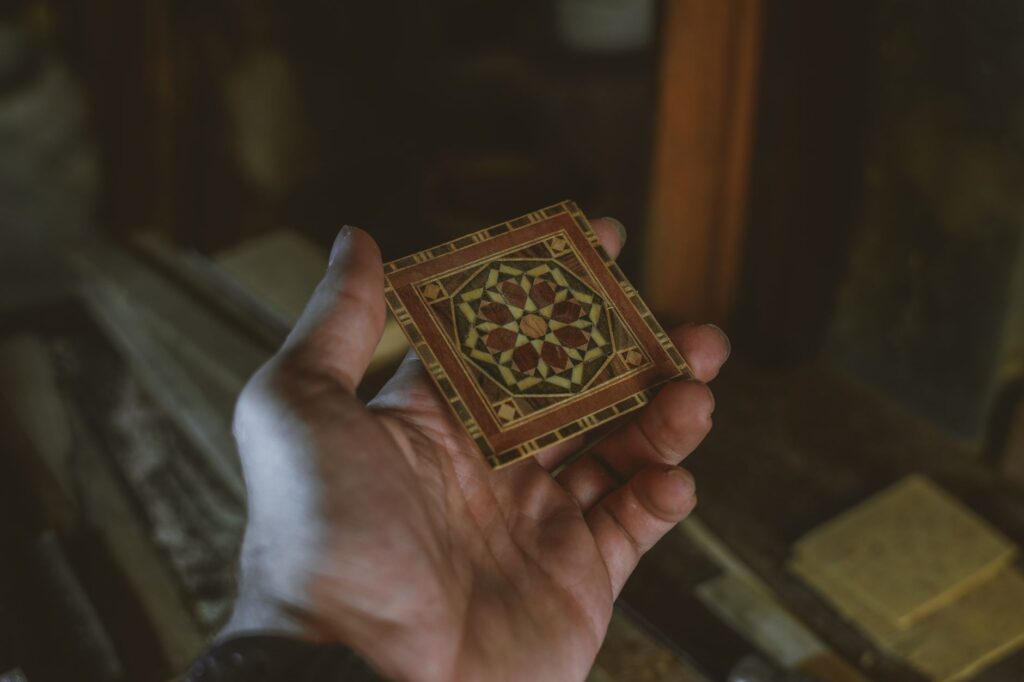
The challenge lies in maintaining the human scale of production against the demands of a globalized market hungry for authenticity. Córdoba’s workshops operate under a strictly limited production regime; a single large-format piece can require up to three months of continuous work. As conservator and researcher Carmen Ruiz recalls in her studio in the San Basilio neighborhood: Preserving this craft does not mean fossilizing a tenth-century technique, but endowing it with the capacity to answer the aesthetic and material questions of our own time.
The Value Chain: Vegetable Tanning and Artisan Sustainability
Behind every piece of guadamecí or cordobán lies a supply chain that prioritizes ecological proximity and respect for natural cycles. Unlike mass industrial leather goods, which rely on aggressive chemicals and synthetic chroming to accelerate processes, Cordoban workshops and their traditional suppliers in Andalusia employ vegetable tannins extracted from olive, oak, and holm oak bark.
This zero-chromium tanning method not only safeguards the artisan’s health and prevents local aquifer contamination, but also grants the skin a noble aging capacity. Over years of use, handling, and exposure to light, the leather acquires a unique patina, a deep luster known in the trade as *melancholy of the skin*. Life cycle assessments conducted in collaboration with the University of Córdoba demonstrate that these objects, when properly maintained, can exceed two centuries of useful life, becoming a genuine alternative to the planned obsolescence of consumer design.
blockquote>True contemporary luxury does not lie in fleeting ostentation, but in the ethical traceability of materials and the human time invested in shaping them.
Furthermore, byproduct scraps derived from cutting and profiling the hides are fully reused in creating smaller marquetry pieces, high-end bookbinding, or minor decorative elements, achieving a level of circular resourcefulness that anticipates current ecological economic principles.
The Role of Institutions and Training Centers
The survival of such a fragile heritage does not depend exclusively on the heroic efforts of independent masters; it requires a robust institutional infrastructure that guarantees generational handover. In this sense, the Córdoba School of Art plays a fundamental role through its specialized training programs in leather coating and ornamentation techniques. There, students combine technical drawing and art history with the direct use of gouges and presses.
However, experts agree that formal academic training must inexcusably be complemented by residencies in real workshops, where tacit knowledge is transmitted through observation and the constant correction of gestures. Master artisan grants promoted by the regional government of Andalusia have allowed young creators of various nationalities in recent years to settle in the city and learn directly from the last patriarchs of guadamecí.
This international flow of talent is transforming Córdoba into a global magnet for experimental designers seeking to master ancestral techniques. Far from retreating into local chauvinism, Córdoba’s workshops have become open laboratories where Andalusi tradition, Scandinavian design, and digital manufacturing methodologies converge, demonstrating that the deepest identity root is, by definition, universal.
Practical guide
How to get there: Córdoba boasts excellent rail connections via the High-Speed train (AVE), placing it less than two hours from Madrid and about 45 minutes from Seville and Málaga. Córdoba Central Station is a fifteen-minute walk from the historic center.
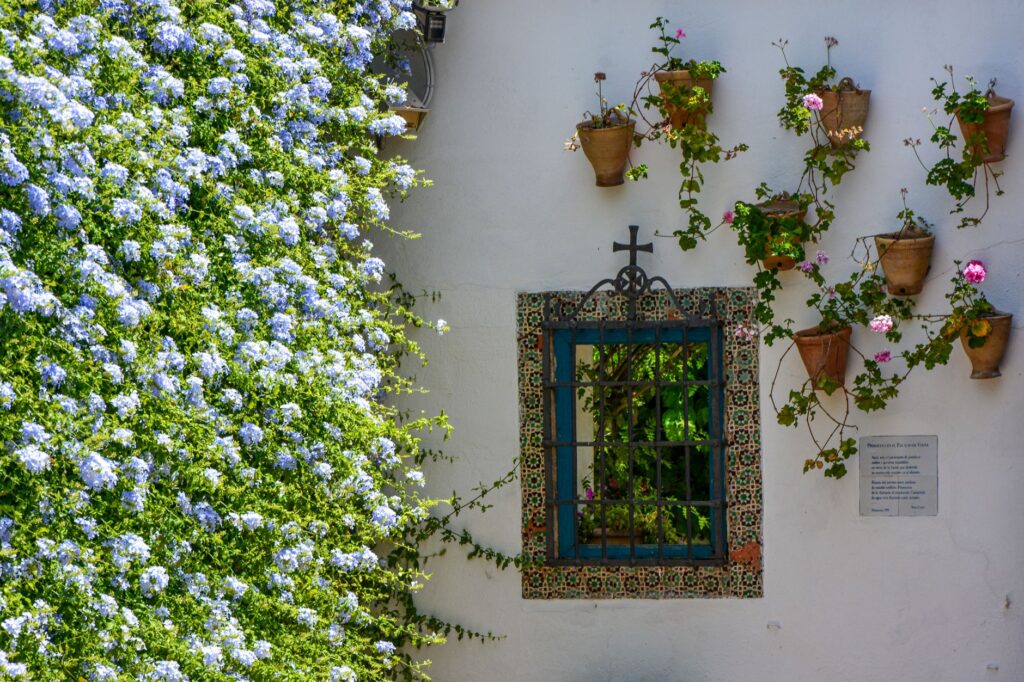
When to go: Spring months (April and May) coincide with the Festival of the Cordoban Courtyards and optimal weather, though autumn offers calmer light and lower tourist density in artisan workshops.
Getting around: The historic center and the Axerquía and Judería neighborhoods are entirely pedestrianized. The best way to tour the workshops is on foot, planning visits in advance due to the intimate and restricted nature of the workspaces.
Recommended workshop route: Visiting the García family workshop in San Basilio, the experimental space of the Delgado Brothers, and the Museum of Umayyad Guadamecí (Casa de las Bulas), which houses some of the most important historical pieces in the peninsula, is essential.
Etiquette and visits: Workshops are active workspaces, not commercial museums. Visitors are advised to request access in advance, respect silence during concentration phases, and consult photography policies before recording processes on video.
Leather as a Refuge for Memory
In a hyperconnected world dominated by the immateriality of screens, the tactile experience has become a scarce and deeply healing good. The hands that emboss leather today in Córdoba’s workshops are carrying out an act of cultural resistance as subtle as it is radical. This is not simply about manufacturing beautiful objects, but about keeping open a channel of communication with the past that gives meaning and depth to the territory we inhabit.
Every line traced with a punch over cordobán hide is a cartography of patience. When the foreign visitor crosses the threshold of these workshops and caresses the golden surface of a freshly polychromed guadamecí, they understand that Córdoba’s true wealth resides not only in its stone monuments, but in this invisible breath that artisans renew every morning to the rhythm of their gouges.