
There are cities that merely present themselves to travelers as immutable postcards, but Edinburgh demands to be read as a palimpsest. Beneath its imposing facade of basalt and medieval cobblestones, the Scottish capital beats with a complex energy where the weight of history intertwines with fiercely creative modernity. It is not simply a matter of walking the Royal Mile or gazing at the castle silhouette etched against a leaden sky; the true pulse of the city is experienced when one leaves the beaten paths and allows oneself to decode the secrets held within its narrow alleyways—the celebrated closes—and its bohemian neighborhoods. In this feature, we delve into the core of a city that defies the seasons, where North Sea winds seem forever laden with the tales of poets, scientists, and rebels.
The magnetism of Edinburgh lies in its topographical and moral duality. Dramatically divided by the slopes of an ancient glacial valley, the city presents a constant dialogue between the claustrophobic verticality of the Old Town and the elegant, rational neoclassical grid of the New Town. This physical configuration is not merely aesthetic; it conditions how its inhabitants navigate the urban space, bridging feudal history with the Enlightenment in just a few strides. Understanding Edinburgh means embracing its contradictions: the solemnity of its national monuments and the irreverence of its bustling contemporary cultural scene, which transforms the urban fabric every August into the global epicenter of the performing arts.
Sacred Geology: Built on Volcanic Rock and Ash
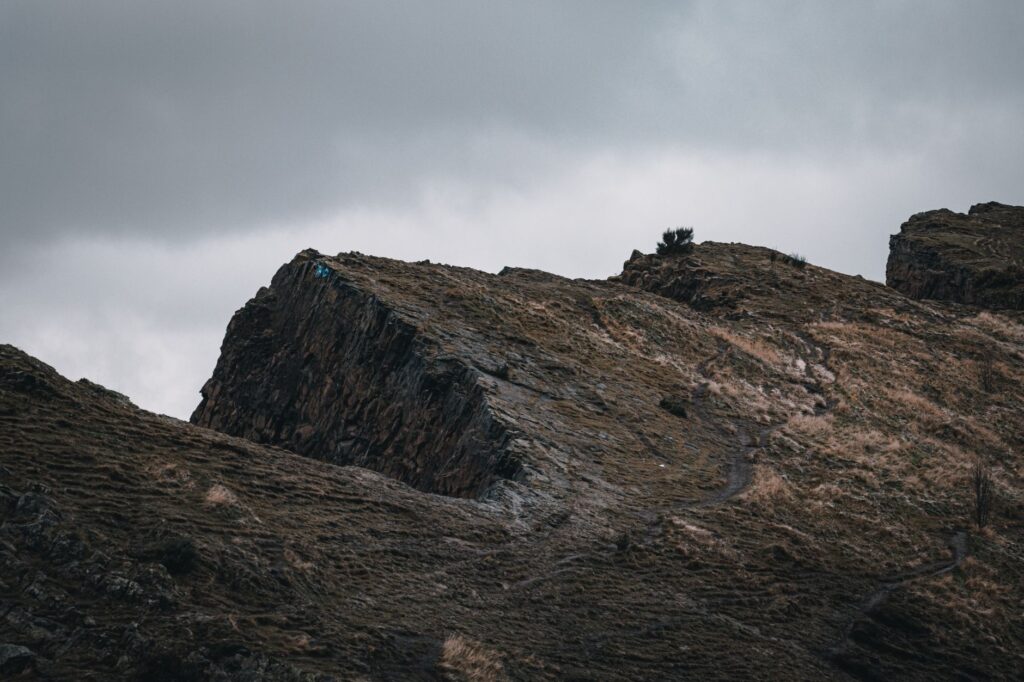
To understand Edinburgh’s layout, one must first look downward, toward the primordial stone that supports it. The hill upon which the Castle stands is actually the volcanic plug of a crater extinct for hundreds of millions of years. From this natural elevation, glacial pressure carved a distinctive geological formation known as crag and tail, creating a downward slope that would determine early urban development. The volcanic nature defines the character of the architecture, built largely from local quarry stone that absorbs the gray and golden northern light, shifting tones depending on environmental humidity and sun position.
Just steps from the nerve center, Holyrood Park and the bulk of Arthur’s Seat remind visitors that this is not a metropolis divorced from its natural surroundings, but a territory where the mountain invades the city. Climbing this summit at dusk allows one to observe how the urban grid dissolves toward the Firth of Forth, offering a perspective where physical effort is rewarded with an unmatched panoramic view. Geology here is no mere backdrop; it is a constant reminder of the telluric forces that shaped the Scottish landscape and inspired generations of geologists, from James Hutton to modern naturalists.
Edinburgh is a symphony in stone and mist where every alleyway holds the echo of a past refusing to stay buried.
This communion between asphalt and wild terrain translates into surprising urban biodiversity. Along the Water of Leith, a wooded path meanders below street level, connecting former industrial mills with protected nature reserves where herons and trout coexist with daily commuting. This green corridor proves that Edinburgh has successfully protected its ecological lungs against real estate pressure, integrating water and vegetation into the daily experience of its residents.
The Medieval Labyrinth: Secrets of the Old Town
Walking the Royal Mile is traversing the backbone of Scottish history. From the castle walls to the Palace of Holyroodhouse, this thoroughfare accumulates centuries of political intrigue, epidemics, commerce, and community life. Yet the true essence of this network lies not in the main avenue, but in the side passages plunging laterally for air. These closes and wynds functioned for centuries as vertical autonomous communities, where dozens of families crowded into high-rise buildings that were precursors to modern skyscrapers.
Among the best-preserved examples stands Mary King’s Close, a subterranean labyrinth of streets and dwellings buried beneath the construction of the City Chambers in the 18th century. Descending into these depths is an exercise in social archaeology that offers a glimpse into the living conditions of the working classes of the era, far from royal pageantry. Local guides recount tales of survival and urban myths, though the true value of the visit lies in the physical realization of how the city literally grew atop its own ruins.
At ground level, the bustle of traditional pubs contrasts with the tranquility of small interior courtyards. In places like Lawnmarket or the Grassmarket, the architecture of stepped gables and restored timber facades transports observers back to the days when Mary Stuart ruled a divided realm. It is in these corners that local gastronomy reclaims its space, offering everything from classic haggis reinterpreted by contemporary chefs to a curated selection of single malt whiskies from the islands and the Highlands.
Enlightenment and Symmetry: The Miracle of the New Town
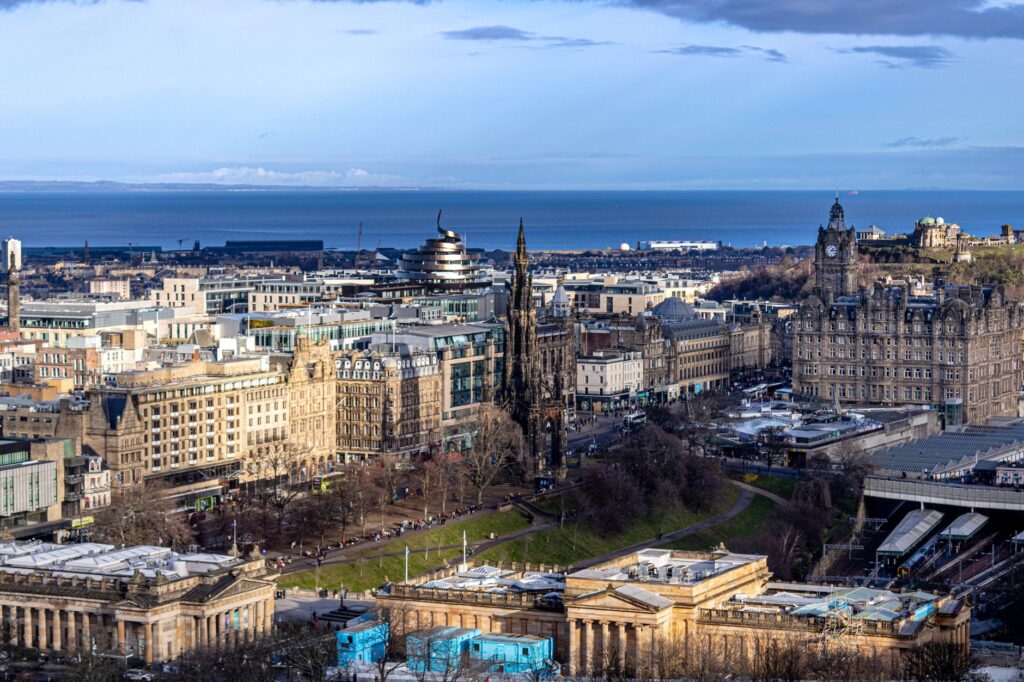
If the Old Town represents organic disorder and medieval defense, the New Town is the absolute triumph of enlightened reason. Projected in the second half of the 18th century following a public competition won by the young architect James Craig, this urban expansion meant a radical break from previous overcrowding. Based on a geometric grid inspired by classicism, the new neighborhood was structured around parallel axes like George Street and Princes Street, flanked by sumptuous squares and manicured private gardens.
The architectural quality of this ensemble lies in the homogeneous use of Craigleith sandstone, whose ochre and cream tones grant unparalleled luminosity on clear days. The industrial bourgeoisie and intellectuals of the Scottish Enlightenment—figures of the stature of David Hume and Adam Smith—found in these broad avenues the perfect stage for philosophical debate and commercial development. Buildings combine the elegance of Palladian facades with interiors designed to maximize natural light intake, a highly prized commodity in northern latitudes.
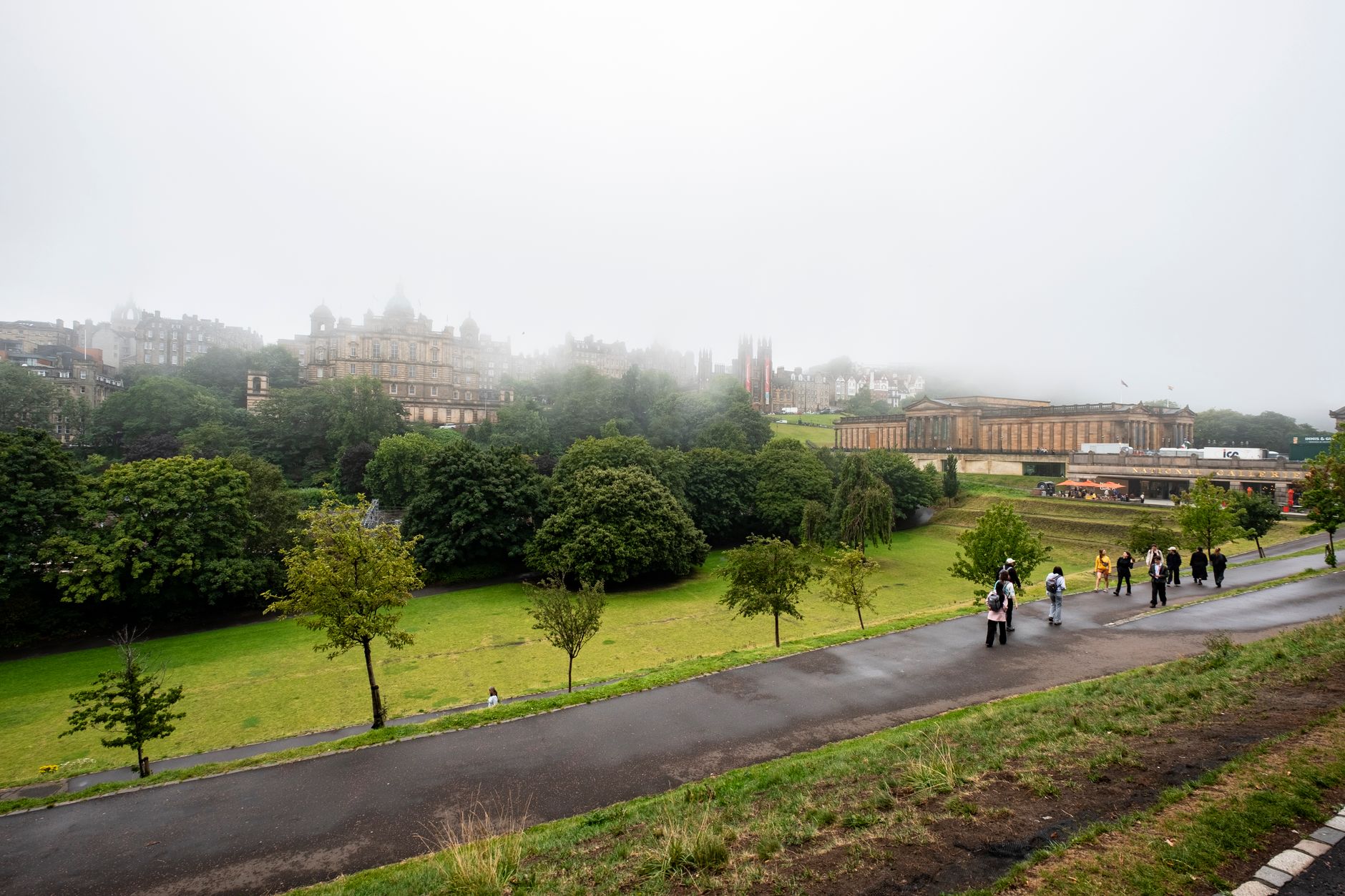
Today, the New Town maintains its commercial and residential pulse, hosting art galleries, independent bookstores, and historic cafes where time seems to stand still. Princes Street Gardens, occupying the former bed of the Nor Loch, act as a green boundary and privileged viewpoint toward the castle, becoming a favorite meeting place both for locals seeking respite and travelers hungry for photographic perspective.
Literary Territory: Cities of Words and Paper
Edinburgh cannot be understood without addressing its profound literary vocation. It was not by chance that it became the first UNESCO City of Literature. From Robert Louis Stevenson’s Gothic novels to Ian Rankin’s contemporary thrillers, through to the philosophical sharpness of Walter Scott—whose monumental works dominate the skyline in the shape of a neo-Gothic spire—letters form part of the civic DNA. Edinburgh cafes are authentic sanctuaries of artistic creation; it was at The Elephant House that J.K. Rowling drafted much of Harry Potter’s early adventures, looking out toward Greyfriars Kirkyard.
This churchyard, situated on the fringes of the Old Town, is a compendium of history and legend. Among mossy headstones and nineteenth-century mausoleums, visitors frequently seek the monument dedicated to Greyfriars Bobby, the loyal terrier who guarded his master’s grave for fourteen years. Literature here merges with collective memory, creating an imaginary where the supernatural and the everyday blend naturally.
Independent bookshops dot every neighborhood, offering everything from incunables to out-of-print editions of Scottish poetry. Spaces like the Scottish Storytelling Centre keep the oral tradition of bards alive, ensuring that the legacy of Celtic legends continues to resonate in new generations through recitals, workshops, and international gatherings.
Innovation and Vanguard: The Contemporary Pulse
Despite its deep respect for tradition, Edinburgh is not a fossilized museum. In recent decades, the city has undergone a cultural transformation driven by a new generation of creators, designers, and hoteliers reinterpreting Scottish heritage from a global and sustainable perspective. Neighborhoods like Leith, a former independent port at the mouth of the eponymous river, exemplify this metamorphosis. From a depressed industrial zone to a gastronomic and artistic mecca, Leith hums with farmers’ markets, craft breweries, and Michelin-starred restaurants.
Contemporary architecture has also found its place without disrupting the historic heritage. The Scottish Parliament building, designed by the late architect Enric Miralles at the foot of Holyrood hill, was once a milestone of debate for its organic, disruptive design, evoking both the inverted boats of fishing tradition and the profiles of cliffs. Today, fully integrated into the urban landscape, it symbolizes political autonomy and the open-mindedness of a society in constant evolution.
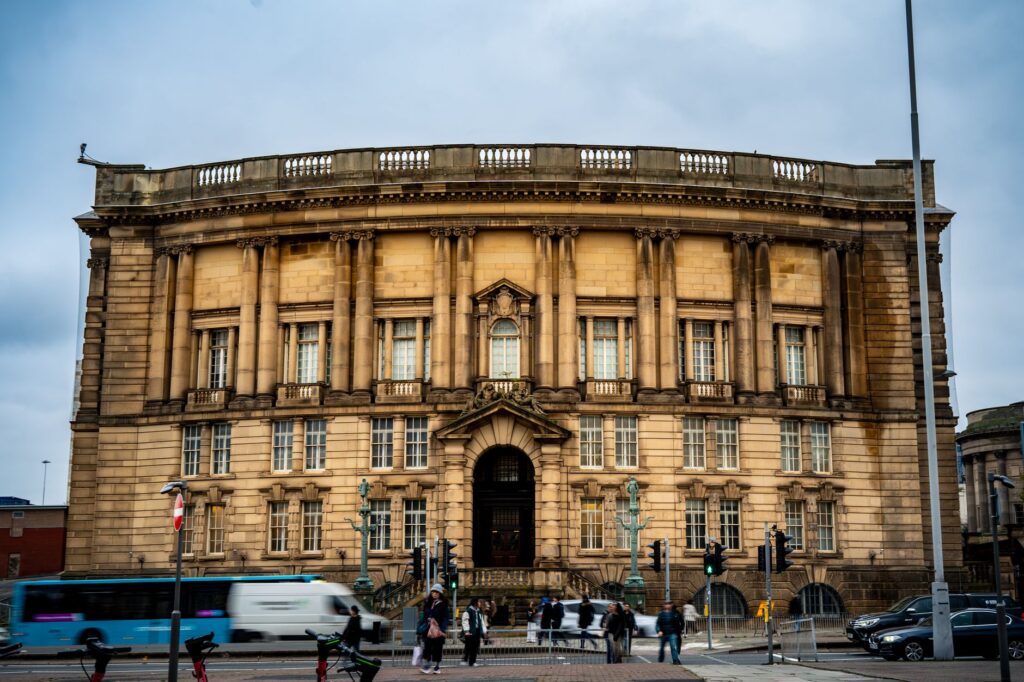
Edinburgh’s true modernity lies in its capacity to converse with its past without losing the pulse of international vanguards.
The music and performing arts scene reaches its zenith in August, when the Fringe Festival floods every corner, from established theaters to improvised basements, turning the capital into a global showcase for emerging talent. This dynamism attracts creators from across the globe, consolidating the city as a pole of intellectual attraction transcending United Kingdom borders.
Practical guide
Planning a trip to Edinburgh requires paying attention to the particularities of its climate and topography. Below are the fundamental keys to optimize your stay.
How to get there
Edinburgh Airport (EDI) has frequent connections with major European capitals. The tram and urban buses (Airlink 100) connect the terminal with the city center in approximately thirty minutes. For those preferring trains, Waverley Station places travelers directly in the heart of the valley between the Old and New Towns.
When to go
Spring (May to June) offers long days, fewer crowds, and nature in full splendor. August is vibrant thanks to festivals, but requires booking accommodation months in advance as prices surge. Autumn brings spectacular ochre tones, though the weather becomes unstable.
Where to stay
The New Town is ideal for those seeking comfort, elegant boutiques, and ease of movement. The Old Town offers a more evocative atmosphere and lodging in historic buildings, though one should consider the hills and stairs required to access them. Leith is the perfect choice for food lovers and a more relaxed neighborhood vibe.
Mobility recommendations
Edinburgh is an eminently pedestrian city, designed to be explored on foot. However, its terrain demands comfortable, water-resistant footwear. The local bus network (Lothian Buses) is excellent, efficient, and accepts contactless payment.
Local gastronomy
Beyond the fresh seafood of the east coast and highland beef, look for establishments committed to local produce. Do not hesitate to visit a traditional pub to enjoy a pint accompanied by comforting food and chat with locals.
Epilogue in the Mist
When twilight falls over the Firth of Forth and street lamps begin to silhouette against centuries-old stone, Edinburgh reveals its most intimate truth. It is not the city of tourist catalogs or the cinematic backdrop many imagine before crossing its borders; it is a living organism, sculpted by wind, memory, and the resilience of its people. In that complicit silence preceding the Scottish night, one understands that leaving this place is not a definitive farewell, but the beginning of a perennial longing for a corner of the world where time, fortunately, never flows in quite the same way.