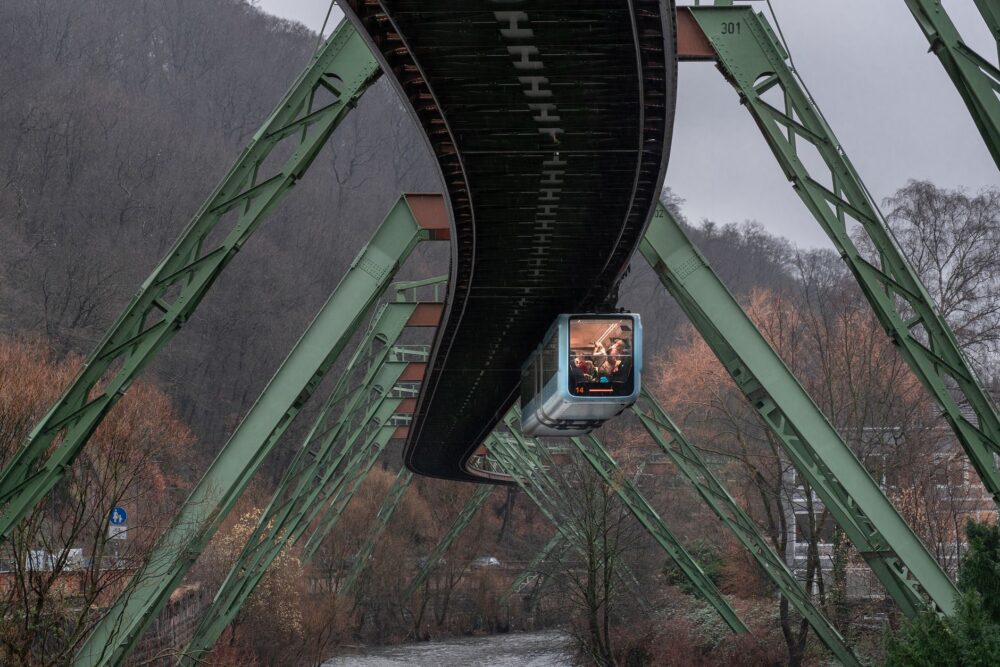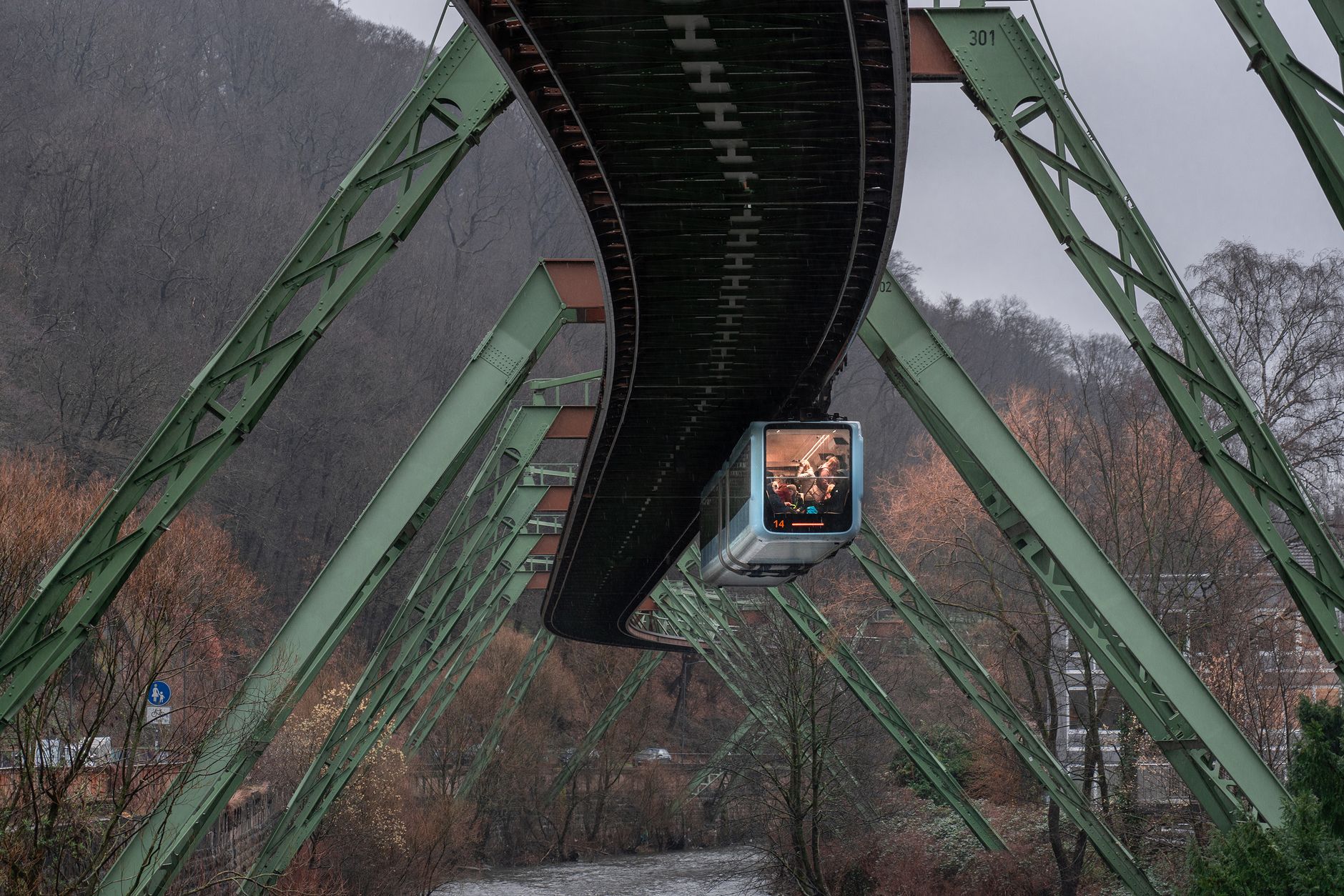

The steel shadow defying urban gravity
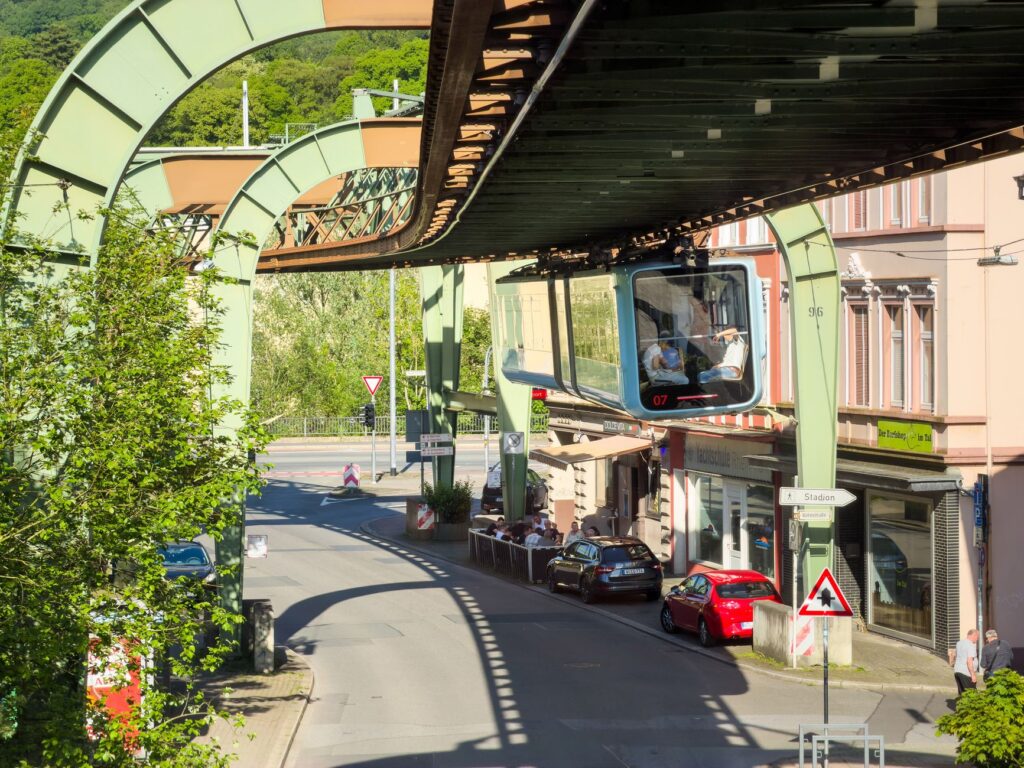
There are cities best explored at asphalt level and others that demand looking upward to grasp their historical pulse. In the valley of the Wupper River, within Germany’s industrial west, mobility is never merely a matter of punctuality or validated tickets in an automated machine; it is a century-old choreography floating twelve meters above the daily hustle. Wuppertal’s Schwebebahn, a suspended railway inaugurated in 1901 under the reign of Kaiser Wilhelm II, is far more than public transportation: it is the backbone, the identity, and the civic pride of a community that understood engineering as an extension of the landscape.
While contemporary metropolises debate how to pacify streets, reduce carbon footprints, and decarbonize daily commutes, Wuppertal has operated a radically efficient solution with zero direct emissions right above its river corridor for over a century. This suspended monorail covers a linear route of just over thirteen kilometers, meandering above the riverbed and major urban arteries. For the modern traveler, boarding its scarlet and gray carriages is an exercise in living industrial archaeology, as well as a masterclass in how sustainable urban planning can integrate into geographical fabric without devouring it.
The birth of an industrial utopia in the Wupper Valley
At the close of the nineteenth century, the Ruhr region experienced unprecedented demographic and industrial explosion. The municipalities that now form Wuppertal—Barmen, Elberfeld, Vohwinkel, and smaller towns—grew at dizzying speeds, choked by carriage traffic, horse-drawn trams, and railway congestion threatening to paralyze production. The ground of the narrow, steep Wupper Valley was entirely occupied by textile mills, iron foundries, and working-class housing, making an underground subway impossible due to the water table while prohibiting surface railway expansions.
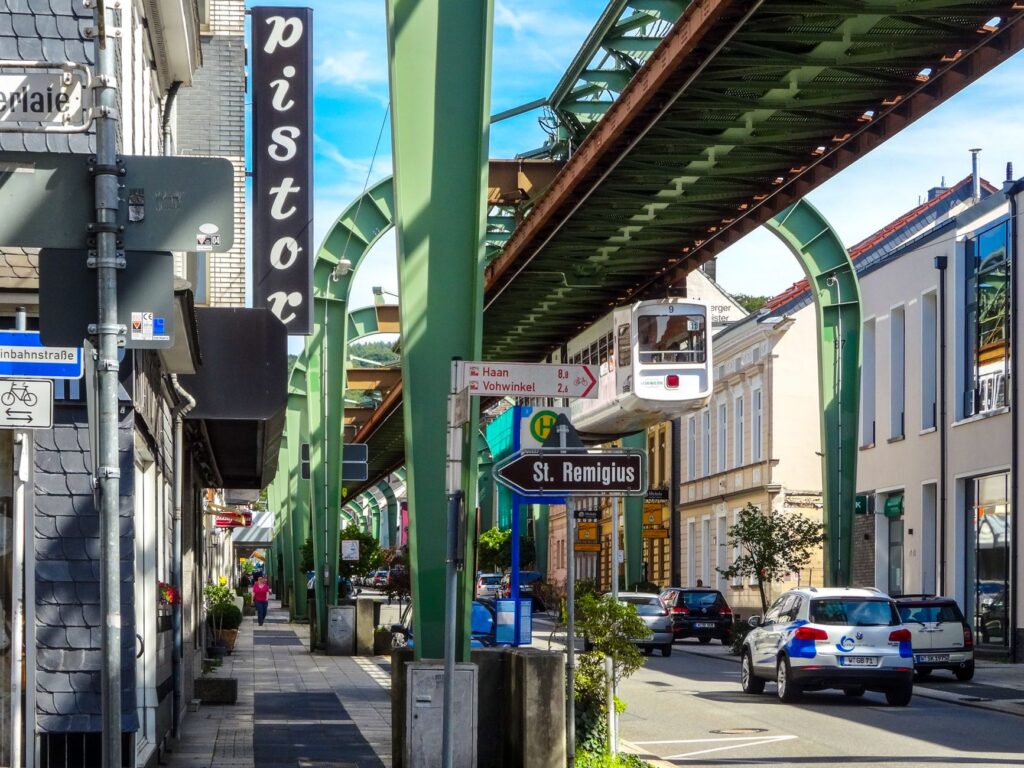
The providential solution arose from the visionary mind of engineer Eugen Langen, who devised a suspended transport system inspired by agricultural funicular experiments. Following years of complex political negotiations, the project materialized with the construction of a colossal metal structure composed of over twenty thousand tons of steel. Kaiser Wilhelm II and Empress Augusta Victoria attended the official inauguration in October 1900, riding the imperial train to certify the reliability of a feat seemingly drawn from Jules Verne’s novels. Since then, the Schwebebahn has carried billions of passengers, surviving world wars, economic crises, and profound urban transformations.
Engineering and architecture: an iron skeleton over the river
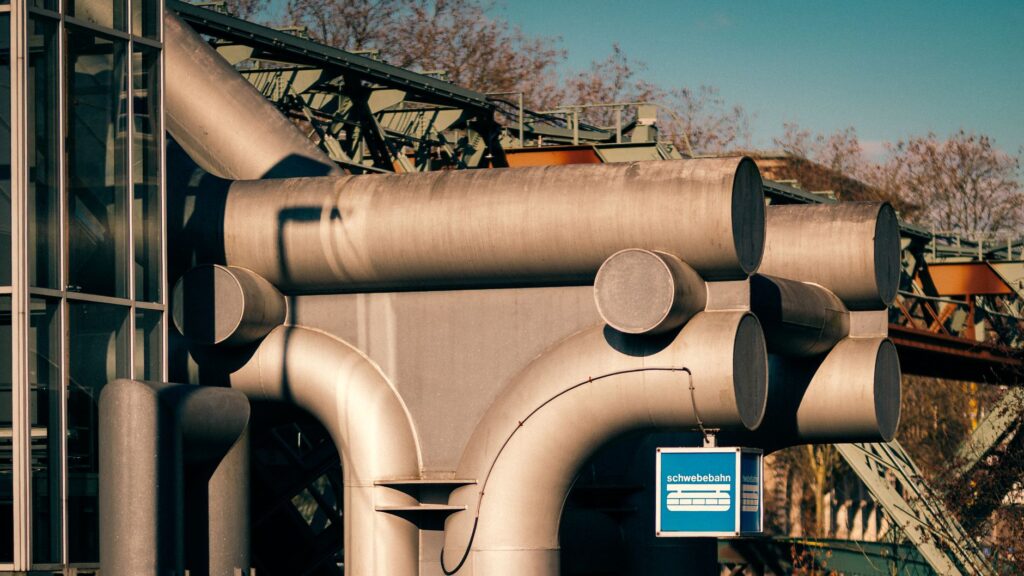
Contemplating the suspended railway’s layout from the Wupper riverbank is an exercise in aesthetic fascination. The load-bearing structure consists of hundreds of puddled iron and modern steel porticoes stretching like metal ribs along the valley. German engineers designed each pillar to adapt to the river’s winding geography, giving the ensemble an organic aspect despite its industrial nature. The stations, many meticulously restored under heritage preservation guidelines, combine early industrial art nouveau elements with contemporary functionality required by European safety standards.
The Schwebebahn demonstrates that infrastructure need not be a scar on the territory, but rather a floating bridge connecting history with the future of green mobility.
The technical operation of the system stands out for its simplicity and energy efficiency. The trains hang freely from a single overhead track supported by the steel framework, drastically reducing frictional wear compared to conventional rail systems. Tracks are electrified via direct current, and current Generation 15 convoys incorporate regenerative braking systems returning energy to the grid during stops. This efficiency makes the train a benchmark of sustainable mobility endorsed by German transport authorities, operating with pinpoint regularity even during harsh Central European winters.
Suspended life: the daily rhythm of a river city
Understanding Wuppertal requires shedding the role of a static tourist and mingling with locals at any of the twenty stations lining the route. Here, daily public transit commuting acquires a cinematic dimension. Through the wide carriage windows, the urban landscape unfolds like a moving diorama: black slate roofs, restored nineteenth-century facades, contemporary street art murals, and the steady flow of the dark Wupper waters beneath travelers’ feet.
Unlike conventional subway cars, where passenger gazes typically crash against dark tunnel walls or advertising screens, the Schwebebahn offers a privileged overhead perspective. One can observe residential interior courtyards, local market hustle, and the silhouettes of surrounding forests climbing the valley slopes. It is an intergenerational space where university students, commuting workers, and seniors share a journey woven into the city’s collective memory since childhood.
Sustainability and ecological transition in the 21st century
Amid the current climate emergency, Wuppertal’s case is analyzed by urban planners worldwide as a pioneering model of urban circular economy and transport efficiency. The municipal utility companies (WSW) manage both renewable energy supply and the transport network, coordinating electric bus fleet recharging and monorail power via local solar and wind sources. This energy integration drastically reduces emissions associated with system operations.
- Integral electrification: Power supplied through direct current grids optimized to minimize transmission losses.
- Regenerative braking: Recovery of up to thirty percent of kinetic energy during station decelerations.
- Recyclable materials: Metal structures subjected to ongoing maintenance and replacement programs using high-durability steels.
- Urban intermodality: Direct, synchronized connections with low-emission bus lines and regional rail networks.
The city’s commitment does not stop at maintaining the historic icon; infrastructure modernization required multi-million-euro investments to adapt tracks and digital signaling, ensuring the system meets top European safety and universal accessibility standards for passengers with reduced mobility.
Culture, art, and memory on the elevated route
The impact of the suspended railway far exceeds strict mass transit functionality; it permeates Wuppertal’s cultural, literary, and artistic life. Painters, filmmakers, and photographers have found endless inspiration in the steel structure and pendular movement of the cars. A famous cinematic anecdote involves Tuffi, a young circus elephant who in 1950 leapt startled from a moving carriage into the shallow Wupper River—an incident commemorated today by humorous murals and souvenirs in local shops.
Furthermore, the city constantly honors its industrial past through pedestrian cultural routes running parallel to the viaduct. Contemporary art centers, coworking spaces installed in former textile warehouses, and the legacy of figures like philosopher Friedrich Engels—born here in 1820—form a robust cultural ecosystem permanently dialoguing with the Schwebebahn infrastructure. Transport thus becomes the connecting thread linking neighborhoods, dynamizing the local economy, and facilitating equal access to public amenities.
Practical guide
Planning a visit to Wuppertal requires understanding the rhythms of a German industrial city seamlessly connected to North Rhine-Westphalia’s main transport hubs.
How to get there: Wuppertal is integrated into the Rhine-Ruhr S-Bahn commuter and RE regional rail networks. It is easily reached by train from Düsseldorf or Cologne in under thirty minutes, as well as from their respective international airports.
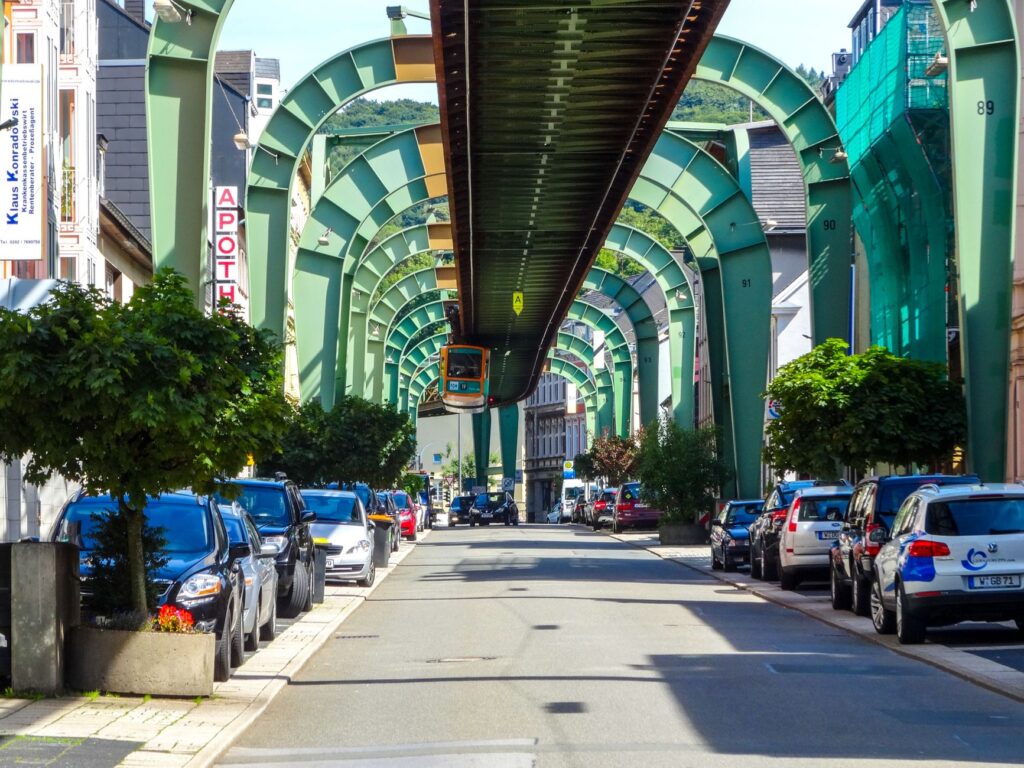
How to ride the Schwebebahn: The single line (Linie 60) connects Vohwinkel in the west with Oberbarmen in the east. Single tickets, day passes, or regional tourist cards (such as the DüsselCard or VRR integrated tariffs) allow unlimited access to the entire public transport system, including buses and the suspended railway.
When to travel: Spring and autumn months offer excellent light for urban photography and pleasant temperatures for exploring the valley trails. Avoid morning rush hours (07:00 to 09:00) if you prefer traveling with greater ease and enjoying the views in tranquility.
True urban sustainability does not consist in inventing technologies from scratch, but in preserving and optimizing those intelligent solutions that human ingenuity once designed with respect for the territory.
The floating legacy of the valley
As dusk falls and the golden sunset light filters through the steel lattice crowning the Wupper River, the Schwebebahn cars continue their silent, rhythmic journey. Watching the train pass from a hillside terrace or listening to the faint hum of its electric motors crossing the city proves that sustainable mobility is not a futuristic promise, but a tangible reality built with long-term vision. Wuppertal remains suspended in time and air, reminding us that public transport can simultaneously be a masterwork of engineering and the everyday home of an entire city. Source in English: Condé Nast Traveler Spain.