
Origins of Stone and Cold in Southern Aragon
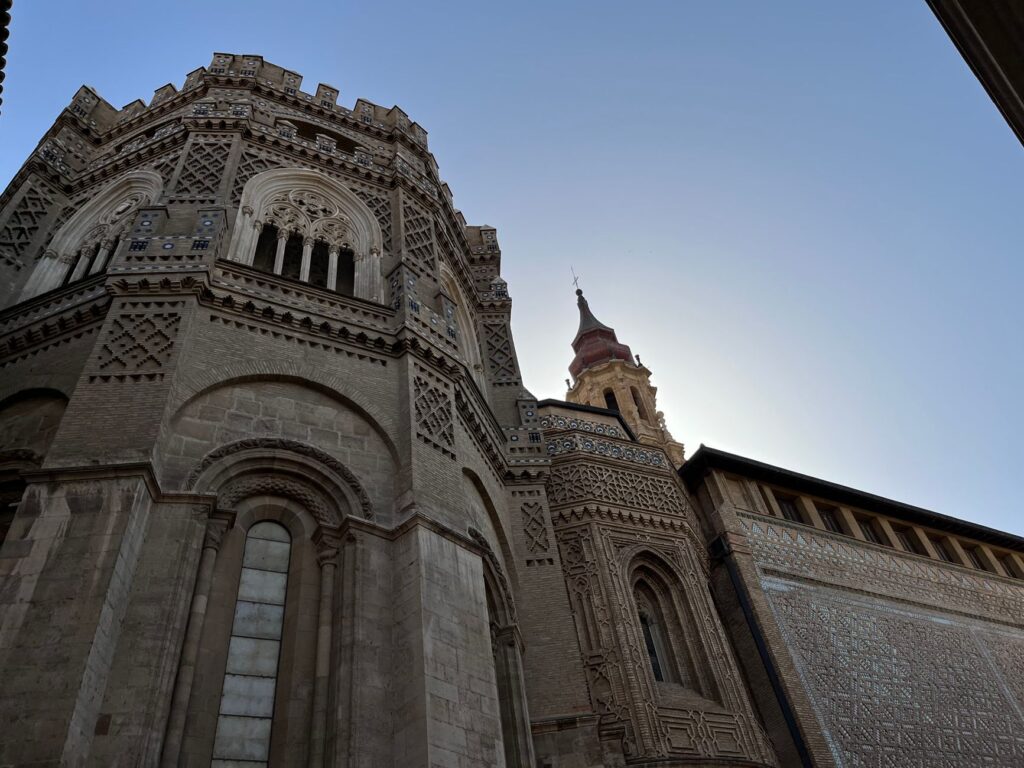
The traveler who ascends to the city of Teruel driven by geographical curiosity soon discovers that the terrain is not a minor geological accident, but the principal sculptor of the local character. At over nine hundred meters of altitude, the Teruel capital experiences a perpetual winter that catches the breath and a summer of skies so clear they seem almost unreal. In this enclave where Mudejar architecture traces filigrees of brick and tile, human survival has historically depended on the intelligence with which its inhabitants learned to converse with a severe environment. The scarcity of surface water and thermal extremes forced the development of preservation techniques based on salt, dry wind, and the smoke of noble woods. This is not a nostalgic exercise in survival, but a sophisticated culinary science passed down from generation to generation that now pulses strongly in the commercial heart of the city.
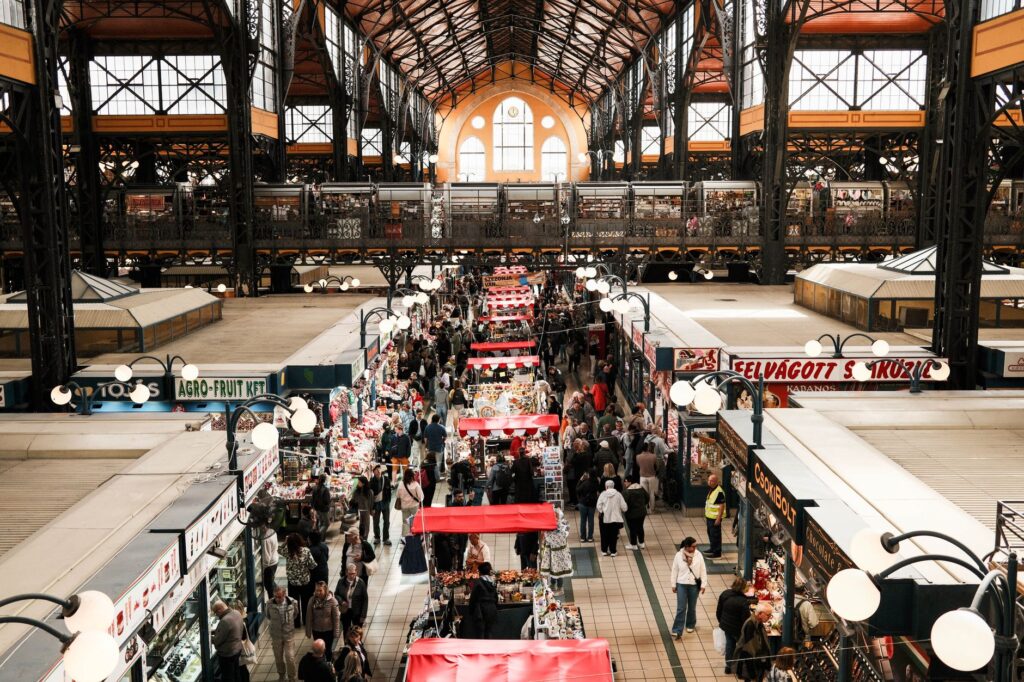
Entering the daily rhythms of this territory requires abandoning conventional tourist circuits to delve into spaces where the community provisions and recognizes itself. The Central Market, conceived in the early decades of the 20th century as an architectural response to the need to centralize urban provisioning, operates today as a living archive of Aragonese memory. Beneath its iron structure and zenithal light, the produce stalls are not mere points of commercial transaction; they represent the final link in a chain of artisanal production deeply rooted in neighboring regions. Here, the city’s pulse aligns with the arrival of vans descending from the high plateaus, carrying with them the unmistakable aroma of high-altitude pastures and the fluvial orchards bordering the Jiloca River.
The Architecture of Provisioning in Teruel’s Central Market
The building of Teruel’s Central Market stands out for a functional sobriety that links with local construction tradition, devoid of the ornamental baroque styles present in other Levantine or Catalan squares. Its masonry walls and wide windows originally permitted cross-ventilation, which was essential for keeping produce fresh before the generalization of the industrial cold chain. Upon crossing its doors, the visitor is enveloped by a symphony of sounds muffled by daily hustle: the sharpened knife grazing the whetstone, butcher’s paper rustling under cuts of lamb, and the steady murmur of neighbors debating the quality of the Jiloca bean harvest. This genuine atmosphere preserves the spirit of classic food markets in the face of the homogenization of large commercial surfaces.
In the market’s north wing, stalls dedicated to traditional butcher shops display cuts that demonstrate mastery in pork and lamb butchery. Local livestock farmers continue to raise indigenous breeds adapted to the harshness of the terrain, a decisive factor in understanding fat infiltration in meats and flavor concentration. Purple garlic heads, braided onions from Fuentes, and olive oil preserves coexist on the shelves with astonishing naturalness. Each merchant acts as a true educator of their product, explaining to the buyer the exact origin of the animal, the type of feed received, and the optimal maturation time in the cold room. It is this direct, almost familial treatment that grants the market its true anthropological and social dimension.
The Invisible Territory: The Drylands and Vegas of the Jiloca
To fully comprehend what is displayed on the market counters, it is imperative to leave the urban center and journey through the landscapes extending northward along the Jiloca River valley. This region, marked by the presence of endorheic salt flats and dry cereal fields, offers a harsh, almost monastic beauty where the horizon blurs between clay hills and red sandstone villages. Here, water is a scarce and coveted commodity that has historically structured agrarian communities around complex networks of medieval irrigation ditches. In these settings, saffron cultivation—once the region’s economic engine—and the harvesting of wild plants like thyme and rosemary impart unmistakable nuances to the ecosystem and, by extension, to the local larder.
The small orchards dotting the Jiloca riverbanks produce slow-growing vegetables of exceptional taste density. Extreme daily temperature oscillations between day and night force fruits to concentrate sugars and organic acids as a natural defense mechanism. It is no coincidence that the borage greens, chard, and green beans of this district are coveted by Aragon’s most demanding restaurateurs. As the road climbs toward the uplands, the plant landscape yields to forests of holm oaks and savin junipers, the ideal habitat where sheep flocks graze freely. This symbiosis between valley agriculture and extensive livestock farming forms a fragile ecological equilibrium that local producers defend against the pressure of intensive agribusiness.
The Liturgy of Pork and Salt: Curing at Altitude
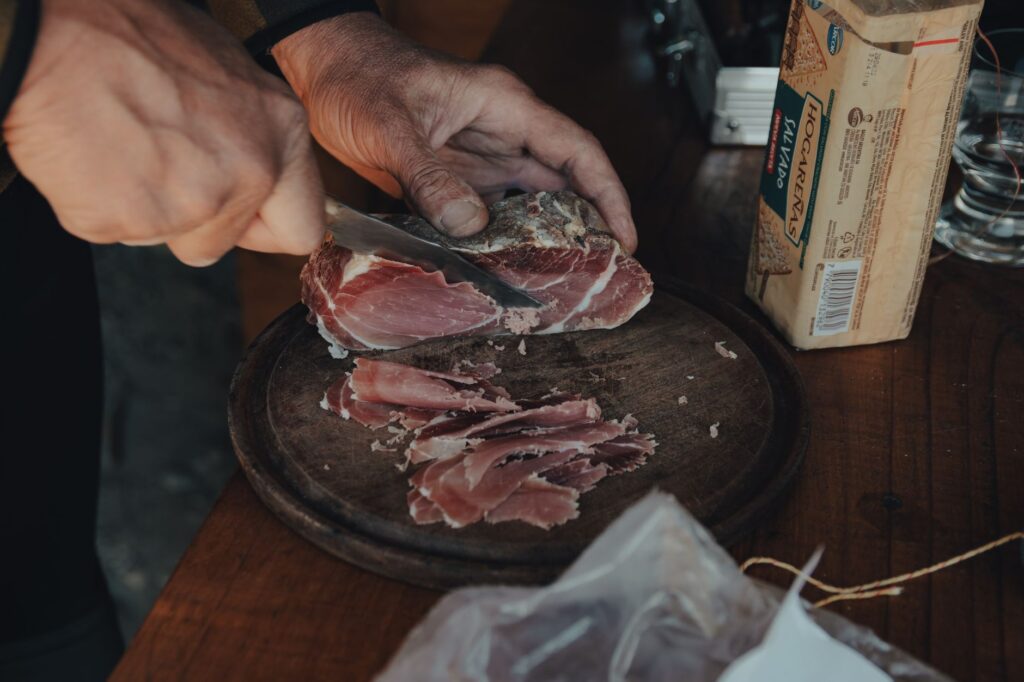
One of the fundamental pillars of Teruel’s gastronomy is undoubtedly its cured meat industry, whose pinnacle holds the protection of Spain’s first Protected Designation of Origin for ham. The process transforming a piece of fresh meat into a masterpiece of curing responds to an almost monastic discipline. In natural drying sheds situated on the mountain foothills, cold, dry wind currents descending during winter nights act as the definitive curing agent. Human intervention is reduced to supervising the precise level of salinity and controlling ambient temperature through the manual operation of wooden shutters.

blockquote>Time in Teruel is not measured in hours, but in the silent months the ham spends hanging in semi-darkness, absorbing the essence of the northern wind and the artisan’s patience.
At the Central Market stalls, this ritual is manifested in the precise slicing of the ham, performed with long, flexible-bladed knives that respect the muscle fiber and reveal the pearly sheen of unsaturated fat. The market’s master ham curers insist that a good product needs no accompaniment other than a piece of rustic loaf bread and a drizzle of extra virgin olive oil. Alongside the ham, cured sausages like Aragon longaniza, minced chorizo, and pork loin pieces preserved in lard complete a catalog of flavors where preservation ceases to be a technical method and becomes a form of high gastronomic culture.
The Vegetable Treasure: From Saffron to Red Cardoon
If meat provides the necessary caloric substance to withstand the winters of the Teruel plateau, earth’s produce supplies the subtle, aromatic nuances balancing the local diet. Among them, saffron cultivated in the clay soils of the Jiloca holds a place of historic honor. Popularly known as red gold, this seasoning requires an absolutely artisanal harvesting and stamen-plucking process performed during cold autumn mornings. Each flower must be handled with extreme delicacy to extract the three crimson stigmas that are subsequently lightly toasted over wood embers, releasing the penetrating aroma defining traditional lamb stews and garlic soups.
Another essential vegetable treasure of the cold season is the red cardoon, an indigenous variety cultivated through the ancestral technique of earthing up, covering the plant with soil to protect it from frosts and bleach its stalks. In the weeks leading up to the Christmas holidays, the Central Market stalls fill with these thorny vegetable structures that buyers acquire with the certainty of obtaining an ephemeral delicacy. Usually prepared in a fine almond sauce, the cardoon represents the culmination of patient agriculture defying the laws of commercial immediacy. It is the triumph of a resilient vegetable finding its greatest gastronomic virtue in climatic adversity.
The Liquid Larder: Low-Acidity Oils and High-Altitude Wines
No journey through Teruel’s food culture would be complete without addressing the wines and liquids watering its tables. Although the province lacks the winemaking fame of neighboring regions, recent years have seen a remarkable renaissance of family wineries recovering old Garnacha and Tinta Fina vineyards planted on hard-to-access slopes. These wines, marked by altitude and extreme insolation, exhibit a firm tannic structure and balanced acidity that cuts through roast fats with surgical precision. Their commercialization in small quantities within the local market reinforces the bond of proximity between vineyard cultivator and wine taster.
Concurrently, extra virgin olive oil obtained from local varieties like Empeltre and Royal completes the triangle of liquid excellence. Centennial olive trees resisting in dry-stone terraces produce a low-acidity olive juice with notes recalling fresh almond and cut grass. Market retailers dispense this liquid gold in bulk or traditional jugs, maintaining a purchase-by-weight custom encouraging reuse and conscious consumption. Every drop reflects the resilience of a millenary tree rooted in stubborn soil, offering a basic foodstuff impregnating all traditional Teruel cooking with its unmistakable profile.
Practices of Conscious Consumption in Traditional Commerce
The rise of hypermarkets and the digitalization of food purchasing have threatened the survival of municipal markets in many European cities, but Teruel resists thanks to a loyal social base and the diversification of its offering. Shopping at the Central Market implies assuming an ethical commitment to the region’s economic sustainability. Merchants do not merely sell food; they act as prescribers of a diet based on seasonality and the minimization of carbon footprint. Here, there are no out-of-season fruits or products wrapped in unnecessary layers of plastic; the predominant wrapping remains waxed paper and the cloth bag brought from home.
This relationship of mutual trust between purveyor and consumer also fosters the recovery of endangered recipes. It is not uncommon to hear advice in the market aisles on how to prepare authentic Teruel breadcrumbs, making use of hard country bread loaves, or how to properly desalt cod for a Lenten stew. Young provincial chefs regularly visit these stalls seeking inspiration and fresh produce, closing a virtuous circle connecting centuries-old tradition with culinary vanguard. The market thus becomes an open classroom teaching that eating well is, above all, an act of knowledge and respect for the territory.
Practical guide
How to get there: Teruel is connected to Zaragoza and Valencia via the N-234 national highway and the conventional railway line, ideal for enjoying a leisurely scenic journey. The Central Market is located in the heart of the historic center, accessible on foot from any point in the monumental zone.
Market opening hours: The halls are open Monday through Saturday during morning hours, generally from 8:00 AM to 2:00 PM. Tuesdays and Thursdays are the most vibrant days, coinciding with the arrival of local producers descending from the Jiloca and Gúdar-Javalambre regions.
Recommended accommodations: The historic center features small boutique hotels housed in rehabilitated noble mansions, as well as family-run guesthouses maintaining the warmth of traditional Aragonese hospitality.
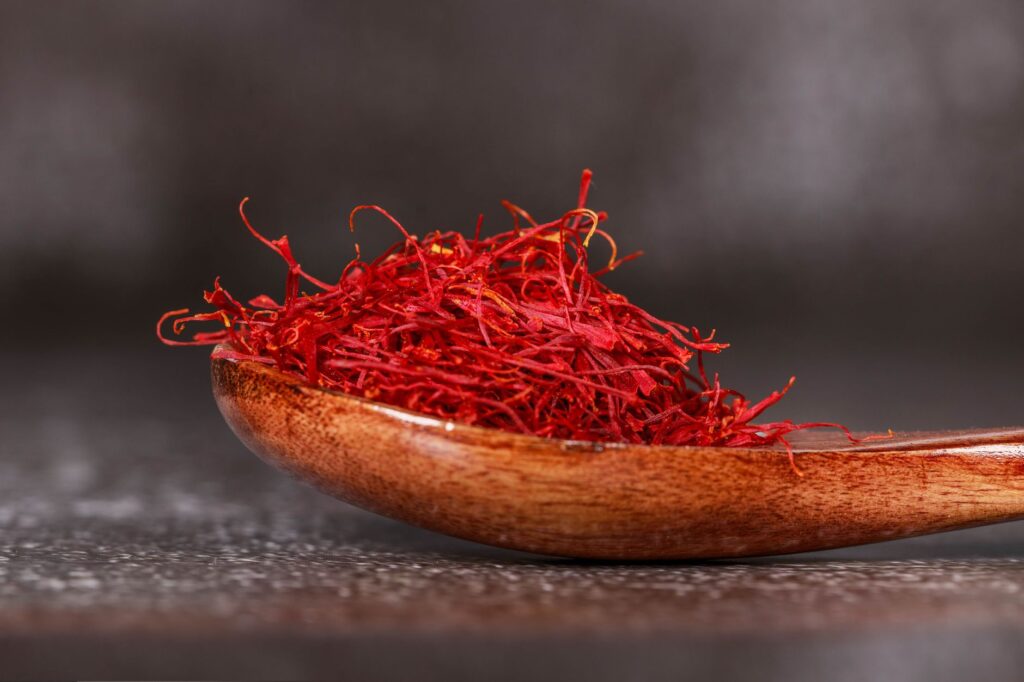
Essential products to purchase: Teruel ham with Designation of Origin, Jiloca saffron threads, extra virgin olive oil of the Empeltre variety, and artisanal preserves of game and orchard vegetables.
Local etiquette tips: It is customary to greet the butcher or greengrocer with familiar warmth and let the merchant select the specific cut according to its intended culinary use at home.
The Final Embrace of Embers and Memory
When evening begins to fall over the city roofs and high-altitude cold reminds us of Teruel’s true climate, chimney embers in Jiloca villages begin releasing their characteristic burnt holm oak aroma. It is the moment when the larder acquired during the morning market bustle transforms into home, into slow food comforting body and spirit. Gathered around a solid wood table, sharing a steaming casserole of lamb with potato-filled twigs or rigorously prepared breadcrumbs, the traveler understands that this corner of Aragon’s gastronomy is not mere sensory entertainment, but the edible translation of a way of understanding life: with resilience, patience, and profound respect for the fruits that the earth, despite its harshness, always grants to those who work it with love and dignity.