
Origins Sculpted by Wind and Livestock
The island of Menorca, declared a Biosphere Reserve by UNESCO, encloses within its geography of dry stone and saline breeze one of the most unique dairy heritages in the Mediterranean. Far from the summer circuit of turquoise coves and tourist overcrowding, the rural interior of the island beats to the unhurried rhythm of herds of Friesian and Minorcan cows. Here, livestock farming is not merely a subsistence economic activity, but the fundamental pillar that shapes a singular landscape of dry stone walls, emerald pastures, and holm oak forests whipped by the relentless Tramuntana wind.
Mahón-Menorca cheese with a Protected Designation of Origin is the direct result of this unique geographical ecosystem. The salinity of the marine air, microscopically deposited over the pastures through precipitation and fog, impregnates the milk from its origin. This environmental influence endows the final product with an unmistakable organoleptic complexity, characterized by intense lactic notes that evolve toward mature, toasted, and subtly spicy nuances as the aging process progresses in traditional cellars.
The Architecture of Dry Stone and Rainfed Pastures
Traveling along the secondary roads of the Ctra. General connecting Mahón with Ciutadella reveals the magnitude of this agricultural and livestock territory. The rustic estates, locally known as llocs, function as self-sufficient production units where the balance between extensive grazing and the conservation of the natural environment has remained unaltered for centuries. The dry stone walls, erected without mortar using the millenary technique of pedra en sec, compartmentalize the island into a geometric mosaic that protects livestock from dominant winds.
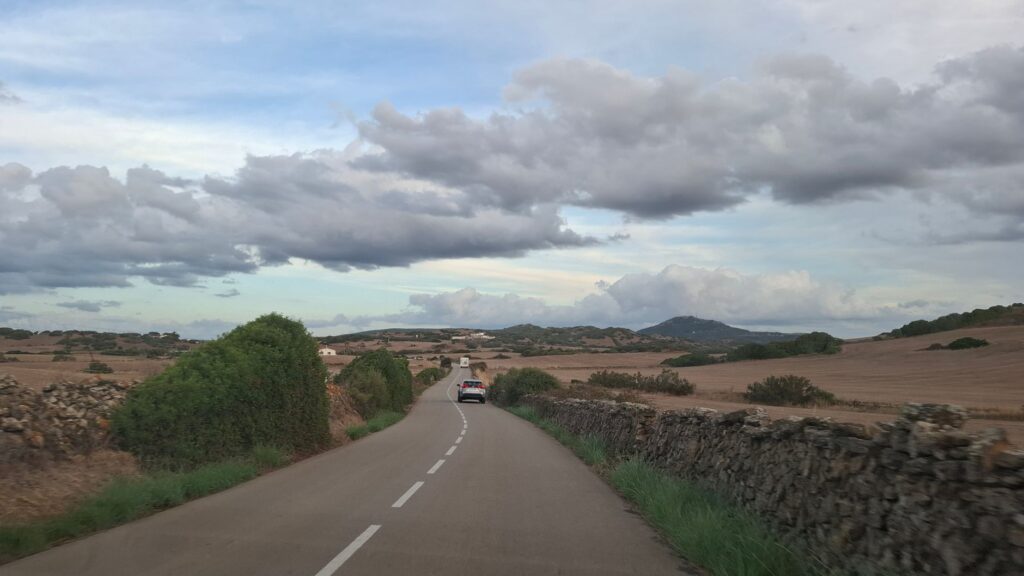
In this rainfed environment, native wild flora composed of clovers, grasses, and aromatic plants constitutes the animals’ basic diet. This direct grazing regime translates into milk rich in fatty acids and volatile compounds that faithfully reflect the seasonality of the island. During spring months, the greenness of the fields brings freshness to the cheese’s aromatic profile, while summer periods concentrate flavors, endowing the curd with a denser and more rustic structure.
The Artisanal Liturgy in Historic Llocs
The manufacturing process of Mahón-Menorca cheese maintains rigorous fidelity to secular methods passed down from generation to generation among master cheesemakers. It all begins in the milking parlors of the llocs, where raw milk is processed without aggressive thermal treatments to preserve the native microbial flora, the true responsible party for the product’s typicity. The curd is obtained through the addition of traditional rennet at a controlled temperature, a critical moment requiring the skill and sensitivity of the artisan.

Once the mass is obtained, manual molding is carried out using a traditional cotton cloth known as a fogasser. By compressing the cheese wrapped in this fabric and tying it with a cord called a lligall, the characteristic geometric embossed pattern is imprinted on the upper surface, granting its parallelepiped shape with rounded edges. This step is not merely aesthetic; it facilitates homogeneous whey drainage and confers structural stability to the block before pressing.
The Art of Air-Drying, Oil, and Paprika
Following pressing and the mandatory brining in pools, the cheeses are transferred to drying chambers, where the delicate phase of maturation begins. It is here that the most visible and differentiating hallmark of this artisanal cheese manifests: the treatment of the rind. Unlike other great European cheeses, Mahón-Menorca undergoes a periodic manual rubbing process with olive oil—often combined with red paprika in more aged varieties—which fulfills a fundamental protective and aesthetic function.
The application of this oily mixture prevents excessive cracking of the rind against environmental dryness and favors the development of beneficial surface molds that decisively contribute to the enzymatic maturation of the interior paste. Paprika, historically introduced as a natural method of preservation and defense against parasites during long storage periods, provides a subtle amber tone and a smoky aroma that dialogues perfectly with the intensity of the lactic fat.

The rind rubbed with oil and paprika is not just a protective shield against time and air, but the physical archive of a rural memory that refuses to dissolve into industrial standardization.
From Young to Aged: The Geography of Maturation
The commercial classification of Mahón-Menorca cheese strictly responds to the aging time, establishing three main categories offering radically different gustatory experiences: young, semi-aged, and aged or mature. The young cheese, with a maturation period between 20 and 60 days, stands out for its flexible texture, ivory color, and a lactic, mild, and slightly acidic flavor profile, ideal for palates seeking the direct freshness of Minorcan cow’s milk.
As the calendar advances toward 2 or 3 months, the semi-aged variety displays toasted notes of cooked butter and nuts, with a firm yet still buttery texture in the mouth. At the upper end is the aged cheese, with over five months of maturation and occasionally up to a year. This oenological and gastronomic jewel presents a crumbly paste, dotted with crunchy tyrosine crystals, where pungent aromas of old leather, wood, and dry spices dominate an extraordinarily long and persistent finish.
Contemporary Insular Cuisine Reinterpreting the Product
The culinary versatility of Mahón-Menorca cheese has transcended the realm of the classic appetizer to become the star ingredient of contemporary Minorcan haute cuisine. The island’s chefs reinterpret this millenary product by integrating it into both avant-garde preparations and traditional spoon dishes. It is frequently found emulsified in light creams accompanying native red meats, grated over marine emulsions, or starring in sophisticated desserts where its salinity contrasts with the sweetness of local figs and honey.
An outstanding example of this recovery of historical recipes is its use in preparing sauces for traditional stews of skate or scorpionfish, where it provides density and an irreplaceable umami background. Likewise, the island’s artisanal sobrasadas find in the contrast with a grated aged cheese a perfect dance partner, proving that the Minorcan pantry operates as an interconnected ecosystem of intense and honest flavors.
Practical guide
Practical Guide
Getting There and Getting Around the Cheesemaking Territory
Menorca boasts excellent air connections through Mahón Airport (MAH), which operates regular flights with the mainland and major European capitals year-round. To explore the artisanal dairies and the llocs along the Ctra. General, the most efficient option is renting a vehicle directly at the airport. The insular road network is perfectly signposted, allowing for short journeys between rural estates, workshops, and local markets.
Recommended Routes and Dairy Visits
It is highly recommended to plan a leisurely itinerary including scheduled visits to agricultural holdings with their own workshops, such as those located in the municipalities of Es Mercadal and Alaior. Many of these family-owned estates offer guided tastings explaining on-site the difference between raw cow’s milk productions and those made with pasteurized milk. It is advisable to contact the Regulatory Council of the Mahón-Menorca Protected Designation of Origin in advance to check the schedule of open-door events and local product markets.
Maturation Calendar and Conservation
When purchasing cheese, it is essential to keep in mind that younger pieces (tender/young) require moderate refrigeration temperatures and should be consumed within a few days once opened. In contrast, semi-aged and aged pieces tolerate storage in domestic cellars or cool, dry areas of the house. To fully enjoy their aromatic nuances, it is recommended to remove the cheese from the refrigerator at least one hour before consumption, allowing it to reach room temperature and release its full range of volatiles.
The silence of the pastures at dusk, when the saline fog begins to merge with the dry stone walls flanking the island’s ancient rural paths, encapsulates the very essence of this territory. There are no stridencies in Menorca; its true wealth reveals itself in the infinite patience with which time, oil, and paprika transform the humble milk of each day into a living testimony of Mediterranean memory.