Origins and Geopolitical Vision of the Rhenish Corridor
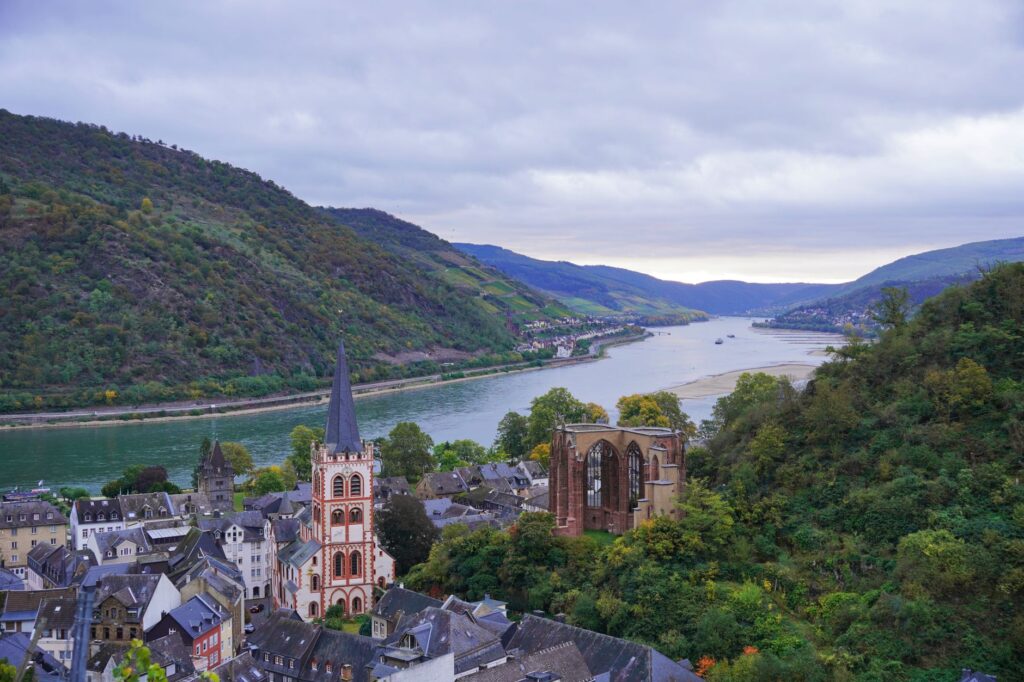
The Middle Rhine Valley, designated a UNESCO World Heritage Site, embodies far more than the essence of European romanticism and Nibelung mythology; it is, above all, a logistical corridor of colossal dimensions. Throughout the nineteenth century, the unification of the German states and the pressing need to connect the thriving industrial Ruhr basin with North Sea ports and southern markets demanded a radical transformation of its steep riverbanks. The construction of railway lines on both sides of the river represented one of the most complex milestones of nineteenth-century civil engineering, overcoming rocky precipices, impossible terraced vineyards, and the seasonal fury of one of the continent’s mightiest rivers.
The decision to lay railway tracks on both banks—the left bank inaugurated continuously in the 1850s and its counterpart on the right shortly thereafter—responded to both economic motives and strategic military demands of the German Empire. Engineers of the era faced terrain where every meter won from the cliffside required complex earthworks, the stabilization of unstable slopes, and the boring of dozens of tunnels beneath medieval castles keeping watch from the heights. This coexistence between feudal stone and industrial iron defines the cultural landscape of the Rhine, a tangible testament to how transport infrastructure shaped European modernity without entirely erasing its historical substrate.
Tunnel Engineering and the Challenge of Topography
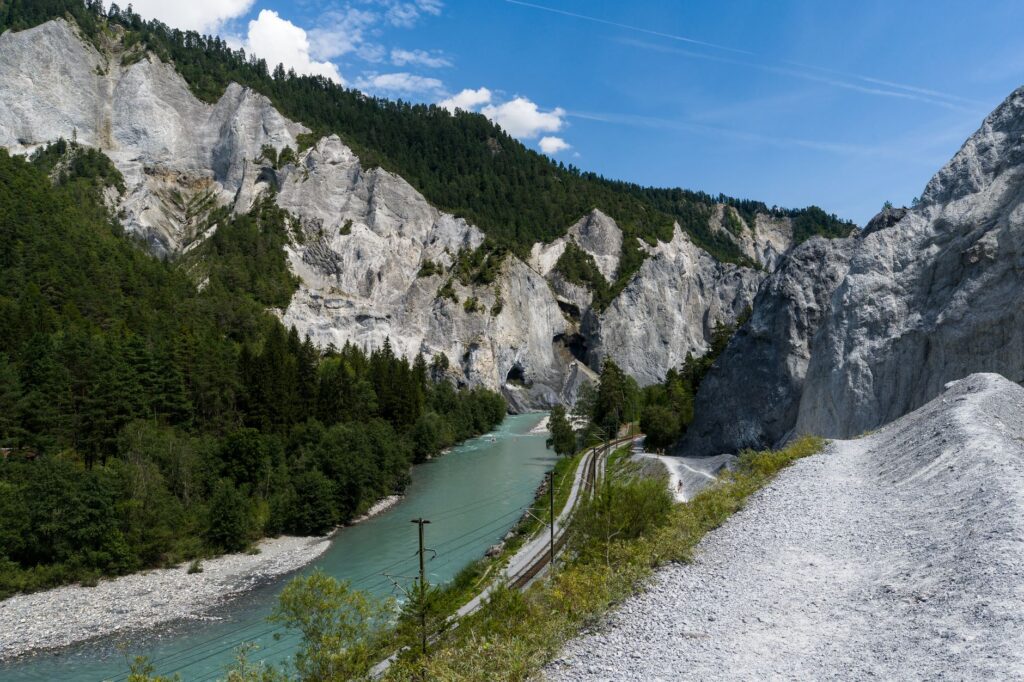
Flanking the Rhenish slate massif demanded unprecedented technical solutions. Between Mainz and Cologne, the railway alignment runs wedged between vertical rock faces and the river channel, forcing builders to excavate more than thirty tunnels over a relatively short stretch. The metamorphic rock, though seemingly resilient, presented geological faults and constant water seepage that tested the skill of workers. Each tunnel was not merely a stone conduit, but a structural work of art endowed with monumental ashlar portals reflecting the aesthetic ambition of the Prussian state.
Beyond subterranean boring, drainage and protection against rockfalls became daily priorities for maintaining the line. Engineers designed pioneering retaining wall systems and buttresses that still support the alignment just meters away from navigable waters. This millimeter precision in design ensured that the flow of freight and passengers remained uninterrupted, turning the corridor into the backbone of Central European rail traffic through successive industrial revolutions and twentieth-century conflicts.
Railway Architecture and Monumental Stations
Stations and service buildings along the Rhine route served a purpose far beyond the utilitarian; they functioned as civic temples of the new industrial era. Stations such as those in Koblenz or Mainz combined Romanesque and Gothic Revival elements with sweeping wrought-iron and glass train sheds, symbolizing technological progress and institutional solidity. These architectural complexes integrated maintenance workshops, steam locomotive depots, and switching yards designed with meticulous logistical efficiency.
On a smaller scale, crossing-keeper lodges, signal boxes, and lattice metal bridges crossing minor Rhine tributaries display an admirable aesthetic coherence. The use of local stone, such as gray slate and volcanic basalt, allowed the infrastructure to blend harmoniously with the natural environment and historic towns punctuating the route, mitigating the visual impact of such massive engineering work within an ecologically and patrimonially valuable landscape.
Transport Logistics and the Transformation of Modern Traffic
Today, the Rhine rail corridor handles one of the densest mixed-traffic loads—high-speed passenger services and heavy freight—in all of Europe. Modernization of the tracks has required the installation of advanced European Rail Traffic Management Systems (ERTMS) and comprehensive electrification, allowing kilometer-long freight trains surrounded by modern Intercity convoys to share space with second-by-second precision. This coexistence demands seamless logistical coordination between German infrastructure managers and private rail operators.
The Rhine is not merely a geographical feature crossed by barges and trains; it is the board where nineteenth-century engineering and twenty-first-century digitalization have forged a flawless truce.
Intermodality stands as another pillar of this transport system. Main stations act as transfer nodes where passengers can immediately connect with historical river navigation services operated by the Köln-Düsseldorfer company or regional bus networks ascending toward the lateral valleys of the Moselle and the Lahn. This constant flow ensures the territorial and economic cohesion of towns that otherwise would have been isolated by the difficulty of their terrain.
Heritage Conservation and Impact on Local Communities
The constant presence of the railway has shaped the daily life of riparian communities for over 160 years. While in the past the arrival of the train marked the end of rural isolation and provided the definitive boost for local wine trade and spa tourism—with famous enclaves like Wiesbaden and Bad Ems in its vicinity—it presently poses complex challenges regarding noise pollution and urban coexistence. Municipalities situated along the gorge have continually pushed for the construction of acoustic barriers and the nocturnal rerouting of freight.
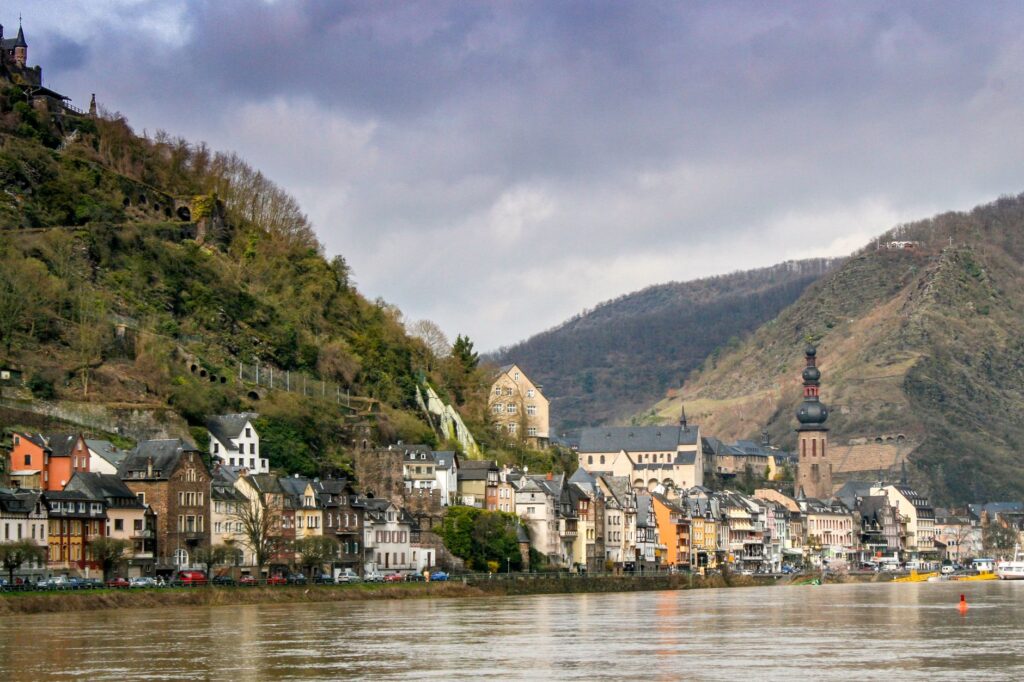
Conversely, the very existence of the railway line has democratized access to cultural and landscape tourism. Millions of annual travelers use regional services to journey from castle to castle without relying on private vehicles, fostering a sustainable mobility model aligned with European Union green transition guidelines. Far from remaining a foreign body, the rail infrastructure has integrated into the region’s collective identity, celebrated in travel literature and local working-class memory.
Technological Innovation and Twenty-First-Century Maintenance Challenges
Keeping a century-old railway line operational wedged between cliffs and a navigable river requires constant engineering operations of great technical complexity. Maintenance work is typically concentrated in strict seasonal windows, mobilizing specialized workshop trains capable of renewing ballast, sleepers, and catenary wires during nocturnal low-traffic periods. Rock slope inspections rely on advanced technologies, including drones and laser sensors detecting micro-fissures before rockfalls occur.

Furthermore, contingency plans for summer floods or extreme low-water episodes—which temporarily disrupt river navigation and shift even more freight onto the railway—test the infrastructure’s resilience. Continuous investment in bridge load capacity and turnout automation ensures that the Rhine corridor maintains its strategic status within trans-European transport networks, adapting to the demands of a globalized economy.
Practical guide
Planning a journey along the Rhine rail corridor requires understanding its connection structure and the destination’s seasonality. The best time for the trip spans spring (from May to June) and early autumn (from September to October), when vineyards display their peak chromatic splendor and international tourist numbers moderate compared to summer months.
Getting There and Key Connections
The ideal starting point is Mainz or Frankfurt am Main, whose international airport offers direct high-speed rail connections into the regional Rhenish network. From Frankfurt, S-Bahn commuter trains and RE regional services reach Mainz in under thirty minutes.

Recommended Routes and Segments
The most scenic section concentrates between Koblenz and Mainz. Sitting on the left side of the carriage (traveling northbound) is recommended to enjoy optimal panoramic views of the river, cliffside castles, and the legendary Lorelei rock. Regional trains operate with high frequency, allowing flexible hop-on, hop-off travel in historic towns such as Bacharach, St. Goar, and Boppard.
Mobility Tips and Fares
Using integrated regional tickets, such as the Deutschlandticket for residents or Rhineland-Palatinate tourist passes, facilitates unlimited mobility on regional trains and local buses. Checking updated schedules on the official Deutsche Bahn app (DB Navigator) is essential, as infrastructure improvement works frequently occur over weekends.
The Iron Heartbeat by the Great River
When evening falls over the dark waters of the Rhine and feudal castle silhouettes merge with twilight’s final glow, the valley acquires an almost mythical dimension. In that moment, the rhythmic passage of a freight train or the metallic flash of a passenger convoy winding along the shore recall that Europe’s history is written not only in treaty books, but in the audacity of those who chose to tame stone and water to unite peoples. More than a century after its inauguration, the Rhenish railway remains the vital artery pumping the indomitable pulse of a continent in constant motion.