
The Iron Gates of an Ancient Continent
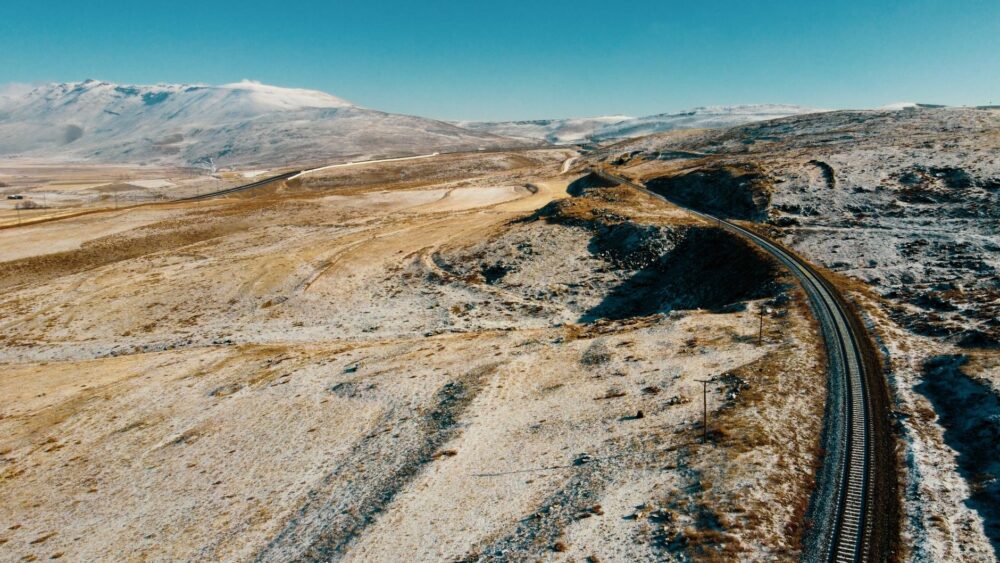
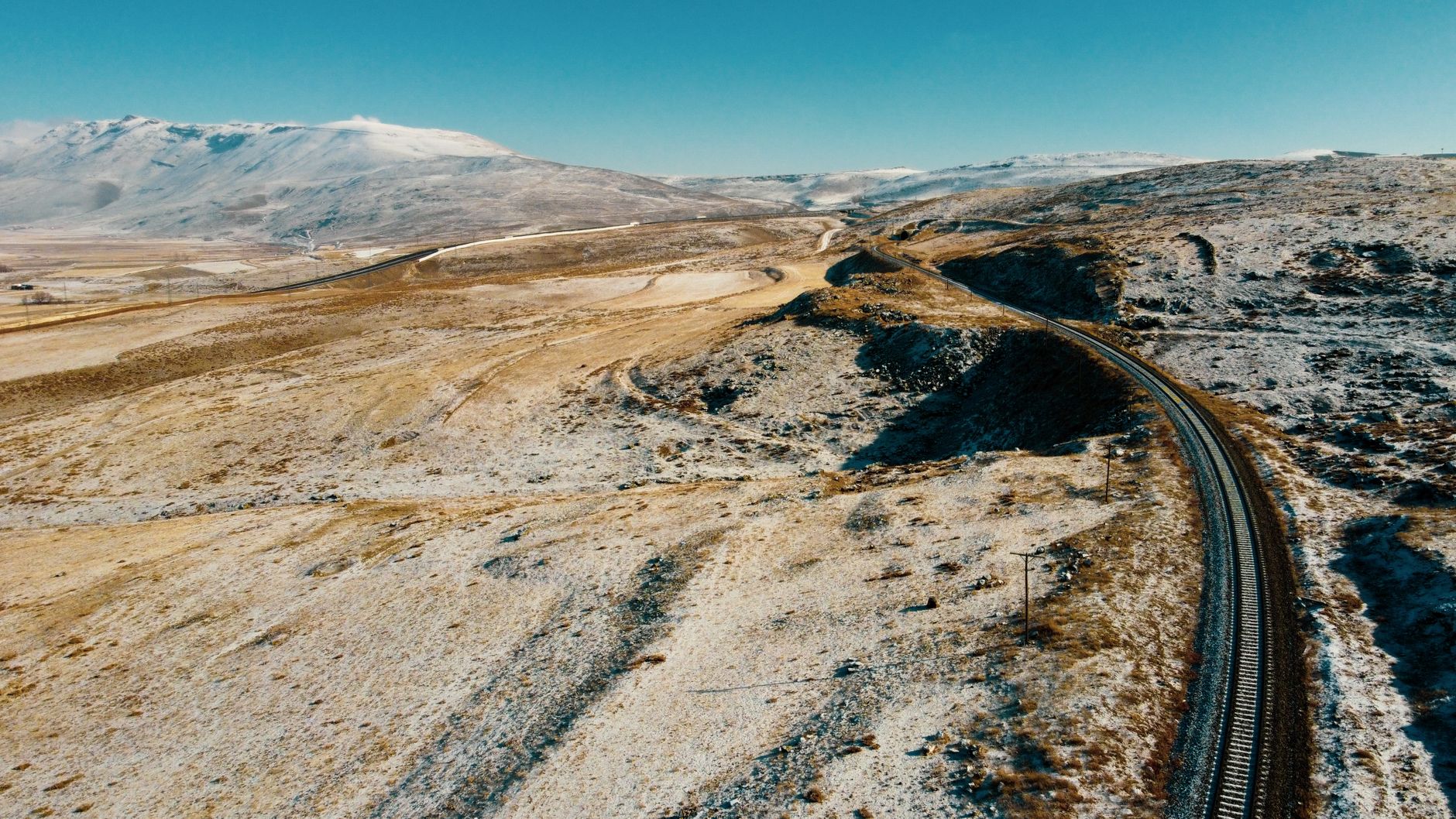
The Anatolian plateau, a vast arid expanse sculpted by millennial winds, has served since the dawn of civilization as the indisputable bridge between Europe and Asia. Crossing this imposing territory is not a mere exercise in geographical displacement, but a direct immersion into the superimposed layers of fallen empires and reborn civilizations. In this setting of endless horizons and rocky gorges, the railway is far from fulfilling a purely utilitarian function; it acts as the steel backbone that holds together profoundly diverse human realities. While modern highways cut across the land with geometric urgency, traditional railway lines meander with a geological patience, adapting to the capricious curves of rivers and the skirts of mountains that stand as immutable witnesses to the passage of time.
The railway system traversing the heart of Turkey is a living archive of nineteenth-century engineering adapted to the most unforgiving topographic demands on the planet. From the western foothills to the eastern heights bordering the Caucasus, the tracks endure extreme thermal variations ranging from forty-degree summer peaks to the deep-steppe Siberian winters. Understanding mobility in this region requires shedding the comfort of Western high-speed travel to delve into a transport model where mechanical resilience and human skill combine daily. Every convoy crossing the mountain passes not only carries local goods and passengers but sustains the fragile economic pulse of communities isolated by rugged orography and harsh weather.

Imperial Heritage and the Geometry of the Terrain
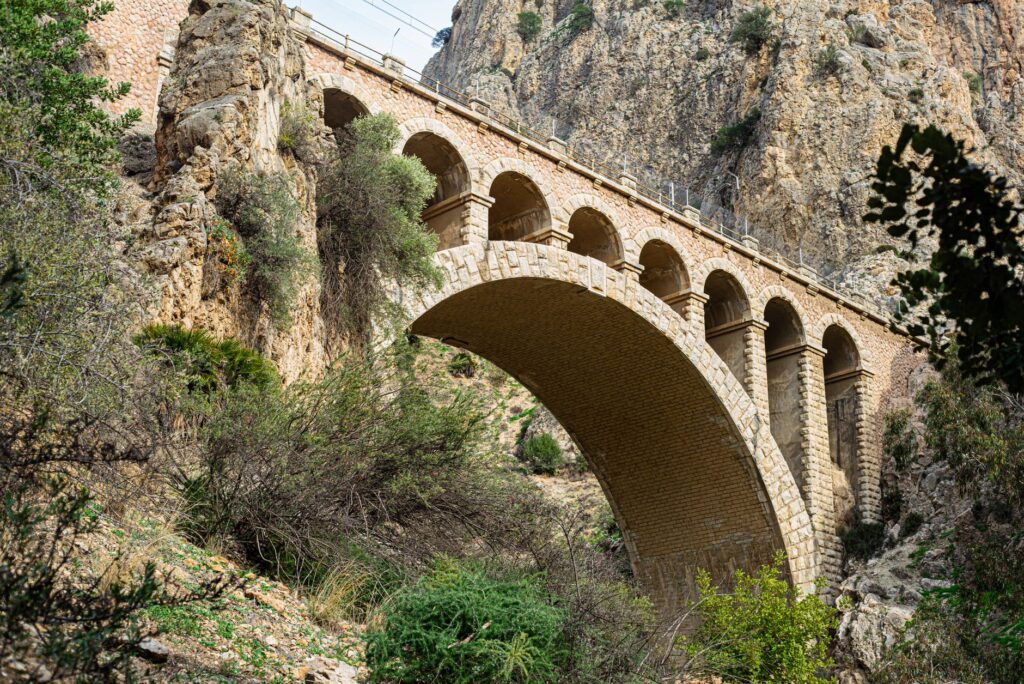
The genesis of the Anatolian railway network is intrinsically linked to the geopolitical ambitions of the late nineteenth and early twentieth centuries. The original layouts did not respond to contemporary commercial optimization criteria, but to the necessity of projecting imperial power across steep valleys and desolate plateaus. German, British, and French engineers had to negotiate with a hostile geography, designing hand-carved stone viaducts and tunnels excavated into living rock using techniques that still astonish with their audacity today. The famous route connecting Istanbul to Baghdad radically transformed the region’s demographics, turning small trading posts into thriving hubs of exchange where the whistle of the locomotive announced the arrival of modernity.
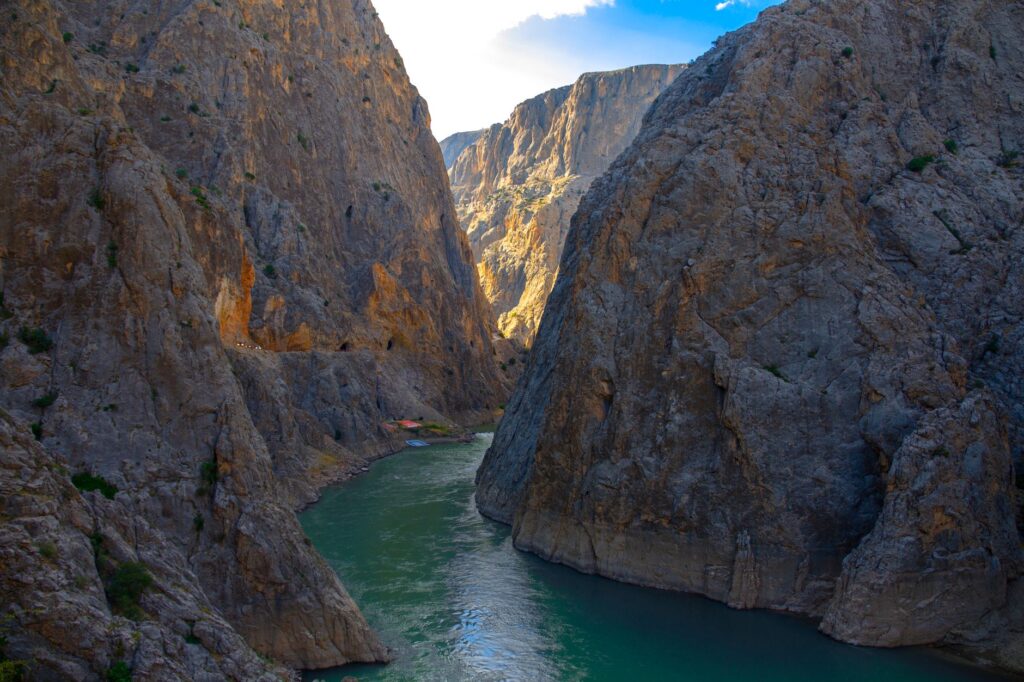
However, the very topography that made the construction of these lines epic has become their primary structural challenge in the twenty-first century. Sharp curve radii, designed for lighter and shorter steam locomotives, drastically limit the speed and freight capacity of modern trains. Clay slopes and limestone gorges suffer constant erosion caused by spring thaws and torrential rains, forcing specialized maintenance teams to monitor every kilometer of track in an almost artisanal manner. Original wooden sleepers have been gradually replaced by prestressed concrete, but the transition must be executed with extreme caution to preserve the flexibility that the terrain demands in the face of frequent seismic activity along the North Anatolian fault.
The Human Pulse of the Single Track
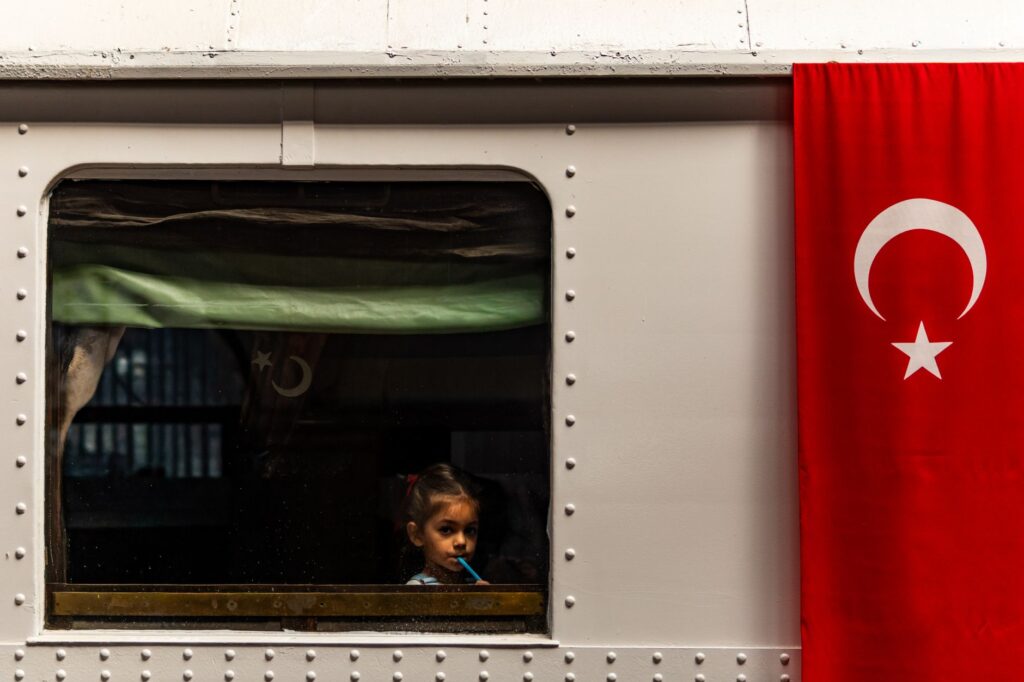
Along the most remote stretches of the plateau, the long-distance passenger train—often referred to regionally as the Eastern Express—functions as the sole umbilical cord connecting the country’s interior. At intermediate stations, where grey cement mixes with the golden dust of the steppe, the arrival of the convoy dictates the social rhythm of the day. Entire families, university students, and local merchants share the carriages during journeys exceeding twenty-four hours. In these confined spaces, time takes on another dimension; unexpected delays caused by train crossings on single tracks or unscheduled catenary maintenance do not generate the frustration typical of urban terminals, but rather foster a leisurely coexistence among passengers.
The railway in Anatolia does not compete with modern time; it suspends it, compelling the traveler to contemplate the immensity of a landscape that refuses to be tamed by haste.
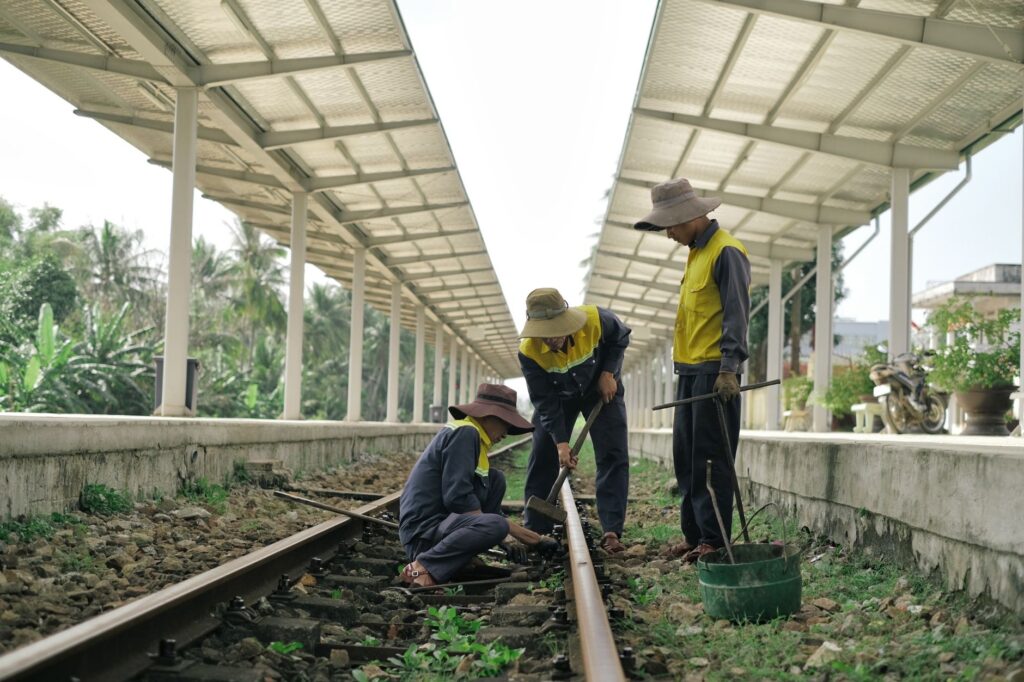
The train drivers and track workers represent a fundamental link in this transport ecosystem. Many belong to families who have worked on the railway for three generations, accumulating empirical knowledge that no technical manual can replicate. They know how to interpret subtle changes in the rolling sound over the rails to detect premature wear or deformations caused by thermal expansion. This tacit knowledge is the true guarantee of safety on a network where cutting-edge technological investment often arrives years behind Western Central European corridors.
Infrastructure Under Pressure: The Maintenance Dilemma
Sustaining a railway network spanning thousands of kilometers in such a demanding geographical environment requires complex logistical and budgetary engineering. Repair workshops located at strategic nodes of the plateau operate as industrial beehives where discontinued components for legacy diesel locomotives are hand-turned by veteran machinists. The scarcity of modern components for older traction models has forced state operators to develop a remarkable capacity for self-reliance and mechanical recycling. Nevertheless, this heroic effort collides head-on with the growing demands of a freight transport market that requires greater volume and punctuality to connect Black Sea ports with Middle Eastern borders.
Climate risks represent another critical variable in the operational equation. During winter months, severe blizzards block entire sections in mountain passes exceeding two thousand meters in altitude. At such times, heavy snowplow trains, powered by robust diesel engines, must force their way through before any other convoy can circulate. Coordination between traffic control centers in Ankara and field crews is meticulous, as a communication failure amid a whiteout can paralyze vital logistical arteries for the entire country. The fragility of this balance constantly reminds us that connectivity in the high plateau is an achievement that must be conquered day by day against the fury of the elements.
Modernization Versus the Weight of History
Over the past decade, national transport policy has heavily invested in developing high-speed rail corridors intended to connect the country’s major metropolises, occasionally relegating conventional lines in deep Anatolia to a secondary plane. This bifurcation of the network has sparked intense debate among engineers and territorial planners. While new high-speed alignments drastically cut travel times between the capital and major industrial cities, historic single-track routes suffer a dangerous reduction in maintenance budgets and rolling stock renewal.
However, eliminating or neglecting these secondary lines would fracture the social cohesion of entire regions lacking viable alternative public transport options due to the precipitous terrain. Mobility experts argue that the future of the plateau does not lie in radical substitution, but in intermodal integration. Traditional stations are being timidly redesigned to link regional trains with local bus fleets penetrating deeper valleys. This hybrid approach seeks to preserve the essence of the historic network while equipping it with renewed functionality that addresses twenty-first-century demographic needs.
Practical guide
Planning a rigorous journey across the Anatolian plateau railway network requires preparation and a thorough understanding of its operational particularities. Reservations for long-distance trains typically open thirty days in advance and sell out rapidly due to high local demand and growing interest from specialized tourism. It is strongly recommended to secure private compartment sleepers, as they guarantee basic comfort during journeys exceeding twenty-four hours. Verifying schedules directly at official ticket offices or authorized platforms is essential, as infrastructure improvement works frequently cause temporary frequency adjustments.
Luggage should be kept to an absolute minimum; traditional train compartments offer limited space, and handling heavy bags on historic platforms lacking proper ramps can prove challenging. Regarding climate logistics, bringing appropriate thermal clothing is imperative when traversing the region between November and March, as heating systems aboard some historic locomotives may experience fluctuations. Finally, always maintain a flexible attitude toward timetables: along the route of the empires, the value of the journey lies as much in contemplating the boundless landscape as in the strict punctuality of arrival.
The Echo of the Whistle on the Salt Horizon
As the sun begins to dip over the salt flats of the central plateau, tinting the sky with deep ochres and dusty violets, the silhouette of an aging diesel locomotive framed against the horizon encapsulates the paradox of this territory. This is not merely a means of transport linking geographical points on a commercial map, but a silent witness to the human transformations that have shaped this land for millennia. In every wooden tie groaning under the weight of steel and in every frosted window misted by the breath of anonymous passengers, a history of persistence against geographical adversity beats on. The Anatolian railway system, with all its vulnerabilities and anachronistic beauty, continues to demonstrate that true connection among peoples is measured not solely by the speed at which borders are crossed, but by the depth of its roots in the territory it traverses.