Introduction to New Zealand’s Steaming Heart
In the center of New Zealand’s North Island, the Taupo caldera beats with an ancestral energy that defines both the landscape and the daily lives of its inhabitants. This vast volcanic region, shaped by millennial eruptions and guarded by the iwi (Māori community) of Ngāti Tūwharetoa, faces one of the greatest challenges in its contemporary history: balancing the massive influx of international visitors with the strict preservation of its delicate geothermal and aquatic ecosystems. For decades, transportation in this geologically active area depended almost exclusively on internal combustion private vehicles, generating congestion on the main arteries surrounding Lake Taupo and elevating carbon emissions in an irreplaceable natural sanctuary.
Faced with this environmental vulnerability, local authorities, in direct collaboration with tribal councils and sustainable transport operators, have driven a radical transformation of regional mobility. The project is not limited to paving new routes, but to recovering the ancestral wisdom of harmonious displacement with the land, integrating clean technologies powered by the subsoil’s own geothermal activity. This report examines how the confluence of energy innovation and indigenous stewardship is redrawing the map of travel in one of the most unique geographic zones on the planet, offering a replicable model for other tourist enclaves threatened by automotive saturation.
The Renaissance of Ancestral Trails
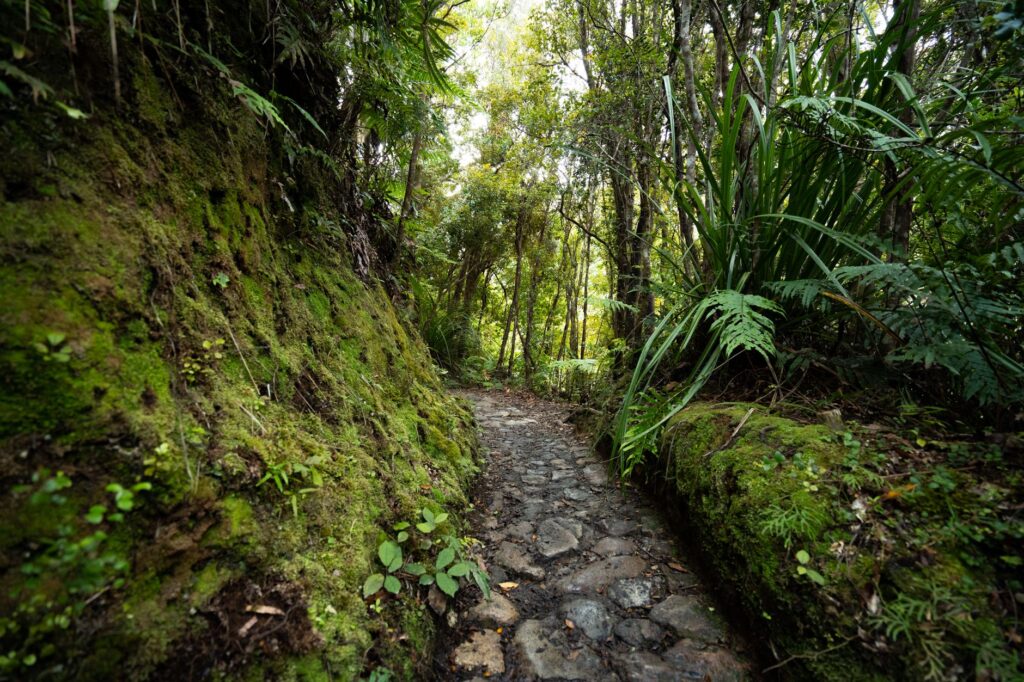
The network of paths and dirt tracks that now vertebrates the Taupo region does not stem from modern urban planning, but from ancient communication routes used by Māori clans for centuries. These itineraries, locally known as ara tawhito, connected lakeside settlements with thermal springs and hunting grounds in the surrounding forests. In recent years, a consortium of regional authorities and traditional leaders has recovered these historical layouts to transform them into the backbone of a new network of non-motorized mobility with low ecological impact.

The rehabilitation of these paths has required a delicate balance between contemporary trail engineering and absolute respect for the native plant tapestry, dominated by tree ferns and manuka scrub. Far from applying invasive asphalt pavements, restoration teams have used natural stabilizers made from compacted volcanic ash and local gravels. This technique allows optimal soil permeability during frequent seasonal precipitation, preventing surface runoff and protecting the water tables that feed the region’s thermal springs. The result is an ash-path infrastructure that invites travelers to explore the territory on foot or by mountain bike, drastically reducing the carbon footprint associated with adventure tourism.
Fleets Powered by the Earth’s Heat
Beyond active mobility, medium and long-distance public transport in the Taupo basin has undergone an unprecedented technological metamorphosis thanks to the direct harnessing of geothermal energy. Proximity to large renewable energy generation plants has established a fast-charging station network for high-capacity electric buses operating on routes surrounding the lake and connecting with major urban centers such as Rotorua and Turangi.
This transition toward a zero-direct-emissions fleet has not only transformed air quality in the volcanic valleys but has also redefined the traveler’s experience. The new vehicles, designed with large glass surfaces to maximize landscape contemplation, operate with total mechanical silence, allowing the sounds of nature—from the whistling of steam in fumaroles to the singing of native birds like the tui—to accompany the journey.
True sustainability in a sacred territory does not consist of introducing invisible technology, but in making human movement tune into the geological rhythm of the earth.
Intermodal transfer stations, strategically located on the peripheries of protected natural areas, act as intelligent filters that limit access by polluting vehicles, forcing visitors to complete the final leg of their journey via electric shuttles or assisted bicycles.

Shared Governance and the Role of the Iwi
The success of this regional mobility revolution lies in a pioneering governance model based on co-management between New Zealand’s central government and the tribal authorities of Ngāti Tūwharetoa. In the Māori worldview, natural elements—Lake Taupo, volcanic mountains, rivers, and thermal vapors—are not exploitable economic resources, but direct ancestors (tupuna) with whom a relationship of reciprocity and kaitiakitanga (sacred guardianship) is maintained. For this reason, any intervention in transport infrastructure requires a rigorous prior consultation process and cultural impact assessment.
This approach has made it possible to veto road projects that threatened to fragment critical ecological corridors or alter the flow of sacred thermal waters. Instead, tribal councils have actively participated in designing transport routes, establishing restricted access zones during periods of regeneration for native flora and fauna. Likewise, local guides integrate historical and environmental narratives directly into bus and bicycle journeys, transforming each trip into a deep learning experience regarding the fragility and resilience of the volcanic ecosystem.
Invisible Infrastructures and Water Protection
One of the greatest technical challenges in the Taupo basin has been the design of road and transport infrastructures that prevent heavy metal and microplastic runoff contamination into the lake, considered an exceptional limnological treasure of purity. To mitigate this risk, civil engineers have implemented sustainable drainage systems (SuDS) based on bioswales and filtering artificial wetlands located along the main land transport axes.
These bioswales, populated by native rushes and aquatic plants, act as natural biological filters that retain sediments and hydrocarbons from tire wear before rainwater reaches receiving basins. In addition, telemetric sensors have been installed at critical points along routes to monitor water quality and the stability of volcanic slopes in real-time, which are particularly prone to landslides after intense seismic activity or adverse weather. This integration of cutting-edge technology and nature-based solutions ensures that the expansion of the transport network does not compromise the long-term health of the aquatic ecosystem.

Socioeconomic Impact on Local Communities
The reconfiguration of Taupo’s transport system has transcended the mere environmental variable, generating a tangible socioeconomic impact in the small rural and indigenous communities that play a fundamental role in the sustainable tourism value chain. Historically, the geographical isolation of certain Māori settlements hindered residents’ access to regional labor markets and basic health services, limiting their participation in the economic boom of the tourism sector.
The establishment of high-frequency electric bus routes and subsidized fares has broken this historical isolation, facilitating the commuting mobility of local workers and allowing the emergence of tourism micro-enterprises managed by indigenous families. These initiatives range from artisanal wood-carving workshops to guided geological and Māori mythology tours accessible via community electric bicycles. Thus, sustainable mobility becomes a direct driver of social equity and cultural revitalization, ensuring that the economic benefits of regenerative tourism remain within the territory.
Pending Challenges and the Roadmap to 2030
Despite notable progress in fleet electrification and the recovery of ancestral paths, the Taupo region still faces complex structural challenges looking toward the 2030 horizon. Among them stands out the extreme seasonality of tourism demand, which concentrates a disproportionate volume of visitors during the Austral summer months, pushing the operational capacity of geothermal charging stations to the limit and saturating public transport services at access nodes to major volcanoes.

To counter this phenomenon, regional authorities are finalizing the implementation of a unified digital Mobility as a Service (MaaS) platform. This tool will allow travelers to plan and book their journeys in an integrated way, combining approach trains, geothermal buses, shared bicycles, and access permits to protected trails, applying dynamic pricing that disincentivizes mass usage during peak hours. Furthermore, plans are underway to expand the low-enthalpy geothermal generation network to guarantee absolute energy self-sufficiency for the entire regional public transport system before the decade concludes.
Practical guide
How to get there: Main access to the Taupo region is via Taupo Regional Airport (TUO) for domestic connecting flights from Auckland or Wellington, or via clean-energy long-distance bus services from Rotorua and Napier.
When to travel: Spring months (September to November) and autumn (March to May) offer mild temperatures, lower visitor density, and optimal conditions to explore the network of ash paths and geothermal trails.
Local transport options: Use the geothermal electric bus network for travel between urban centers and main points of interest. Rent electric-assisted bicycles at authorized visitor centers to explore historical trails while respecting local iwi regulations.
Cultural and environmental rules of conduct: Venturing off marked trails in geothermal areas is strictly prohibited to protect the fragile crust and avoid high-temperature accidents. Respect tribal council signage in restricted access zones and avoid single-use plastics during your journeys through the National Park.
The Silent Beat of Thermal Waters
As evening falls, when mist descends over the calm surface of great Lake Taupo and the last columns of vapor merge with the twilight sky of sunset, the region recovers that primordial silence that preceded the arrival of any human infrastructure. On the shore, next to rock formations sculpted by ancient pyroclastic flows, the constant murmuring of hot water welling up from the bowels of the earth reminds us of the fleeting nature of our constructions and the permanence of geological cycles. Here, at this meeting point between cutting-edge technology and the millennial memory of the iwi, transport has ceased to be a mechanical imposition on the landscape, becoming a respectful dialogue with the environment. Ash routes and buses fueled by volcanic heat demonstrate that it is possible to move forward into the future without breaking the fragile thread that unites human beings with their terrestrial home, allowing each journey to be a conscious act of preservation, respect, and deep gratitude toward the land that sustains us.