
High along the ridges of the Swiss Jura, where winter drapes an icy veil over the landscape and mountain silence seems to suspend the passing hours, dwells a civilization dedicated to capturing the second. Between the slopes of the Canton of Neuchâtel and the folds of the French border, time is not measured by the vibration of a quartz crystal or invisible digital pulses, but by the mechanical tension of a mainspring, the mathematical dance of a hairspring, and the subtle metallic whisper of an lever escapement.
For over three centuries, this remote region turned its winter isolation into the cradle of global high horology. La Chaux-de-Fonds and Le Locle, designated UNESCO World Heritage sites due to their unique industrial urban planning built by and for watchmaking, hold the secret of a mastery fusing precision physics, architectural foresight, and fine artistry. Entering these workshops means stepping into a temple of the microscope, where steel, brass, and synthetic ruby are polished by hand to defy the relentless pull of gravity.
The Landscape of Time: The Unique Urbanism of La Chaux-de-Fonds and Le Locle
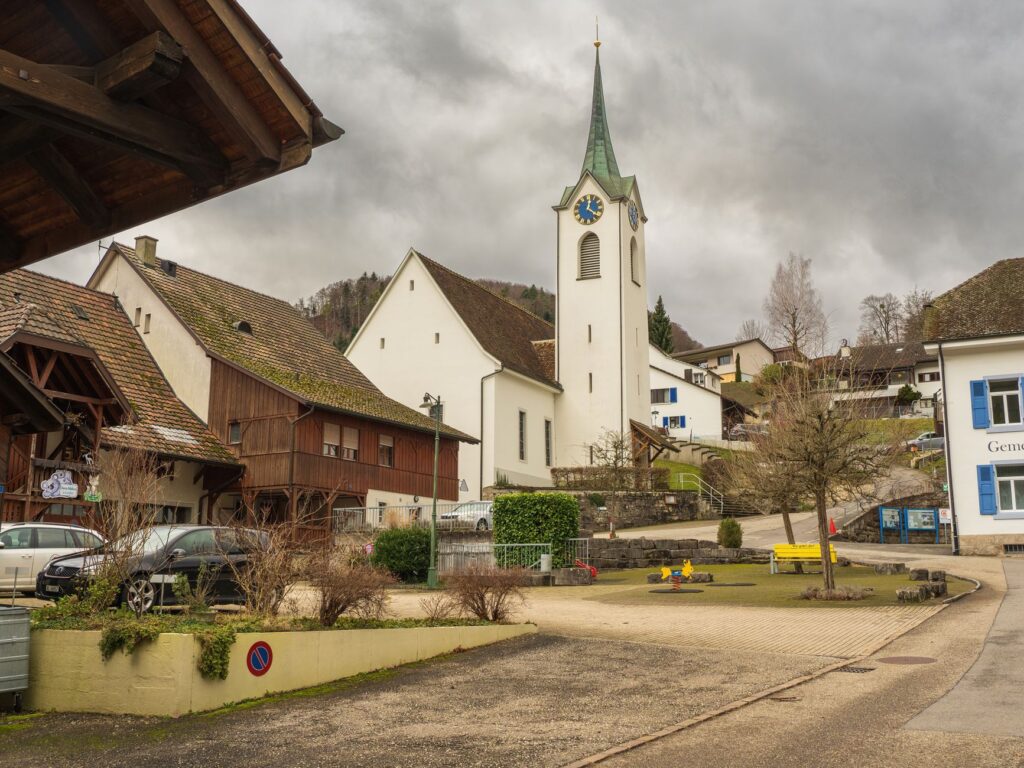
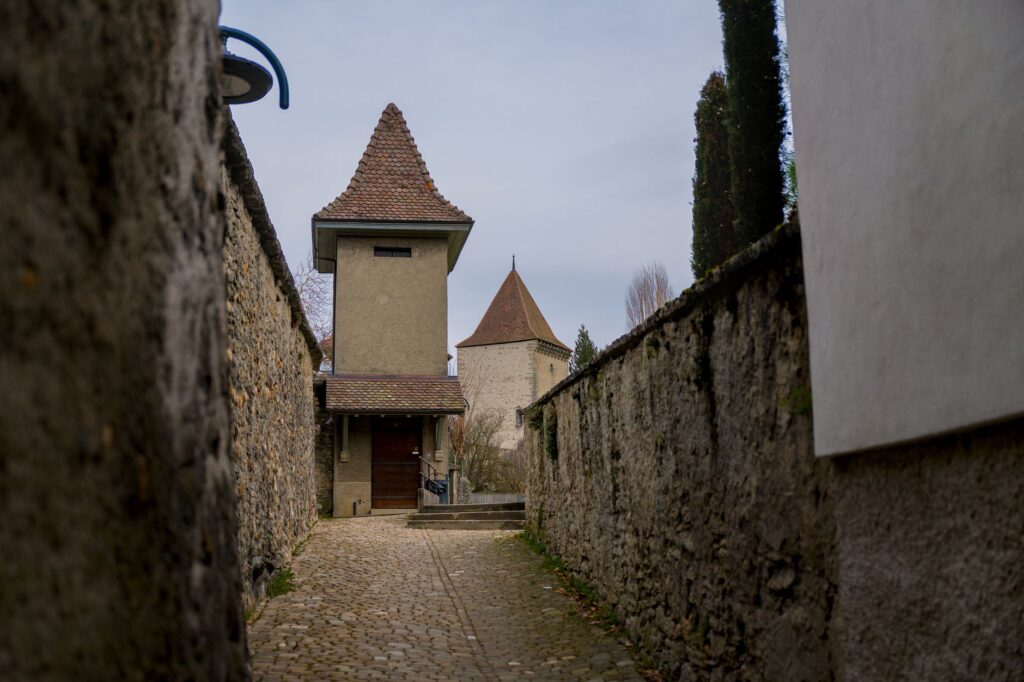
Unlike European towns born from heavy industry or river trade, La Chaux-de-Fonds and Le Locle were laid out following devastating 19th-century fires with a singular, monomaniacal purpose: directing natural light straight onto the workbenches of thousands of artisans. Their wide, orthogonal grid streets ensure that residential and workshop buildings never cast dark shadows on one another, allowing crisp northern light to penetrate into the deepest corners of the assembly rooms.
In these structures, distinguished by continuous ribbon windows on their top floors, whole families refined the horological division of labor. While local farmers found essential supplementary income in winter by crafting tiny components, the two towns grew into global assembly and export powerhouses. The region’s architecture is a physical mirror of a clock movement: austere on the outside, impeccably articulated, and aligned with mathematical precision toward absolute functional perfection.

Northern Light as an Essential Tool
For a craftsman operating with micrometer tolerances, indirect sunlight is an irreplaceable material. North-facing windows prevent the harsh glares of the midday sun, providing cool, steady illumination that allows artisans to inspect hand-beveled edges, surface flaws, and mirror-polished steel parts without optical distortion.
- Orthogonal Layout: Street grid deliberately designed to eliminate long shadows cast between building rows.
- Workshop Glazing: Continuous top-floor window banks built specifically to capture diffuse sky light.
- Hybrid Spaces: Symbiotic integration of domestic family living and high-precision micro-workshops under one roof.
The Physics of the Invisible: Anatomy of the Mechanical Caliber
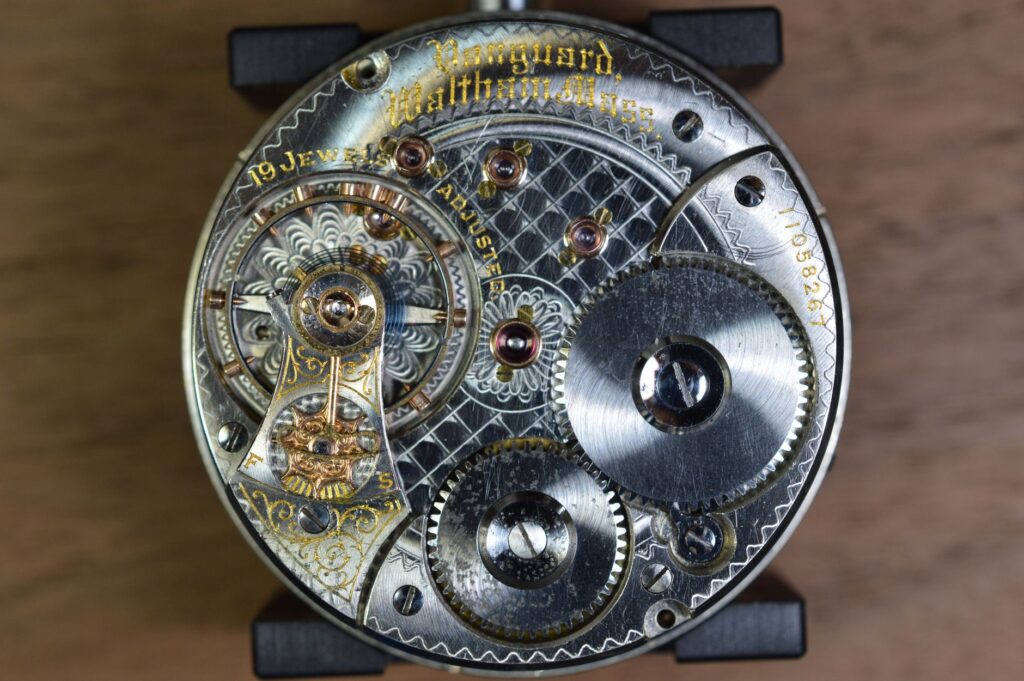
Understanding the fascination surrounding Swiss fine watchmaking requires venturing into the realm of the ultra-small. A grand complication caliber—capable of displaying lunar phases, correcting leap years via a perpetual calendar, or chiming the hours through a minute repeater—can contain upwards of six hundred individual components fitted within a space no larger than a pocket coin.
The living heart of this architecture is the regulating organ, formed by the balance wheel and hairspring. This hyper-responsive metallic coil, thinner than a strand of human hair, expands and contracts thousands of times per hour. The precise manual shaping of its terminal curve determines whether the timepiece gains or loses imperceptible fractions of a second per day—a delicate task no automated assembly line has ever managed to replicate with the touch of a seasoned regleur.
“A mechanical watch is far more than a timing instrument; it is a dynamic sculpture where physics transforms into poetry through the endurance of matter.”
The Art of Patience: Anglage, Guilloché, and Grand Feu Enameling
Beyond chronometric performance, the hallmark of Jura watchmaking lies in the hand-finishing of internal parts, even those destined to remain permanently hidden beneath a solid case back. This unyielding ethical and aesthetic commitment to invisible perfection defines the true soul of the region.
Hand-beveling (or anglage) entails paring away the sharp edges of brass bridges and plates using steel files, soft woods coated with diamond paste, and elder pith gathered from local forests. The result is a sparkling, mirror-bright chamfer that catches the light with crisp reflection. Alongside this sits guilloché, the art of engraving complex geometric patterns onto gold dials using hand-cranked rose engine lathes dating back to the 19th century.
Endangered Traditional Decorative Arts
The rare value of these timepieces rests on mastering near-extinct crafts that demand years of apprenticeship and undivided focus during weeks of solitary labor over a single component.
- Grand Feu Enameling: Applying successive coats of powdered glass onto metal plates, fused in kilns at temperatures exceeding 800 degrees Celsius.
- Perlage and Côtes de Genève: Subtle wave and circular graining patterns applied with hardwood pegs onto movement mainplates.
- Jewel Setting: Manual press-fitting of synthetic rubies to minimize friction across the gear train pivots.
From Cottage Industry to Manufacture: The Living Memory of Cabinotiers
The historical evolution of Jura horology cannot be separated from the legacy of the early cabinotiers. Originally working in Genevan attics following the Huguenot exodus, these master craftsmen gradually migrated to the northern valleys in search of quiet, cost-effective mountain retreats, adapting local farming routines to the établissage system.
Under this decentralized network, a central manufacturer (or manufacture) distributed raw materials and rough castings to dozens of specialized home workshops tucked across the valleys. One bench made only hands; another turned balance staffs; a third coiled mainsprings. By the late 19th century, this hyper-specialized ecosystem transformed the canton into the premier watch exporter on Earth, supplying everything from naval chronometers to European royalty’s gold pocket watches.
Restoring Historical Time: Breathing Life into Astronomical Clocks
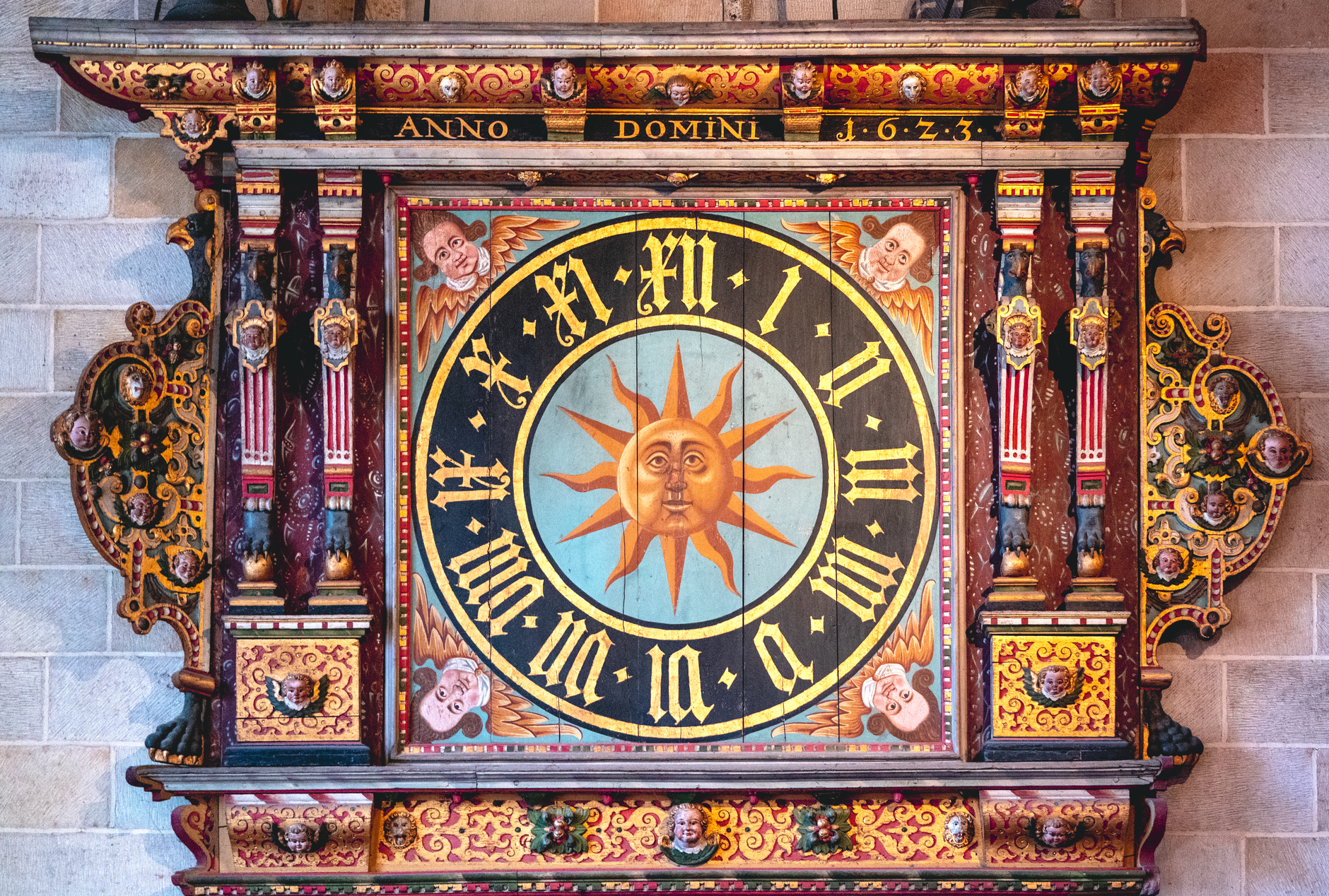
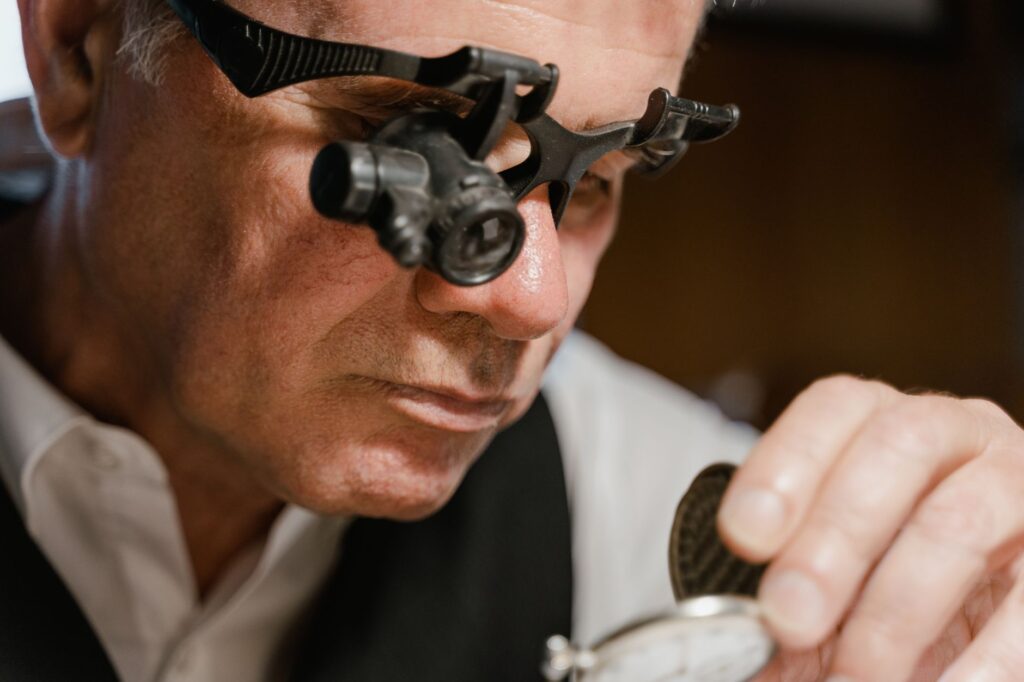
Deep inside the Musée International d’Horlogerie (MIH) in La Chaux-de-Fonds, as well as in private restoration studios in Le Locle, an elite corps of conservators tackles a different challenge: preserving movements crafted between the 16th and 19th centuries. Here, the goal is not to fabricate modern parts from digital blueprints, but to decipher the original genius of historical masters like Abraham-Louis Breguet, Ferdinand Berthoud, or Pierre Jaquet-Droz.
Restoring an 18th-century automaton or a pendulum astronomical clock demands deep cross-disciplinary expertise in antique metallurgy, horological oils, analytical geometry, and material physics. The conservator must resist the impulse to swap worn parts for modern replicas. The fundamental rule of the discipline requires preserving original patinas and employing only historically accurate alloys and hand tools identical to those used by the creator.
The Great Digital Paradox: Why Mechanical Art is Experiencing a Golden Age
When the quartz crisis swept through the industry during the 1970s with cheap, hyper-accurate digital timepieces from Asia, the traditional Jura industry suffered a devastating crash. Thousands of skilled jobs vanished overnight, and tons of historical tooling were discarded as scrap metal. Yet five decades later, high-end mechanical horology has completed an extraordinary transformation: evolving from a basic tool for time-telling into an object of revered cultural value—a piece of enduring micro-mechanical art.
In a world dominated by planned obsolescence, ephemeral touchscreens, and ceaseless digital notifications, the mechanical watch stands as an anchor of permanence. It requires no battery, emits no alerts, and can run for centuries when properly cared for. This philosophical resistance to fleeting digital trends has once again turned the attention of global collectors, historians, and art connoisseurs toward the quiet valleys of the Jura.
“To preserve an antique mechanism is to keep alive an uninterrupted dialogue between historical human ingenuity and modern patience.”
An Itinerary Among Springs and Gears: Essential Museums and Institutions
For the discerning traveler seeking to explore this geography of time, the region offers a museum network of extraordinary scholarly rigor. The journey should begin in La Chaux-de-Fonds at the Musée International d’Horlogerie, a underground masterpiece of brutalist architecture housing over four thousand historic items, ranging from medieval Islamic astrolabes to modern atomic clocks.
A few miles away in Le Locle, the Musée d’Horlogerie du Locle, housed in the picturesque Château des Monts, offers a more intimate journey through neoclassical rooms, 18th-century automata, and tall grandfather clocks with intricate carillons. Furthermore, guided visits to historical manufactures reveal the fascinations of modern CNC machining centers operating side-by-side with antique wooden workbenches where hand-finishing continues precisely as it did two centuries ago.
Practical guide
Getting There and Around
The region encompassing La Chaux-de-Fonds and Le Locle is effortlessly connected via the Swiss Federal Railways (SBB/CFF). From either Geneva International Airport or Zurich Airport, regular regional trains provide smooth connections with a quick transfer at Neuchâtel. The local rail network allows travel between the two watchmaking towns in roughly ten minutes, offering panoramic views of forested hills and alpine meadows.
When to Visit and Urban Recommendations
While winter brings the nostalgic, snowbound atmosphere in which bench watchmaking was born, the spring and autumn months (May to October) are ideal for self-guided architectural walking tours dedicated to watchmaking urbanism. It is essential to book weeks in advance for tours of independent workshops or access to the MIH restoration lab, as visitor group sizes are strictly limited to protect the quiet working conditions of the craftsmen.
Etiquette and Workshop Conduct
If granted access to the cleanroom facilities of a manufacture or assembly studio, visitors will be provided with anti-static lab coats and specialized overshoes. Mobile devices must be silenced, and visitors must maintain a respectful distance from active workbenches to avoid disturbing the air purity or the intense focus required by the master horologists.
The Poetics of Eternity: A Gaze Upon the Final Hairspring
As evening falls over the gabled roofs of Le Locle, low twilight rays illuminate the high windows of the upper workshops. Inside a quiet room, an elderly master watchmaker uses fine titanium tweezers to make a microscopic adjustment to the outer curve of a balance hairspring. His eye, magnified through the loupe strapped to his brow, remains motionless, locked on a fraction of a millimeter.
In that quiet fragment of time, the hurry of the modern world fades entirely. Swiss high horology is neither an industry of speed nor an exercise in superficial luxury; it is a quiet victory over forgetting. As long as human hands can file a wheel tooth and human eyes can discover beauty within the microscopic coils of a steel spring, the Jura valleys will remain the guardians of time’s most noble and serene pulse.