
The northern extremity of Australia possesses a rhythm entirely its own, dictated by monsoons, heavy heat, and an unbroken connection to the land stretching back tens of thousands of years. In this tropical outpost, the city of Darwin has historically stood as a crossroads between the Australian continent and Southeast Asia. Yet beneath the modern pavement and bustling port activity beats a primal identity: that of the traditional custodians of this territory, the Larrakia people. For generations, the voice of this coastal and inland nation has sought a permanent home, an architectural and spiritual beacon where their history is not merely protected, but shared on equal and proud terms with visitors from across the globe.
The recent opening of the Larrakia Cultural Centre represents far more than an urban milestone or a new attraction on northern Australian itineraries. It is the culmination of a long process of advocacy, dialogue, and community design that restores the foundational Indigenous narrative to the heart of Darwin. This facility is born with the vocation of becoming a living meeting space, where deep history engages in a continuous dialogue with the contemporary expressions of a people who refuse to be confined to the margins of history books.
Territory and sovereignty: Larrakia persistence against time
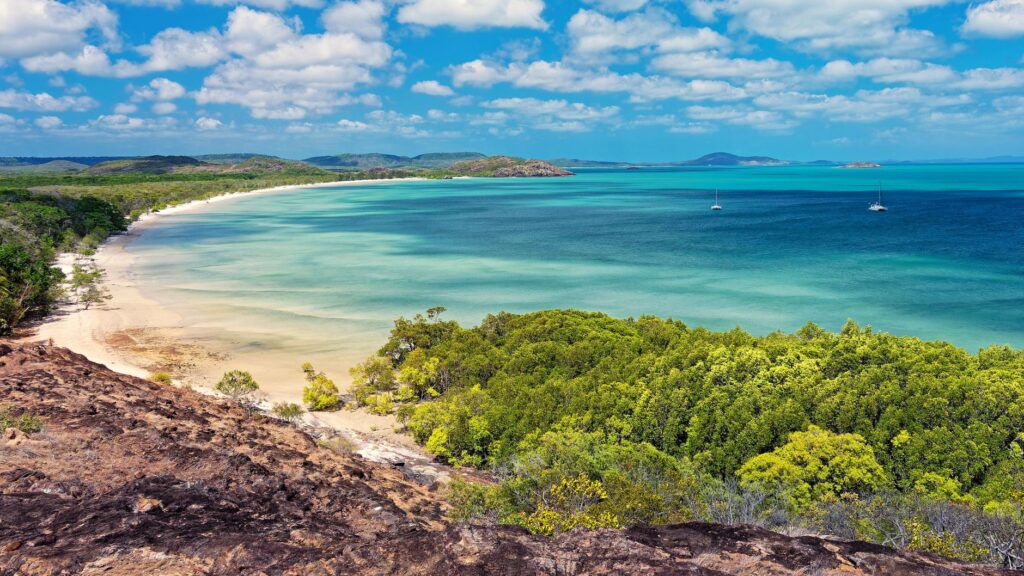
To understand the magnitude of this new cultural space, one must examine the ground beneath our feet. Larrakia country spans from tide-swept coasts to surrounding eucalypt woodlands, an ecosystem rich in resources that has sustained their clans for millennia. The relationship of the Larrakia with their environment is not merely utilitarian; it is a complex web of legal, spiritual, and ecological obligations collectively known as Dreamtime Law. Every inlet, every mangrove swamp, and every sea breeze holds a creation story that inextricably binds individuals to their geography.
Over the 19th and 20th centuries, British colonization and the rapid development of Darwin profoundly altered this equilibrium. Traditional lands were fragmented, and the Larrakia suffered displacements and assimilationist pressures designed to erase their culture. Despite these blows, cultural resistance never faltered. Elders and community leaders kept the flame of oral transmission alive, teaching younger generations the traditional names of plants, navigation techniques in treacherous waters, and sacred songs explaining the origin of the world.
Architecture with soul: design honoring the landscape
The building of the new Larrakia Cultural Centre is not a neutral white box meant to house artworks under clinical conditions; it is, in itself, an aesthetic and philosophical statement. Conceived in close collaboration with architects specializing in Indigenous design and the traditional custodians themselves, the architectural complex integrates local materials, organic forms, and bioclimatic solutions responding to Darwin’s harsh tropical climate.
The building’s lines evoke shapes from the surrounding nature: the curves of waves, the texture of native tree barks, and the layout of traditional shelters. Large eaves protect exhibition spaces from direct sunlight and torrential wet-season rains, while open internal courtyards allow breezes to circulate freely, creating a cool and welcoming microclimate. This architectural approach demonstrates that modernity and ancestral tradition are not only compatible, but can enrich one another to produce spaces of immense beauty and functionality.
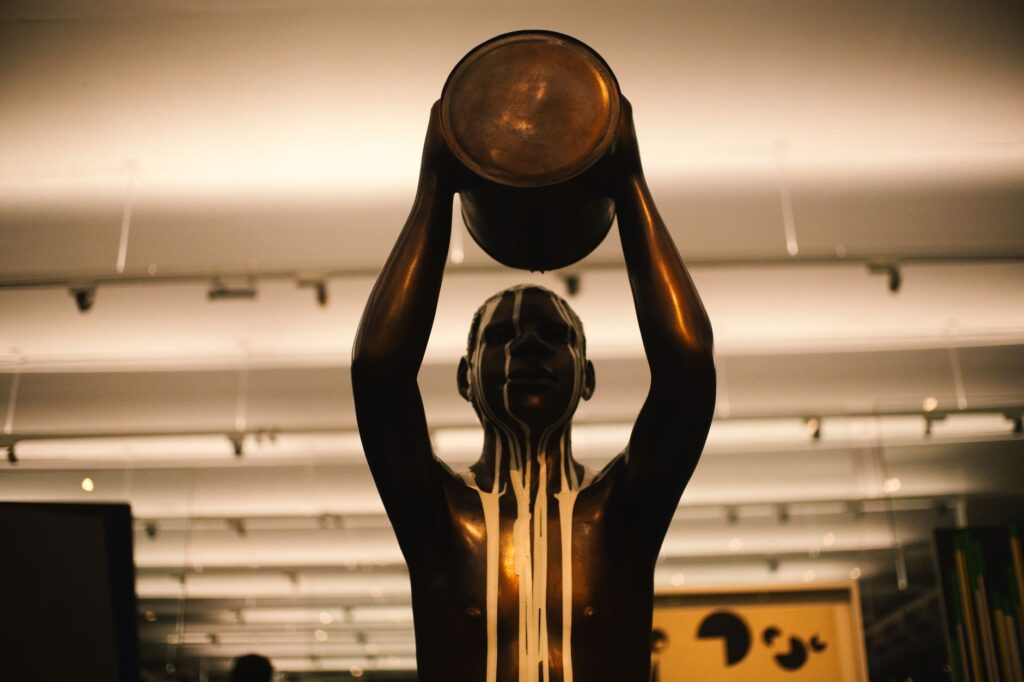
Indigenous art is not a frozen relic of the past; it is a living, political, and deeply spiritual language that continues to shape Australia’s present.
Art as a living archive: collections and contemporary expressions
Inside the center, visitors embark on a journey that challenges harmful preconceptions about Aboriginal art. Exhibition halls house everything from traditional pieces, such as delicate wooden carvings and finely ornamented hunting tools, to contemporary artworks utilizing multimedia supports, light installations, and vibrantly colored acrylic paintings.
Contemporary Larrakia artists use their talent to address urgent issues: climate change, biodiversity loss, historical trauma, and community resilience. Every brushstroke, every mark on tree bark, and every digital projection functions as testimony that Larrakia culture is in full creative effervescence. The center not only exhibits these works but includes studios for resident artists, allowing the public to observe the creative process firsthand and engage in direct dialogue with creators.
Northern cuisine: botanical and culinary knowledge
One of the most celebrated aspects of the new cultural center is its commitment to gastronomy as a vehicle for cultural knowledge. Northern Australian cuisine has traditionally been dominated by colonial and Asian influences, but native ingredients—known as bush tucker—possess extraordinary nutritional richness and symbolic value.
The restaurant and culinary workshops integrated into the complex offer visitors the opportunity to discover ancient flavors. Wild fruits with high vitamin C levels, pungent spices extracted from native seeds, and estuarine fish prepared according to ancestral techniques form part of a gastronomic offering that educates the palate while honoring the generosity of Larrakia land. Community botanical experts guide attendees through demonstration gardens, explaining the medicinal and nutritional properties of each plant.
Community voices: education, memory, and future
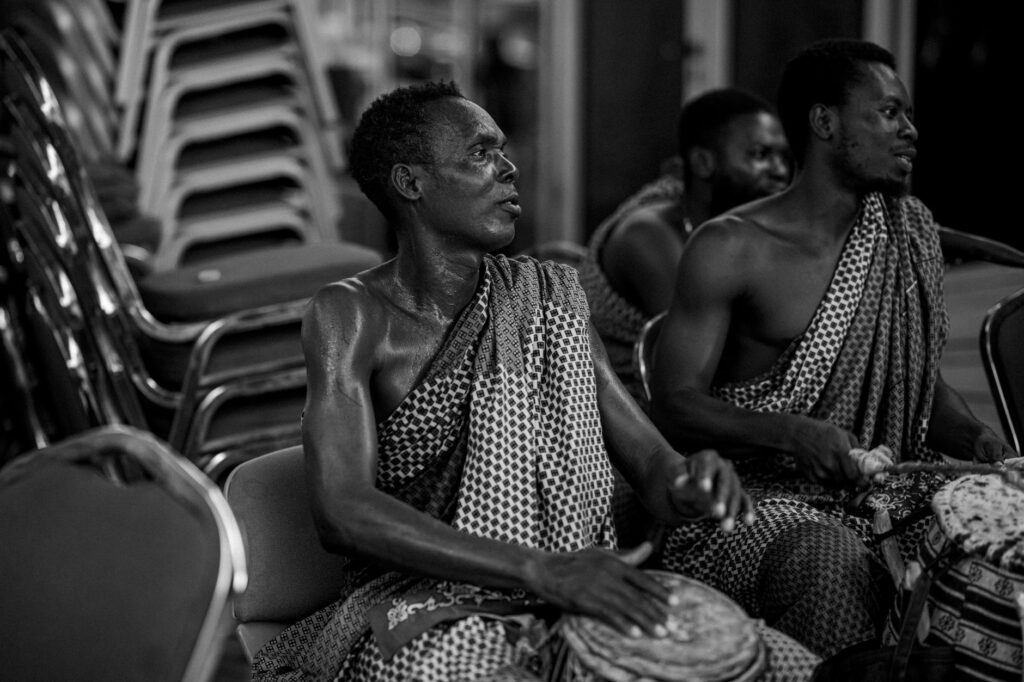
A cultural center only holds value if it serves its own people. Therefore, the institutional heart of this project focuses on community education and intergenerational transmission. Classrooms equipped with modern technology, spaces for traditional language workshops, and interactive digital archives are available for young Larrakia to reconnect with their linguistic roots and family history.
The center’s educational programs are designed for both local schools and international universities, establishing a bridge of intercultural understanding based on mutual respect. By empowering Larrakia youth with knowledge of their heritage, the center ensures that the flame of their culture continues to burn brightly in the coming decades, guiding the community toward a future of self-determination and pride.
Regenerative tourism as a tool for respect
The opening of this center arrives at a crucial moment for the Northern Territory’s tourism industry. The extractive and superficial model of mass tourism is gradually giving way to more conscious approaches, where travelers seek transformative experiences rooted in authenticity and ethics. The Larrakia Cultural Centre positions itself as a global benchmark for regenerative tourism.
Here, the visitor is not a mere consumer of services, but a respectful guest accessing knowledge under terms dictated by the traditional custodians themselves. This model ensures that economic benefits derived from tourism flow directly back to the local community, funding environmental conservation projects, educational scholarships, and wellness programs for elders.
Traveling with purpose implies accepting that the places we visit have legitimate owners whose stories deserve to be heard with humility and attention.
Practical guide
Getting there: The Larrakia Cultural Centre is located in the heart of Darwin, just a few minutes’ walk from the financial district and the city waterfront. Darwin International Airport offers regular connections with major Australian capitals.
Hours and access: The facility is open Tuesday through Sunday, from 9:00 AM to 5:00 PM. Booking tickets in advance via the official digital platform is recommended to secure access to guided tours led by traditional custodians.
Visitor tips: Allow at least half a day to leisurely explore the main exhibitions and botanical gardens. Photography is permitted in most public areas, but certain ceremonial zones and specific artworks carry respect restrictions that must be strictly observed.
Epilogue: beneath the southern sky, a new horizon
As evening falls over Darwin, the northern Australian sky ignites in tones of fire, ochre, and violet, reflecting across the calm waters of Beagle Bay. From the porches of the new Larrakia Cultural Centre, this daily spectacle acquires a renewed dimension. It is no longer merely a beautiful tropical landscape, but the stage where an ancient people reclaim their space with dignity, beauty, and hope. The opening of this center is not the end of a journey, but the luminous beginning of a chapter where Darwin’s story is finally told in full, with the clear and steady voice of those who never left.
Source in EN: TravelDailyNews Asia – Larrakia Cultural Centre opens as new home for Indigenous culture in Darwin.