There are cities where history is contemplated not only on the sculpted stone of their Roman walls, but tasted with every bite in the morning bustle of their food markets. Tarragona, the ancient imperial Tarraco, is a living territory where past and present converse through fresh produce, saline tides, and the dedication of farmers and fishermen who keep an ancient heritage alive. Delving into its commercial fabric is not a mere act of buying and selling, but an anthropological journey to the heart of a community that has turned its natural pantry into a cultural standard of the highest order.
The city’s pulse begins to beat long before the sun warms the coastal coves. At the port docks, the arrival of fishing boats sets the rhythm of an unyielding ritual. The fish markets light up with silvery flashes as sailors unload the day’s catch: prawns from La Rápita, colossal cuttlefish, and the prized rock fish that will later fill the market stalls. This indissoluble bond between the Mediterranean Sea and local tables defines a gastronomy based on absolute respect for the product, where simplicity in the kitchen elevates the exceptional quality of the raw material.
Architecture of Iron and Living Produce
The Central Market building, a jewel of Catalan Modernism designed by architect Josep Maria Pujol de Barberà and inaugurated in 1915, stands as the great temple of this daily liturgy. Its wrought iron and exposed brick structure not only responds to the functional aesthetics of the early 20th century, but shelters a vibrant human ecosystem beneath its vaults. Each stall is a showcase of colors, textures, and aromas reflecting the generosity of the Tarragona regions, uniting the coastline and the agricultural interior in a single space.
Beneath the market’s high skylights, vendors hawk their goods with the warmth characteristic of those who have spent decades behind the counter. Here, customers seek not only provisions, but expert advice on the cooking time of a mollusk or the most suitable almond variety for making an authentic romesco sauce. This almost theatrical verbal exchange constitutes the true social glue holding the community together against the uniformity of impersonal shopping malls.

The Memory of the Orchard and Dry Fruits
A few kilometers from the coast, the flat and fertile land of Camp de Tarragona displays an agrarian mosaic where almond and hazelnut trees have reigned since time immemorial. The region’s Protected Designations of Origin guarantee the excellence of nuts that form the backbone of local pastry-making and Catalonia’s most emblematic sauces. In the market aisles, sacks of Marcona almonds and Negreta hazelnuts emit a warm, toasted aroma that evokes the region’s mild winters.
Alongside the nuts, local market gardens provide exceptional vegetable variety shaped by the Mediterranean microclimate. Tender, compact local artichokes, calçots anticipating the winter feast, and hanging tomatoes coexist in chromatic harmony. Each vegetable tells a story of patience, measured irrigation, and respect for seasonal cycles, reminding visitors that true avant-garde cuisine is always born from a deep understanding of the land and its limits.
The Invisible Art of the Fish Market and the Sea
The market’s rhythm cannot be understood without the silent work of the fishermen’s guilds. Every dawn, boats set sail to brave the darkness in search of traditional fishing grounds. The sustainability of these practices ensures the survival of species that globalized mass consumption tends to devour without discernment. In the Tarragona market, buying coastal fish is not an act of passive consumption, but an active commitment to maintaining a heroic and threatened trade.

The pleasures of the sea translate here into preparations where the produce barely needs intermediaries. Red prawns with their intense flavor and concentrated iodine, or mantis shrimp that bring unmatched depth to rice broths, are the undisputed stars of local casseroles. The mastery of cooks and vendors lies in transmitting this marine heritage through detailed explanations that educate the buyer’s palate and preserve the culinary memory of the Catalan coast.
The Alchemy of Romesco and Olive Oil
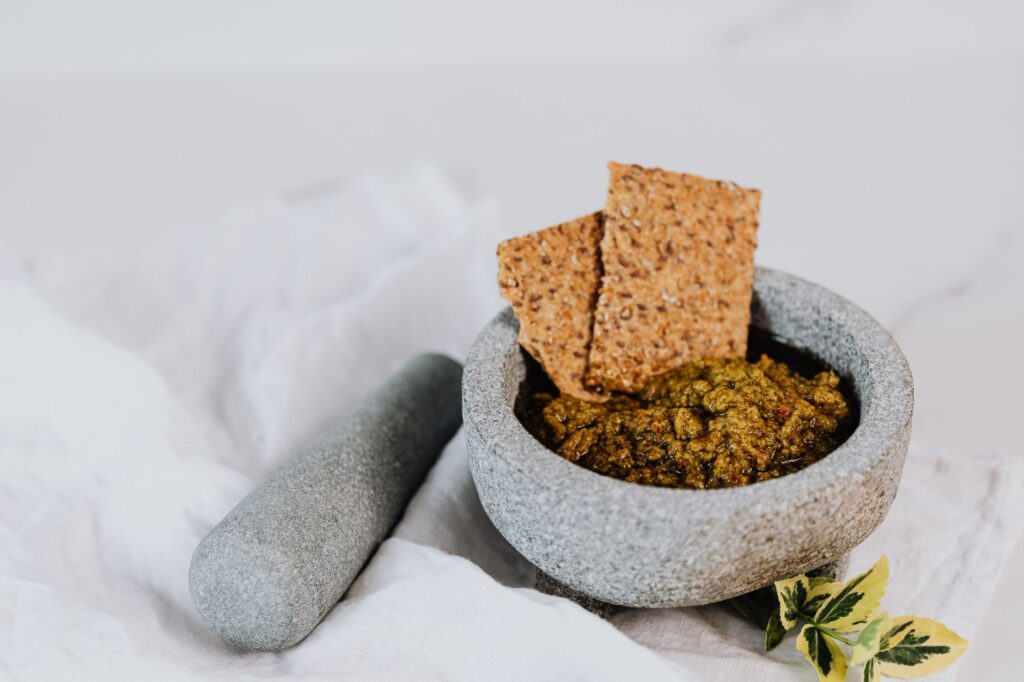
If there is one element that synthesizes Tarragona’s gastronomic identity, it is undoubtedly romesco sauce. Born in the seafaring neighborhoods of El Serrallo, this emulsion of almonds, hazelnuts, dried nyora peppers, garlic, roasted tomato, extra virgin olive oil, and a touch of vinegar represents the pinnacle of Mediterranean alchemy. In the market’s specialized stalls, ingredients can be purchased separately or visitors can choose artisan pastes made by families using recipes passed down through generations.
Extra virgin olive oil, protected by the Siurana PDO, acts as the guiding thread uniting all flavors. Obtained primarily from the Arbequina variety, this medium-fruity oil with notes of fresh grass and a slight bitter finish imparts subtle elegance to every dish. Its constant presence in market stalls underlines the importance of a liquid gold that is not merely a condiment, but the cultural pillar supporting the region’s entire Mediterranean diet.
The Liturgy of the Counter and Generational Renewal
Walking among the stalls of the Central Market is also witnessing the challenges traditional commerce faces in the 21st century. Faced with pressure from digital consumption and large retail chains, Tarragona vendors are betting on specialization, organic produce, and direct human contact. This effort to reinvent themselves without losing their essence is allowing for an incipient generational renewal, where young entrepreneurs reclaim historic shops to offer gourmet local products and restaurant proposals integrated within the market itself.
This symbiosis between tradition and modernity turns the market into a dynamic space that transcends mere commercial function, establishing itself as a center for cultural outreach. Cooking workshops, guided tastings, and encounters between producers and consumers consolidate the venue as Tarragona’s true civic heart, a place where collective identity is reinforced with every daily transaction and shared conversation among aisles.
The market is not merely a place where food is acquired, but the faithful mirror where a city recognizes itself, celebrates its roots, and projects its future through flavor.
The culinary experience in Tarragona culminates outdoors, on the terraces surrounding the market and the historic squares of the old town. There, tasting a local vermouth — another deeply rooted tradition in the city — accompanied by Arbequina olives and artisan potato chips completes a perfect sensory circle. Travelers then understand that Tarragona’s gastronomy does not end on the plate, but encompasses the unhurried rhythm of its mornings, the golden light on modernist facades, and the warmth of hospitality forged over centuries.
Practical guide
How to get there: Tarragona has excellent rail connections. The central station receives regional and medium-distance trains from Barcelona and Valencia, while the Camp de Tarragona high-speed station, located about 15 kilometers away, connects with Madrid and the rest of the peninsula via shuttle bus services.

When to visit: The Central Market opens Monday through Saturday in the morning (from 8:30 a.m. to 2:30 p.m., extending until 8:00 p.m. on Fridays). Spring and autumn offer ideal weather to explore both the city and the surrounding orchards and coves without overcrowding.
Address of interest: The Central Market is located in Plaça Corsini, right in the city’s nerve center, perfectly integrated into the pedestrian commercial axis linking Rambla Nova with the Old Town.
Essential products: Do not miss purchasing toasted Marcona almonds, PDO hazelnuts, Siurana extra virgin olive oil, and traditional ingredients to make authentic seafaring romesco.
Recommended accommodation: Opting for small boutique hotels or rehabilitated tourist apartments in the historic center allows visitors to experience the city’s nightlife and morning atmosphere with complete authenticity.
Etiquette tips: When purchasing fresh produce at traditional stalls, it is customary to greet with a cordial ‘bon dia’ and let the vendor select the best pieces according to the culinary use intended for the food.
Further reading: To delve deeper into the area’s maritime and commercial history, consulting local publications on the El Serrallo neighborhood and the evolution of fishing guilds is highly recommended.
Epilogue of Golden Light and Flavor
As evening begins to fall over the Roman walls and the sea breeze gently enters the downtown streets, Tarragona recovers a luminous calm that seems to suspend time. It is the moment when market stalls lower their metal shutters until the new dawn, and the aromas of Mediterranean cuisine slowly fade among the golden stone alleys. In that moment of quietude, the city reveals its true nature: a refuge where the memory of the sea and the toil of the earth continue to beat with the same strength that drove the first sailors and farmers two millennia ago. Travelers who have learned to listen to the murmur of its markets and taste the authenticity of its products understand that Tarragona is not just a destination visited, but a living legacy incorporated forever into the memory of the palate and the soul.