
Introduction to the Water Veins of Southeast Asia
The Mekong Delta is not merely a geographical region; it is a living organism where solid land feels like a mere suggestion and water defines every aspect of human existence. Within this vast network of river branches, concrete bridges are scarce, and the true transport infrastructure relies upon an intricate web of artificial and natural canals. For centuries, the currents of the main river and its nine primary tributaries—known locally as the Cu Sông or the nine dragons—have functioned as the economic backbone for farmers, merchants, and travelers. Mobility in this area does not conform to the conventional standards of urban road engineering, but rather to a complex intermodal choreography where motorized sampans, plank ferries, and heavily laden motorcycles collaborate in a delicate daily balance.
Understanding how the inhabitants of provinces like Can Tho, Ben Tre, or Vinh Long travel requires abandoning the Western notion of highways and accepting the syncopated rhythm of water. Boats are not merely tourist attractions for foreign visitors, but floating ambulances, school buses, and heavy cargo trucks transporting everything from bunches of bananas to construction materials. However, this ancestral transport system faces unprecedented pressures. Reduced water flows from upstream dam construction, combined with saline intrusion and land subsidence, threaten to collapse traditional water routes. In this report, we examine how the logistics of one of the world’s most densely populated regions are sustained and what alternatives local authorities are adopting to prevent the isolation of rural communities.
The Fluvial Backbone: Sampans, Barges, and Floating Trade Logistics
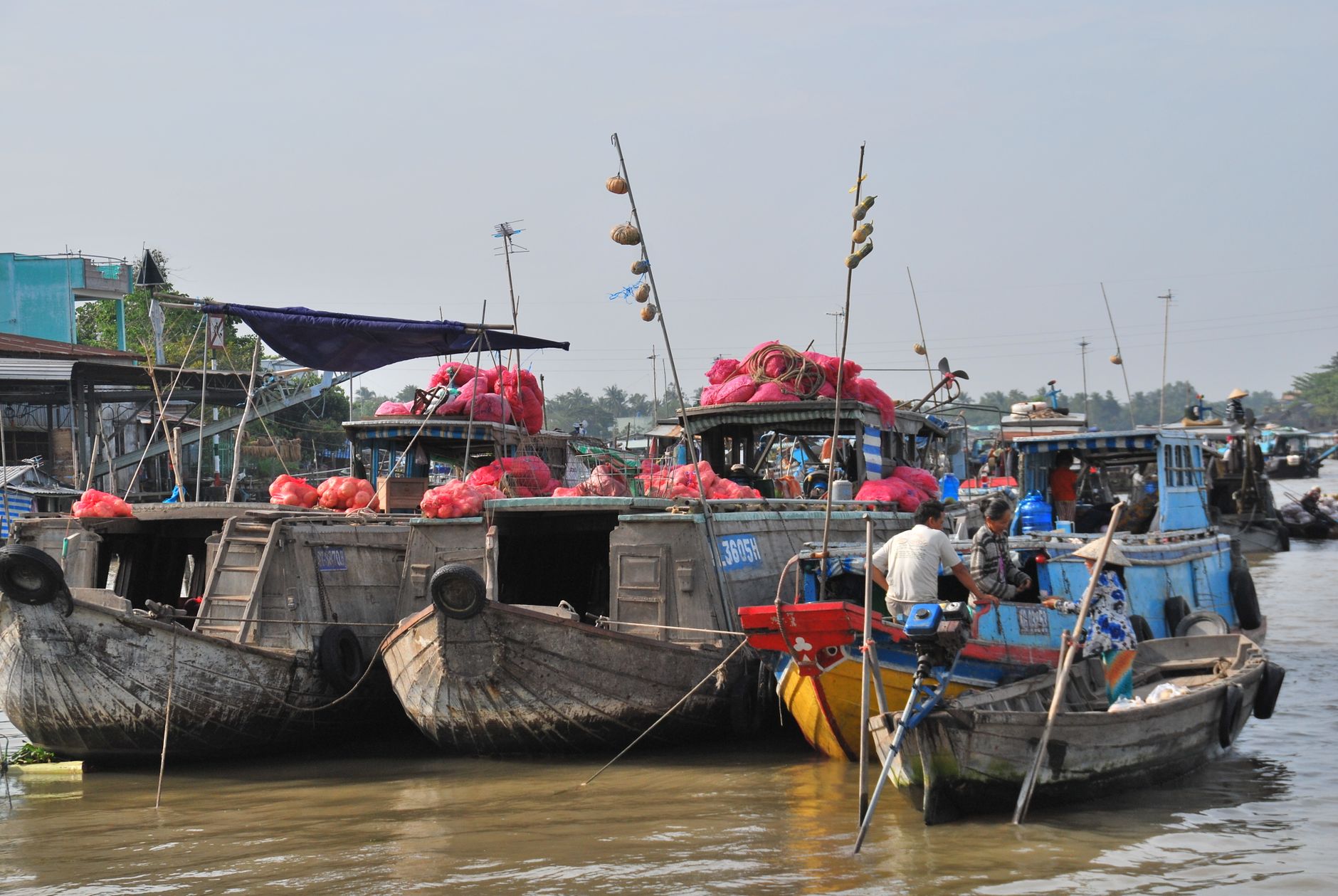
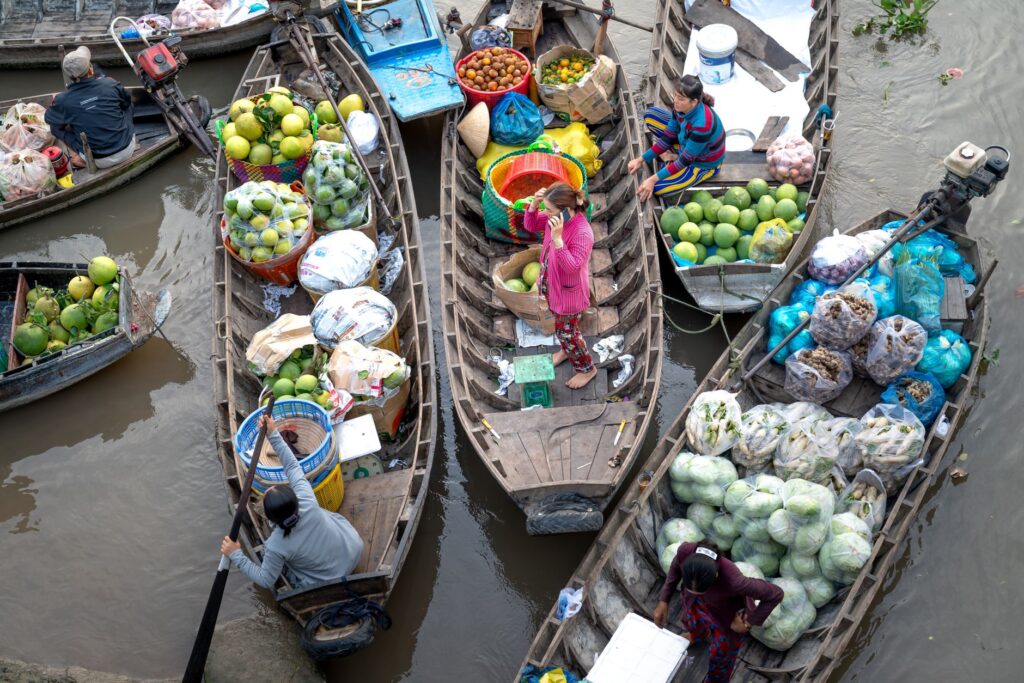
The operational heart of the delta beats within its floating markets, with Cai Rang being the most notable exponent of this commercial boat culture. Unlike a land market where stalls are stationary, infrastructure here is entirely mobile. Wooden barges act as floating wholesalers, advertising their goods through the ingenious system of the cay beo: a long bamboo pole erected at the bow of the boat from which samples of the fruit or vegetable for sale are hung. Buyers navigate in smaller vessels, maneuvering with millimeter precision across intersecting currents and the wakes generated by speedboats carrying tourists and local commuters.
The logistics of these transactions require a profound understanding of local hydrography. Tides from the South China Sea penetrate deep into the interior of the delta, reversing current directions twice a day. Barge captains must plan their routes not by distance in kilometers, but by tidal cycles. Navigating against the tide with a ten-ton barge of rice can triple fuel consumption, a critical factor in the economy of small river transport workers. Furthermore, the progressive replacement of traditional wooden boats powered by oars or sails with second-hand diesel engines—frequently adapted from truck motors—has altered the acoustic and ecological landscape of the canals, accelerating erosion along muddy riverbanks.
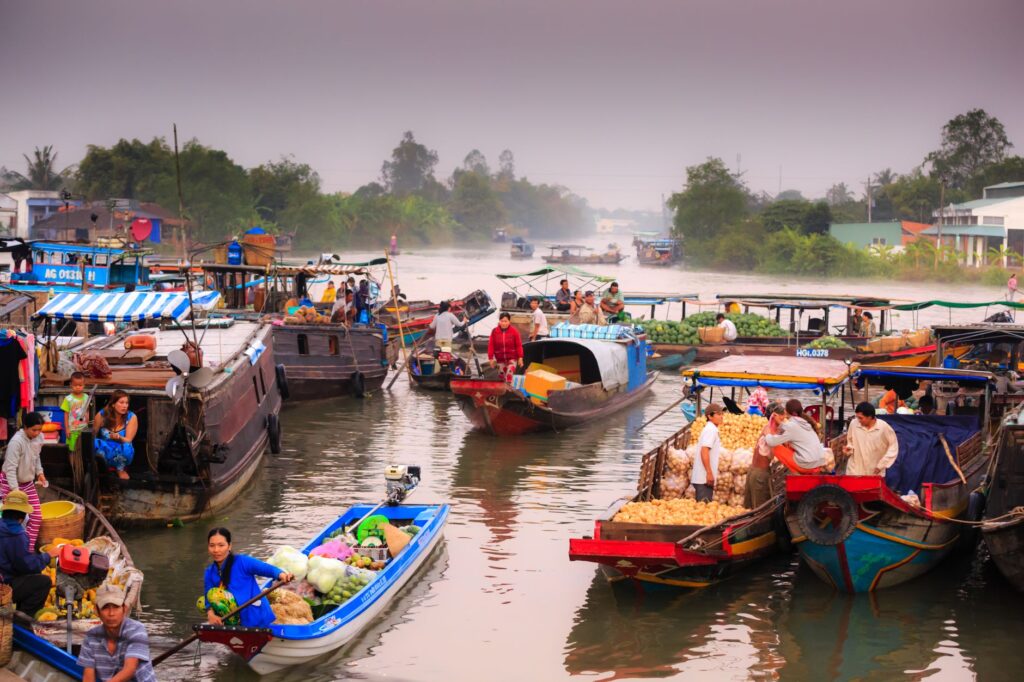
Water does not separate communities in the Mekong Delta; on the contrary, it acts as the only viable path in a territory where land constantly yields to the tide.
Simultaneously, large-scale freight transport has had to adapt to the shallow draft of many secondary canals. Port authorities in Can Tho have implemented intermodal transfer hubs where large barges from Phnom Penh or the port of Ho Chi Minh unload containers onto shallower vessels. This constant transfer requires perfect synchronization between floating cranes and light trucks waiting on concrete docks, evidencing an imperfect yet functional transition between traditional navigation and the globalized supply chain.
The Role of Rural Ferries and the Secondary Road Network
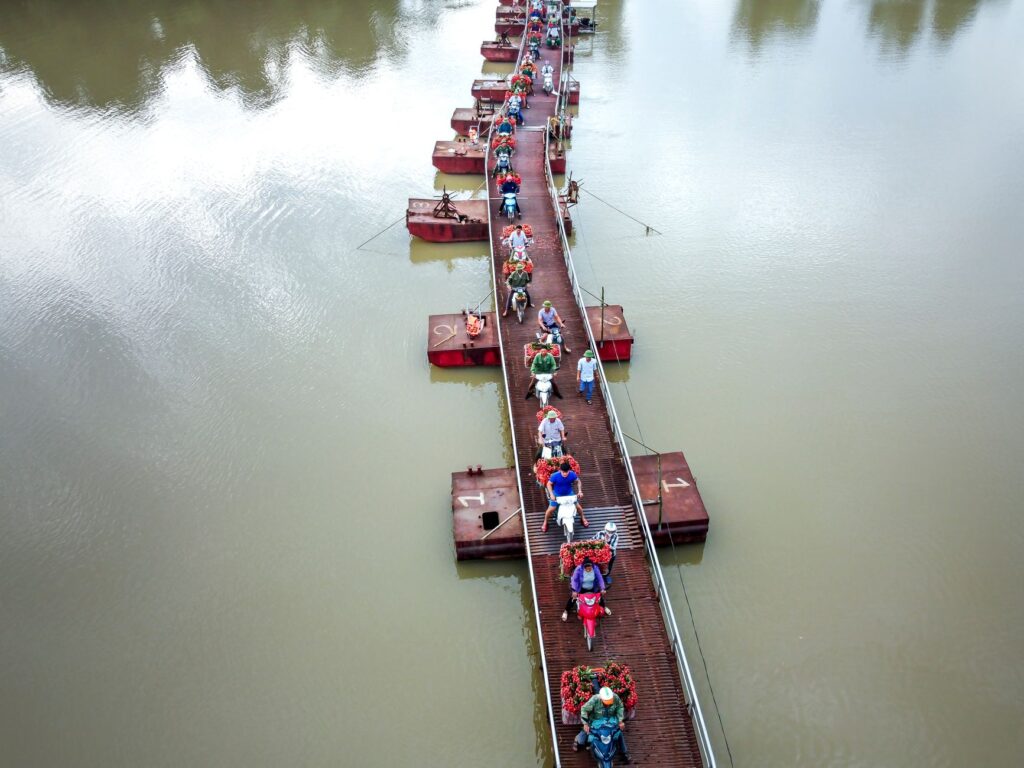
As one ventures into the rural zones of Soc Trang or Tra Vinh provinces, the river landscape intersects with a secondary road network attempting to stitch together fragments of solid land. Nonetheless, the constant interruption of rivers makes local ferries, known as pha, indispensable. These open metal platforms simultaneously transport dozens of motorcycles, pedestrians, and small cars, operating uninterrupted from dawn until late at night. Boarding is a lesson in implicit efficiency: motorcyclists shut off their engines, reduce spacing to a minimum, and rely on the ferry operator’s hand gestures to prevent a miscalculation from plunging them into the turbid waters of the Hau River.
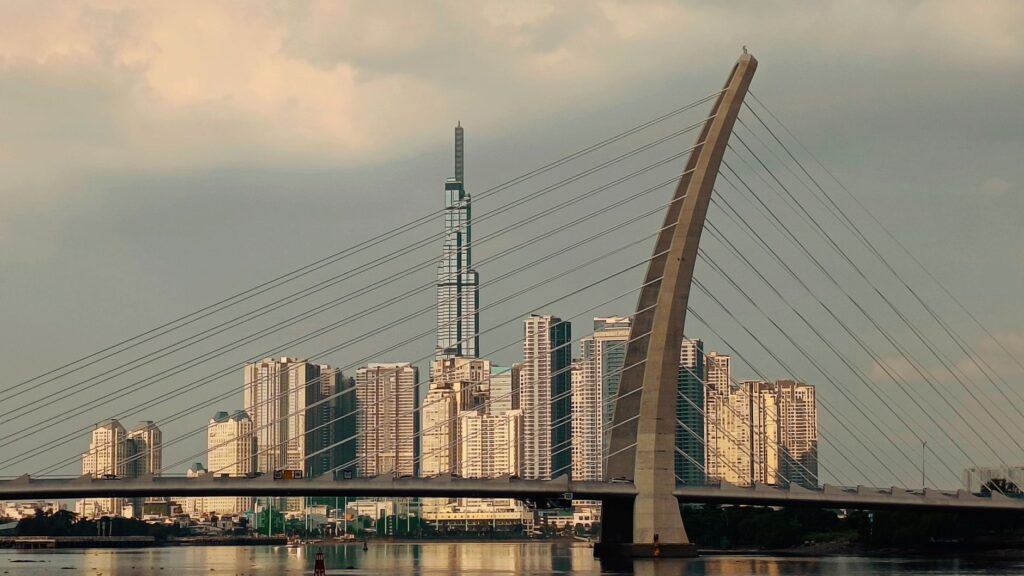
The construction of major cable-stayed bridges, such as the Can Tho and My Thuan bridges, has radically transformed road transport across primary arteries, drastically reducing travel times between the delta region and the metropolis of Saigon. However, these engineering colossi have generated an unforeseen collateral effect on riverside economies. Many small ferry ports that once employed entire communities have gone bankrupt or seen their operations reduced to a fraction. Local operators have had to reinvent themselves, offering tourist transport services or adapting their barges to carry heavy agricultural machinery unable to cross under the strict weight limits of older bridges.
The integration of the motorcycle and the boat remains the undisputed paradigm of individual mobility within the delta. It is not uncommon to observe motorcycles laden with gas cylinders, poultry cages, or even entire mattresses boarding fragile wooden canoes to cross a canal where the nearest bridge is twenty kilometers away. This ductility in transport reflects the adaptive capacity of a population that has turned logistical precariousness into a form of economic survival.
Climate Challenges: Droughts, Erosion, and Canal Collapse
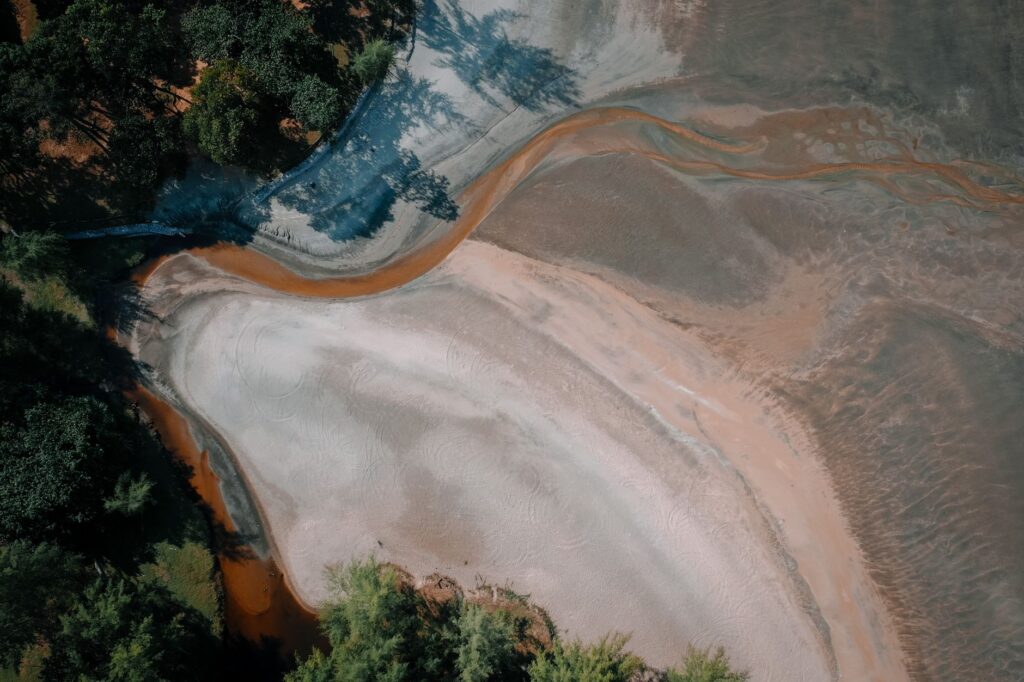
The greatest challenge facing the Mekong transport system stems not from a lack of technological investment, but from a systemic environmental crisis. Massive upstream dam construction—primarily in China, Laos, and Cambodia—has trapped the nutrient-rich sediments that traditionally fertilized the delta and maintained soil stability. Without these sediments, the riverbed is sinking and riverbanks suffer catastrophic erosion, causing roads and entire homes to suddenly collapse into the water.
For transport operators, this translates to the constant emergence of geographical bottlenecks. Canales that historically accommodated medium-draft barges are silting up due to declining water volume and changing sedimentation patterns. Municipal dredges work continuously to keep main commercial corridors open, but government budgets remain insufficient to maintain thousands of kilometers of secondary canals that sustain village life. Additionally, saline intrusion caused by falling river flows and rising sea levels is destroying wooden infrastructure and prematurely rusting the metal hulls of commercial vessels.
School and healthcare mobility are the most vulnerable to this environmental degradation. During the dry season, when water levels drop sharply, boats transporting children to regional secondary schools must suspend routes or lengthen journeys to seek alternative deeper channels. Provincial authorities have begun experimenting with low-draft fiberglass catamarans, but their acquisition cost remains prohibitive for independent river cooperatives operating in impoverished districts.
The Transition Toward Electrification and Sustainable Transport
In response to noise pollution and carbon emissions generated by thousands of outboard diesel engines, Vietnam’s Ministry of Transport has launched a pilot program for the gradual electrification of the river fleet in the Mekong Delta. This initiative, developed in partnership with international cooperation agencies, aims to replace internal combustion engines with electric propulsion systems powered by lithium batteries and solar charging stations installed at main docks in Can Tho and Chau Doc.
The transition, however, is met with skepticism by local fishers and transport workers. The initial conversion cost of a traditional vessel far exceeds the average annual income of a family dedicated to river trade. Likewise, current battery autonomy is limited when vessels must operate for long hours against intense currents or transport heavy agricultural loads. Nonetheless, early results in passenger ferry services show a dramatic reduction in ambient noise and a notable improvement in air quality within urban floating markets.
Simultaneously, a unified digital river transport platform is being developed to allow farmers to hire cargo barges in real time via mobile apps, optimizing routes and reducing empty return trips. This digitalization of traditional transport represents a bridge between the delta’s artisanal past and the logistical demands of the modern export economy, seeking to preserve the cultural identity of the canals while mitigating their environmental footprint.
Practical guide
Planning a journey through the intermodal transport system of the Mekong Delta requires understanding local dynamics and respecting the timelines imposed by water and weather.
How to get there: The primary entry point to the delta is Can Tho city, accessible via express buses from Ho Chi Minh City (approximately 3 to 4 hours along the main highway) or via domestic flights to Can Tho International Airport (VCA).
When to travel: The best time to explore the region in terms of climatic stability is during the dry season, running from November to April. Water levels remain stable during these months, avoiding the seasonal flooding of the monsoon period (May to October).
Fluvial transport: To visit floating markets like Cai Rang or Phong Dien, hiring traditional sampans directly at local docks around dawn (approx. 5:30 a.m.) is recommended. Negotiate the fare in advance and verify that the vessel carries standard life jackets.
Road connectivity and ferries: If traveling by rented motorcycle, using local ferries (pha) is mandatory and inexpensive. Cash payment in small-denomination Vietnamese dong is required, and travelers must strictly follow operator instructions when boarding and disembarking.
Accommodation and logistics: Staying in ecological lodges or homestays in rural Ben Tre or Vinh Long is advisable, where hosts directly manage bicycle or boat transport to explore fruit orchards and minor canals.
Safety and health: Comprehensive travel insurance covering aquatic activities and rural transport is essential. Broad-spectrum sunscreen, mosquito repellent, and water-resistant footwear are strongly advised due to the constant humidity of the docks.
The Human Pulse of Water and the Memory of Canals
At the end of the day, when the tropical sun plunges over the horizon and dyes the waters of the Mekong a deep ocher tone, the delta reveals its most intimate dimension. The engines of the sampans gradually shut down, replaced by the distant murmur of cicadas and the rhythmic splashing of wooden oars still used by some fishermen near the containment dikes. In this amphibious enclave, where life is measured by water flow and tidal height, transport is not merely a matter of engineering or commercial logistics; it is the invisible thread holding together a community deeply rooted in its natural environment.
The barges crossing the dusk carry something more than cargo: they carry the collective memory of generations that have patiently negotiated with the fury and generosity of one of the world’s greatest rivers. As upstream dams and climate change continue to redraw the region’s map, the adaptive capacity of its inhabitants remains the delta’s true critical infrastructure. Observing this daily ballet of wood, water, and motor is to understand that human mobility, in its purest expression, is a constant act of resilience and respect for the territory one inhabits.