
Breaking the Paradigm of the Perfect Family Vacation
For decades, the family travel industry has been dominated by a narrative of containment: resorts with kids’ clubs, predictable buffets, and destinations where the risk of a meltdown is mitigated by a ball pit. However, a growing movement of parents is rejecting this safety bubble in favor of what many would consider a terrible idea. Taking a three-year-old on a safari in the Serengeti or navigating the frenetic crowds of Mardi Gras in New Orleans isn’t an act of masochism; it’s an investment in shared resilience and curiosity.
The premise is simple yet radical: children don’t need sterile environments to thrive; they need experiences that connect them with the vastness of the world. By stepping away from itineraries designed for absolute comfort, parents discover that logistics, while complex, are secondary to a child’s capacity for wonder. This is the chronicle of why big trips—the ones that sound exhausting on paper—end up being the most rewarding experiences of a lifetime.
The Myth of the ‘Right Age’
A common refrain among skeptics is that it isn’t worth taking young children to exotic destinations because they won’t remember anything. This argument is rooted in a utilitarian view of memory. While a two-year-old might not retain the historical details of a temple in India, the sensory and emotional impact of that experience becomes part of their developmental DNA. Travel isn’t about accumulating facts; it’s about shaping a disposition toward the unknown.
Traveling to complex places forces parents to slow down. Where an adult sees a train delay as a frustrating obstacle, a child sees an opportunity to watch people, play with shadows on the platform, or try a local snack. This forced deceleration is, paradoxically, the greatest gift of family travel. It compels us to see the world through a 43-inch lens, where the ordinary becomes extraordinary.
Traveling with children is not an interruption of an adventurous life, but its most profound and challenging evolution.
The Logistics of Safari Chaos
A safari with a toddler sounds like a recipe for disaster. Hours of sitting in a 4×4, the midday heat, and the requirement for absolute silence in the presence of predators. Yet, the reality is often quite different. In the plains of Kenya or Tanzania, nature acts as the ultimate mindfulness teacher. A child who can’t sit still in a restaurant often finds themselves mesmerized by the twitch of an elephant’s ear or the rhythmic gait of a giraffe.
The key lies in adaptation, not resignation. Specialist family guides know that a successful safari with kids alternates the search for the Big Five with stops to examine tracks in the mud or identify colorful insects. It’s a lesson in patience for everyone involved. Success isn’t measured by the number of lion sightings, but by the family’s ability to inhabit the present moment without the distractions of digital life.

India: A Shared Sensory Assault
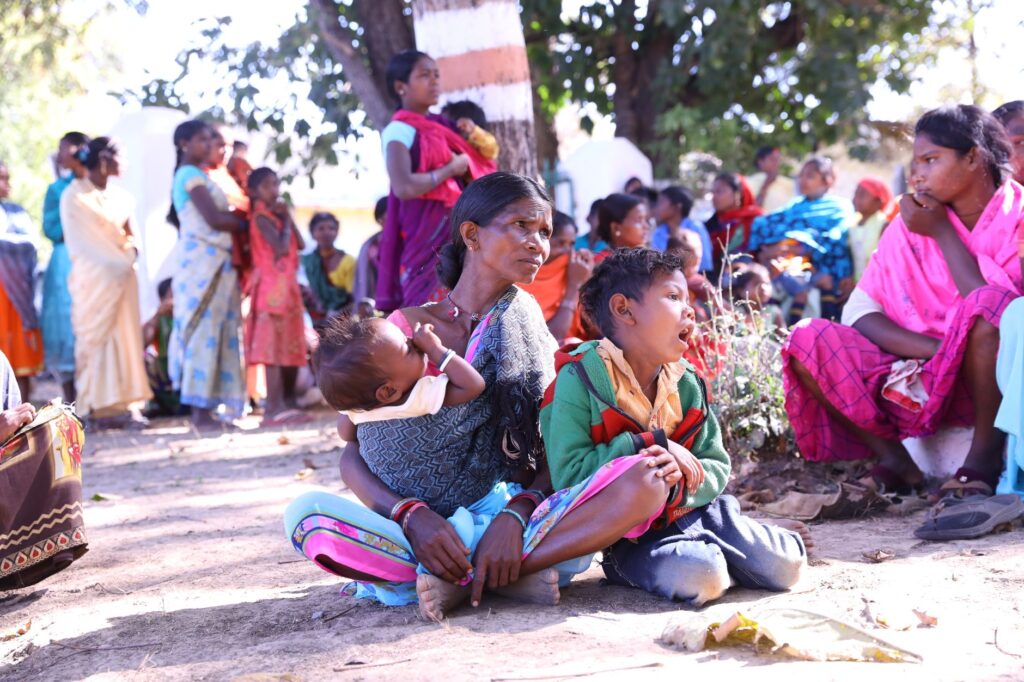
If a safari is a lesson in patience, India is a lesson in adaptability. For a young child, the streets of Delhi or Jaipur are a kaleidoscope of stimuli: the smell of spices, the constant blare of horns, the vibrant colors of saris, and the animals wandering freely. Many parents avoid this destination for fear of illness or sensory overload, but those who venture there find that India is a country that truly cherishes children.
In Indian culture, children are a social bridge. A baby in a carrier opens doors that a solo traveler would never even see. Conversations flow faster, smiles are more genuine, and hospitality is multiplied. Navigating this environment, a child learns that the world is diverse, loud, and deeply human. There is no better vaccine against the fear of the ‘other’ than having played in a foreign city square before learning to read.
Mardi Gras and the Value of the Crowd
New Orleans during Mardi Gras is, by definition, chaos. Crowds, loud music, and a frenetic energy that seems antithetical to a toddler’s routine. But even here, in the heart of America’s biggest party, there is a space for the family. The areas away from the French Quarter, such as St. Charles Avenue, transform into community picnics where children are the stars, catching beads from their parents’ shoulders.
This experience teaches children how to navigate the human scale of large events. They learn to be part of something bigger than themselves, to enjoy collective joy, and to handle overstimulation with the guidance of their parents. It is, essentially, an exercise in trust. The child trusts that their parents will keep them safe amidst the noise, and the parents trust the child’s ability to absorb local culture organically.
Gear and the Survival Mindset
To survive these journeys, the right gear is fundamental, but the mindset is even more so. It’s not about carrying a suitcase full of toys; it’s about selecting versatile tools. A high-quality hiking carrier is preferable to a stroller on cobblestone streets or mountain paths. Familiar snacks, a robust first-aid kit, and a tablet loaded for crisis moments are essential, but the most valuable resource is flexibility.
Accepting that there will be days when the plan falls apart is the first step toward success. If the child needs a three-hour nap instead of a museum visit, you adapt. The goal isn’t to check boxes on a tourist bucket list, but to maintain the group’s emotional equilibrium. A stressed parent creates a stressed child; a parent who embraces the unexpected with humor teaches one of life’s most important lessons.
We don’t travel to escape life with our children, but so that life does not escape them.
High-Altitude Hiking: Small Steps on Big Mountains
Hiking is perhaps the purest form of family adventure. In the mountains, hierarchies dissolve. Walking through the Pyrenees or the hills of Scotland with a child means accepting a different pace. Stones become castles and streams become oceans. The shared physical effort strengthens family bonds in a way that no sedentary activity can match.
It is important to choose routes with frequent visual rewards to keep the child engaged. Mountain huts, with their communal atmosphere and shared dinners, offer an educational experience in coexistence and respect for nature. Seeing a child reach a summit, however small, is witnessing the birth of self-confidence.

Practical guide
- Health and Safety: Always consult a travel doctor at least two months before departure. Ensure all vaccinations are up to date and carry a digital record of medical histories.
- Destination Choice: Evaluate the healthcare infrastructure of the destination. Countries like Costa Rica, Jordan, or Japan offer an excellent balance between adventure and safety.
- Transportation: On long-haul flights, opt for overnight flights that coincide with the child’s sleep schedule. On the ground, consider hiring a private driver for total control over stops.
- Accommodation: Look for places with a kitchen or at least a small fridge. The ability to prepare a simple family meal can save a difficult day.
- Documentation: Check visa requirements for minors and ensure you carry travel authorizations if only one parent is present.
- Travel Insurance: Purchase a premium policy that includes medical evacuation and cancellation for family-related reasons.
The Long-Term Reward
At the end of the day, after the delayed flights, the diaper changes in unlikely places, and the accumulated fatigue, something indestructible remains: the family narrative. These trips become the stories told over and over at holiday dinners. They are the foundation of a family identity built on curiosity and courage.
Taking children on big trips isn’t just a gift for them; it’s a gift for the parents. It reminds us that we are capable of handling uncertainty and that the world, despite its complexities, is a welcoming place for those who explore it with an open heart. The next time someone says a destination sounds like a terrible idea for a child, consider it an invitation to the greatest adventure of your life.
Source: Condé Nast Traveler