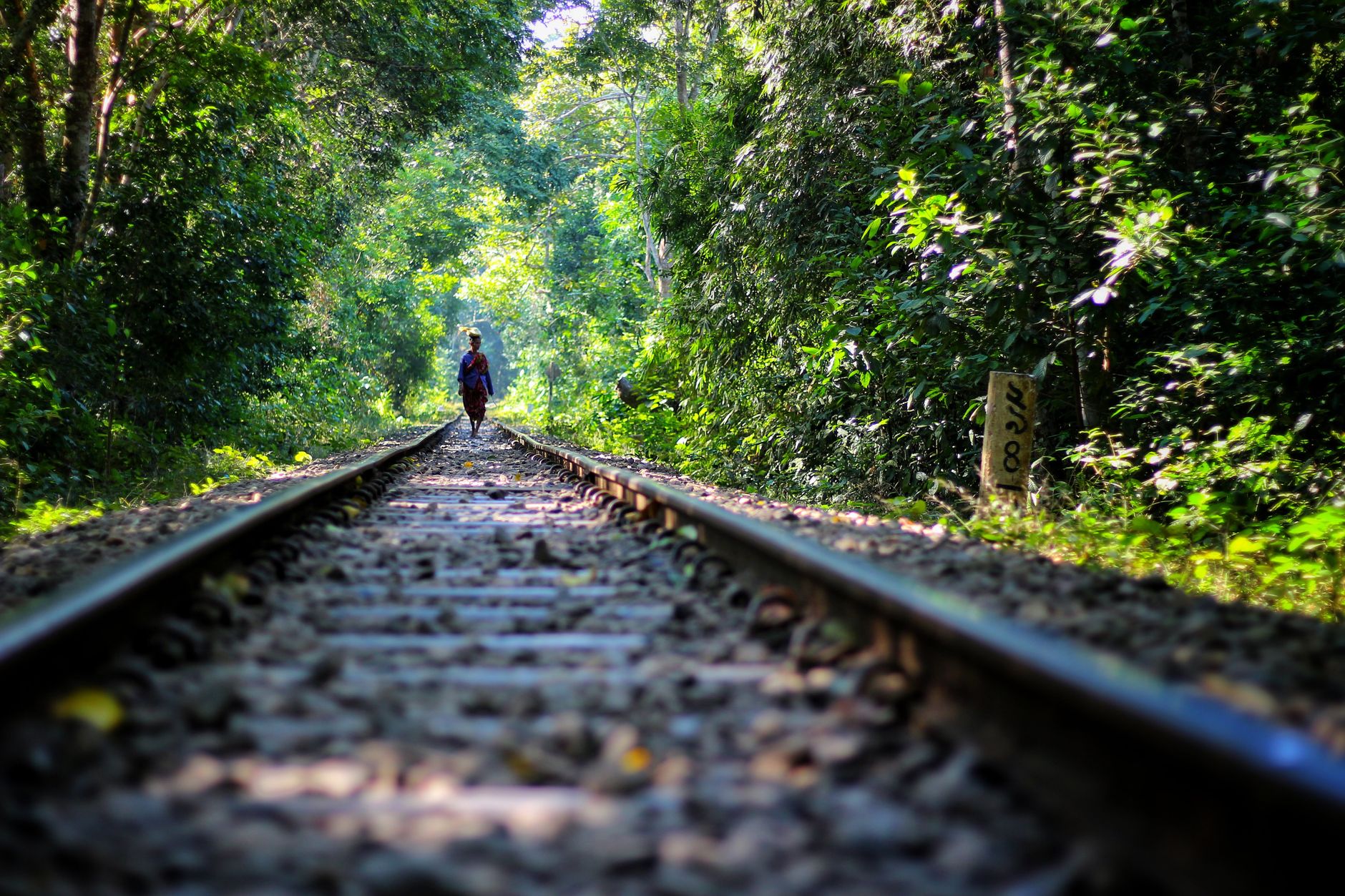

The metallic whistle of the locomotive breaks the stagnant humidity of dawn in Owendo, the industrial port located a few kilometers from Libreville. On the platforms, the scent of heavy diesel, hot bitumen, and soluble coffee blends with the dense breeze of the Gabon estuary. This is no luxury tourist train; it is the Trans-Gabonese, the steel backbone that slashes westward to eastward across the dense equatorial jungle of Central Africa, connecting the Atlantic coast with the mineral-rich highlands of Franceville. For nearly seven hundred kilometers, this railway represents far more than a mere means of transport: it is the sole operational corridor that persistently defies biological decay and the voracity of one of the wildest natural environments on the planet.
Planning a traverse of this magnitude requires understanding that railway time in Central Africa does not obey rigid schedules, but rather the unpredictable pulse of the rainy season, clay-soil landslides, and the maintenance logistics of infrastructure built under extreme conditions. This report offers a technical and anthropological immersion into the green heart of the continent, breaking down the operational keys to successfully traversing one of the world’s most demanding and authentic expedition routes.
The Steel Genesis in Virgin Jungle: History and Geopolitics of the Route
The construction of the Trans-Gabonese, formally initiated in the late 1970s under the impetus of Omar Bongo’s government with massive national and international investment, was hailed at the time as one of the greatest civil engineering feats in tropical terrain. The initial objective was strategic and economic: to evacuate the immense manganese deposits of Moanda and valuable timber from the interior depths to international markets without relying exclusively on river navigation along the Ogooué River.

However, laying railway tracks over clayey and swampy soils, subjected to annual precipitation exceeding three thousand millimeters, posed a titanic challenge. Thousands of local and foreign workers carved away hills, spanned metal bridges across river canyons, and battled vegetation capable of reconquering ballast within weeks. Today, traveling on this train means moving through a monument to human perseverance against the relentless wear and tear of the equatorial line.
Initial Logistics and Preparation in Libreville: Visas, Permits, and Provisioning
The starting point for any serious expedition to the interior of Gabon begins in its political capital. Obtaining an entry visa requires advance planning with approved invitation letters and an up-to-date international vaccination card featuring the yellow fever jab. The Owendo station, the passenger terminal for the Trans-Gabonese, lacks advanced international digital ticketing systems, meaning physical purchase of executive or economic class tickets must be done days in advance to secure a seat.
Equipment provisioning is another critical factor. Thermal fluctuations are moderate, but relative humidity consistently exceeds eighty percent. This mandates protecting electronic gear in waterproof dry bags with silica gel. Likewise, carrying an advanced medical kit including malaria prophylaxis, oral rehydration salts, ultraviolet or chlorine water purifiers, and high-concentration DEET or picaridin insect repellents is essential.
Departure from Owendo and the First Kilometers Through Mangroves and Estuaries
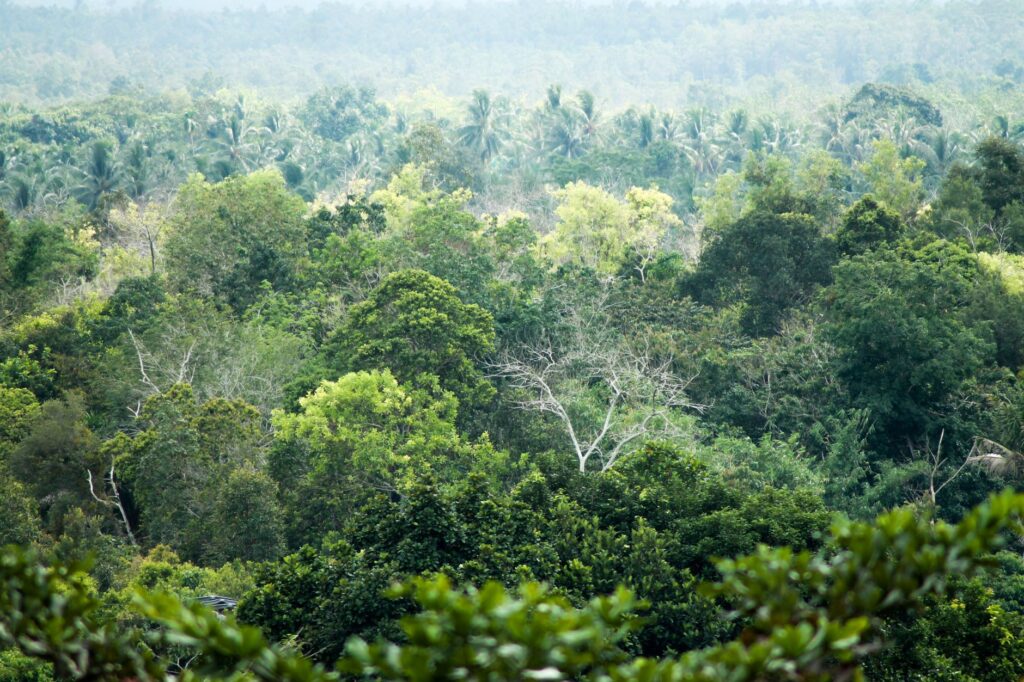
The convoy sets off with a roar of axles and metal couplers. As we leave the metropolitan area of Libreville behind, sheet-metal and wooden suburbs quickly yield to the dense mangroves bordering the Atlantic estuaries. In this initial stretch, running through the Estuary province, the landscape is characterized by a symphony of intense greens where raffia palms and giant ferns dominate waterlogged banks.
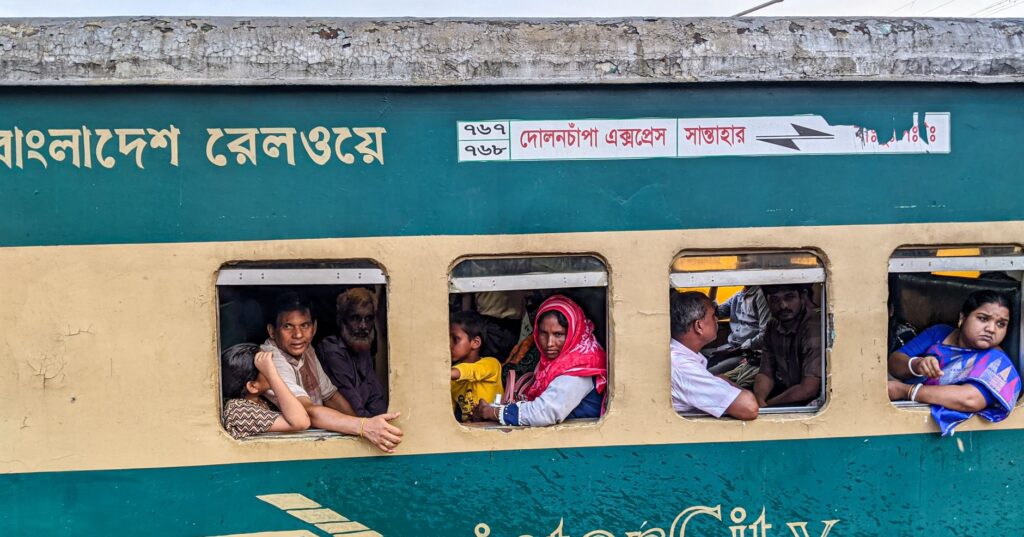
On board, the atmosphere is vibrant and communal. Passenger cars combine sleeper compartments with bench seating where locals, agricultural traders, and the occasional scientific researcher share space for hours. The train transforms into a social microcosm where everything from sacks of cassava to small game meat is bartered, reflecting the commercial dynamism connecting interior towns with the coast.
The Heart of the Ogooué Basin: Engineering and Geology in Motion
As the train penetrates the interior, the topography changes dramatically. The flat coastal terrain transforms into a rolling relief furrowed by the Ogooué River and its countless tributaries. Here the railway snakes through clay embankments, crossing metal viaducts spanning river chasms of striking visual beauty. Technical management of the route in this zone is ongoing: work crews equipped with heavy machinery constantly patrol critical trouble spots to clear rocks and mudslides triggered by torrential rains.
For the traveler, this sector offers some of the expedition’s most breathtaking vistas. Train windows frame walls of virgin vegetation where century-old trees such as okoumé and azobé emerge, their canopies harboring rich birdlife including hornbills, grey parrots, and fish eagles. It is along this stretch that the sense of isolation from the outside world reaches its absolute peak.
The Trans-Gabonese is not a simple rail commute; it is a visceral immersion into the metabolism of the equatorial jungle, where machine and nature maintain a millimeter-thin pulse of coexistence.
Ndombi and Lastourville: Historical Stops and the Cultural Pulse of Local Communities
As the convoy pushes eastward, stops unfold at localities deeply rooted in history and trade, such as Ndjolé, Ndombi, and Lastourville. Many of these enclaves, born as colonial trading posts or logging camps, retain weather-beaten wooden architecture that contrasts with the vitality of their street markets.
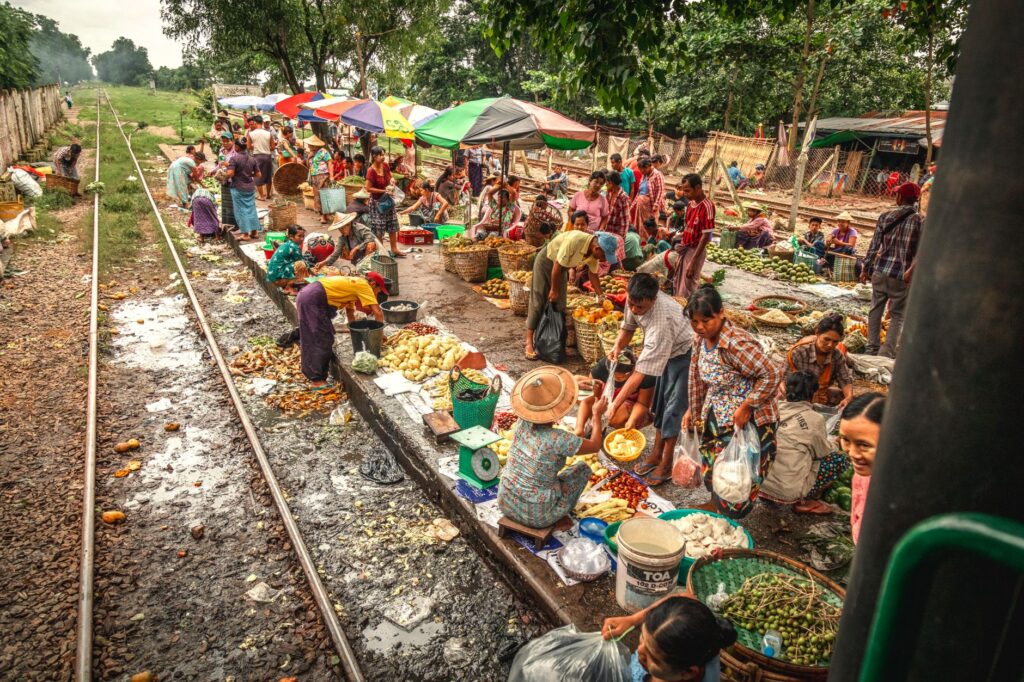
At the stations, the train’s arrival sparks an unalterable collective ritual. Street vendors offer hot dishes of cassava, smoked meat skewers, fried plantains, and fresh tropical fruit through carriage windows. This direct exchange with local communities sheds light on the complex socio-economic fabric supporting the country’s interior, far removed from conventional tourism circuits.
Arrival in Franceville and the Batéké Plateau: The Eastern Frontier
After traversing rock-excavated tunnels and cresting steep gradients, the Trans-Gabonese reaches its terminal in Franceville, capital of the Haut-Ogooué province. The jungle landscape subtly surrenders its dominance here to wooded savannas and rolling plateaus characteristic of the border region with the Republic of the Congo. This geographical transition marks the end of the railway line but opens the door to further overland exploration toward the nearby Batéké Plateaus National Park, a unique territory of fossil sand dunes covered in herbaceous vegetation and cut by crystal-clear rivers. Here, the railway expedition culminates, giving way to the contemplation of a biodiversity where forest elephants, mandrills, and a wide variety of endemic primates still roam.

Practical guide
How to get there: Libreville’s Leon Mba International Airport (LBV) receives regular flights from major European and African capitals. From the capital, access to Owendo station is best made via authorized taxis with pre-agreed fares.
When to go: The best time for the traverse coincides with the dry seasons: June to September and December to February. Heavy rainy months (March-May and October-November) should be avoided, as the risk of line interruption from landslides increases considerably.
Documentation and Visas: Passport valid for at least six months, visa obtained in advance through Gabonese embassies or consulates, and a valid yellow fever vaccination certificate.
Accommodation on board and en route: The Trans-Gabonese features economic class seating and sleeper-style compartments in executive class. Advance booking is recommended, alongside lightweight cotton clothing, a personal sleep sheet, a headlamp, and bottled water supplies.
Health and Safety: Antimalarial prophylaxis is essential, as is travel insurance covering emergency medical evacuation. Maintain a respectful attitude toward local authorities and avoid photographing critical infrastructure or military installations.
The steady murmur of the jungle at dusk, when the train slows down as it approaches an intermediate station amid equatorial twilight, leaves an indelible mark on the traveler’s memory. In that exact moment, beneath the beam of the locomotive cutting through the nocturnal fog, one realizes that the true essence of contemporary adventure lies in the capacity to advance patiently along the margins of the world, accepting the relentless rhythms of earth and iron.