
In the flatlands of Emilia-Romagna, where the winter mist clings to the Trebbiano vineyards and the summer heat saturates the air of the Po Valley, there exists a ritual that defies the immediacy of the modern world. This is not an industry, but a liquid heritage guarded in the most unexpected place of rural mansions: the attic, or sottotetto. There, beneath roof tiles that endure the region’s most extreme thermal fluctuations, rests the Aceto Balsamico Tradizionale di Modena—an elixir that requires at least twelve years to be named and twenty-five to reach the excellence of the «extra vecchio» grade.
This report delves into the silence of the acetaie, those family sanctuaries where time is not measured in minutes, but in the gradual retreat of a barrel’s volume. Here, vinegar is not a condiment; it is a biological and cultural testament. To understand its essence, one must shed the idea of supermarket balsamic vinegar—that mass-produced industrial product—and embrace an alchemy that uses only one ingredient: cooked grape must. Nothing else. The rest is an invisible dance between the porosity of the wood, the voracity of acetic bacteria, and the infinite patience of those who know they will not taste the fruit of the barrels they begin to fill today.
The Grape and the Fire: The Birth of Cooked Must
It all begins in the vineyard under the September sun. The authorized varieties, primarily Trebbiano and Lambrusco, must reach a specific technical maturity where the balance between sugars and acidity is perfect. Unlike wine production, the goal here is not the immediate fermentation of fresh juice. After pressing, the must undergoes cooking over an open fire in large copper cauldrons. This process, known as cottura, is the first step of the transformation. For hours, the liquid reduces, concentrating its sugars and caramelizing its aromatic notes until it acquires a deep amber hue.

Cooking is an art of precision. If the fire is too intense, the sugar burns and the flavor turns bitter; if it is too light, the concentration will not be sufficient to withstand the passage of decades. This is where kitchen chemistry meets tradition. The cooked must, once cooled and decanted, is introduced into the first barrels to begin its lengthy metamorphosis. It is a dense, sweet liquid with a promise of complexity that only oxygen and wood can fulfill.
The Battery of Barrels: A Language of Noble Woods
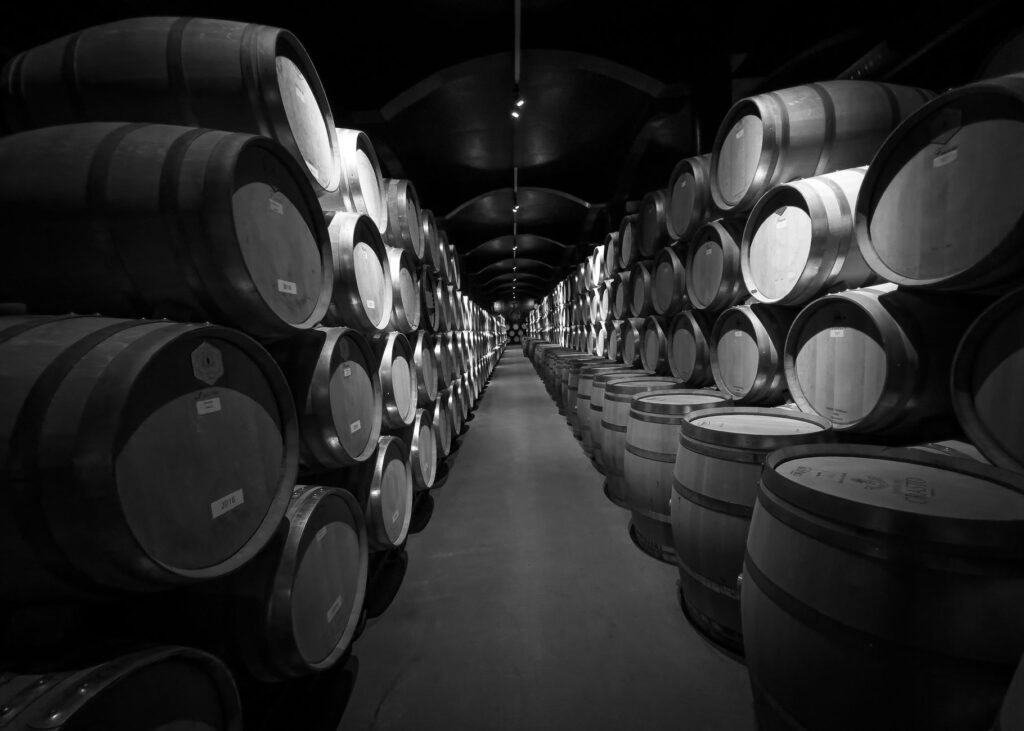
The heart of any acetaia is the «batteria.» This is a series of barrels of decreasing size, generally between five and seven, which house the vinegar at its different stages of maturation. What makes this system unique is the diversity of the woods. Each type of tree contributes a distinct note to the final sensory profile, and the master acetaio combines these woods like a composer arranging an orchestra.
- Oak: Provides structure and the typical notes of vanilla and soft tannins. It is the most common wood for the larger barrels.
- Chestnut: Rich in tannins, it helps the vinegar’s dark coloration and favors oxidation.
- Cherry: A porous wood that imparts sweet and fruity aromas, essential in the middle stages of the process.
- Ash: Less common but valued for its ability to soften the whole without imposing a dominant flavor.
- Juniper: The most prized and difficult wood to manage. It contributes resinous essential oils and an unmistakable spicy character.
- Mulberry: Traditionally used for its high porosity, which accelerates evaporation and the concentration of the liquid.
The placement in the attic is not accidental. The summer heat in the sottotetto encourages fermentation and evaporation (what producers call the «angels’ share»), while the winter cold allows for natural decantation and clarification. Without this brutal thermal contrast, the balsamic would never achieve its silky texture and obsidian-like shine.
«Balsamic is not manufactured; it is raised like a child. You listen to it breathe through the pores of the wood and accompany it in its maturity until it finally decides to give us its soul.»
The Liturgy of the Transfer: The Annual Rite of Patience
Every year, usually at the end of winter, the most delicate operation takes place: the travaso (transfer) and the rincalzo (refilling). Due to natural evaporation, the liquid level in the barrels drops. The process consists of extracting a small amount from the smallest barrel (the one containing the oldest vinegar) for consumption or certification. That gap is filled with liquid from the second smallest barrel, and so on, until reaching the largest barrel, which is topped off with the cooked must from the previous year.
This dynamic blending system ensures that the younger vinegar is «educated» by the older one, creating historical continuity in every battery. It is common to find batteries that have belonged to the same family for over a century. In Modena, there is a tradition of starting a new battery when a daughter is born, so that on her wedding day she can take with her a dowry of vinegar that has grown alongside her. It is a form of liquid immortality where the work of grandparents is enjoyed by grandchildren.
The Invisible Factor: The Extreme Climate of Emilia-Romagna
Unlike wine, which seeks the thermal stability of underground cellars, Aceto Balsamico Tradizionale requires the punishment of the weather. The provinces of Modena and Reggio Emilia possess a unique microclimate: sweltering summers with high humidity and rigid, foggy winters. This oscillation is the engine of chemical transformation.
During the hot months, acetic bacteria work at full capacity, transforming sugars and alcohols into complex organic acids. This is also when the greatest concentration through evaporation occurs. In winter, the process stops; the liquid rests, impurities fall to the bottom of the barrel, and the vinegar clarifies. This cycle, repeated over decades, is what gives the product its characteristic density, which must be able to coat a spoon evenly, like dark molasses.

Difference Between Tradizionale and Industrial Products
It is vital for the traveler and the gourmet to distinguish between the three main categories flooding the market. Aceto Balsamico Tradizionale di Modena DOP is our focus: 100% cooked grape must, aged for a minimum of 12 years in noble wood batteries, and bottled exclusively in the 100ml flask designed by Giugiaro. It contains no dyes, thickeners, or preservatives.
On the other hand, we find Aceto Balsamico di Modena IGP. This is a much more common and affordable product. It is made by mixing grape must (which may be concentrated, not necessarily cooked) with wine vinegar and often caramel (E150d) for color. Its minimum aging is only 60 days. While it can be a decent product for everyday salads, it lacks the depth, texture, and history of the Tradizionale. Confusing them is like confusing a table wine with a Gran Reserva from a legendary estate.
The Consortium and the Tasting: The Rigor of the D.O.P. Seal
No one can bottle their own Aceto Balsamico Tradizionale. Once a producer believes their vinegar is ready, it must be submitted to the judgment of the Consorzio Tutela. A commission of five expert tasters analyzes each batch blindly. They evaluate the color (it must be dark brown, limpid, and bright), the density (it must flow with syrupy smoothness), and above all, the aromatic bouquet and flavor.
The Sweet and Sour Balance
The flavor must be a perfect harmony between sweet and acidic. A balsamic that is too sweet lacks character; one that is too acidic is aggressive. The complexity must manifest on the palate progressively: first the sweetness of the must, then the sharp but balanced acidity, and finally an infinite aftertaste where notes of wood, dried fig, tobacco, or dark chocolate appear, depending on the battery.
If the vinegar passes the test, the Consortium bottles it directly into the official flasks. A cream-colored cap indicates an aging of at least 12 years (Affinato), while a gold cap certifies the product as Extra Vecchio, with over 25 years of maturation. This rigor is what maintains the prestige of one of the world’s strictest designations of origin.
«In a drop of Extra Vecchio, there isn’t just grape; there is the air of three decades, the sweat of a lineage, and the wisdom of woods that no longer exist.»
Culinary Use: Respecting the Black Gold
Aceto Balsamico Tradizionale should never be used for cooking over heat. Heat would destroy its complex volatile aromas. It is a finishing product, a jewel added drop by drop just before serving. Its density makes it ideal for pairings that often surprise the newcomer.
One of the most sublime ways to taste it is over shards of long-aged Parmigiano Reggiano. The salinity and tyrosine crystals of the cheese contrast with the bittersweet oiliness of the vinegar. It is also extraordinary over a pumpkin risotto, on fried eggs with truffles, or even for dessert: fresh strawberries or high-quality vanilla bean gelato are completely transformed by just three drops of this elixir.

Practical Guide
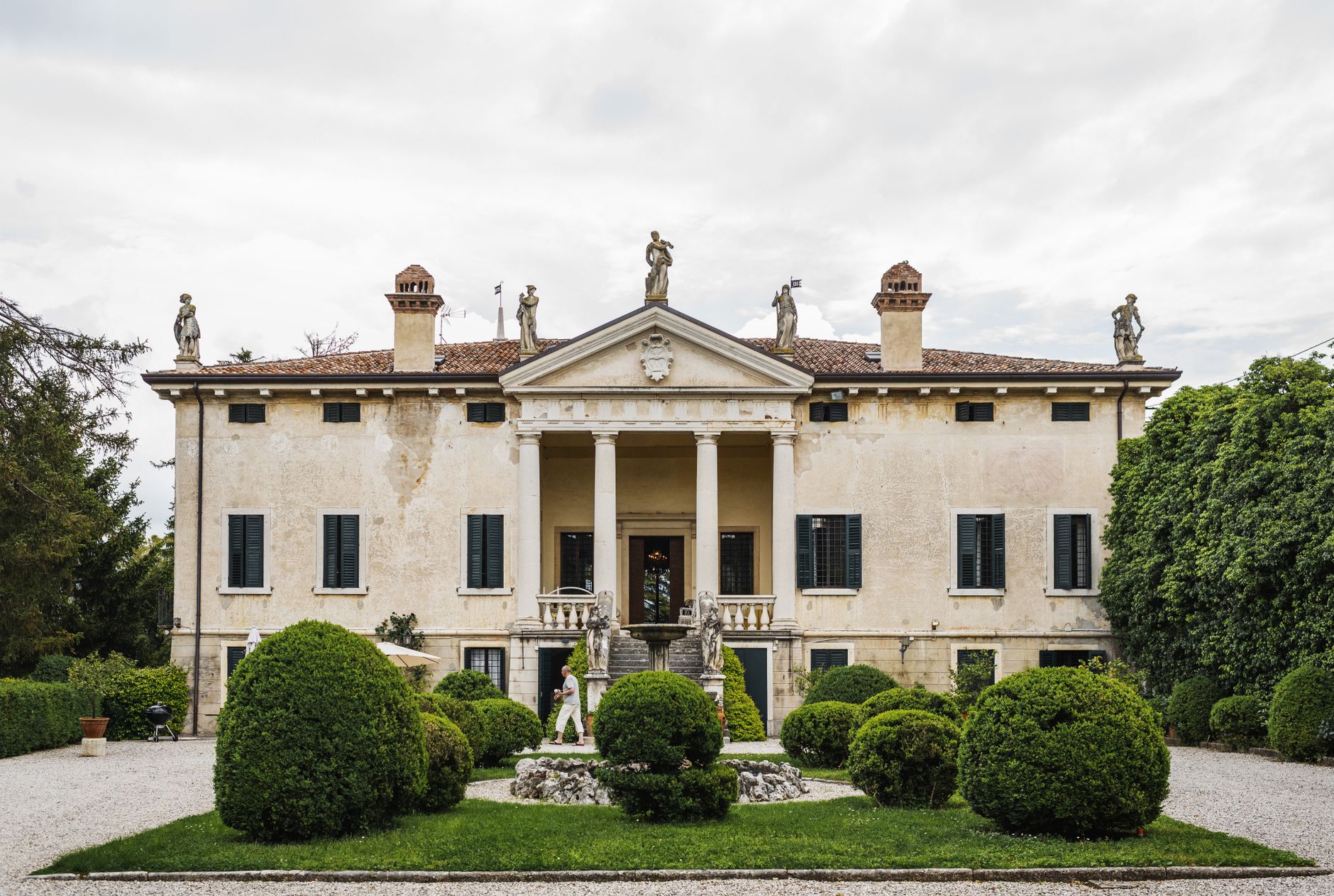
For those wishing to experience an acetaia firsthand, the province of Modena offers a network of producers who open their doors to visitors with almost religious pride. Do not expect large factories, but rather family mansions and historic farms.
- When to go: Autumn is ideal for seeing the cooking of the must, but winter offers the necessary peace to chat with the master acetaios while they perform the transfers.
- How to visit: It is essential to book in advance. Many acetaie are small and only receive limited groups. Places like Spilamberto, home to the Museum of Traditional Balsamic, are mandatory starting points.
- Where to buy: Always look for the 100ml spherical bottle with a rectangular base designed by Giugiaro. If the packaging is different and says «Tradizionale,» be wary.
- Storage: Traditional balsamic is practically eternal. It does not need refrigeration, and its high concentration of sugars and acids preserves it naturally. Just keep it away from intense light sources and strong odors.
Visiting an acetaia is an exercise in humility. In a world rushing toward the next headline, entering an attic where nothing has changed in the last fifty years reminds us that excellence has no shortcuts. Each drop of this black gold is a triumph of human will over haste, a gift that the past gives to the present so that the future continues to taste like truth.
The Persistence of Liquid Memory
At the end of the tour, when the master acetaio offers us a small plastic spoon (metal can alter the taste) with a pearl of Extra Vecchio vinegar, we understand that we are not tasting a condiment. We are tasting time. That thick liquid clinging to the spoon has watched generations pass, survived economic crises and social changes, remaining faithful to its own nature. It is, perhaps, the gastronomic product that best represents the resilience of Mediterranean culture: the ability to turn something simple—a grape—into something eternal through patience and absolute respect for the cycles of the earth.