
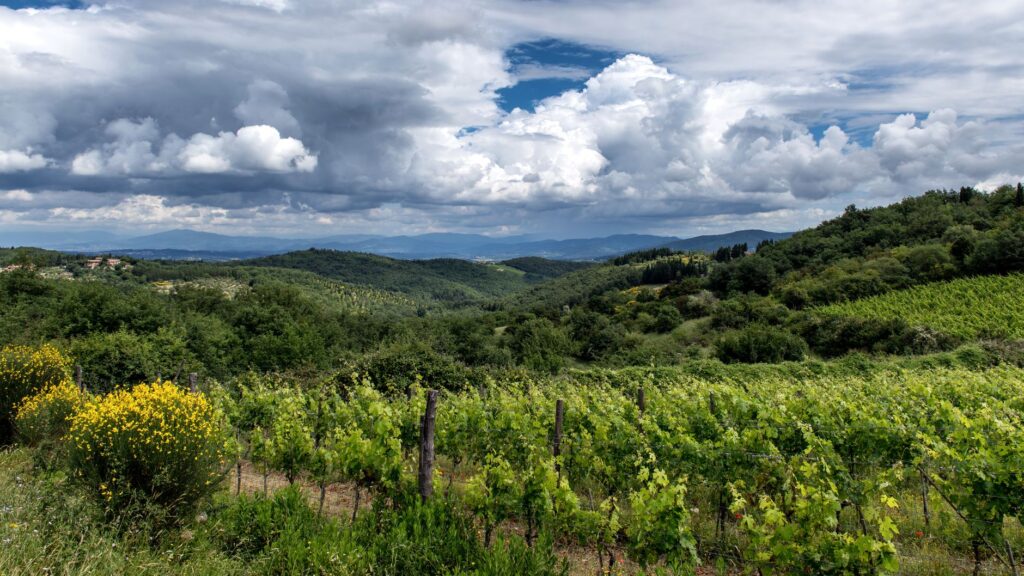
There are geographies where time is measured not by clock hands, but by the slow combustion of firewood and the dry crackle of vine shoots feeding the earth. Across the high plains of Ribera del Duero, the Castilian wind sharpens stone profiles and tempers the patience of those who inhabit the landscape. Here, gastronomy is neither an exercise in artifice nor a passing trend, but an ancestral pact with survival and climate rigor. In this vast territory where the Duero river snakes past horizons of clay and limestone, fire is the structural element of material and spiritual culture. The traditional kitchens of Aranda de Duero harbor a secret that survives the shifts of modernity: a liturgy of enveloping heat that transforms a humble raw material into a pinnacle of Iberian culinary civilization.
Stepping into a historic roasting house in this region is crossing an invisible threshold where the air smells of old wood, toasted fat, and the solemnity of well-executed craft. There is no room for haste in the interior courtyards where piles of well-dried Holm oak firewood rest, cut to the exact measure so that the flame does not smother the coals. Around this liturgy, a community of master roasters articulates a precise gesture inherited from their grandparents. Every dawn, before the sun warms the cereal fields, the adobe and refractory brick ovens begin their warming cycle—a physical and thermodynamic ritual requiring intuition, experience, and absolute respect for the physics of radiant heat.
The Architecture of Adobe and Refractory Clay
The heart of any traditional roasting house in Aranda is not the industrial kitchen, but the bakery oven repurposed or custom-built with adobe, potter’s clay, and Castilian brick. This vaulted structure, kept low to concentrate thermal radiation onto the product’s surface, accumulates energy for hours. Holm oak wood, selected for its density and clean combustion, burns inside the oven until the vault acquires a characteristic white tone—an unmistakable sign that the fire has purified the enclosure and thermal inertia is at its optimal point.
Unlike modern cooking methods dependent on forced air or electrical resistance, the Castilian wood-fired oven transmits heat via direct radiation and natural convection. The earthenware casseroles holding the lamb absorb this energy in an enveloping manner, creating a humid atmosphere in the initial phases that allows the meat to retain internal juices while the outer skin mutates toward amber and gold. This thermal equilibrium is the result of centuries of trial and error—a vernacular technology so sophisticated in its simplicity that no contemporary algorithm has managed to replicate it with total fidelity.

The Raw Material: The Purity of the Churro Suckling Lamb
The miracle of the suckling lamb relies not solely on the fire technique, but on the strict selection of the raw material. The native Churro sheep breed, perfectly acclimatized to the harshness of the Northern Plateau, produces an animal with unique characteristics. Fed exclusively on maternal milk during its few weeks of life before reaching the optimal slaughter weight, these lambs yield pearly-white meat with a subtle marbled fat that melts at low temperatures.
Local cattle dealers and ranchers maintain a relationship of complicity built on trust and rigorous visual inspection. Specimens exceeding traditional weight limits or those consuming pasture or other forages are rejected, as the purity of the milky flavor is the undisputed trademark of authentic Ribera suckling lamb. This direct dependence on the local livestock cycle inextricably links the dish to the landscape: sheep grazing on stubble and poor meadows pass on the mineral and herbaceous nuances of a land lashed by winter frosts and baked by the summer sun.
The Craft of the Forequarter and the Earthenware Casserole
Preparing the suckling lamb before entering the oven is an exercise in extreme sobriety. Unlike other cuisines where marination and masking are the norm, here respect for the product is absolute. The chosen cuts are typically forequarters or hindquarters, cleanly chopped on hardwood tables. The only seasoning authorized by the strictest tradition is water and coarse sea salt, lightly dissolved before being sprinkled over the meat.
Handcrafted earthenware casseroles, sourced from traditional potteries in the province of Burgos, act as the perfect vessel. At the base of the casserole, small vine shoots or thin wood pieces are arranged to prevent the meat from touching the bottom directly, allowing juices to circulate freely during the two-hour cooking process. The master roaster monitors the lamb’s color through the oven mouth, skillfully reaching in to rotate the casserole if uneven radiation is detected, ensuring harmonious, choral cooking.
The Metamorphosis: From Pale Flesh to Crispy Gold
As the minutes pass, the oven works its private alchemy. In the first hour, the animal’s natural moisture generates a dense vapor that gently stews the meat in its own juices, softening muscle fibers to a texture of extreme fineness. As water evaporates, surface fat begins to render and drip onto the concentrated juices at the bottom, generating an impeccable Maillard reaction on the skin.
This is the critical moment separating the amateur from the master. In the final fifteen minutes, the lamb’s skin acquires a bubbling, glass-like crisp texture, uniformly toasted to contrast radically with the almost buttery tenderness of the interior. Upon cutting it with the edge of a plate—a theatrical yet deeply functional gesture proving the meat’s tenderness without sharp knives—the hot vapor releases aromas of clean fat, oak, and toasted milk that fill the dining room.
The true master roaster does not dominate fire; he learns to listen to its silences and gauge the pulse of the embers before surrendering the meat to the diner’s unforgiving judgment.

The Liquid Match: The Red Wines of Ribera
No analysis of roasted suckling lamb would be complete without its natural liquid counterpart: the red wines of the Ribera del Duero Designation of Origin, crafted primarily from Tempranillo or Tinta Fina grapes. The tannic structure, balanced acidity, and notes of ripe black fruit and noble wood act as the perfect counterpoint to the lamb’s rich, unctuous fat.
The underground cellars excavated beneath Aranda’s streets—a kilometer-long labyrinth of stone galleries where temperature remains constant year-round—guard the earth’s liquid memory. Visiting these centuries-old caves reveals that wine and roast share the same territory and climate-resistance philosophy. A reserve with well-integrated oak cleanses the palate bite by bite, preparing the sense of taste for the next portion of crispy crust.
The Culture of the Bar and the Mid-Morning Fork Snack
Beyond the grand dining rooms serving suckling lamb as a main course, life in Aranda pulses strongly in traditional tavern bars and historic watering holes. Here, the culture of the mid-morning snack holds firm against global standardization. Crispy pork rinds, lamb sweetbreads sautéed with garlic and parsley, and Ribera-style potatoes form a repertory of small plates complementing the grand roasting liturgy.

In these social spaces, conversation revolves around weather, grape harvests, and livestock conditions. Local regulars share the counter with seasoned travelers seeking authentic flavors without tourist filters. It is in these nooks that the anthropology of the Castilian village shows itself without artifice, revealing a hospitality dry in form yet warm in substance—a faithful reflection of its geography.
Practical guide
How to get there: Aranda de Duero is strategically connected by highway (A-1), roughly 160 kilometers north of Madrid and 80 kilometers south of Burgos, facilitating private vehicle access. Regular bus connections also operate from Madrid Sur and Burgos stations.
When to go: Any time of year is favorable for enjoying a proper roast, though autumn and winter months heighten the contrast between exterior chill and the warmth of wood-fired ovens. The harvest season (September and October) adds the allure of active winemaking operations.
Where to stay: The historic center features restored manor houses converted into small boutique hotels and wine lodgings integrating wine tourism with local gastronomy.
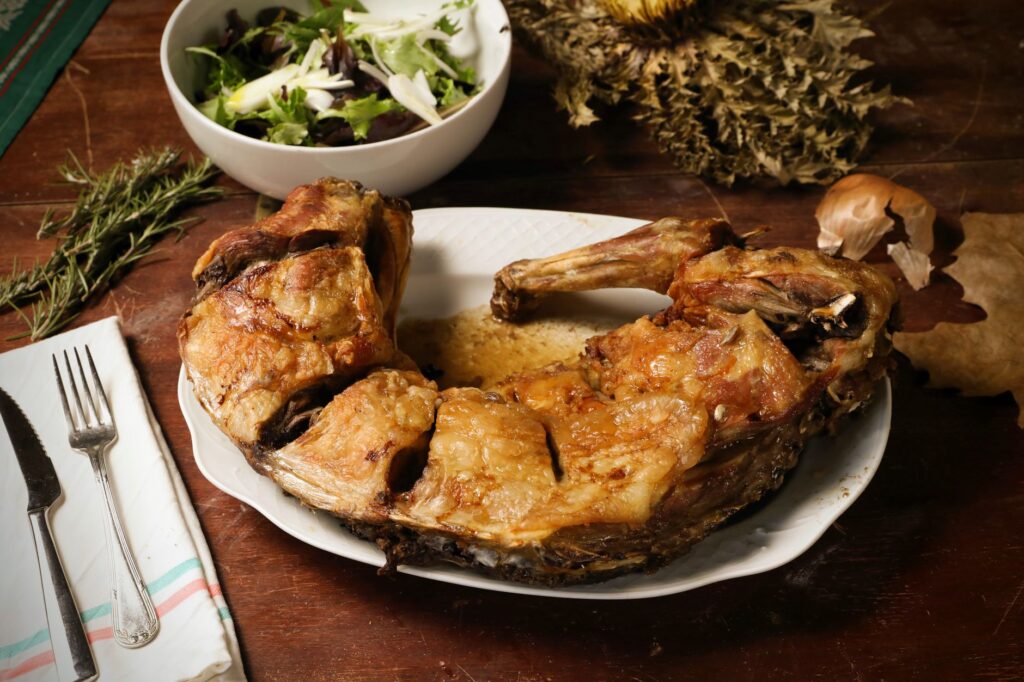
Practical tips: Table reservation at traditional roasting houses weeks in advance is essential, particularly on weekends. Ordering one forequarter or hindquarter per two to three diners is recommended, accompanied exclusively by a green lettuce and onion salad to cut the fat, alongside young red or crianza wine from the region.
Local etiquette: In the most traditional establishments, the meat is served in earthenware platters placed at the center of the table. Do not hesitate to accept the ceramic plate for the classic tenderness test using a plate edge instead of a knife—a ritual respected by all master roasters in the region.
The murmur of fire slowly dying down at the adobe oven mouth marks the end of another day in the Aranda high plains. When the last ember turns to gray ash and residual heat begins to fade from stone walls, the certainty hangs suspended in the air that certain things deserve to remain unaltered. In a fast-paced world devouring traditions with the same haste it consumes trends, wood-fired suckling lamb remains a beacon of cultural and sensory resistance. It is not merely food; it is memory made bite—the perfect alliance between rough earth, Holm oak wood, and the patient hand of man who knows how to wait for time to accomplish its masterpiece.