The Foundations of an Iron and Glass Temple
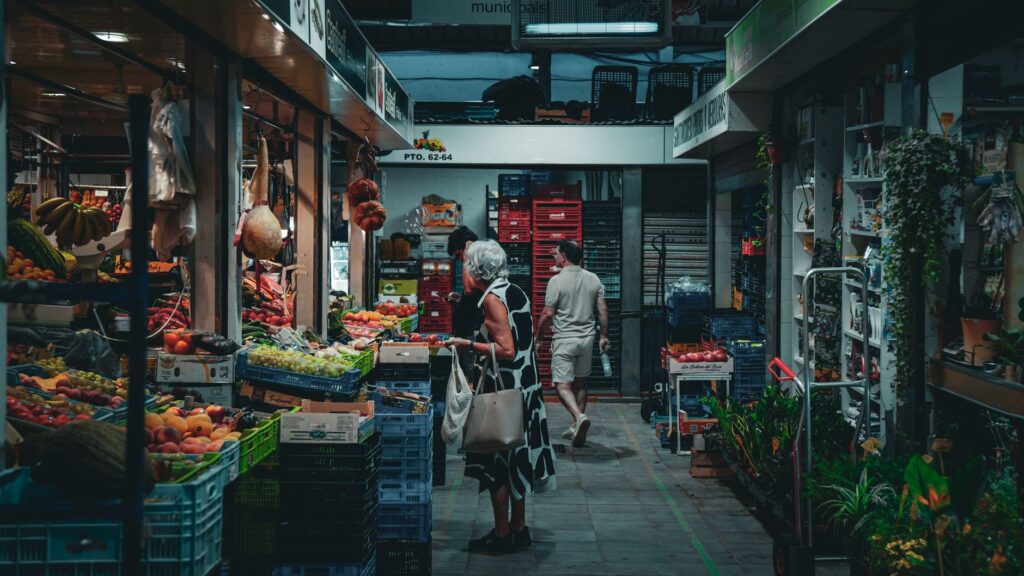
At the heart of the Andalusian capital, where the pulse of the ancient city beats to the rhythm of the Guadalquivir River, stands the Central Market of La Encarnación—a space that transcends mere commercial transaction to establish itself as a true anthropological sanctuary. Far from being an attraction designed for the contemporary traveler, this enclave maintains intact the daily liturgy of southern provisioning, where morning hustle blends with the unmistakable aroma of orange blossoms and clean frying. The metal structures sheltering the stalls today remind visitors that urban commerce in this latitude has always been tied to the engineering of light and the necessity of ventilation during harsh southern summers.
Walking through its aisles at dawn requires a mandatory pause to understand the silent hierarchy governing the stallholders. Each stand represents a family dynasty with decades of accumulated knowledge—a living archive of local tomato varieties, fish from Sanlúcar, and crustaceans that mere hours earlier traversed the Gulf of Cádiz. Here, purchasing is not an automated act, but a constant dialogue between producer and diner, a ritual of trust where the exact ripeness of a fruit or the precise origin of shellfish according to Atlantic tides is actively debated.
Shopping in the halls of La Encarnación is not an act of fast consumption; it is a masterclass in human geography where every product narrates the exact origin of its landscape.
The relationship between the market’s architecture and the surrounding urban fabric creates a unique scenery. Vegetable stalls display a chromatic palette that competes with the baroque altarpieces of neighboring temples, proving that southern aesthetics also feed on the ephemeral and the everyday. In this ecosystem, urban rhythms align with the changing seasons, dictating what is cooked in Sevillian homes and which products deserve the honor of gracing the tables of traditional taverns.

The Invisible Geography of the Guadalquivir Valley
To grasp the culinary magnitude displayed in the market showcases, one must leave the asphalt behind and venture into the Guadalquivir Valley, that alluvial strip where the waters of the millennial river work agricultural miracles. This fertile plain, crisscrossed by irrigation ditches of Andalusian heritage, functions as the true vegetable engine feeding the province’s markets. Here, the land is not a mere physical support, but a living organism demanding respect, knowledge, and meticulous water management.
In the market gardens bordering towns like Lora del Río or Alcalá del Río, local farmers continue applying crop rotation techniques that maximize soil mineral wealth without exhausting resources. Valley artichokes, renowned for their tenderness and almost total absence of fibrous threads, are the direct result of an unrepeatable combination: the constant moisture of the river aquifer and the solar hours characterizing the Guadalquivir basin.
Work on these plots follows a strict calendar that ignores global trends. While intensive agriculture pursues standardization, small producers in the region champion native varieties of legumes and vegetables possessing short shelf lives but exceptional organodynamic density. This commitment to agricultural biodiversity grants Sevillian gastronomy its unmistakable character, rooted in the ability to extract profound flavors from seemingly simple ingredients.

The Art of Cereal and Historical Milling
Beyond the market gardens, the Guadalquivir Valley has historically served as the great granary of southern Iberia. Hard wheat, cultivated in dryland fields extending beyond the humid plain, forms the invisible pillar supporting the bread-making culture and traditional pastry of the province. Ancient hydraulic mills, now silent witnesses of industrial archaeology, recall a past when river water power was channeled to transform grain into superior quality flour.
The relationship between cereal and local cooking manifests with particular intensity in cold soups and batters used for traditional fried foods. Far from being a secondary ingredient, local wheat flour provides specific textures and absorption capacities crucial for achieving the perfect batter—one sealing in seafood juices without excessive oil absorption.
This mastery of milling and slow fermentation survives in century-old bakeries hidden within the region’s villages. There, bakers continue utilizing long-fermentation sourdoughs, producing loaves with crunchy crusts and open crumbs that retain freshness for days, a tangible testimony to the survival of endangered artisanal trades.
The Liturgy of Must and Countryside Wine Cellars
When advanced autumn begins to temper the valley’s heat, the Sevillian countryside initiates a winemaking ritual as ancient as it is unknown to mass tourism: the production of the year’s new must. In towns like Umbrete or Espartinas, family-owned wineries open their doors to offer the yield of Zalema and other native grape varieties before they complete barrel aging. This young, cloudy, fresh wine with low alcohol content becomes the inseparable companion of morning market visits.
Visiting these traditional wineries, popularly known as merenderos or mostos, means immersing oneself in an atmosphere where time seems to slow down. Communal wooden tables welcome locals and visitors sharing plates of fine cured meats and olives seasoned with chamomile and garlic, while wine is poured directly from clay jars. It is an exercise in unpretentious hospitality.
This must circuit represents a genuine circular economy, where local vineyards nourish village social life and sustain minor architectural heritage—courtyard wineries and wine presses—threatened by urban pressure. Protecting this cultural landscape guarantees the survival of leisure and gastronomic traditions deeply rooted in the territory.
The Territory of Dehesa and Iberian Pork
The gastronomic journey through Seville’s orbit remains incomplete without ascending toward the foothills of the Sierra Norte, where the countryside yields to oak and cork dehesas. This pasture ecosystem, shaped by human intervention over centuries, constitutes the natural habitat of free-range Iberian pigs, whose acorn diet determines the excellence of hams and cured meats occupying pride of place in market stalls.

The rhythm of the dehesa is marked by acorn drop during winter months. Local herders monitor stocking rates per hectare with milimetric precision, ensuring each animal has necessary space and feed without altering fragile forest soil balance. This extensive ranching model acts as a natural firebreak and preserves native flora biodiversity.
In traditional curing cellars across municipalities like Constantina or Cazalla de la Sierra, cold mountain air works the alchemy of slow curing. Without accelerators or industrial processes, hams rest in shadow for years, acquiring aromatic nuances evoking acorns, thyme, and damp Andalusian undergrowth.
The Alchemy of Olive Oil and Ancient Groves
If wheat provides structure and pork intensity, extra virgin olive oil serves as the unifying thread of Seville’s pantry. Dryland olive groves, featuring centuries-old specimens of varieties like Manzanilla Sevillana or Lechín, paint a silvery-green sea extending as far as the eye can see. Early harvesting, conducted during the first days of October, concentrates herbaceous notes and balanced bitterness characteristic of the region’s finest oils in the juice.

Modern olive mills combine the heritage of stone presses with cutting-edge cold extraction technology, ensuring olives move from tree to bottle within hours. This technical rigor prevents oxidation and preserves polyphenols intact, transforming local oil into a superfood backed by both culinary tradition and nutritional science.
Good extra virgin olive oil from the Vega de Sevilla is not a mere condiment, but the backbone defining the gustatory identity of an entire food culture. Its constant presence in every dish confirms that vegetable fat has historically served as the cornerstone of the Mediterranean diet in these southern lands.
Practical guide
- How to get there: La Encarnación Market is located in Seville’s historic center, accessible on foot from any central point. To explore the Guadalquivir Valley and countryside, a private vehicle is essential, connecting via the A-4 highway and secondary county roads.
- Best time to visit: Autumn months (October to December) and spring (March to May) offer optimal temperatures for touring urban markets as well as agricultural holdings and rural wineries.
- Recommended accommodation: Choose boutique hotels in restored palatial homes in the Santa Cruz neighborhood or the Feria area for an authentic urban immersion; in rural areas, opt for restored country estates in Lora del Río and Constantina.
- Shopping tip: Visit the market before ten in the morning to witness produce at peak freshness and converse leisurely with vendors about the provenance of each seasonal item.
The Ultimate Beat of Memory
At dusk, when market stalls close their metal shutters and workers wash the floors with fresh water, the city of Seville recovers a different, more intimate quietude. In that transitional moment, the day’s aromas—the trace of fresh fish, the green perfume of new oil, and the warmth of freshly baked bread—merge with the ancient stone of surrounding buildings, recalling that a people’s culture resides not solely in stone monuments, but in the fidelity with which they preserve the flavors sustaining them across centuries. It is the silent victory of a living larder defying time.