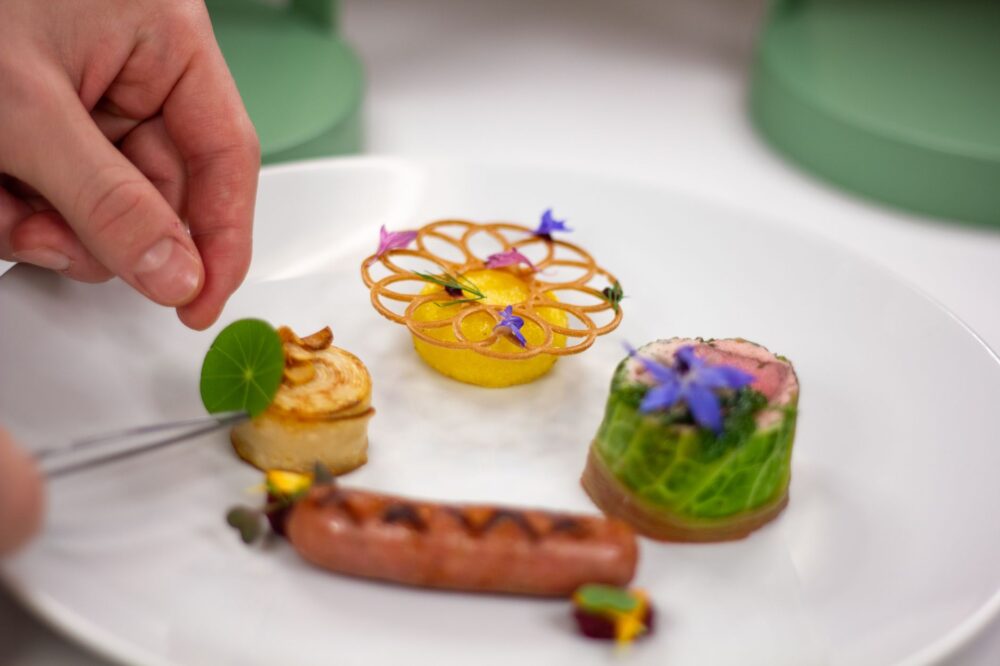
At the westernmost edge of southern Europe, where porous biocalcarenite stone absorbs the constant battering of a saline Atlantic, the city of Cádiz unfolds an unalterable choreography every single dawn. This is not merely commercial exchange; it is an ancestral liturgy linking the seabed to the polished marble display counters. The Central Food Market, nestled in the central Plaza de la Libertad, beats as the true ventricle of a population that has turned scarcity into virtue and absolute freshness into an unshakeable dogma. Here, the air smells of concentrated iodine, freshly cut lemon peel, and the characteristic aroma of the coastal estuaries where the tide deposits its finest piscine jewels.
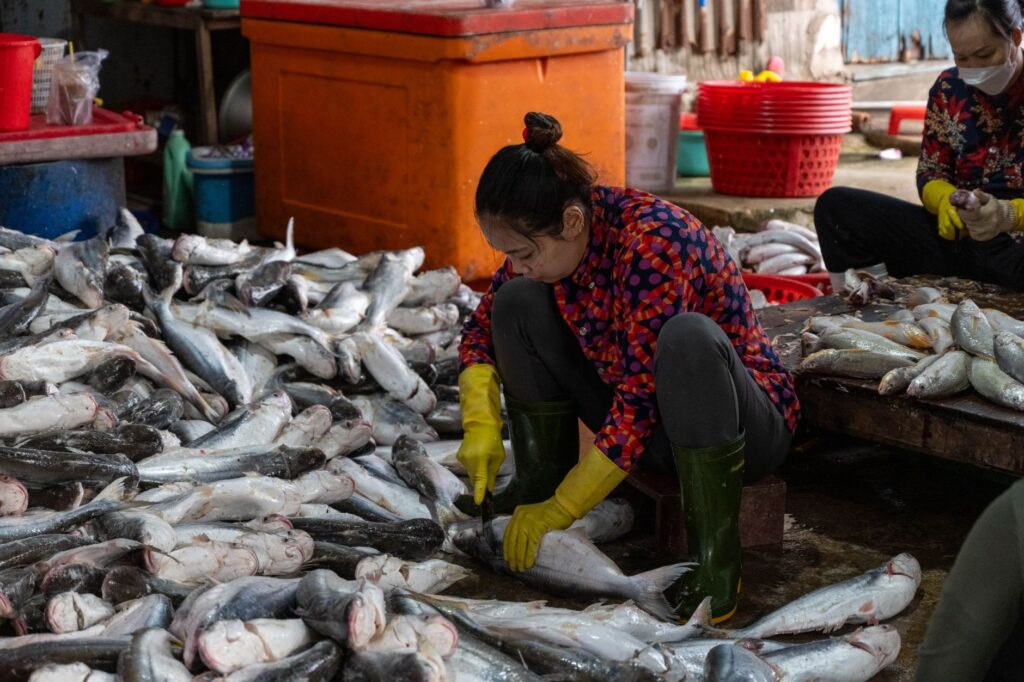
Crossing the neoclassical arches of this enclosure, designed in the 19th century by architect Juan Daura, means stepping into a territory where time seems governed by lunar phases. The vendors do not shout out their catch with stridency; they present it with the dignity of those guarding a fragile heritage. In the stalls of the central zone, silver and blue fish — from silvery pout to deep-water bream — are lined up on beds of crushed ice with almost geometric precision. Each specimen tells a story of intersecting currents, easterly winds pushing schools toward the coast, and artisanal fishing gear respecting the biological cycles of a singular ecosystem.
The Invisible Geography of Estuaries and Tides
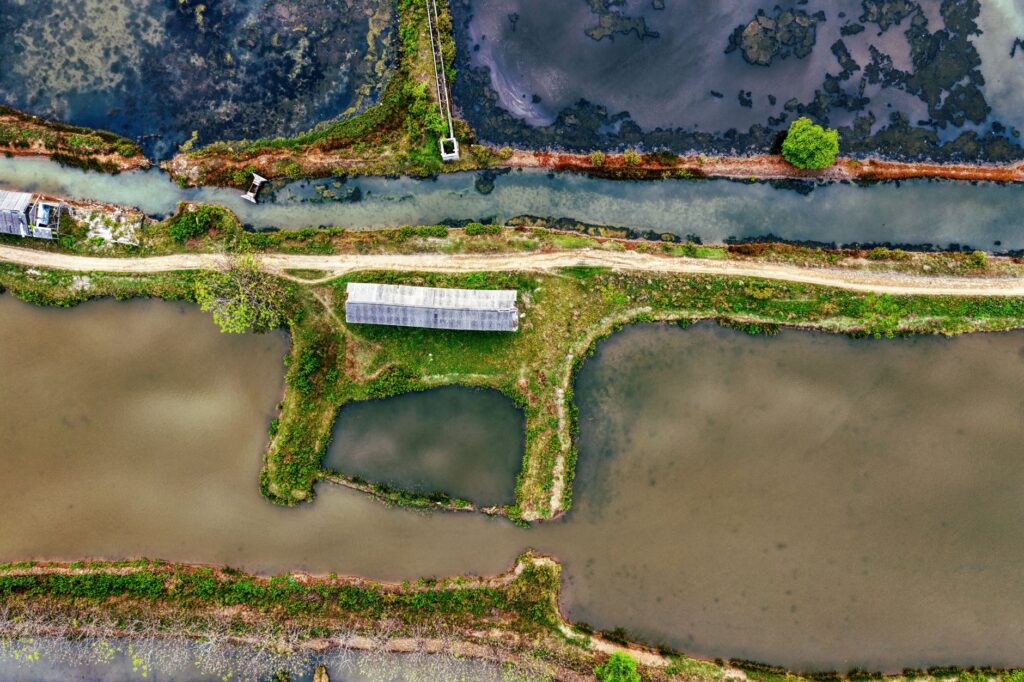
To understand the pantry of Cádiz, one must abandon the asphalt and look toward the marshes surrounding the Bay. These ancient salt pans, historically transformed into natural nurseries, constitute the habitat where high-value gastronomic species thrive, such as wild sea bream, mud-dwelling sole, or estuary bass. In these labyrinths of shallow water, phytoplankton sets the nutritional pace, endowing the fishes’ flesh with a firm texture and a clean marine flavor entirely devoid of muddy traces. Master salt-pan operators regulate the sluice gates with empirical wisdom passed down through generations, interpreting water height and ambient temperature with the precision of a Swiss watchmaker.

The contrast between the open ocean and the tranquil waters of the natural park is instantly reflected in the market stalls. While gatherers patiently extract rock oysters from intertidal zones, small-boat fishermen return to port with translucent white prawns and local sea snails that demand millimetric cooking knowledge. Here, there is no room for improvisation: an extra minute in boiling seawater ruins the delicate protein structure of a crustacean born to melt on the palate. The cuisine of the Bay is, in essence, an exercise in subtraction where fire barely intervenes to preserve the primordial identity of the product.
The Temple of Skin and Scale: Architecture and Endurance
The market building is not merely a food container; it is a masterpiece of urban functionality that reorganized urban life in Cádiz during the Elizabethan era. Its colonneaded porticos structure a diaphanous space where southern light penetrates overhead, illuminating the stalls with an implacable clarity that tolerates no mediocrity. The polished stone counters, scarred by decades of sharp knives and saltwater, bear marks equivalent to the wrinkles on a veteran sailor’s face. Around this quadrilateral, the surrounding square bustles with terrace cafes where fried fish transforms into an object of anthropological study.
The art of frying fish in Cádiz transcends mere culinary technique to enter the realm of thermodynamic alchemy. The pieces, lightly dusted with fine semolina flours that barely trap moisture, are submerged in extra virgin olive oil or high-oleic sunflower oil close to one hundred and eighty degrees Celsius. The result is a crunchy crust, dry to the touch, that hermetically seals the internal juices of dogfish, small hake, or anchovies. There is no trace of heavy grease; the physics of the process guarantees that the product floats in perfect equilibrium between lightness and the punch of marine flavor.
Algae and the Forgotten Fruits of the Coastline
Over the past decade, haute cuisine has focused on elements that local fishermen always considered a nuisance in their nets: marine algae. Yet, in the most specialized corners of the Central Market, Ulva rigida (sea lettuce), Codium tomentosum (codium), and Porphyra umbilicalis (Atlantic nori) are now sold with the same naturalness as chard or spinach from neighboring market gardens. These halophytic plants provide extraordinary concentrations of marine umami, elevating broths, rice dishes, and tartares to a dimension where the ocean’s flavor multiplies exponentially.
Added to this underwater vegetal pantry are the fruits of the intertidal strip and the dry-farmed crops of the Cádiz countryside. Glassworts, popularly known as sea asparagus, crunch between teeth, providing an irreplaceable saline and herbal counterpoint. Combined with tomatoes from nearby Conil — grown in sandy soils retaining the nocturnal breeze — they shape salads that summarize the paradox of an arid land bathed by an inexhaustible sea. The cooking of this Andalusian corner demonstrates that excellence requires no cross-continental pantries, but rather profound attention to what grows on one’s own doorstep.
The Liturgy of the Pint and the Kraft Paper Cone
Walking through the market and its surroundings requires understanding the unwritten codes of Cádiz hospitality. Here, luxury is not measured by the opulence of cutlery, but by the finesse with which a cold beer is poured and the promptness with which a kraft paper cone of fried fish is handed over. This seemingly informal packaging hides millimetric logistical wisdom: the paper absorbs any oil excess while maintaining the temperature and texture of the content until it reaches the diner’s hands. Bustling, democratic standing bars act as intergenerational meeting points where dockworkers, magistrates, international chefs, and wandering visitors converse.
The cuisine of the Bay does not seek to disguise the product with unnecessary artifices; its ultimate ambition is to return to the diner the exact flavor of saltwater, beaten rock, and the easterly wind that shapes life south of the south.
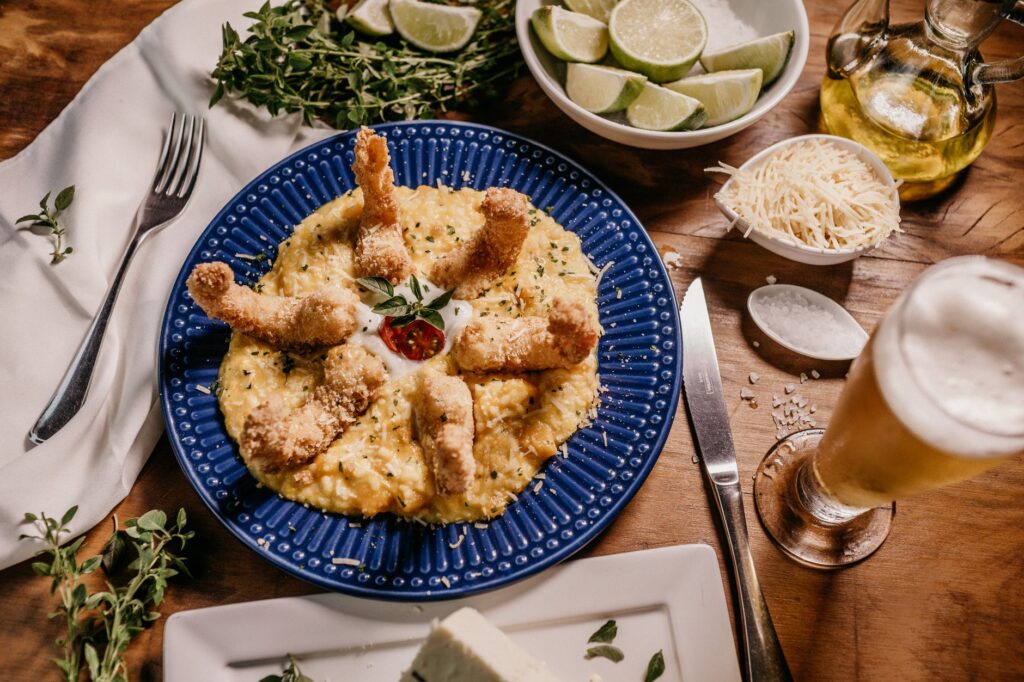
In these morning gatherings, patrons debate with equal passion the market price of shrimp fritters and the suitability of currents for catching wild trap-net bluefin tuna. The fritter, that ephemeral lace of wheat and chickpea flour, finely minced spring onion, fresh parsley, and tiny transparent crustaceans, stands as one of the great milestones of global frying. Its creation requires an expert hand capable of pouring liquid batter over hot oil to achieve a golden lattice network that shatters upon the slightest contact, releasing an explosion of marine flavor that synthesizes the entire gastronomic philosophy of the territory.
The Enigma of Bluefin Tuna: From Trap-Net to Plate
No journey through the gastronomic culture of the Bay would be complete without mentioning the tarantelo, morrillo, or contramulo cuts of almadraba bluefin tuna. This millenary, sustainable fishing art, inherited from Phoenicians and Romans, harnesses the migratory route of tunas on their inbound journey to the Mediterranean. In the market’s most exclusive stalls, the ronquedores — artisans capable of butchering the animal with a surgeon’s precision — separate the tuna’s distinct parts, each possessing an ideal fat percentage and texture for specific preparations. From the most purist sashimi to the traditional stew of cuttlefish and tomato, bluefin tuna represents the pinnacle of a symbiotic relationship between man and sea written along these coasts for millennia.
The traceability of this product is rigorous and transparent. Each piece carries labels certifying its capture in the trap nets of the Cádiz coast, guaranteeing that the final consumer savors a wild specimen caught without stress and treated with absolute respect for the cold chain. This rigor contrasts with the apparent carefree joy of the streets, revealing that behind every tapa of cured tuna or grilled tarantelo lies a solid artisanal industry, fiercely protective of its heritage and conscious that marine resources have a limit that must never be crossed.

Practical guide
How to get there: Jerez Airport is located about 45 kilometers from Cádiz and has regular rail connections. Cádiz railway station places travelers within a ten-minute walk of the Central Market.
When to go: Spring months (April to June) coincide with the almadraba season and optimal temperatures for touring the coastline without tourist crowds.
Where to eat: The interior of the Central Market features a gastronomic zone to taste freshly purchased products. In the surrounding area, traditional fry shops like Las Flores and seafood taverns like El Mantecao offer flawless local produce.
What to buy: Virgin sea salt from estuary pans, artisanal canned mackerel and melva from Andalusia, and special frying flours from local mills.
Ethical advice: Respect the market’s rest hours and avoid single-use plastics when acquiring products from traditional stalls.
The pulse of Cádiz slows down when the afternoon turns golden over the cathedral domes and the western wind caresses the walls of La Caleta. At that precise moment, when market stalls shut their metal shutters and vendors meticulously clean white marble surfaces, the city reveals its most intimate truth. It is not a static postcard intended for rapid consumption, but a living organism breathing to the rhythm of Atlantic tides, feeding on the brackish memory of its ancestors and projecting toward the future a recipe book where every scale, every grain of salt, and every tidal surge preserve intact the uncompromisable dignity of the south.