The Lithographic Heartbeat in the Tuscan Capital
Florence does not live solely by the Renaissance echoes sculpted in marble and projected onto monumental domes; in the quiet alleyways descending toward the Arno River, the city guards an industrial and artistic secret that defies the dictatorship of the pixel. Stone lithography, a procedure invented at the end of the 18th century by Alois Senefelder based on the chemical principle of the antagonism between water and grease, finds today in the Tuscan capital a fascinating bastion of resistance. Far from constituting a mere museum curiosity, the active lithographic workshops in this area operate as living centers of creation where veteran printmakers and international contemporary artists converge.
Entering one of these traditional studios is stepping into an ecosystem where time seems measured by the density of the ink and the porosity of the limestone. Unlike serigraphy or digital printing, lithography demands absolute physical and chemical mastery. Each plate is a monolithic block of stone quarried from the formations of Bavaria, hand-polished until it achieves a tactile smoothness that disconcerts those familiar only with the glossy paper of modern printers. In this environment, master printers act simultaneously as empirical chemists, precise draftsmen, and discreet athletes capable of moving blocks weighing over fifty kilograms without altering a single millimeter of the working surface.

The Raw Material: The Millennial Journey of Solnhofen Limestone
The soul of any lithographic workshop resides in its stones. The vast majority of slabs used in Florentine studios originate from the Jurassic formations of Solnhofen in Germany, a geological site unique in the world for the fineness of its calcareous grain. This stone, characterized by its grayish or yellowish color and absolute homogeneity, possesses the ideal property of retaining both the greasy substances used for drawing and the water that subsequently repels printing ink. Selecting an adequate stone is an act of intuition and experience spanning decades; an imperceptible flaw in the grain can ruin an entire run after hours of meticulous etching work.
The preparation process of the matrix is a ritual of physical purification. Before the artist traces the first line with grease pencil or autographic ink, the stone must be resurfaced and grained. Using a smaller stone as a muller, silica sand, and water, artisans perform constant circular movements over the surface until every trace of the previous image is removed. This millimeter-level wear reduces the thickness of the block over the years, turning each slab into a three-dimensional historical document accumulating layers of visual memory.
The lithographic stone is not an inert support; it is a living archive that absorbs the history of every hand that has inhabited it.
The physical effort required to level a large matrix underscores the deeply artisanal nature of a craft where muscle fatigue is inextricably linked to the resulting aesthetic.
Drawing and Chemical Alchemy: When Grease Defies Water
Once the stone surface is smoothed and dried, the creative phase proper begins. The artist works directly on the limestone using grease pencils, bitumen sticks, or lithographic ink diluted in water or turpentine. The porous texture of the stone offers a singular resistance that allows for everything from subtle gradients to absolute, velvety blacks. Each deposited mark is irreversible in its deep intention: the grease penetrates the microscopic pores of the limestone, fixing itself permanently before any stabilizing chemical agent is applied.
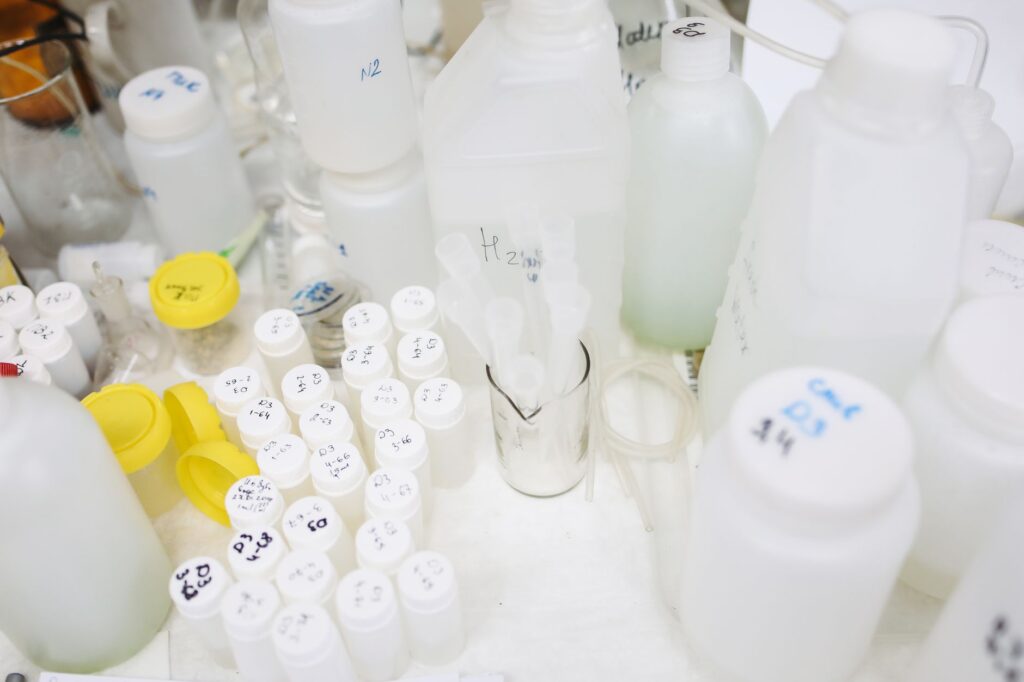
The true magic—or rigorous science—manifests at the moment of preparation. The master impregnates the stone with a weak solution of nitric acid and gum arabic. This mixture fulfills a fundamental dual function: on the one hand, it desensitizes the white areas that have received no drawing, allowing them to retain moisture; on the other, it fixes and makes insoluble the greasy lines of the design. During printing, the press dampens the stone with a sponge; the damp areas repel the greasy ink from the roller, while the drawn areas attract it with millimeter precision. It is a dynamic and fragile balance requiring constant reading of environmental humidity and workshop temperature.
Historic Machinery: Arm Presses and Manual Traction
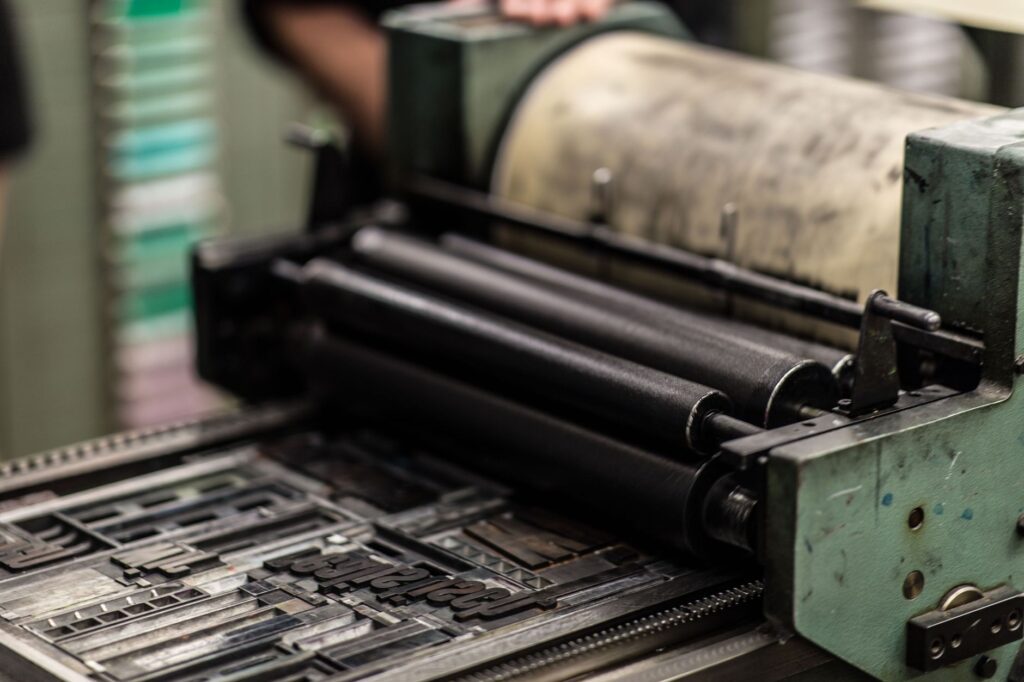
The machinery park of these Florentine workshops constitutes a mechanical heritage of incalculable value. Alongside robust 19th-century friction lithographic presses cast in iron by historic European houses such as Voirin or Krause, direct-arm presses coexist, allowing the printer to regulate exact pressure via a metal flywheel. Operating these machines is an exercise in choreographic precision: the cotton paper, slightly dampened to ensure perfect ink absorption, is placed over the stone protected by a greased leather scraper that receives the uniform pressure of the cylinder as the crank is turned.
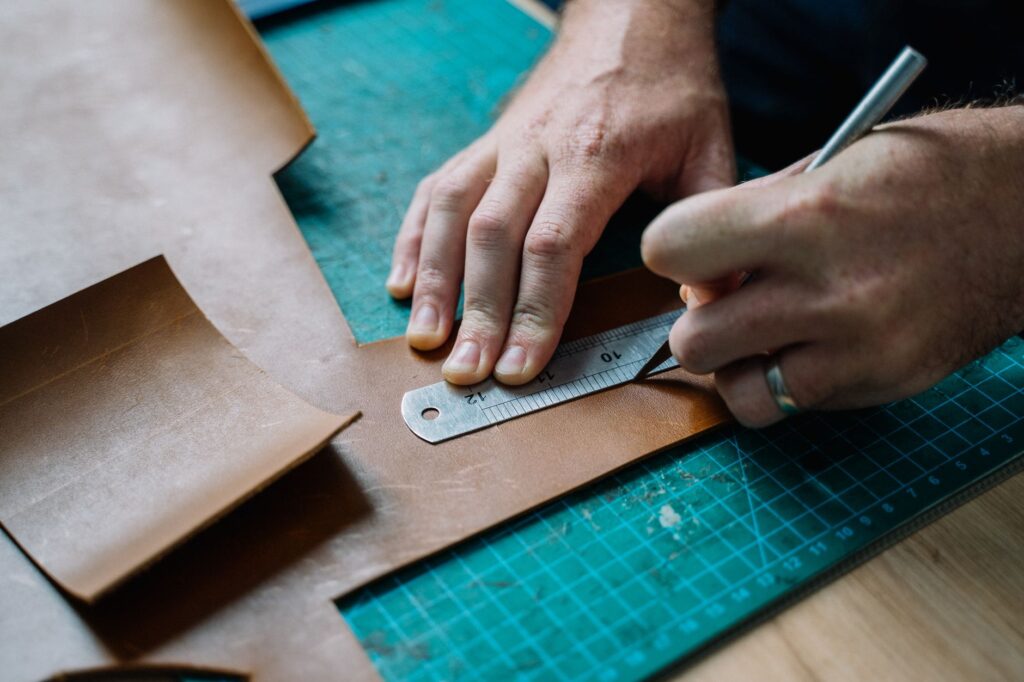
The relationship between printer and press is symbiotic. Unlike industrial rotary presses, where the operator monitors digital screens from an aseptic distance, the traditional lithographer listens to the subtle crunch of the paper separating from the stone, smells linseed oil and bitumen, and observes the consistency of the inked layer against the light. The quality of each print depends entirely on the artisan’s tactile and visual sensitivity during the printing cycle. This absolute manual control explains why original lithographic prints possess an organic vibration unattainable by photomechanical or digital systems.
The Contemporary Dialogue: International Artists in Florence
Far from locking themselves into historicist purism, Florence’s workshops have successfully opened their doors to contemporary creators from disciplines as diverse as abstract painting, monumental sculpture, and digital graphic design. Contemporary painters visit these studios drawn by the possibility of translating their gestural language into the rigor of stone, finding a unique space for experimentation in collaboration with master printers. This symbiosis allows centuries-old techniques to be revitalized by incorporating experimental acids, complex color overlays, and artisanal papers from around the globe.
Artist-in-residence programs promoted by these workshops foster a two-way exchange of knowledge. While the artist brings a renewed iconographic vision, the master printer subverts traditional technical limitations to widen the expressive margins of the medium. The results of these collaborations are regularly exhibited in graphic art galleries across Europe and North America, demonstrating that stone lithography remains a vanguard territory where conceptual modernity rests upon unalterable material pillars.
Archiving and Cataloging: Safeguarding Graphic Memory
Preserving the legacy of Florentine lithography also entails managing an immense documentary heritage composed of thousands of printed stones, trial proofs, notebooks, and historic plates signed by past masters. In the cellars and attics of these studios, reinforced metal shelving supports tons of engraved limestone, guarding complete runs that document the evolution of European graphic art over the past hundred and fifty years. Cataloging this collection requires a constant effort of digitization and preventive conservation to prevent the ravages of humidity and the passage of time.

Likewise, passing this know-how on to new generations represents the greatest challenge to the craft’s survival. Given the scarcity of vocational training centers specialized in traditional printing techniques, the workshops function as autonomous guild schools where apprentices spend years performing auxiliary tasks—from stone grinding to roller cleaning—before receiving authorization to ink an original matrix. This direct apprenticeship model guarantees the continuity of a millennia-old chain of transmission based on patient observation and technical rigor.
Practical guide
- How to get there: Florence features direct flight connections via Peretola Airport (FLR), located just a few kilometers from the historic center, as well as an excellent high-speed railway network (Frecciarossa and Italo) connecting Santa Maria Novella station with Rome, Milan, and Bologna in under two hours.
- Visitable studios: Several historic workshops and printmaking studios located in the San Frediano and Santo Spirito districts offer guided tours by prior appointment, allowing visitors to observe the complete limestone printing process and the operation of 19th-century presses.
- Best time to visit: Spring (April to June) and autumn (September to November) offer optimal temperatures for exploring the historic center on foot and enjoying the workshops without the crowds of peak summer tourism.
- Access rules: Because these are active workspaces rather than conventional museums, prior booking is strictly mandatory, flash photography is prohibited in archiving areas, and visitors must respect safety guidelines regarding heavy machinery and chemical products.
- Acquiring artwork: Visitors interested in purchasing original graphic works should always verify the artist’s signature, the edition numbering, and the blind stamp (timbro a secco) of the printing workshop, which serves as an indisputable guarantee of authenticity and artisanal provenance.
- Recommended reading: To delve deeper into the technical and artistic history of the medium, consulting classical printmaking manuals published by specialized Florentine institutions and the reasoned catalogs of Tuscan graphic foundations is advised.
The Silence of the Workshop at Dusk
When the golden light of the Tuscan afternoon begins to filter through the frosted glass of the studio, casting long shadows over rows of limestone blocks and heavy leather rollers, the workshop regains a solemn stillness. In that moment of pause, following a day of physical effort and chemical concentration, lithography reveals its most intimate nature: it is not simply a method of multiple reproduction, but an act of material meditation where the human being dialogues directly with the earth’s crust. The black ink dries on the cotton paper as a perennial testimony that slowness, manual skill, and respect for matter remain possible in a world dominated by speed and the ephemeral.