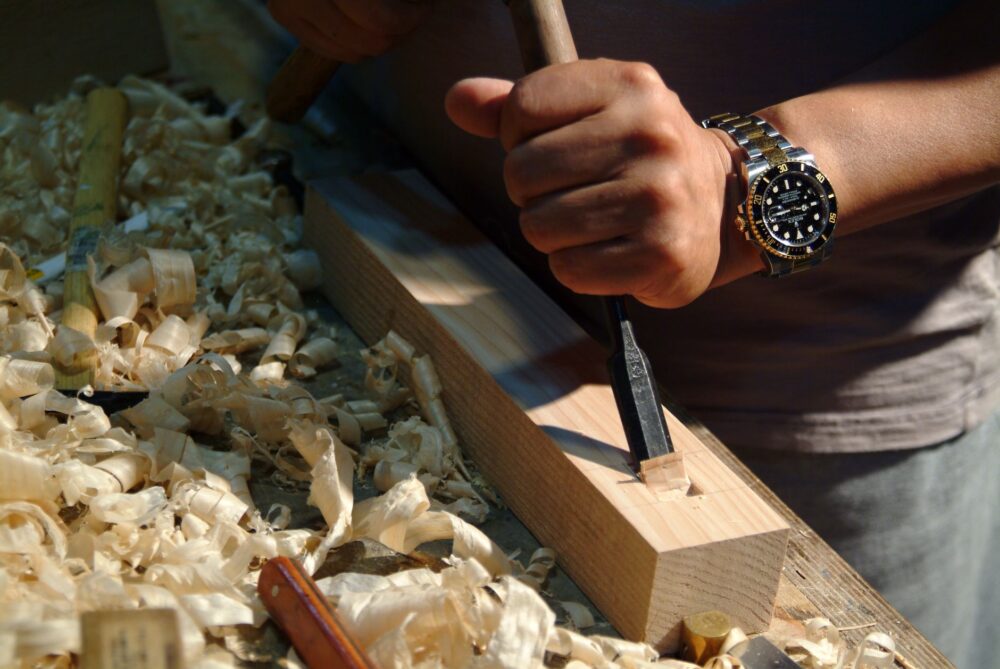
The Alchemy of Fire and Salt in the German Forests
In the green heart of Lower Saxony, where streams cross valleys of clayey earth and dense beech forests, time seems measured by the firing cycles of downdraft kilns. Here, around Alfeld, ceramics are neither a utilitarian exercise nor a decorative trend disconnected from their environment; they are a discipline of material resistance that directly connects with the pottery traditions of northern Europe. While globalized industrial production standardizes shapes and temperatures through automated gas tunnels, a small group of contemporary master ceramists has decided to return to primordial elements: chamotte-rich clays, hardwoods dried for years, and the risky introduction of rock salt at the climax of combustion.
This report explores the renaissance of a craft that was on the brink of extinction during the final decades of the twentieth century, when utilitarian plastics and low-cost Asian porcelain displaced traditional earthenware. Today, the workshops scattered across this rural landscape are experiencing a profound renewal driven by creators who combine the technical rigor of Germanic craftsmanship with a contemporary aesthetic sensibility. The guiding question of this journey is how the persistence of centuries-old gestures—such as freehand throwing and the manual stacking of thousands of pieces in refractory chambers—can engage with modern sensibility without losing its authenticity, ecological commitment, or material integrity.
Geography of Clay and Pine: The Territory of Alfeld
The landscape of Lower Saxony exerts a decisive influence on the chromatic palette and texture of these pieces. Unlike Mediterranean earthenware, luminous and glazed with lead or tin oxides, northern traditions demand ceramic bodies capable of withstanding rigorous winters and extreme thermal shocks. Local clays, extracted from sedimentary deposits dating back to the Tertiary period, possess a high iron and refractory mineral content, giving the paste a grayish or brownish tone before firing, and a range of toasted ochres and ash grays after the violent aggression of the flames.
The workshops are not concentrated in large urban centers; instead, they are nestled within old timber-framed farmhouses, known regionally as Fachwerkhäuser, converted into artist studios. In these spaces, the work rhythm is dictated by the availability of local raw materials and the rigorous selection of oak and beech firewood that fuels the large horizontal-draft kilns. The selection of firewood is no minor detail; the bark, fiber density, and moisture level determine the amount of flying ash that will settle on the pieces, creating unique, unrepeatable vitrified textures that no commercial glaze can replicate.
The Discipline of the Wheel and Chamotte Preparation
The process begins long before the clay touches the wheel head. In the workshop of Heinrich von Berg, a master ceramist with over four decades of experience operating a restored watermill, clay preparation is an almost alchemical ritual. Raw clays are blended with chamotte—previously fired and crushed clay of varying particle sizes—to provide the ceramic body with the structural stability necessary during drying and the drastic contractions of high-temperature firing, which frequently exceed 1,300 degrees Celsius.
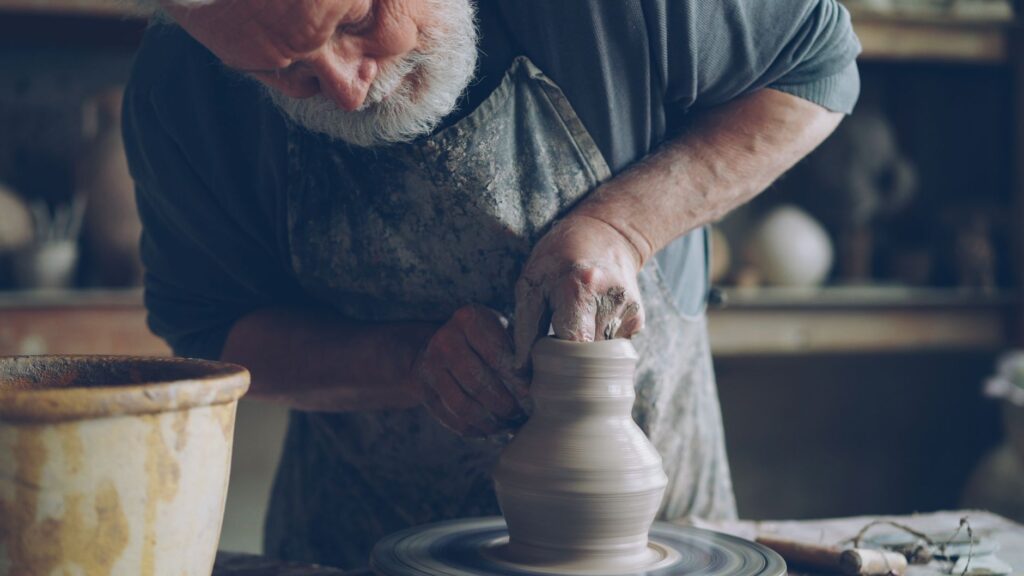
Seated at his heavy flywheel pottery wheel, Von Berg works with fifteen-kilo blocks of dense, textured paste. His hands, calloused and coated with a fine layer of dry dust, shape monumental jars, thin-walled bowls, and narrow-necked bottles destined to hold high-end vinegars or oils. Each vessel is born from a constant dialogue between centrifugal force and the artisan’s tactile memory. There are no molds or numerical patterns; proportions are calculated through visual balance and accumulated experience passed down through generations of direct workshop apprenticeships.

The Art of Slip and Raw Surface Treatment
Once the pieces reach the leather-hard stage, the surface treatment phase begins. Unlike high-temperature Asian ceramics, which seek the smooth perfection of celadon or the restraint of raku, the Lower Saxony school embraces expressive roughness. Mineral slips—liquid clays mixed with natural iron, manganese, and cobalt oxides—are applied via splashing, rapid dipping, or gestural brushstrokes reminiscent of abstract calligraphy.
In the contemporary studios surrounding the Leine River, this phase has been enriched by experimenting with local sands and crushed granite powders applied to the damp surface of greenware. The goal is to create a porous, textured skin that acts as a receptive canvas for the salt vapors that will be released later inside the kiln. This tactile quality inevitably invites the observer to touch the work, breaking the traditional museum barrier that prohibits physical contact with the artistic object.
The Great Firing: Four Days of Vigil by the Flame
The culminating point of the production cycle is the wood firing, a marathon process requiring the coordinated participation of several ceramists and assistants for at least ninety-six continuous hours. The kiln, an imposing structure of hand-built refractory bricks, is meticulously loaded piece by piece. Stacking is an ephemeral engineering feat: pieces are loaded unglazed, separated by small refractory clay supports called perts, allowing flames to circulate freely among them and reach every nook and cranny of the chamber.
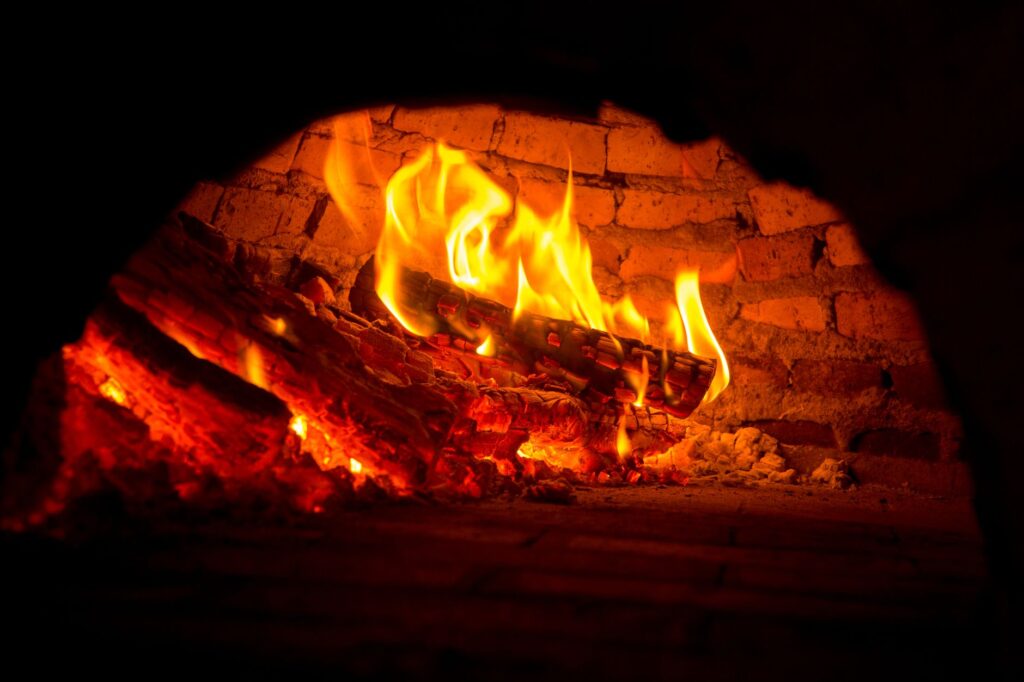
During the first two days, the fire is kept gentle and steady to eliminate residual moisture from within the clay body. From the third day onward, the rhythm shifts drastically: the amount of firewood fed into the firebox is increased every few minutes, raising the temperature exponentially. The atmosphere inside the chamber shifts from oxidizing to reducing—a state where the fire consumes available oxygen and draws metallic oxides directly from the clay and slips, generating deep, smoky tones and unpredictable metallic shadows.
The Violent Magic of Rock Salt
The most critical moment of the entire process occurs in the final hours of firing when pyrometers register the coveted 1,320 degrees. It is then that damp rock salt is introduced directly into the heart of the combustion chambers through strategic openings in the kiln’s crown. Upon contact with extreme heat, the salt instantly dissociates into sodium and chlorine vapor.
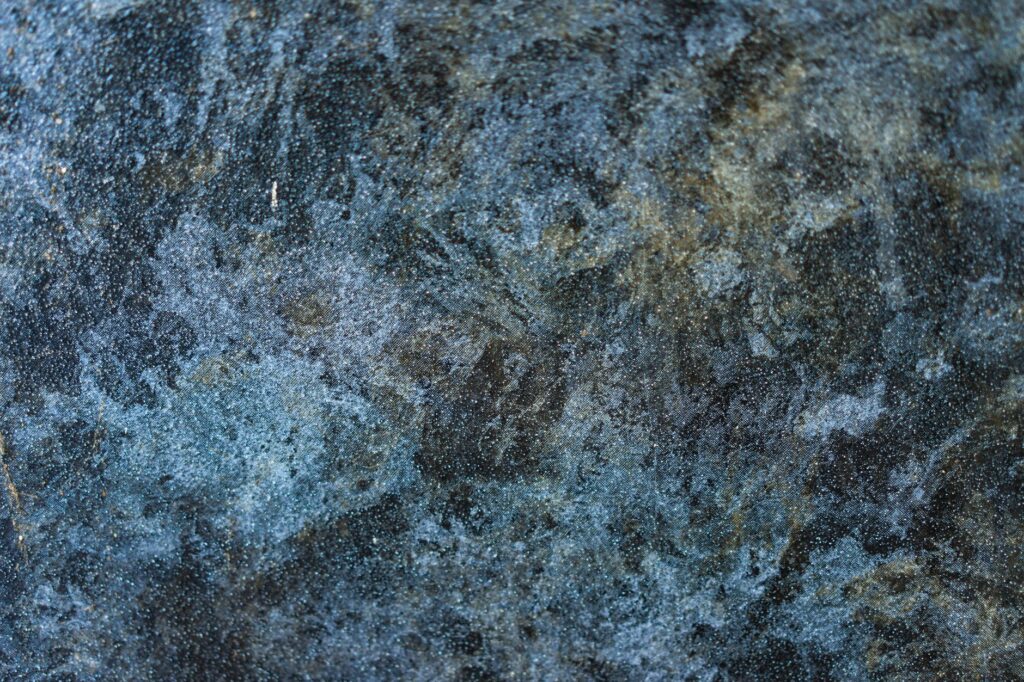
Gaseous sodium drifts through the labyrinth of incandescent pieces and immediately reacts with free silica present on the rough surface of the clay and chamotte. This spontaneous chemical reaction produces a natural vitrified layer, a translucent salt glaze known in German as Salzglasur, characterized by a subtly textured surface resembling orange peel. The resulting chemical randomness ensures that no single vessel is identical to another, turning each batch into a fossilized record of air currents, wood density, and salt purity at a precise second.

The wood and salt kiln is not a submissive instrument; it is a capricious partner that demands absolute respect, infinite patience, and a permanent willingness to accept imperfection as the ultimate expression of material beauty.
Practical guide
How to get there: The Alfeld area and the Leine River valley are located in Lower Saxony, about fifty kilometers south of Hannover. The most efficient way to tour the artisan workshops is by rental car from Hannover Airport (HAJ), taking the A7 motorway southbound toward Kassel until the Alfeld exit.
Best time to visit: Spring (May to June) and autumn (September and October) offer ideal temperatures for exploring rural roads and coincide with open-door weekends organized by several workshops during artisan ceramics festivals.
Recommended accommodations: The Hotel zur Post, located in the historic center of Alfeld, offers a traditional and comfortable starting point. For a complete immersion in nature, several old farmhouses in the villages of Duingen and Freden have been converted into charming rural guesthouses (Gästehäuser).
Routes and workshop visits: Although many studios operate privately due to the intense physical labor required by production, several master ceramists welcome visitors by appointment arranged via email. It is advisable to consult the schedule of the regional association Keramik in Niedersachsen to coordinate guided visits to public firings.
Purchasing and shipping: Salt-glazed stoneware pieces are extremely durable and suitable for everyday use (dishwasher and oven safe), but due to their weight and fragility during transit, most workshops handle insured international shipping directly from the studio.
The Echo of Clay in the Silence of the Forest
At dusk, when the fires of the great kiln finally die down and heat begins to slowly dissipate through the thick refractory walls, the Alfeld workshop regains a dense and solemn silence. On the workbench, a small freshly demolded cup, rough to the touch and marked by a faint trail of salt and ash, awaits the verdict of time. In an era obsessed with digital immediacy and exact replication, these dense, heavy objects born of collective physical effort remind us that true material culture remains rooted in the patience of the earth, the risk of controlled fire, and the human hands that refuse to forget ancient gestures.