The Silent Transformation of Deep Waters
The sound of water breaking against a vessel’s hull has been the constant soundtrack of life in the Norwegian fjords for decades. Yet, in recent years, that sonic identity has undergone a radical shift. In the heart of the Vestland region, heavy diesel-powered ships are ceding the stage to a new generation of fully electric vessels that glide silently across cold waters. This revolution is driven not by aesthetic whim, but by the urgent necessity to preserve one of the planet’s most breathtaking and fragile landscapes.
The transition toward sustainable transport in the fjords poses monumental engineering challenges. Distances between towering cliffs, unpredictable currents, and harsh winter temperatures demand propulsion systems capable of withstanding extreme conditions without compromising operational range. Through an unprecedented alliance between coastal municipalities, public transport operators, and regional authorities, Vestland has established itself as the global living laboratory for clean maritime mobility.
This report examines how transport electrification not only cuts carbon emissions but redefines the relationship between local communities and visitors. The goal is no longer to move the highest possible volume of passengers in the shortest time, but to ensure that every journey respects the biological rhythm of the fjords, integrating tourism into a long-term environmental regeneration cycle.
The Geography of Current: The Technical Challenge of the Fjords
Understanding the scale of this shift requires examining the cartography of Norway’s western coast. Here, the earth fractures into deep gorges carved by ancient glaciers. Fjords such as the Sognefjord and Hardangerfjord act as vital arteries where terrestrial roads are either unfeasible or excessively destructive to the natural surroundings. For generations, conventional ferries have served as the only floating bridges connecting isolated island and peninsular communities.
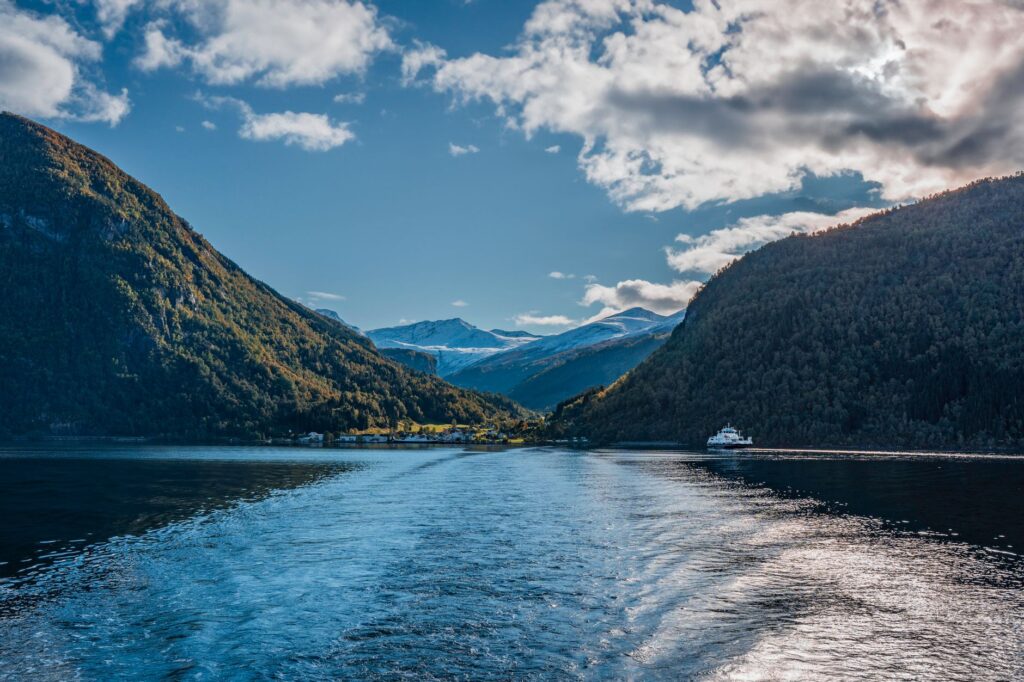
The environmental cost of these traditional routes was undeniable. Millions of liters of fossil fuel burned annually in short but constant trips generated significant greenhouse gas emissions and underwater noise, disrupting marine fauna. The introduction of high-capacity battery-powered ferries has shattered this dynamic. These silent giants recharge within minutes at each dock using automated plug-in connections powered almost entirely by clean hydroelectric energy.
However, electrical infrastructure in such rugged terrain is far from bottleneck-free. Delivering sufficient kilowatts to remote docks nestled at the base of vertical rock faces has required multi-million-euro investments in local substations and energy storage systems. Engineers have had to design solutions that prevent grid overload during peak summer tourism demand.
The Role of Local Communities in Transport Governance
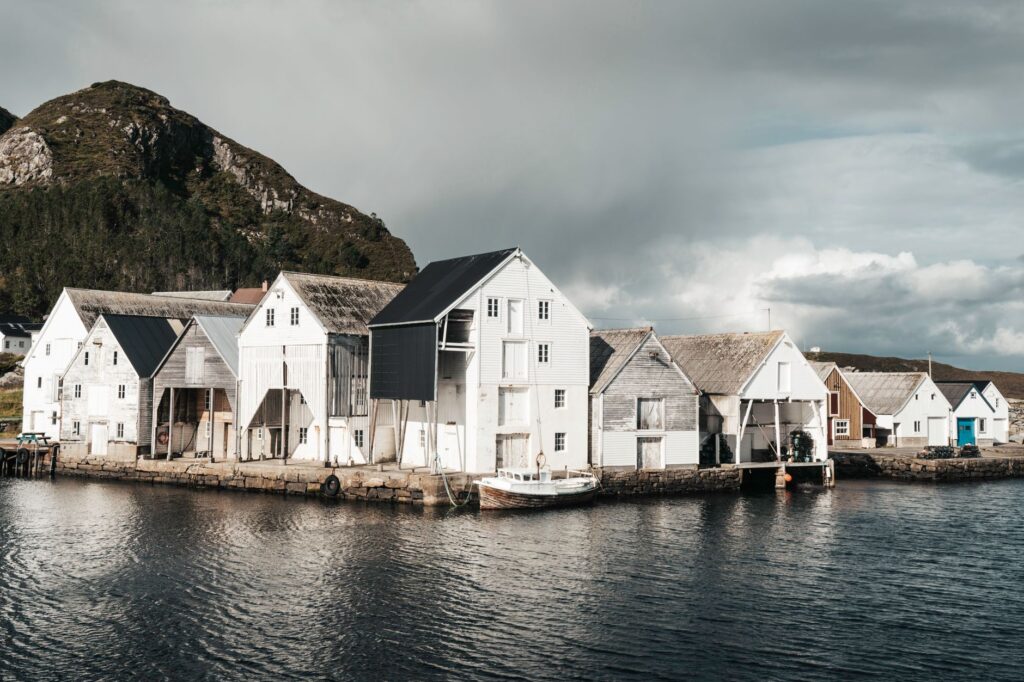
No technological transition succeeds without the active backing and participation of the territory’s inhabitants. In Vestland’s riverside villages, transport management has been decentralized, granting community councils a direct voice in planning schedules, frequencies, and tariffs. This participatory governance ensures that services prioritize residents’ daily needs—such as access to medical and educational centers—over tourist overcrowding.

Local transport cooperatives have taken over the management of last-mile connections, combining electric ferries with cargo bike fleets and shared microbuses. This integrative model discourages private fossil-fuel vehicle use among arriving travelers, steering them toward soft-mobility corridors designed to minimize carbon footprints.
Furthermore, the local economy benefits directly from this green infrastructure. Regional shipyards, once focused on maintaining traditional oil or fishing fleets, have successfully converted into naval electric innovation hubs, exporting their technical expertise to other archipelagos and coastal regions across Europe and North America.
Regenerative Tourism Versus Mass Tourism
The concept of sustainability in the Norwegian fjords has evolved from mere damage mitigation toward a distinctly regenerative approach. Regional tourism institutions no longer measure success by exponential growth in overnight stays or the massive arrival of giant cruise ships. Instead, value is placed on the quality of the experience and the visitor’s ability to integrate into local life without disrupting it.
Electric ferry operators work closely with local naturalist guides to offer onboard geological and ecological interpretations of the landscape. Passengers receive detailed guidance on observing marine wildlife—such as porpoises and native birds—without disturbing their habitats. This educational approach fosters deep respect that endures long after the traveler leaves the territory.
The true measure of progress in Vestland is not how many kilometers we cover in a day, but how lightly we tread upon the fjord so that nature barely notices we were here.
This philosophy translates into strict capacity control policies at sensitive landing points, such as the valleys adjacent to the UNESCO-listed Nærøyfjord. Limiting vehicular access and prioritizing silent water transport has allowed endemic flora and fragile mountain soils to begin recovering from decades of wear and tear caused by over-tourism.
Energy Innovation and Dockside Storage
The operational success of electric ferries relies as much on the ships as on the smart docks that host them. Along the Vestland coastal route, stationary second-life battery banks have been installed, reusing retired packs from land electric vehicles. These systems store energy during off-peak hours—when hydroelectric generation exceeds demand—to release it rapidly during fast ferry charging cycles.
This intelligent energy management prevents voltage spikes in rural grids and ensures service continuity even during severe winter storms that temporarily disrupt terrestrial high-voltage lines. Transport resilience thus acts as a protective shield for communities historically vulnerable to winter isolation.
Engineers have also optimized hull hydrodynamic designs and integrated flexible solar panels on upper decks to power auxiliary onboard systems, further reducing dependence on the main grid during longer crossings between fjords and open sea.
Economic Challenges and the Tariff Balance
Despite technological strides, transitioning to a fully clean transport network faces complex financial hurdles. Initial acquisition costs for an electric ferry triple those of conventional diesel models, and remote charging infrastructure requires substantial public and private outlays.
To prevent this economic burden from falling on local residents or pricing out travelers, the Norwegian government has implemented cross-subsidy systems and differentiated port fees. Highly polluting vessels pay heavy levies to dock in protected fjords, while clean operators enjoy tax incentives and priority in public route concessions.
Nevertheless, experts warn that long-term stability depends on keeping fares affordable for daily passenger and freight transport, ensuring that the ecological transition does not fracture the social cohesion of vulnerable rural communities.
Practical guide
Planning a conscious journey to the Vestland region requires understanding its integrated transport network and embracing the slower rhythms demanded by sustainable mobility.
- When to go: The months between May and September offer optimal navigation conditions and extended daylight. Spring highlights melting snow and rushing waterfalls, while summer guarantees higher frequency of electric services.
- How to get there: Bergen Airport (BGO) acts as the primary international gateway. From there, connections to the heart of the fjords are made via regional electric trains and low-emission buses linking directly to ferry docks.
- Transport network: Use the unified Skyss travel planner to combine trains, buses, and electric ferries into a single digital ticket. Avoid renting gasoline or diesel cars; electric car rental networks and shared bicycles cover most inhabited hubs.
- Accommodation: Prioritize lodgings certified with Norway’s Sustainable Destination label, located in rural communities that directly manage local resources.
- Code of conduct: Respect local guides’ instructions at docks and trails. Disposing of waste in the water or flying drones in protected cliff-nesting areas is strictly prohibited.
The Eternal Reflection in Still Waters
As evening falls over the Sognefjord, the hum of combustion engines is already a distant memory. Instead, the water mirrors snow-capped peaks with crystal clarity, broken only by the silent passage of an electric ferry sliding its aluminum hull across the dark surface. On deck, passengers gaze quietly at the geological spectacle, mindful that their presence leaves no scars on the landscape.
Caring for the land and water is not a temporary sacrifice, but the only way to ensure that the wild beauty of these fjords continues to belong to the future.
This newly found harmony between cutting-edge technology and ancestral respect proves that modern transport can be an ally of nature. Vestland’s communities have shown that redefining mobility without sacrificing local identity or planetary health is entirely possible, offering the world a masterclass in how to navigate toward a truly sustainable horizon.