
Introduction to the Norwegian Edge
Located far above the Arctic Circle, the Lofoten Islands represent one of the most imposing and challenging geographical settings in Western Europe. Here, granite mountains plunge steeply into the dark waters of the Vestfjorden, creating a landscape of deep fjords and sharp ridges where solid land seems fragmented into countless islets. For centuries, survival and trade in this archipelago depended exclusively on the skill of fishermen aboard their sjark boats and oarsmen navigating treacherous waters. Today, modernity has woven a network of infrastructures as daring as they are fragile, turning daily transit into a complex intermodal choreography.
Understanding how people and goods move through this territory means delving into a delicate balance between modern engineering and the capricious fury of arctic elements. Unlike large continental metropolises, where mobility is governed by congestion and automated timetables, in Lofoten the determining factor is meteorology. A sudden gale sweeping off the Norwegian Sea or a thick bank of fog can disrupt road traffic across suspension bridges and essential maritime connections within minutes, forcing residents and travelers to submit to nature’s relentless rhythm.
The Backbone of the E10 Highway
The European Route E10, popularly known as Kong Olavs vei (King Olav’s Road), acts as the true backbone of the archipelago. From its connection to the mainland all the way to its terminus in the fishing village of Å, this road winds for over eight hundred kilometers, a substantial stretch of which leaps from island to island via a rosary of impressive bridges and subsea tunnels. The construction of this route brought an economic and social revolution in the latter half of the twentieth century, replacing insular isolation with a promise of territorial continuity that transformed the local economy—traditionally based on stockfish—toward a mixed model with a heavy reliance on international tourism.
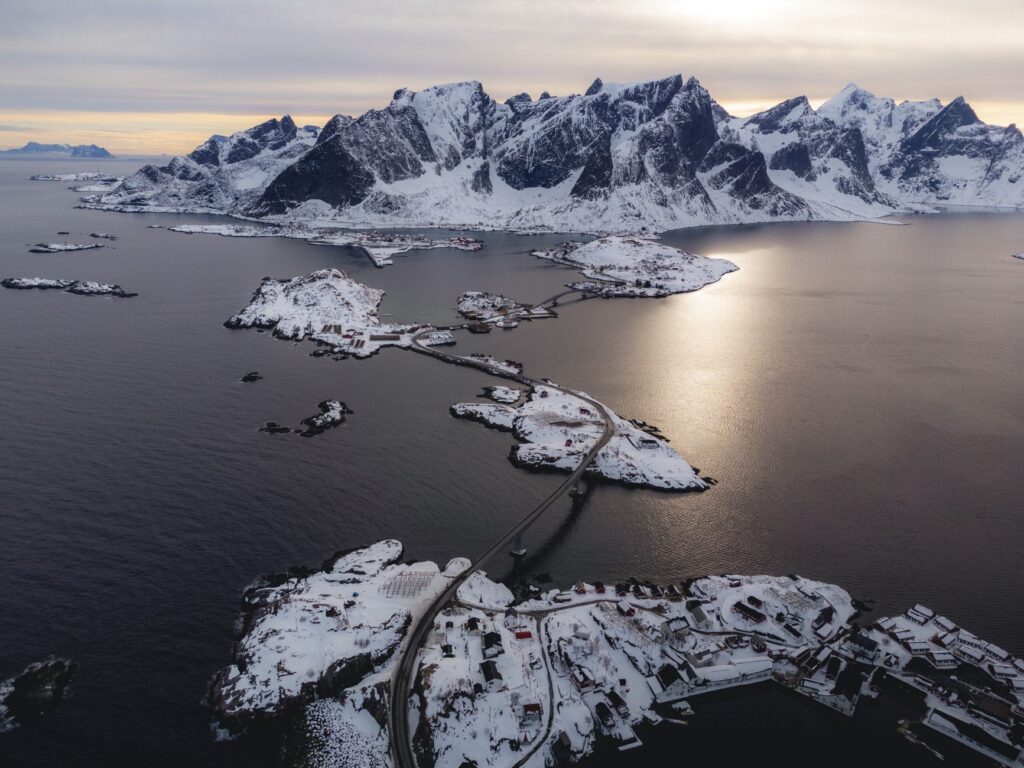
Driving along the E10, however, demands extreme vigilance regarding road conditions and seasonality. During winter months, the asphalt turns into an ice rink where studded tires (piggdekk) are mandatory, and maintenance crews work tirelessly to clear avalanches that periodically cascade down from the peaks. Single-lane bridges with passing places and narrow tunnels lacking advanced lighting are silent witnesses to an era when pragmatism outweighed comfort. Every journey across this asphalt suspended between sky and marine abyss serves as a constant reminder of the vulnerability of human communication in extreme latitudes.
The Maritime Pulse of the Ferries
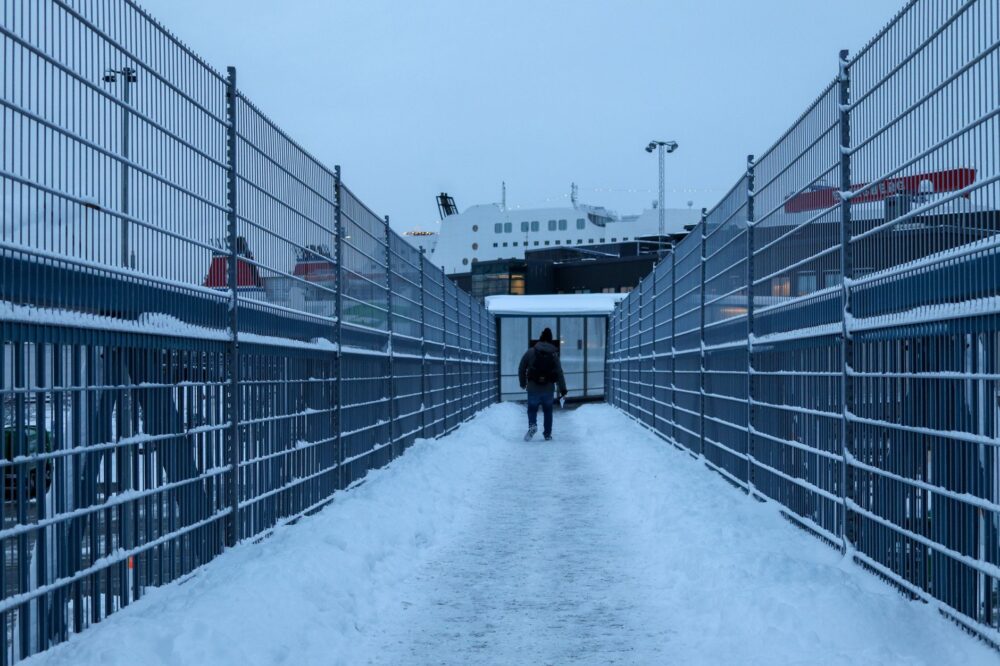
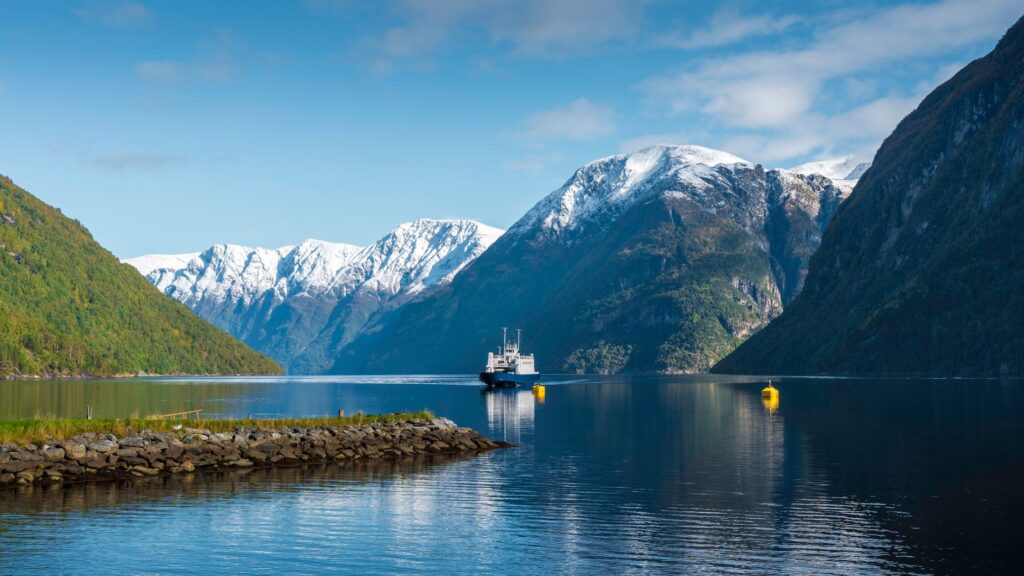
Despite the ambitious network of roads and bridges, the archipelago cannot be understood without its historic ferry system, known locally as ferger. These vessels are not mere auxiliary transport means, but true vital arteries connecting peripheral islands and preventing long, circuitous detours over impassable mountain roads. The routes linking Bodø on the mainland with Moskenes at the southern tip of Lofoten, or the shorter crossings traversing internal fjords, operate with commendable precision despite facing unpredictable tides and violent currents like those of the famous Moskenstraumen channel.
Aboard these ferries, much of the archipelago’s social and economic life takes place. Local transporters carrying perishable goods share the decks with hikers and residents who use the crossing to catch up on local news. The transition toward hybrid and electric fleets across several of these lines marks a milestone in the sustainability of arctic transport, reducing the carbon footprint in an exceptionally pristine natural environment. Nevertheless, dependence on electrical infrastructure and the limited capacity of insular terminals pose new logistical challenges during peak summer influxes.
Engineering Facing the Marine Abyss
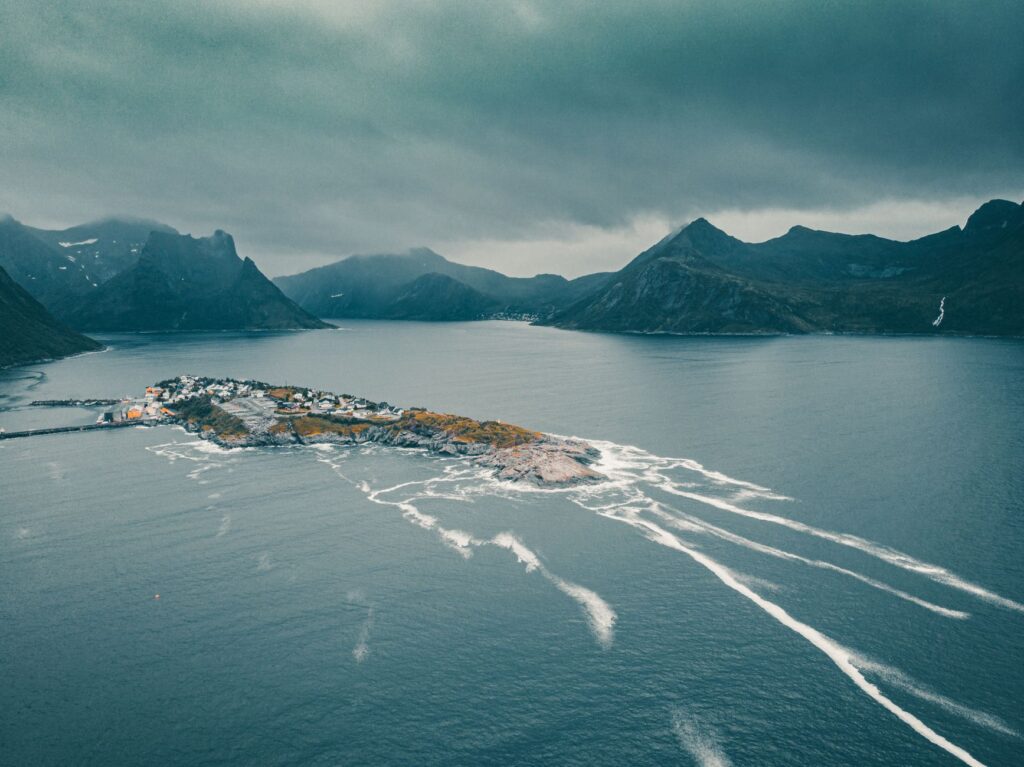
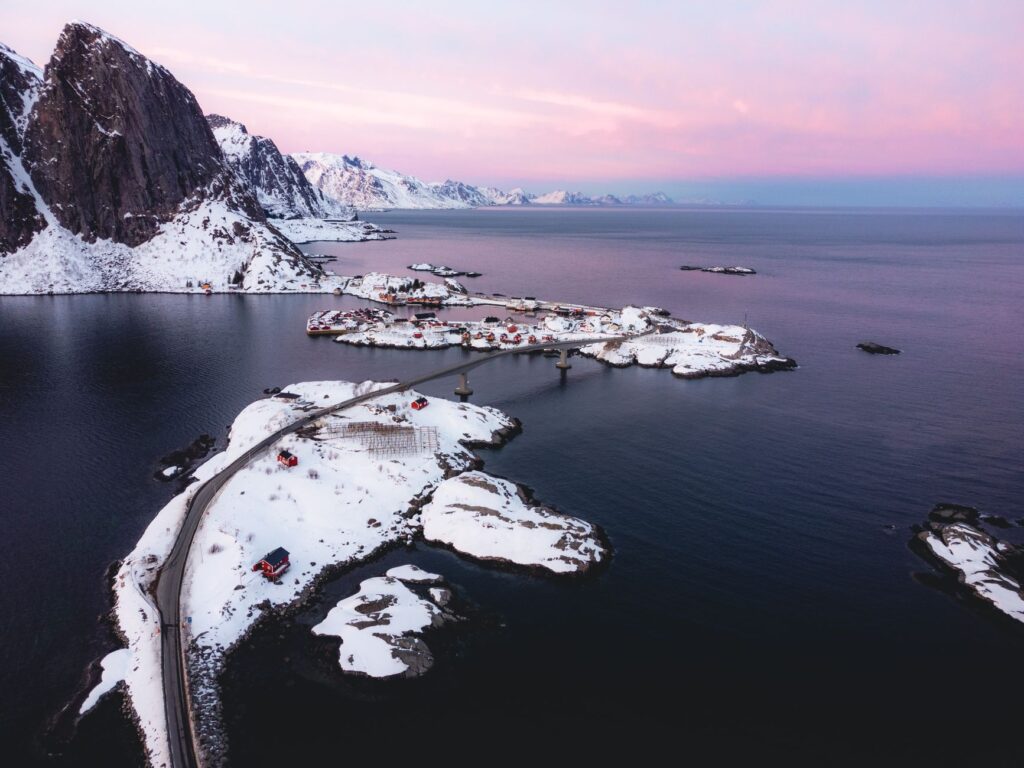
The Lofoten landscape is punctuated by civil engineering milestones that defy the logic of the terrain. The Lofast, Gimsøystraumen, and Raftsund bridges are true architectural masterpieces that curve over deep and treacherous channels to unite landmasses that were once only reachable by barges. These bridges not only support vehicular traffic but must also withstand gale-force winds capable of overturning light vehicles and the constant corrosion of a marine environment laden with salt spray.
Planning and maintaining these structures represent a titanic financial and technical challenge for Norwegian authorities. Engineers must constantly monitor the fatigue of metal structures and the impact of freeze-thaw cycles on reinforced concrete. Furthermore, the visual integration of these large structures into a protected and pristine landscape has required very careful design solutions, ensuring the bridge lines dialogue harmoniously with the vertical silhouette of surrounding mountain peaks.
The bridge is not merely a pathway between two rocks; it is the fragile thread sustaining the daily life of entire communities against the loneliness of the open sea.
Soft Mobility and the Challenge of Over-Tourism
In recent years, the boom in photographic and adventure tourism has tested the carrying capacity of Lofoten’s transport infrastructure. During summer months, the saturation of camper vans and rental cars on roads originally designed for local traffic creates severe bottlenecks at key points such as Reine, Hamnøy, and Henningsvær. This pressure on the territory has sparked an urgent debate regarding the need to promote soft mobility and intermodal public transport.
Local initiatives promote the use of electric bicycles for coastal stretches and the enhancement of local bus lines synchronized with main ferry timetables. However, population dispersion and the lack of sidewalks or safe shoulders along much of the E10 complicate the implementation of continuous cycling networks. The current challenge lies in preserving the authenticity and silence of the arctic landscape without strangling the tourism economy upon which hundreds of local families depend, seeking a delicate balance between accessibility and conservation.
Regional Aviation as a Last-Resort Link
When winter storms block roads and suspend ferry services, the Lofoten archipelago relies on its network of regional airports to maintain contact with the rest of the country. The facilities at Svolvær (Helle) and Leknes operate with short runways carved between the sea and the mountains, where landing and takeoff operations require exceptional skill from commercial pilots handling specialized turboprops.
These short-takeoff-and-landing airports, known in Norway as Kortbanenett, are essential for the urgent transfer of patients to mainland hospitals and for ensuring the timely arrival of mail and critical supplies. Despite their small size, their operational status is subject to the whims of wind shear and low visibility, turning every flight into a demonstration of the symbiosis between aeronautical technology and local adaptation to the most extreme geographical environment.
Practical guide
Planning a journey through the transport system of the Lofoten Islands requires rigor, flexibility, and a deep respect for the meteorological conditions of the Arctic Circle.
Best time for mobility: The months between May and September offer ice-free roads and higher frequency in ferry services, albeit with higher traffic density.
Vehicle rental: It is essential to choose cars equipped with season-appropriate tires. In winter, studded tires are mandatory; in summer, verify that the vehicle has sufficient power for steep inclines.
Ferry reservations: For major lines such as Bodø-Moskenes, advance booking for vehicle space through official portals is strictly necessary during peak season.
Traffic applications: Always use the official tools provided by the Norwegian Public Roads Administration (Vegvesen) to check real-time mountain pass closures and tunnel status.
Respect for local infrastructure: Avoid parking in emergency turnouts or private fishing loading zones. Use exclusively designated rest areas.
Emotional Epilogue Facing the Vestfjorden
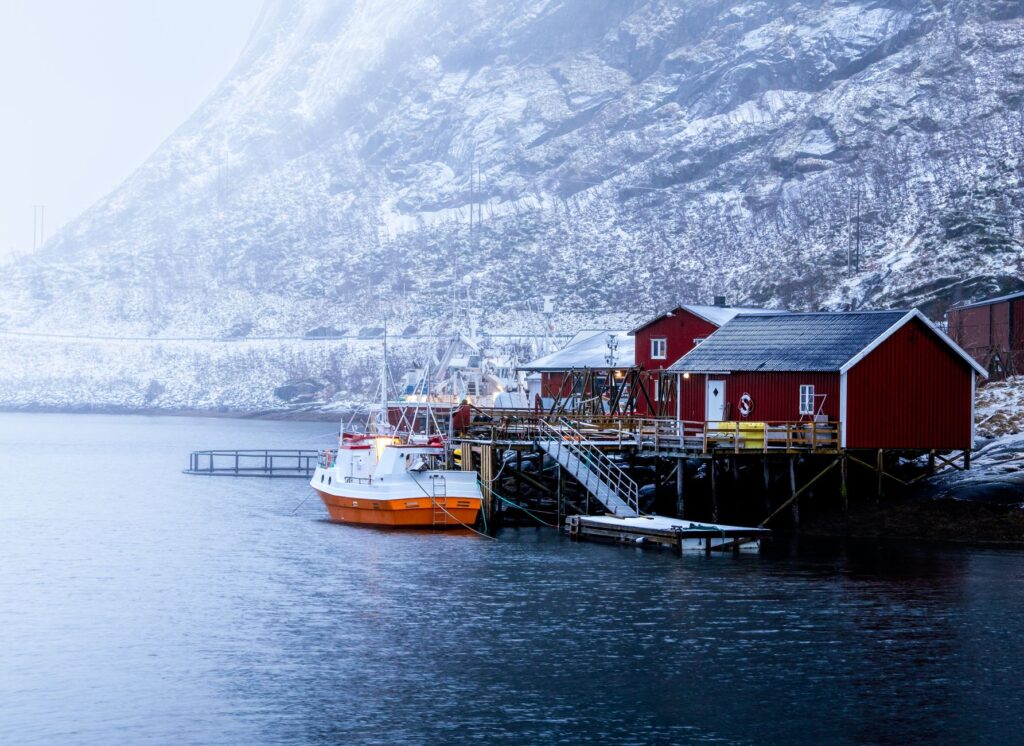
As evening falls, when the golden light of the midnight sun or the soft blue hues of the polar twilight tint the waters of the Vestfjorden, the Lofoten archipelago reveals its most intimate truth. On the wooden docks of historic rorbu cabins, the sound of water slapping against pilings blends with the distant echo of a ferry engine returning to port. There are no strident noises in this corner of the world; only the silent certainty that every road, every bridge, and every ship represents a daily act of human resistance against the relentless immensity of the north.