


The Liquid Geography of the Inland Delta
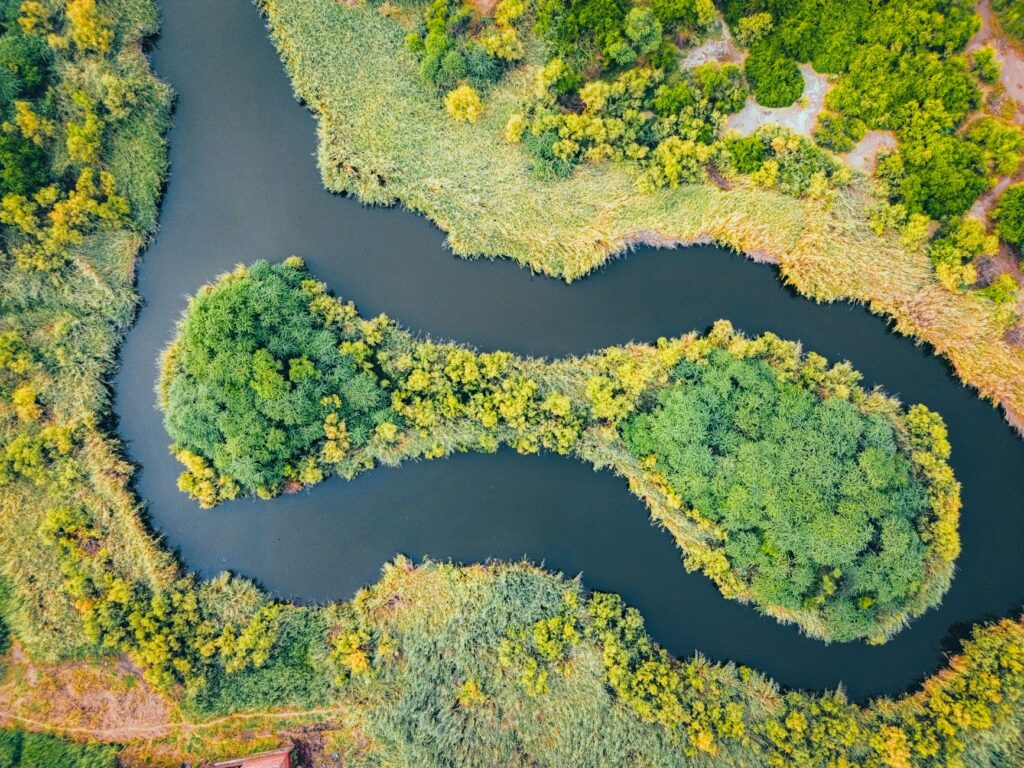
The Okavango Delta defies all continental logic by emptying not into the sea, but into the thirsty sands of the Kalahari Desert. Every year, floodwaters originating in the Angolan highlands feed a vast labyrinth of channels, permanent lagoons, and palm-fringed islands that form a unique ecosystem on the African continent. In this waterlogged territory, conventional mobility collapses instantly. There are no paved highways crossing the wetland nor railways connecting remote settlements with the administrative hubs of Maun. The survival of local communities and the viability of the tourism sector depend entirely on an intricate intermodal network where traditional human river traction coexists with high-tech bush aviation.
Understanding the region’s logistics requires abandoning urban parameters and embracing the rules of a fluctuating natural world. Water levels dictate travel rhythms, demanding constant technical adaptation. During flood months, land routes vanish beneath crystal-clear sheets of water, turning every journey into a complex transfer operation between shallow boats and light aircraft capable of operating on rudimentary dirt strips. This relative isolation has preserved the ecological integrity of the delta, yet it also poses enormous logistical challenges for supplying fuel, food, and essential medical supplies to island camps and villages.
The Poetics and Technique of the Traditional Mokoro
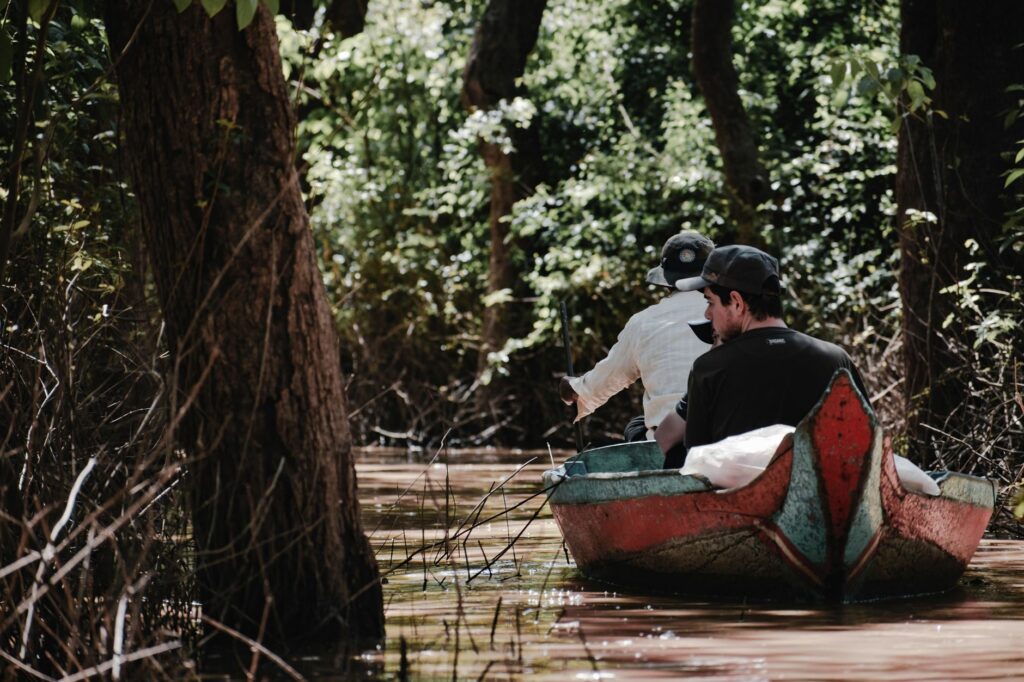
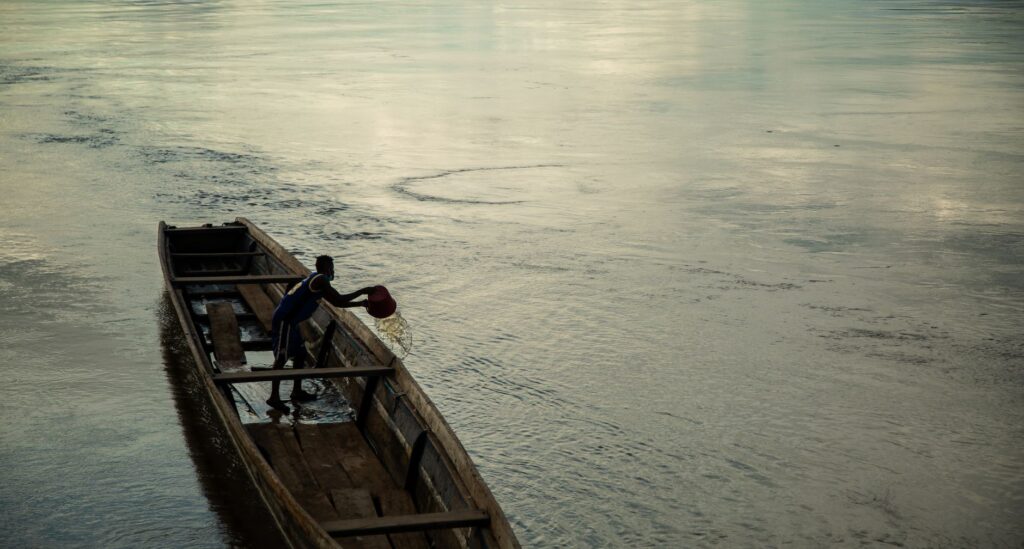
For centuries, the mokoro has been the undisputed vehicle of shallow waters. Originally carved from the trunks of large hardwood trees such as African ebony or kogelhout, this narrow dugout skiff is propelled by the push of a long wooden pole known as a ngashi. The poler, stationed at the stern, reads hidden currents, the density of papyrus beds, and the potential presence of dangerous wildlife such as hippos and crocodiles with millimeter precision. Today, for forest conservation reasons, many of these canoes are built from fiberglass, yet the navigation technique remains unaltered, passed down through generations among riverine communities.

The integration of the mokoro into modern transport is not merely a tourist attraction, but a vital logistical link providing access to areas where motors are prohibited or impractical due to shallow channels. These boats carry small cargo loads of personal items, mail, and basic foodstuffs between inhabited islands and the main southern delta jetties. Their precarious stability and low speed demand patience and deep meteorological knowledge, turning every river crossing into a living lesson in human adaptation to a dynamic and wild environment.
Bush Aviation: The Air Bridge of the Kalahari
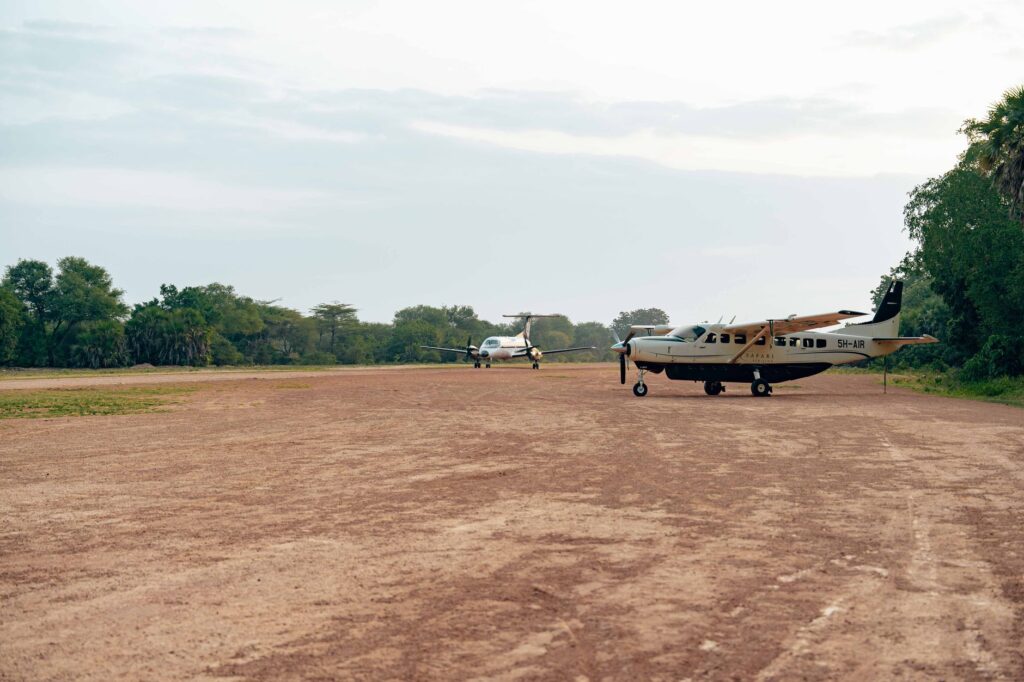
When distances are measured in hundreds of kilometers of impassable marshland, air transport ceases to be a luxury and becomes the primary communication artery. Maun Airport, informally known as the safari bush-plane capital of the world, manages a daily volume of light aviation operations rivaling mid-sized commercial airfields. Twin-engine and single-engine high-wing aircraft, operated by specialized local companies, connect urban civilization with dozens of compacted sand and clay airstrips scattered throughout the remote interior of the delta.
These secondary strips lack automated control towers or night lighting systems. Pilots rely on daytime visibility, visual terrain reports, and accumulated experience to bypass unforeseen obstacles, from wandering wildlife on the runway to sudden changes in soil consistency following seasonal rains. Maintaining these aircraft requires titanic logistical efforts, importing specialized spare parts from Johannesburg and operating mechanical workshops in absolute isolation. Without this aerial umbilical cord, medical management and supply chains for exclusive tourist enclaves would collapse within weeks.
Amphibious Transport and Camp Logistics
Beyond canoes and bush planes, supplying floating camps and villages requires modified terrestrial vehicles with amphibious capabilities and extreme four-wheel drive. All-terrain trucks with elevated suspensions and raised air intakes (snorkels) cross flooded fords during the transition season, tackling deep mud and unpredictable side currents. These mechanical goliaths carry everything from gas cylinders and potable water to solar generators and construction materials, enduring severe mechanical wear due to constant humidity and environmental salinity.
The true measure of infrastructure in the Okavango is not poured concrete, but the capacity for silent adaptation before the annual flood that redraws every known map.
Coordination between these trucks and motorboats operating in main channels creates a fluid yet fragile supply chain. Local operators must plan deliveries weeks in advance, calculating exact river levels along each stretch of the journey. Any delay in spare parts or fuel delivery can temporarily paralyze operations across an entire zone, demonstrating the extreme vulnerability of an island economy dependent on dynamic natural corridors.
Ecological Impact and Sustainability of Delta Routes
The steady increase in tourism and local population growth raises critical dilemmas regarding the carrying capacity of transport routes within the delta. Wakes generated by motorboats accelerate the erosion of fragile channel banks, altering nesting habitats for numerous waterbird species. Likewise, fuel consumed by aircraft and amphibious vehicles represents a latent contamination risk in a fragile ecosystem where surface and groundwater constitute the basic vital resource for the entire food chain.
Faced with this reality, Botswana’s environmental authorities, in collaboration with local communities, have implemented strict regulations on navigation routes and noise limits in sensitive conservation zones. The use of low-emission four-stroke engines is encouraged, and strict corridors are established for light aviation to minimize wildlife disturbance. The sustainability of the Okavango transport system is no longer measured solely by operational efficiency, but by its capacity to coexist harmoniously with the wetland’s natural cycles.
Socioeconomic Challenges for Riverine Communities
Intermodal connectivity affects not only tourism and material supply, but directly determines the quality of life for local communities settled on delta islands. Access to secondary education, emergency hospital services, and regional markets depends entirely on the reliability of this fragmented transport network. During years of extreme drought or abnormally violent floods, traditional mokoro routes become blocked by dead vegetation or absolute channel dryness, isolating families for weeks.
Recent government initiatives have attempted to improve satellite telecommunication infrastructure and partially subsidize emergency medical evacuation flights, yet massive structural gaps persist. Integrating local youth as authorized guides, pilots, and mechanics represents the most solid path to ensuring economic benefits derived from the delta’s complex transport system directly bolster the well-being and sovereignty of indigenous populations who have inhabited this aquatic labyrinth for centuries.
Practical guide
When to travel: The dry season, from May to October, offers the best navigability conditions in main channels and optimal visibility for light aviation, coinciding with peak floodwaters in the interior of the delta.
How to get there: The mandatory entry point is Maun International Airport (MUB), connected via daily scheduled flights from Johannesburg (JNB) and Cape Town (CPT) through regional carriers such as Air Botswana and Airlink.
Internal logistics: Travel between camps and remote areas is conducted exclusively via charter bush planes operated by local companies such as Mack Air or Moremi Air, complemented by motorboat or mokoro transfers managed by tour operators.
Health requirements and visas: A yellow fever vaccination certificate is mandatory if arriving from an endemic country. Malaria prophylaxis is recommended during warmer, more humid months (November to April). Most Western visitors obtain tourist visas upon arrival.
Luggage allowance: Due to strict weight and space limits on bush planes, luggage must be packed strictly in flexible soft bags (rigid suitcases are prohibited), with a maximum limit between 15 and 20 kilograms per passenger.
Code of conduct: Disposing of waste of any kind in channels or on airstrips is strictly prohibited. Maintaining a safe distance from wildlife during river transits and following instructions from the poler or assigned guide at all times is mandatory.
Epilogue: The Silence of Water and the Motor Horizon
At dusk, when the distant roar of aviation engines fades beyond the horizon and the water’s surface recovers its perfect mirror, the Okavango Delta reveals its deepest truth. In this confine where solid ground is a seasonal mirage and paths are written upon mud and current, mobility is not merely a question of engineering or commercial logistics; it is a delicate choreography between human daring and reverent respect toward a liquid territory that refuses to be tamed. Every mokoro sliding its fiberglass hull over the papyrus and every bush plane gently kissing the sandy airstrip stand as daily testimony that connection between humanity and wild nature remains possible.


