
Introduction to the Granite and Maquis Labyrinth
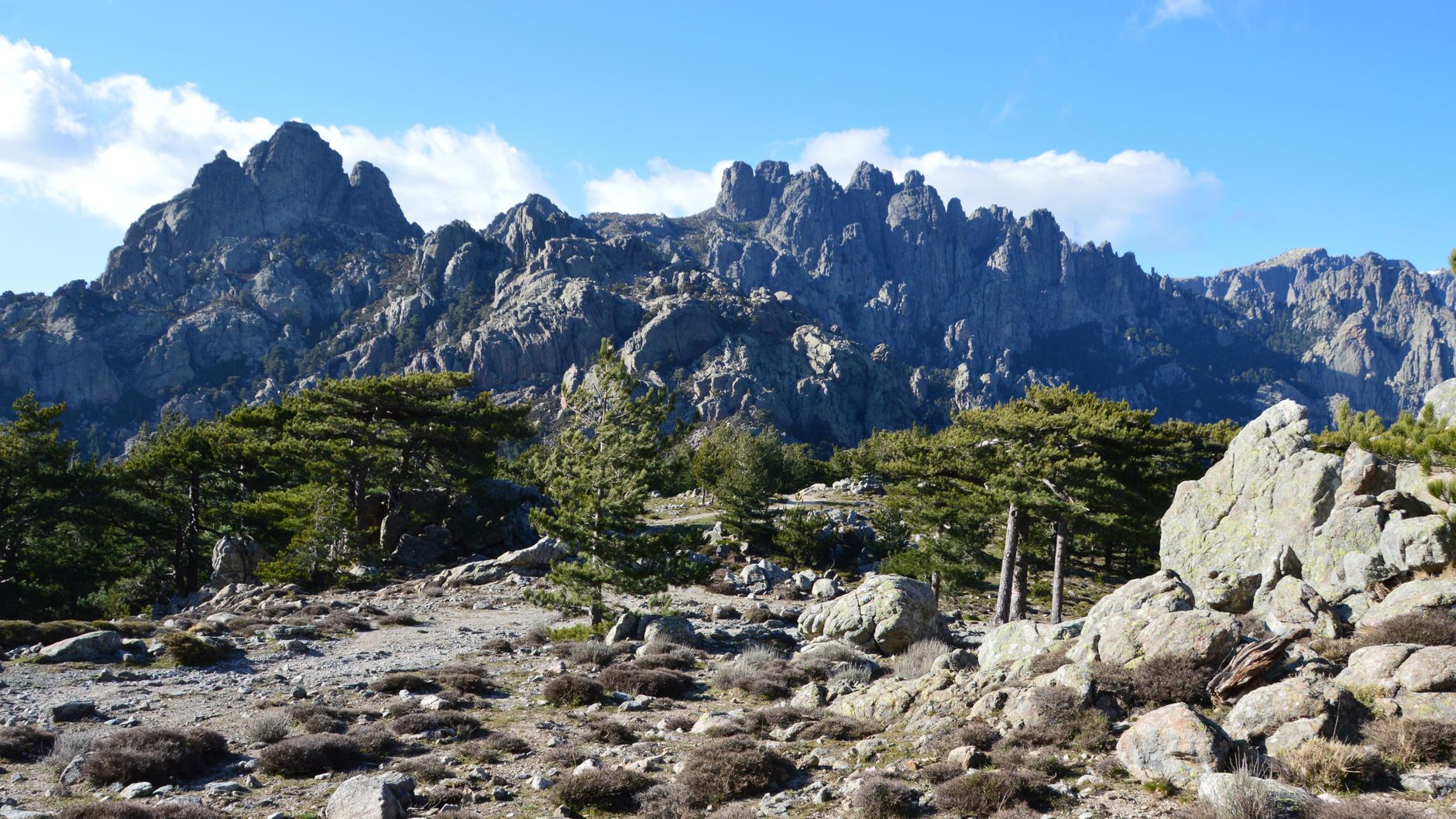
The trail of coarse granite traversing the island of Corsica from northwest to southeast is not merely a hiking route, but an exercise in direct friction with the most untamed geology of the Mediterranean. Formally known as the GR20, this roughly 180-kilometer itinerary stands as Europe’s most technical and demanding pedestrian route. Unlike low-mountain paths or traditional pastoral tracks, the terrain here imposes a strict discipline where verticality, millennia of glacial erosion, and harsh weather dictate the pace of the march step by step.
Immersing oneself in this crossing requires stripping away any romantic notions of casual holiday trekking. The sharp ridges of Mount Cintu, the boulder fields in glacial cirques, and the traverses across unstable scree slopes turn every day into an exercise of absolute concentration. This report examines the biomechanics of alpine walking in Corsica, the proper interpretation of island meteorology, the complex logistics of high-mountain refuge provisioning, and the essential safety keys required to successfully tackle one of the world’s great cathedrals of autonomous backpacking.
Insular Geography and the Climatic Paradox of Sea and Summit
Corsica is, in essence, a mountain carved out in the middle of the sea. This insular condition generates a fascinating and perilous climatic paradox: while the coasts enjoy the subtropical warmth of the Mediterranean, the interior summits experience a strictly alpine high-mountain microclimate. Humid air masses rolling in from the sea crash violently against the central rocky barrier, triggering sudden summer electrical storms, dense fog banks that reduce visibility to zero within minutes, and gale-force winds sweeping across the ridges without warning.
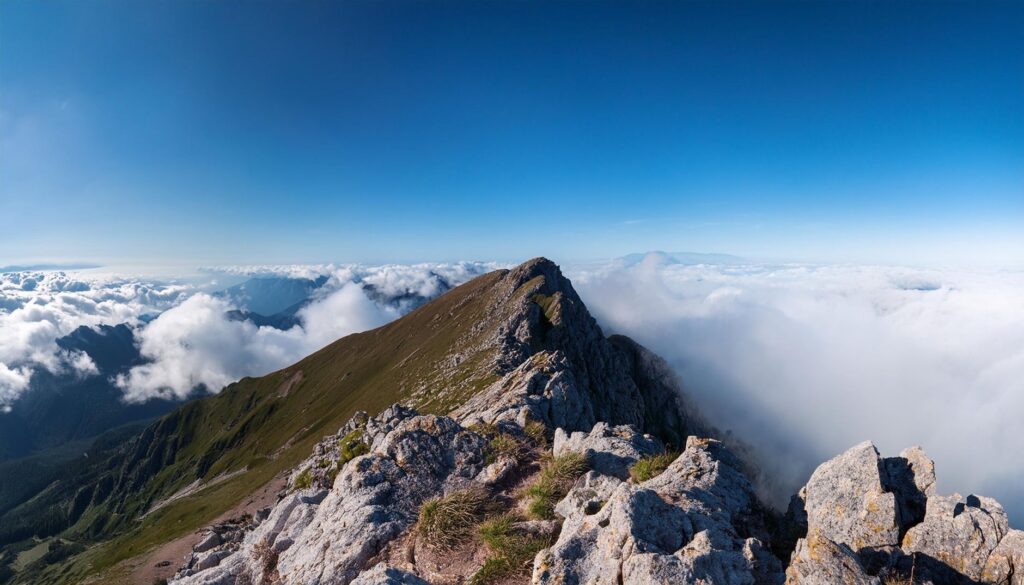
Understanding this dynamic is the first step for any responsible expedition. Corsica’s relief is composed primarily of plutonic and metamorphic rocks, with red and grey granite dominating the north and schists in the south. This geological composition offers exceptional boot-sole grip in dry conditions, but turns into an extremely hazardous skating rink when acid rain or hail makes an appearance. Winds, locally known as the libeccio or mistral, blow with excessive force across exposed cols, forcing hikers to exercise extreme caution and, on occasion, drastically alter their departure times to avoid peak atmospheric instability.
Temporal Planning and the Classic Division of Two Sectors
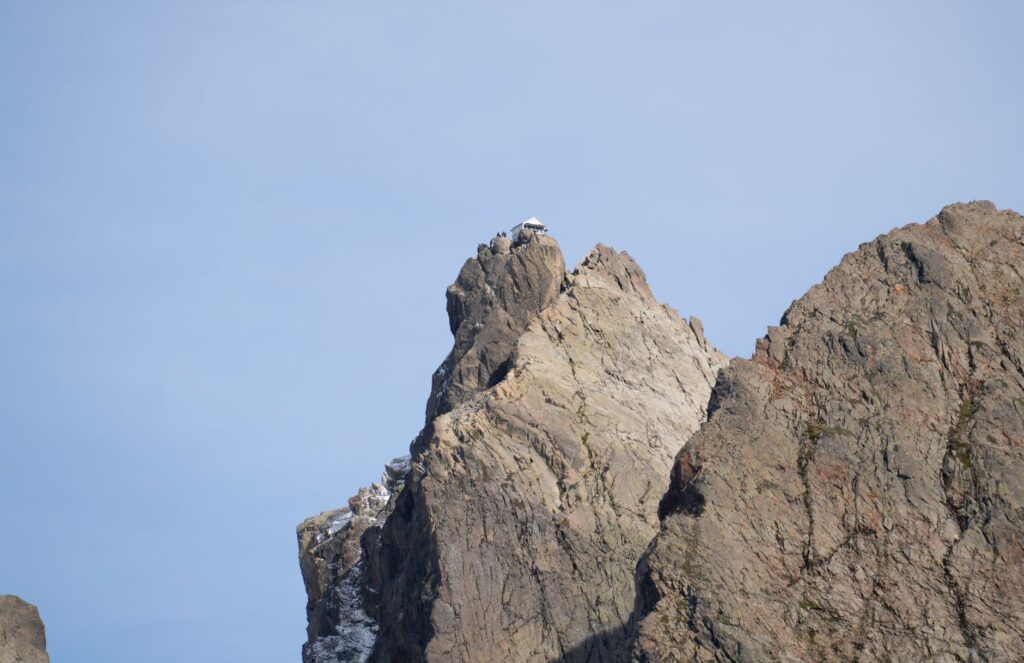
Traditionally, the GR20 is divided into two major halves that contrast radically in morphology and technical difficulty. The northern section, starting in the village of Calenzana and concluding at the Vizzavona refuge—the geographic and railway midpoint of the island—concentrates the vast majority of technical hurdles. It is a territory of granite needles, chains bolted into bare rock, exposed scrambling moves, and persistent snowfields well into summer. Here, stages like the one linking Asco Stagnu to Haut-Asco across the famous Cirque de la Solitude demand basic rock-climbing dexterity and a complete absence of vertigo.
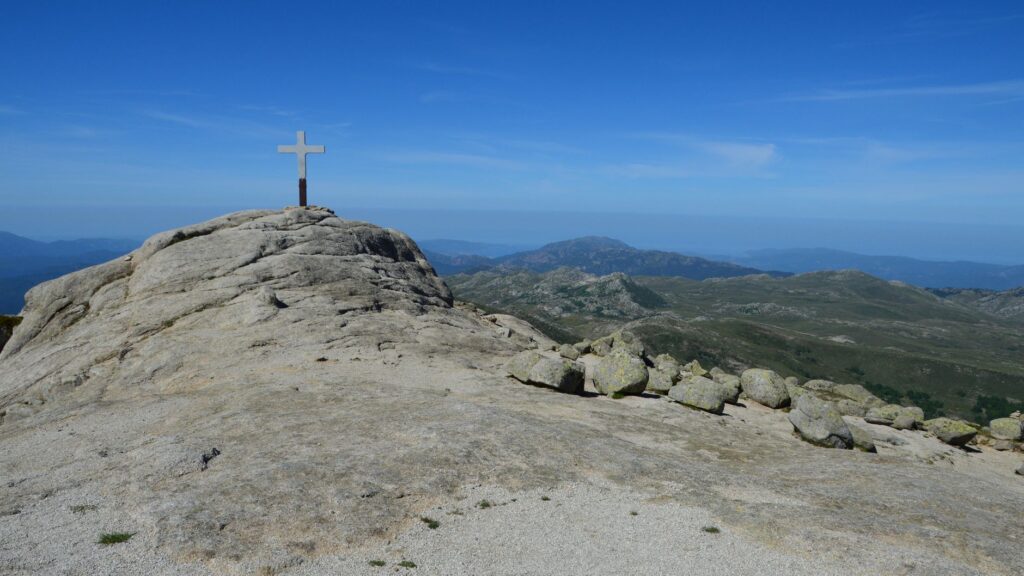
Conversely, the southern sector, running between Vizzavona and the village of Conca, features a gentler profile characterized by forested plateaus, low-altitude ridges, high-mountain meadows, and paths blanketed by dense, aromatic Corsican maquis shrubland. Although less vertical, this sector should not be underestimated: distances between water sources increase during dry months, and the accumulation of physical fatigue following the northern rigors typically takes a heavy toll in the form of muscular and tendon injuries if daily effort and pack weight are not managed correctly.
Refuge Infrastructure and the Management of Autonomy
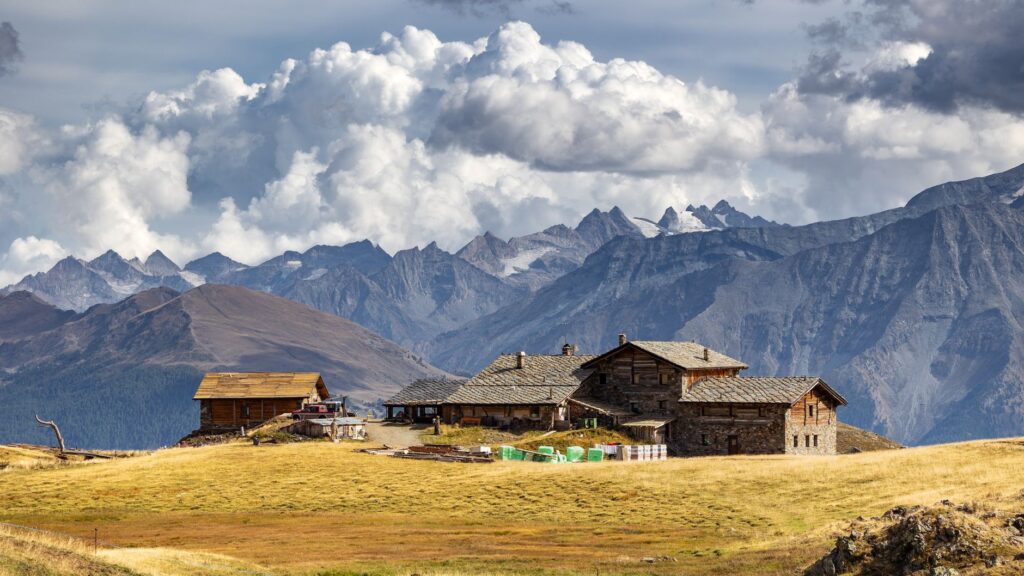
Throughout the entire route, the network of refuges managed by the Corsican Regional Natural Park (PNRF) forms the logistical backbone for walkers. These stone and wooden shelters offer basic yet functional infrastructure, comprising bunks in shared dormitories, blankets, potable water sources nearby—whose purification remains mandatory due to free-roaming livestock—and small cooking areas set up for use during severe weather conditions.
However, relying blindly on these refuges for food supplies is a grave strategic error. During peak months, wardens manage limited provisions delivered via mules or helicopters, making the purchase of fresh food or specific energy products extremely complex and costly. Self-sufficiency thus becomes a dogma: every hiker must carry their own cooking system, high-calorie trail rations, and a water reserve adapted to stretches where natural springs may run completely dry at the height of the Mediterranean summer.
Technical Equipment: The Dilemma of Weight Versus Safety
On the GR20, every gram carried on your back multiplies exponentially with every elevation gain surmounted. The golden rule of modern mountaineering—traveling light—takes on critical dimensions here, though safety must never be compromised. The ideal backpack for a complete autonomous traverse should weigh between 12 and 15 kilograms, including water and food for up to four days between intermediate resupply points.
Footwear demands surgical attention. Ultralight trail running shoes gain followers for their comfort and breathability, but the abrasive, razor-sharp terrain of Corsican granite destroys technical fabrics at an alarming rate and offers less protection against ankle sprains on technical descents. Mid-cut boots with high-traction soles and reinforced toe boxes remain the most sensible choice for the majority. Likewise, elements like telescopic poles with tungsten tips, an advanced first-aid kit, high-density emergency blankets, and a water purification system utilizing ultraviolet rays or chemical filtration complete the indispensable kit for surviving the mountains with competence.
The Corsican mountain does not negotiate with improvisation; it demands absolute respect for its rhythms, humility before its verticality, and physical preparation as solid as the rock supporting it.
Alpine Nutrition and Hydration on Mediterranean Ridges
Sustained physical effort in high mountains requires a radical shift in nutritional habits during the march. On the GR20, daily caloric expenditure can easily exceed 4,000 kilocalories, depending on backpack weight and accumulated elevation gain. Relying solely on commercial energy bars proves insufficient and generates taste fatigue. It is essential to combine slow-release carbohydrates with nuts, high-energy cured local charcuterie such as Corsican cold cuts, and long-aged sheep cheeses that withstand summer temperatures well.
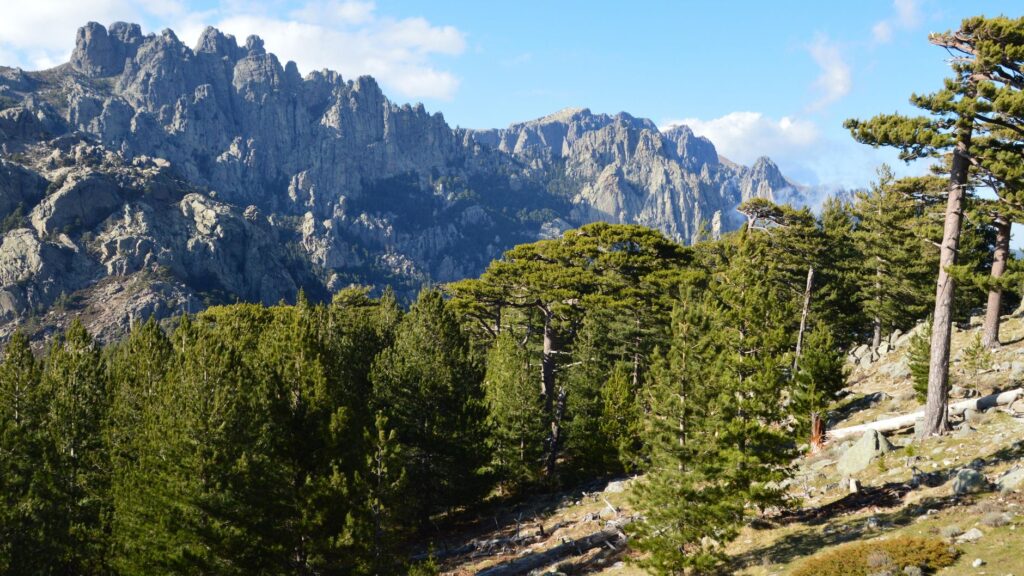
Water management is another critical pillar of trail survival. Although the northern route features numerous mountain torrents and springs, the southern sector and exposed ridges completely lack natural water resources during July and August. Carrying a minimum storage capacity of three liters of water per person, coupled with purifying tablets or hollow-fiber membrane filters, prevents severe dehydration and heat exhaustion that could force costly helicopter rescues by emergency gendarmerie services.
Environmental Ethics and the Fragility of the Corsican Ecosystem
The exponential increase in visitors received by the GR20 over recent decades has subjected its fragile alpine ecosystem to unprecedented environmental pressure. Trail erosion, the accumulation of poorly managed organic waste, and the disturbance of endemic fauna—such as the mouflon or the white-throated dipper—represent real threats to the preservation of this protected natural sanctuary.
Practicing a zero-impact ethic is not an aesthetic option, but a legal and moral obligation for any mountaineer. All solid waste, including biodegradable items like fruit peels, must be carried out in the backpack until reaching designated bins at refuges or exit valleys. Lighting fires outside authorized areas, wild camping outside marked spaces around refuges, and using conventional soaps in natural springs or torrents are strictly prohibited, as chemical detergents destroy delicate high-altitude aquatic microfauna.
Conserving the virginity of the Corsican ridges depends exclusively on the individual conscience of those who traverse them in silence and respect.
Practical guide
- How to get there: The primary access to Corsica is by air through the international airports of Ajaccio (AJA) and Bastia (BIA), or by sea via regular ferries from the French ports of Nice, Marseille, and Toulon, as well as Italian ports like Livorno and Genoa. To connect with the trailhead in Calenzana, local buses or taxis from the town of Calvi must be utilized.
- Best time to visit: The official season for refuge openings and stable conditions runs from early June to late September. July and August offer the warmest weather but concentrate the highest influx of hikers and high daytime valley temperatures. June stands out for technical snowfields and wildflowers; September offers fewer crowds but a higher risk of abrupt weather shifts.
- Permits and reservations: No special access permit is required to hike the trail, but overnight stays in PNRF refuges and the use of designated camping zones must be booked well in advance through the official park website to guarantee space and infrastructure sustainability.
- Transport and return logistics: Upon finishing the traverse in the village of Conca, road transport must be coordinated to reach the port of Porto-Vecchio or the city of Figari to connect with island transport networks returning toward Ajaccio or Bastia. Excess travel gear can be transported between accommodations via local mountain logistics companies.
- Safety and emergencies: Comprehensive travel and mountain insurance explicitly covering high-mountain rescue and helicopter evacuation costs is indispensable. The European emergency number is 112, and the PNRF publishes a daily updated bulletin regarding the operational status of refuges, water sources, and local weather alerts.
The Final Echo of Granite Beneath the Sunset Light
As the sun slowly descends over the horizon of the Tyrrhenian Sea, painting the vertical granite walls with deep amber and melancholic hues, the GR20 reveals its most intimate and transformative dimension. In that instant of absolute silence on high-altitude cols, far from the bustle of coastal civilization, accumulated leg fatigue fades away against the unalterable grandeur of the insular landscape. Corsica gifts its summits to no one; it lends them temporarily to those who demonstrate the patience, rigor, and humility required to walk upon its stone spine.