
Introduction to the Flooded Labyrinth of the Pantanal
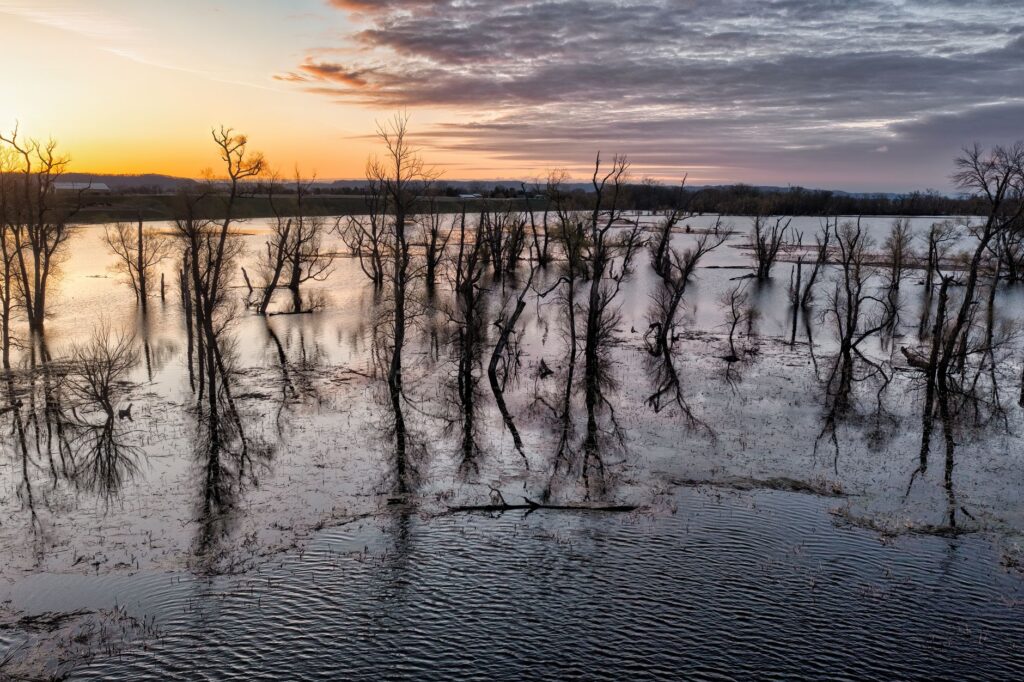
The Pantanal extends as a vast sedimentary basin in the heart of South America, spanning Brazilian, Bolivian, and Paraguayan territory. This colossal mosaic of savannas, gallery forests, and alluvial plains constitutes the largest freshwater wetland on the planet. During the rainy season, rivers overflow their natural banks, transforming the savanna into a shallow inland sea where life reorganizes in a cyclical fashion. In this extreme and dynamic environment, survival depends on the capacity to adapt to radical fluctuations in water levels, an ecological pulse governing the existence of all resident species.
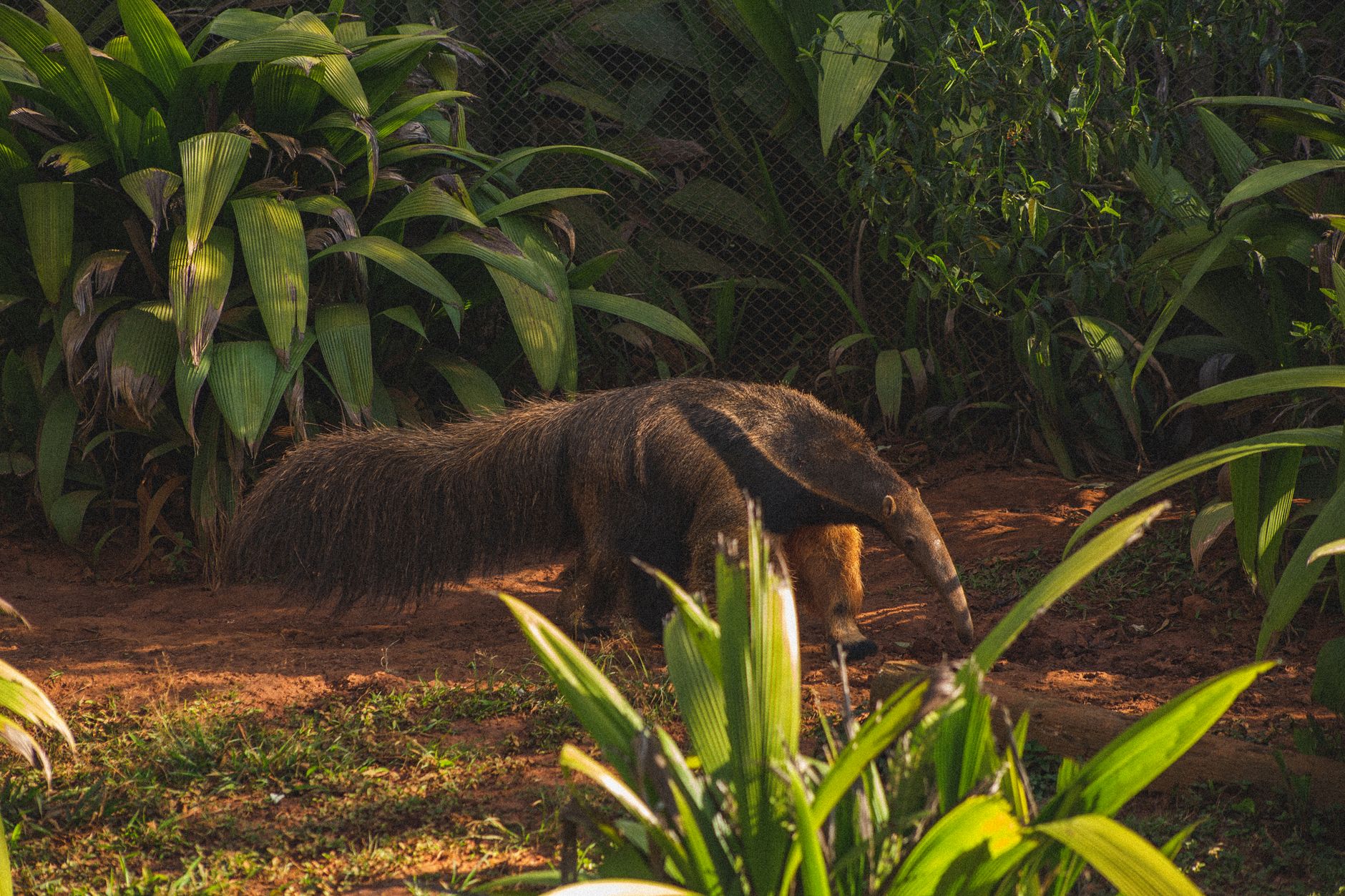
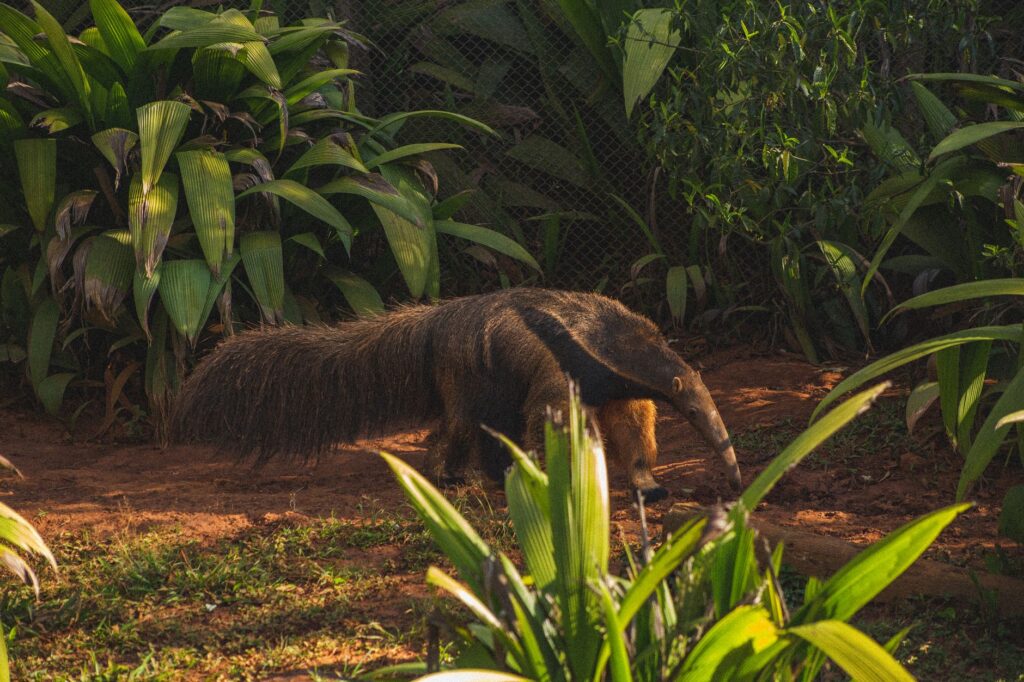
Among the terrestrial mammals populating this territory, the giant anteater (Myrmecophaga tridactyla) stands out for its extravagant morphology and extreme trophic specialization. Weighing close to forty kilograms and measuring over two meters from snout to tail tip, this enigmatic dweller walks with a measured pace on the knuckles of its forelimbs. Its presence in the Pantanal is a key indicator of environmental health, as its role as a specialized insect predator regulates termite and ant populations across the alluvial soils.
Anatomy and Evolutionary Specialization of the Solitary Giant
The bodily architecture of the giant anteater is the result of millions of years of evolution directed toward a single food source: colonial insects. Completely lacking teeth, its elongated tubular snout houses a muscular tongue coated in sticky saliva that can project and retract up to one hundred and fifty times per minute. This tongue, anchored to the sternum, inserts with surgical precision into termite galleries, extracting thousands of individuals per feeding session without completely destroying the mound structure, thereby ensuring a sustainable long-term food source.
To access these hardened mud fortresses, the animal features powerful claws on its forelegs, formidable tools used both to tear rotten wood and defend against natural predators like the jaguar. When walking, these claws fold inward, forcing the anteater to bear its weight on the dorsal side of its phalanges, a knuckle-walking gait unmistakable in open grasslands. Its coarse, dense coat, dominated by a characteristic black-and-white diagonal stripe on the flanks, acts as disruptive camouflage among tall vegetation and tropical sunlight shadows.
Seasonal Dynamics and the Challenge of Floods
The hydrological cycle of the Pantanal imposes formidable challenges on terrestrial fauna. When floodwaters submerge vast tracts of land, the giant anteater must demonstrate notable swimming prowess to move between temporarily dry islands of emergent vegetation. During peak flooding months, the availability of dry refuges drops drastically, forcing these mammals to concentrate on higher ground where competition for territory and food resources intensifies remarkably.
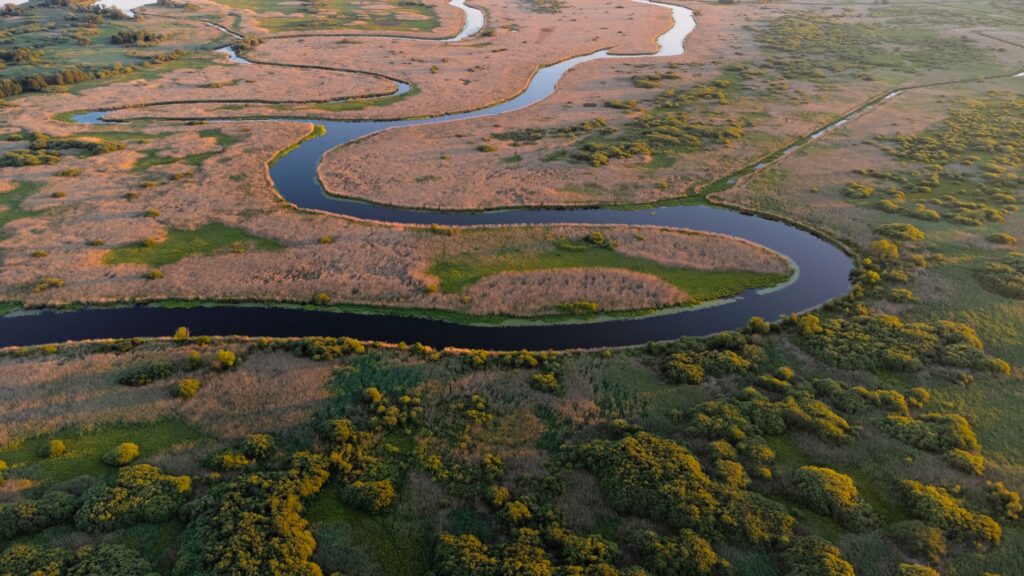
The dry season, conversely, transforms the landscape into a dusty expanse crossed by dying meandering streams. Although movement becomes easier on firm ground, extreme desiccation reduces termite activity and exposes anteaters to unprecedented risks, such as natural or anthropogenic wildfires that periodically scourge the region. In this scenario of climatic vulnerability, the animal’s mobility becomes its primary asset for finding intact habitat patches where soil moisture supports the persistence of its usual prey.
Nutritional Ecology and the Management of Insect Colonies
The diet of Myrmecophaga tridactyla is far from random; it requires an almost instinctive understanding of the toxicity and chemical defenses of different ant and termite species. Many tropical ants secrete toxins or possess powerful mandibles capable of inflicting painful stings, forcing the anteater to limit the time spent consuming a single nest. Typically, an adult visits dozens of mounds per day, ingesting small amounts of venom during each foray while avoiding the accumulation of toxic secondary metabolites in its digestive system.
This diffuse foraging behavior prevents the overexploitation of local resources and allows insect colonies to recover rapidly. At the ecosystem level, this selective predation influences soil aeration and organic matter decomposition in the flooded savannas. By disturbing the soil to access subterranean nests, the anteater facilitates rainwater infiltration and the redistribution of essential nutrients required for the growth of grasses sustaining the large herbivores of the Pantanal.
Demography, Reproduction, and Maternal Care
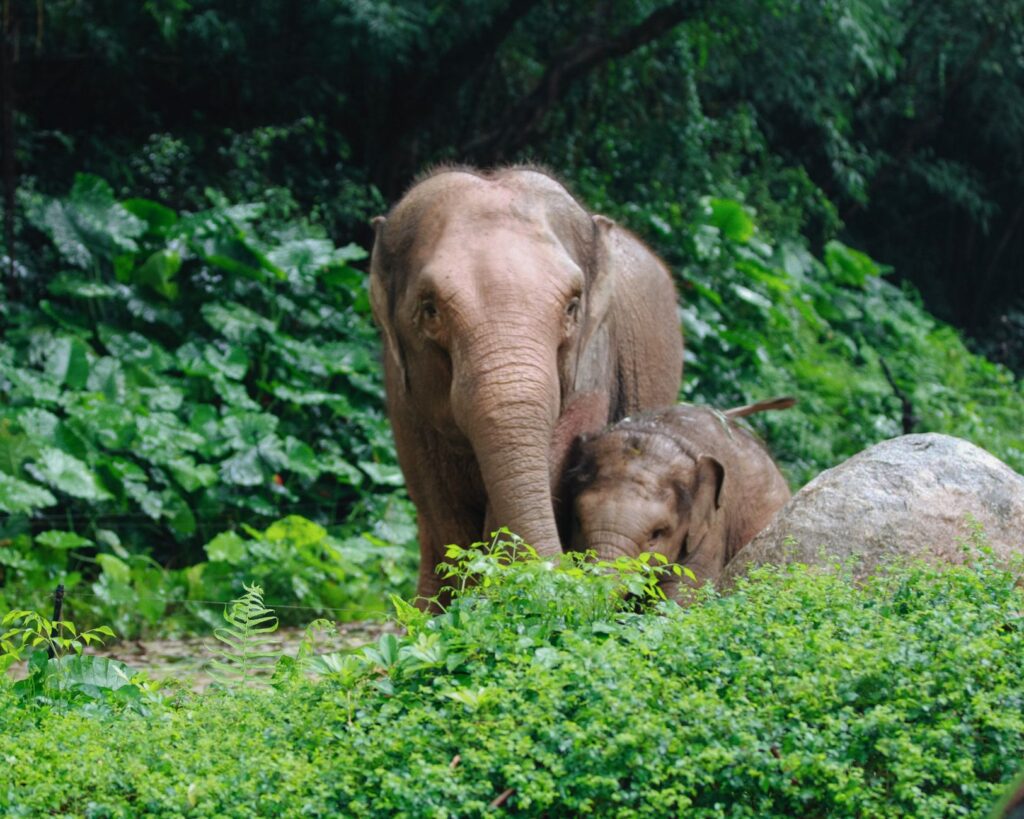
The social structure of the giant anteater is eminently solitary, with adult individuals tolerating each other only during the brief mating season. Females give birth to a single offspring after a gestation period ranging from one hundred and eighty to one hundred and ninety days. The maternal bond is one of the most fascinating aspects of their biology: newborn young climb and cling firmly to the mother’s back, where their fur aligns perfectly with the adult’s chromatic pattern, achieving near-absolute camouflage against observers and aerial predators.
During the first months of life, the infant travels permanently on the mother’s back, gradually learning to recognize food sources and environmental hazards. This continuous transport represents an enormous energetic expenditure for the female, who must double her foraging efforts to sustain both her own metabolism and that of her offspring. By one year of age, the young anteater becomes independent and begins exploring its own home range, a territory spanning several square kilometers depending on local ecosystem productivity.
Anthropogenic Threats and the Impact of Fire
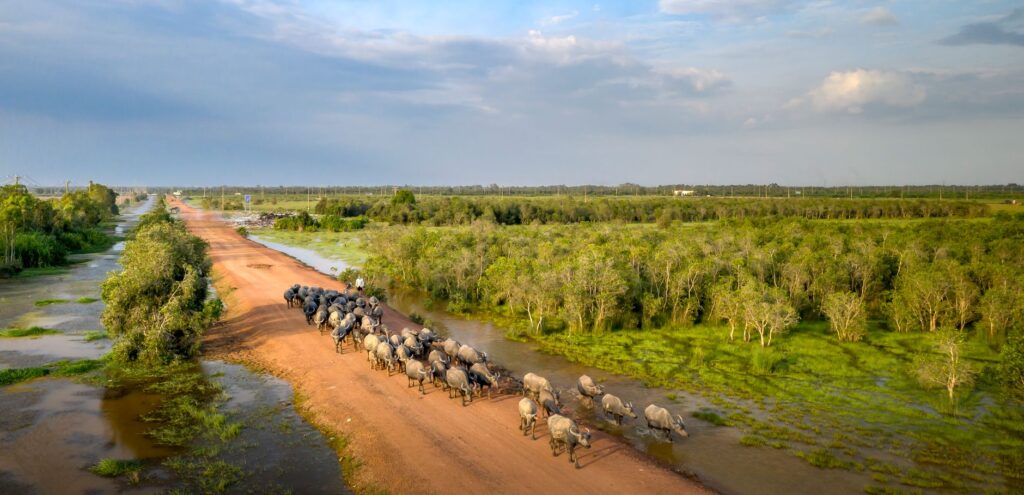
Despite its broad historical distribution across the South American continent, populations of Myrmecophaga tridactyla are in steady decline due to multiple anthropogenic pressures. Habitat fragmentation caused by agricultural expansion, conversion of savannas into cattle pastures, and road infrastructure divides natural ecological corridors. Roads crossing the Pantanal are frequent sites of vehicle collisions, given that the animal’s slow movement and lack of defensive response against modern vehicles make it a frequent victim of road traffic.
Intentional wildfires, fueled by prolonged periods of extreme drought driven by climate change, represent a catastrophic threat. Cornered by flames, the anteater’s natural response involves fleeing at a light trot or curling up among vegetation—ineffective tactics against high-intensity fires advancing rapidly under wind drive. Uncontrolled burns destroy not only individuals but also the topsoil layer where their prey concentrates, leaving vast tracts ecologically sterile for years.
Conservation Initiatives and Citizen Science in the Wetland
Facing this adverse outlook, various scientific and conservation organizations have intensified efforts in the Pantanal to protect the giant anteater. Telemetry programs using GPS collars allow researchers to track movement patterns of rescued and reintroduced individuals, evaluating the viability of biological corridors between protected areas. This research yields crucial data on how animals adapt to human-modified landscapes and which zones require urgent ecological restoration measures.
Likewise, wildlife rescue centers play a fundamental role in rehabilitating orphans whose mothers perished in fires or road accidents. These centers combine specialized veterinary care with strict protocols for rehabilitation and gradual habituation to the wild, ensuring recovered individuals regain the skills necessary to survive independently. Environmental education targeting local communities and tour operators fosters peaceful coexistence, transforming the anteater into a symbol of regional pride and a flagship for preserving South American biodiversity.
Protecting the giant anteater in its flooded labyrinth demands understanding that conserving a single cryptic species equals safeguarding the complex ecological pulses of an entire continent.
Practical guide
How to get there: The main entry point to the Brazilian Pantanal is through the cities of Cuiabá, in Mato Grosso state, or Campo Grande, in Mato Grosso do Sul. From both hubs, travelers can connect to strategic towns like Poconé or Corumbá via paved highways.
Best time to visit: The dry season, spanning from July to October, offers the best wildlife viewing opportunities, as animals concentrate around remaining water bodies and dirt roads become much more passable.
Recommended accommodations: Ecotourism in the Pantanal relies on traditional cattle ranches converted into eco-lodges, such as Caiman Ecological Refuge in Mato Grosso do Sul or Araras Pantanal Lodge in Mato Grosso, which integrate hospitality with scientific research.
Travel requirements: A valid passport is required, alongside a tourist visa to Brazil depending on nationality. Up-to-date vaccination records, including yellow fever immunization, are essential, as is travel insurance covering nature-based activities.
Essential gear: Lightweight long-sleeved clothing in neutral tones to prevent insect bites, waterproof footwear or trekking boots, high-power binoculars, telephoto cameras, and plenty of sunscreen and biodegradable insect repellent.
The Final Pulse of the Flooded Savanna
As evening falls, when the sun sinks into the Pantanal horizon painting the water in copper and violet tones, the silhouette of the giant anteater emerges with ancestral dignity among the golden grasslands. This solitary wanderer, oblivious to the frenzy of the modern world, continues its silent labor of digging the earth, reminding those privileged to observe it that the true wealth of the land lies in its fragile, invisible balances. Its steady stride across the flooded plain is tangible proof of a millenial resilience still fighting to find its place in a changing future.