
In the shadow of cathedral towers painted an unrepeatable amber by centuries of weather, Salamanca has decided to stop waiting for travelers to cross its walls by mere inertia. The city along the Tormes River has launched an unprecedented diplomatic offensive across the European landscape, structured around a hundred strategic meetings with tour operators, airlines, and specialized agencies. This is not a matter of massive poster campaigns or traditional seasonal brochures, but rather a surgical exercise in positioning within the offices of Paris, Brussels, and Frankfurt. The objective is clear: to seduce a profile of visitor that seeks deep cultural immersion, off-season stays, and absolute respect for historical heritage.
This movement responds to a profound mutation in continental tourism flows. The contemporary traveler no longer consumes drive-by destinations; they demand experiences with substance, local roots, and seamless connections. To meet this challenge, Salamanca’s tourism managers have chosen to land in European decision-making centers with a proposal that intertwines the power of its University—the cradle of European humanism—with a gastronomic and MICE offering that aspires to compete in the major continental leagues. The challenge is significant: maintaining the balance between the economic vitality brought by the sector and the preservation of a historic core declared a World Heritage Site, where living, porous stone experiences the daily pulse of thousands of students and residents.
The European Board: Beyond the Weekend Getaway
The strategic map of this commercial offensive is drawn in the major transport and cultural capitals. Salamanca now competes in an ecosystem where mid-sized cities must justify their differential value against sprawling metropolises. The sixty meetings held with European tourism intermediaries reveal a paradigm shift: quality is prioritized over volume, and the goal is to lengthen average stays. Data gathered by municipal delegations shows a growing interest from Central European markets toward inland idiomatic and heritage tourism, a niche where the Charrue capital holds a historic competitive advantage.
Professional meetings held during this tour have put on the table the need to optimize land and air connections. Salamanca, located just over an hour from Madrid by high-speed rail, exploits this logistical advantage to integrate into broader Iberian travel circuits. However, the current commercial effort seeks to decouple the Salamanca brand from the mere day trip from the Spanish capital. The strategy aims to convince operators that the city deserves extended overnight stays, serving as a base camp to explore the wider province and its biosphere reserves.
The Architecture of Golden Stone as a Diplomatic Asset
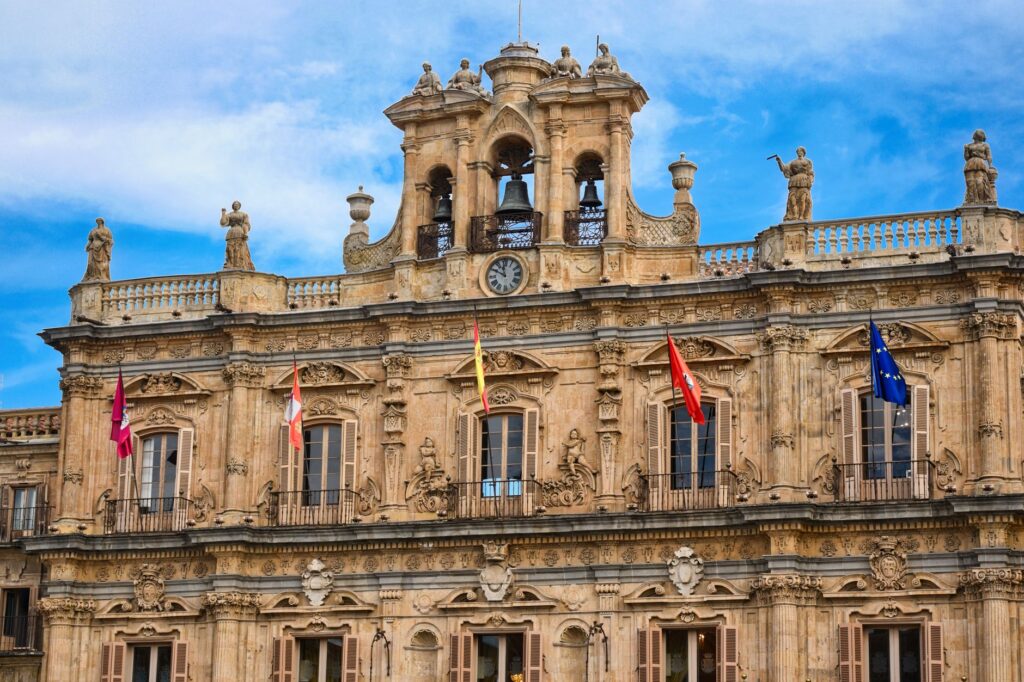
Few urban materials possess the visual eloquence of Villamayor sandstone, the golden-toned rock used to sculpt the Plaza Mayor, La Clerecía, and Renaissance palaces. In presentations before international tour operators, this stony canvas is presented not merely as static monumentality, but as a living stage. The evening light striking the university facade is the ultimate sales pitch, an image that encapsulates the promise of timeless travel. Urban planners and cultural managers emphasize that maintaining this heritage requires constant resources, largely dependent on a healthy and diversified tourism economy.
Heritage is not an immobile backdrop, but an organism that breathes through the daily use given to it by its inhabitants and respectful visitors alike.
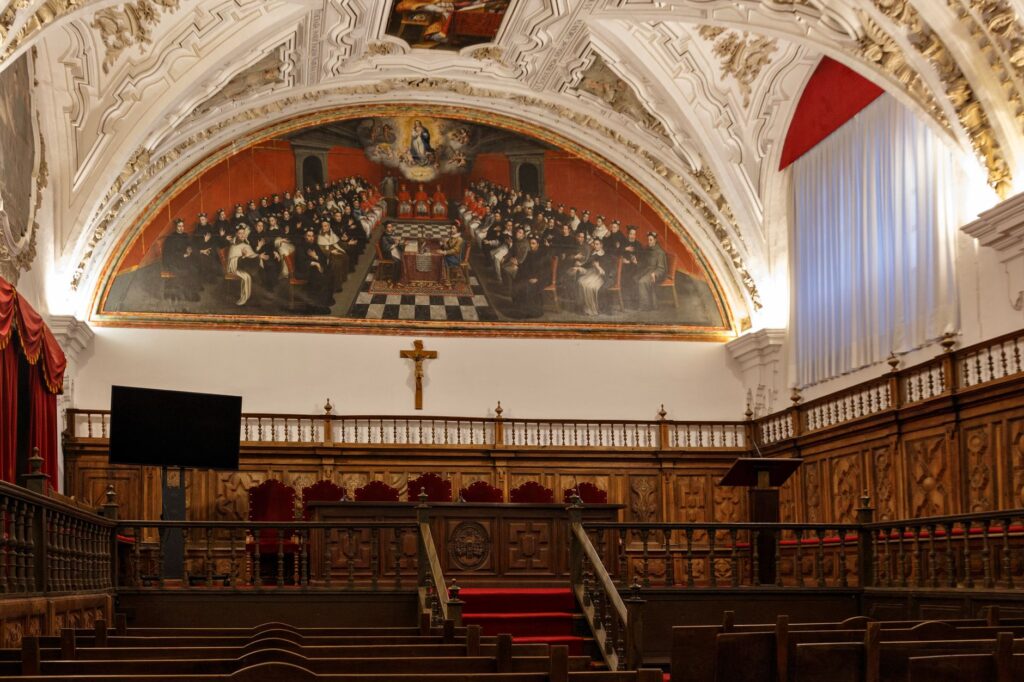
This architectural approach translates into specialized itineraries that steer visitors away from overcrowded circuits. Commercial meetings have served to design products focused on hidden heritage: crypts, lesser collegiate churches, cloistered convents opening their bakeries, and historical libraries housing unique incunabula. Salamanca’s tourism diplomacy sells cultural density. Against the grain of rapid selfie tourism, the proposition consists of offering time for contemplation in spaces where Spanish Renaissance and Plateresque dialogues with the present.
The University as a Millennial Bridge to the Continent
Founded in 1218, the University of Salamanca is much more than an academic claim; it constitutes the Iberian Peninsula’s first great cultural connector with Europe. In the offices of Brussels and Strasbourg, this legacy is claimed as a weighty argument to attract highly qualified intellectual and congress tourism. Scientific congresses, international symposia, and academic gatherings represent a lifeline against summer seasonality, guaranteeing stable hotel occupancy during the autumn and spring months.
The network of contacts woven through these commercial meetings seeks to tighten ties with European university networks and cultural foundations. Packages combining short stays with specialized Spanish courses, art history seminars, and literary gatherings are actively promoted. This synergy turns the exchange student and the researcher into informal ambassadors of the city in their home countries, consolidating a constant flow of visitors driven by intellectual curiosity and the desire to understand the roots of modern European thought.
Flavors of the Pasture: Gastronomy as an Identity Narrative
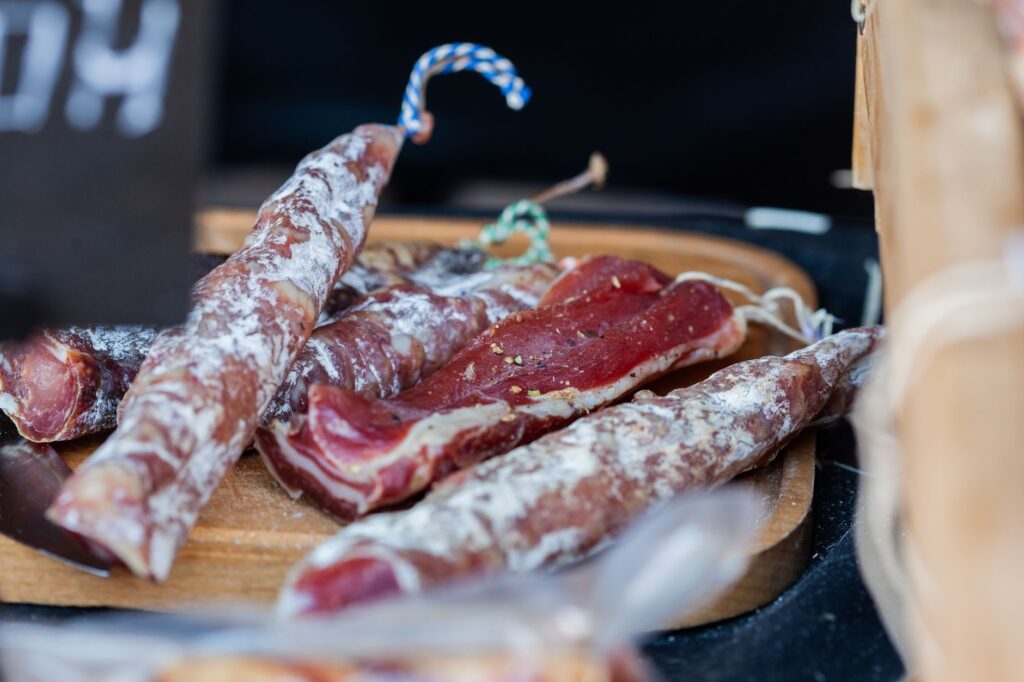
No modern tourism strategy can dispense with the culinary narrative. On their European tour, Salamanca’s representatives have carried the provincial larder as a standard of authenticity. Jabugo-style acorn-fed Iberian ham from Guijuelo, wines from the Arribes and Sierra de Francia Protected Designations of Origin, and artisanal cheeses formed part of professional tastings aimed at opinion formers and food critics. Local haute cuisine and the tradition of tapas present themselves as an ecosystem complementary to monumental heritage, where local produce is the undisputed protagonist.
This gastronomic approach shies away from tourism standardization. It places value on routes dedicated to the Iberian pig and terraced vineyards carved into the Douro canyon—agrarian landscapes preserving ancestral cultivation methods. European tour operators particularly value this direct connection between plate and territory, a rising trend among travelers practicing ecotourism and seeking sustainability in their consumption choices. Salamanca’s gastronomy thus becomes the link connecting the scholarly history of the university with the popular culture of the rural environment.
The Challenges of Coexistence and Urban Sustainability
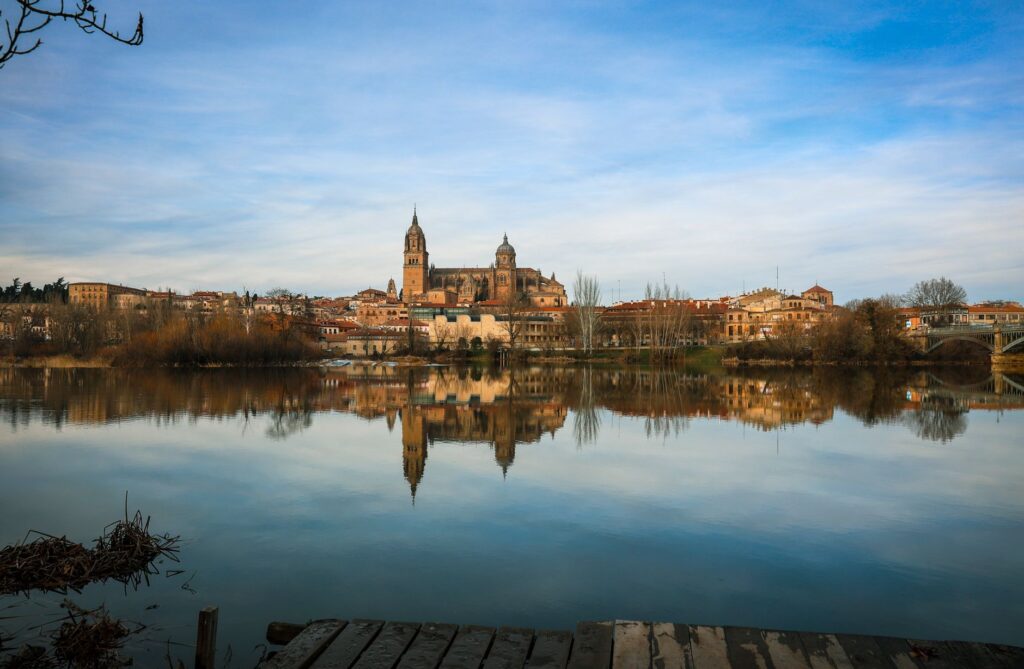
The success of a commercial offensive of this magnitude inevitably raises questions about the destination’s carrying capacity. During meetings held in Europe, municipal officials transparently addressed urban management challenges: pressure on housing markets in the historic center, the need to regulate short-term tourist rentals, and the urgency of dispersing visitor flows toward peripheral neighborhoods and the Tormes river green belt.
The true challenge of contemporary tourism is not attracting more people, but ensuring that the arrival of visitors enriches the local community rather than displacing it.
To counter overcrowding in iconic enclaves, the city council promotes alternative routes that highlight twentieth-century industrial architecture, traditional working-class neighborhoods, and natural riverside spaces. Sustainability is no longer a sectoral department, but the transversal axis underpinning any foreign promotion policy. The goal is to consolidate a model where tourism functions as an engine for heritage conservation and social cohesion, avoiding the undesirable gentrification effects suffered by other historic cities across the continent.
Practical guide
Planning a visit to Salamanca from abroad requires attention to certain logistical details to maximize cultural and heritage offerings.
- How to get there: Madrid-Barajas Airport is the main international gateway, connecting to Salamanca via high-speed rail (AVE/Alvia) taking approximately one and a half hours.
- When to go: Spring (April to June) and autumn (September to November) offer optimal temperatures and fewer crowds, alongside an active academic calendar.
- Accommodation: The historic center features options ranging from former Renaissance palaces converted into boutique hotels to traditional guesthouses and regulated apartments.
- Mobility: The city is designed to be explored entirely on foot. Vehicular access to the historic center is restricted to protect heritage.
- Essential reservations: Visiting the University (Escuelas Mayores and General Historic Library) and accessing the Towers of La Clerecía (Ieronimus and Scala Coeli) require prior booking during peak season.
- Reference gastronomy: Booking in advance at traditional taverns around the Plaza Mayor is recommended, alongside exploring local markets for certified Iberian charcuterie.
The Intimate Pulse of the City at Dusk
When the sun sets and the last rays leave the golden stone of the Plaza Mayor, Salamanca reveals its true face—the one absent from statistical manuals and tour operator folders. It is the moment when the bustle of university cafes softens and the murmur of fountain water accompanies passersby through narrow alleys where time seems suspended. In those quiet instants, the city ceases to be a commercial destination and becomes an intimate refuge, a space where the memory of Fray Luis de León, Unamuno, and anonymous generations continues to inhabit every corner. It is the definitive proof that the deepest journey is not the one covering vast distances on a map, but the one allowing travelers to tune into the serene heartbeat of a community that has successfully guarded its beauty through the centuries.
Source: Tribuna de Salamanca (https://www.tribunasalamanca.com/noticias/378418/salamanca-sale-a-buscar-nuevos-turistas-en-europa-con-60-reuniones-comerciales)