
The metallic roar of wheels rolling over steel tracks has largely faded from daily life across most of Colombia, but along the route descending from the Western Andes to the Pacific coast, it persists as a monumental reminder of industrial ambition. The railway line connecting the Cauca Valley with the country’s primary maritime port is not merely a communication route; it is an exercise in survival against one of the most hostile and humid topographies on the planet. Here, nineteenth- and early twentieth-century civil engineering had to negotiate jungle-covered abysses, roaring rivers, and a rainfall regime that tests the durability of any infrastructure. Throughout this report, we examine how this steel artery shaped regional economics and how it survives in the collective memory and contemporary logistics of Latin America.
To grasp the scale of this undertaking, one must delve into its origins, conceived during an era when connecting coffee-producing hubs with the global ocean was an urgent imperative for national viability. Orographic difficulties manifested immediately from the earliest topographical surveys. Crossing the Western Cordillera demanded bold technical solutions, ranging from the manual excavation of tunnels through solid rock to the erection of prefabricated metal bridges that had to be hauled on muleback from the coast down into the depths of the Dagua River canyon. Every wooden sleeper and every imported European rail represented a pyrrhic victory against the voracious advance of tropical vegetation and endemic fevers that decimated entire labor crews.
Conquering the Abyss: Alignment and Geotechnology in the Dagua Canyon
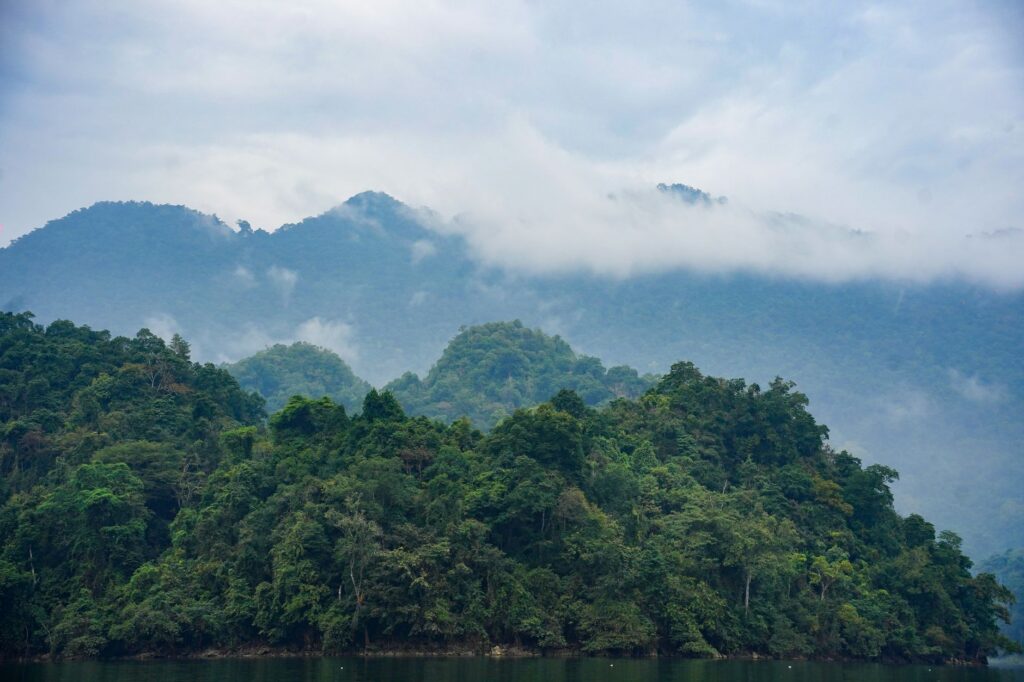
The most complex segment of the entire network is concentrated in the Dagua River canyon, a deep gorge where relative humidity frequently exceeds ninety percent and annual precipitation is measured in colossal millimeters. In this stretch, British and Colombian engineers had to design a system of continuous gradients that avoided excessive use of rack railways, relying instead on pure adhesion and meticulous calculation of curve radii. Clayey slopes, highly prone to massive landslides during the rainy season, required the construction of dry-stone and masonry retaining walls that still withstand the relentless onslaught of hydrological erosion today.

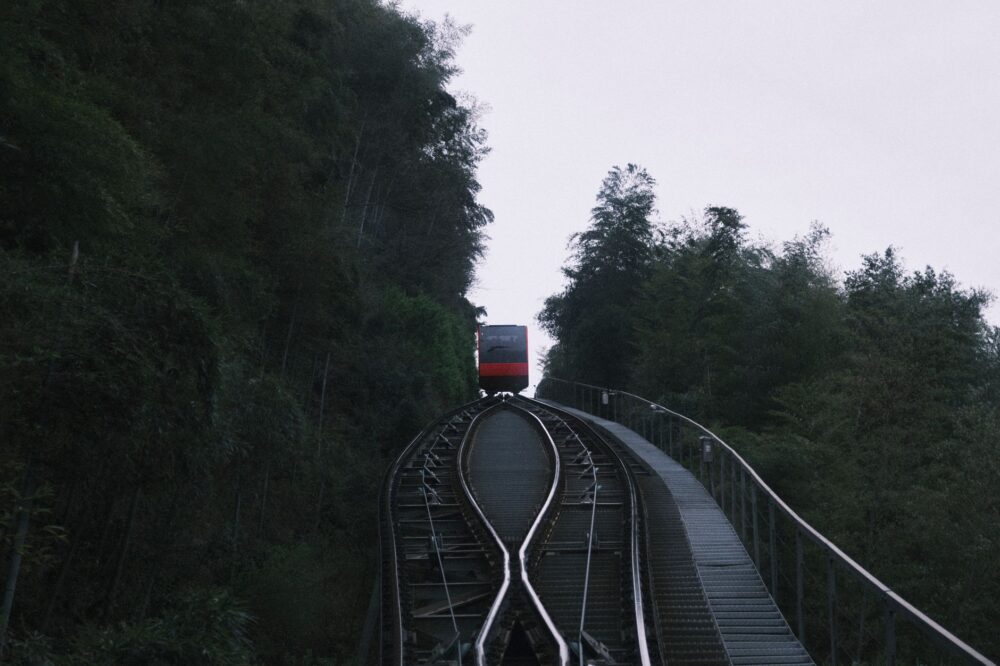
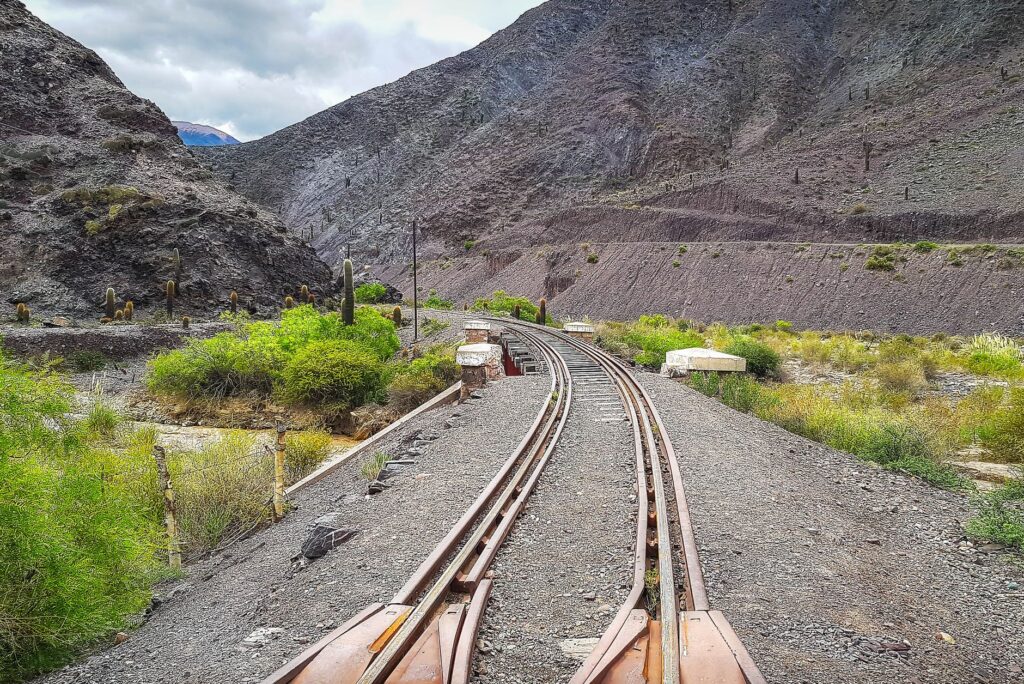
The railway alignment does not follow a straight line; rather, it meanders, adapting to the capricious shapes of contour lines. This generated an almost endless succession of short viaducts and tunnels that turned the journey into an experience both claustrophobic and fascinating. The basaltic rock cut by hand reveals the marks of drill bits and dynamite used over a century ago, a silent testament to the harshness of the labor shifts. In this environment, track maintenance has historically been an unceasing battle against nature, with maintenance brigades constantly fighting falling boulders and invading roots that undermine the ballast.
Port Logistics and the Strategic Role of Buenaventura
Beyond its heritage value, the Pacific railway corridor has always held a premier economic mission: guaranteeing the smooth flow of goods to and from Buenaventura, the port through which a vast share of Colombia’s foreign trade with the Pacific basin flows. During its golden decades, freight trains carried coffee, sugar, and manufactured goods toward the docks, returning inland with machinery, coal, and consumer goods. The efficiency of this logistical chain relied on the ability to transfer cargo directly between deep-draft vessels and steam or diesel locomotives.
However, competition with motor vehicle transport and the complex concession dynamics applied to national railways in the late twentieth century triggered a severe operational decline. The tracks suffered prolonged periods of abandonment, rail looting, and structural decay that drastically reduced operating speeds and freight tonnage. Today, the reactivation of this infrastructure is debated between the modernizing necessity of integrating multimodal corridors and the massive financial costs required to adapt a historical layout to twenty-first-century heavy-freight standards.
The iron piercing the mountain range is not merely the skeleton of an export economy; it is the living scar of a nation that attempted to conquer its own geography through rail and sweat.
Industrial Architecture and Ghost Stations Along the Route
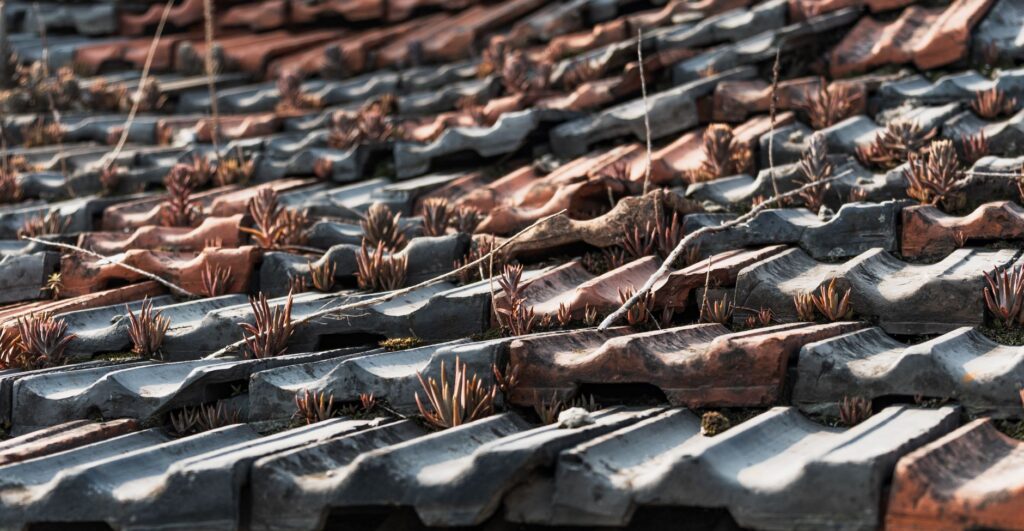
Exploring what remains of the active and dismantled railway infrastructure reveals an exceptional catalog of republican industrial architecture. Intermediate stations, originally built with fine timber structures, gabled clay-tile roofs, and wide eaves designed to mitigate equatorial heat and rain, now function as landmarks of local collective memory. Some have been adapted into small community centers or rural schools, while others slowly fade beneath the relentless embrace of secondary jungle.
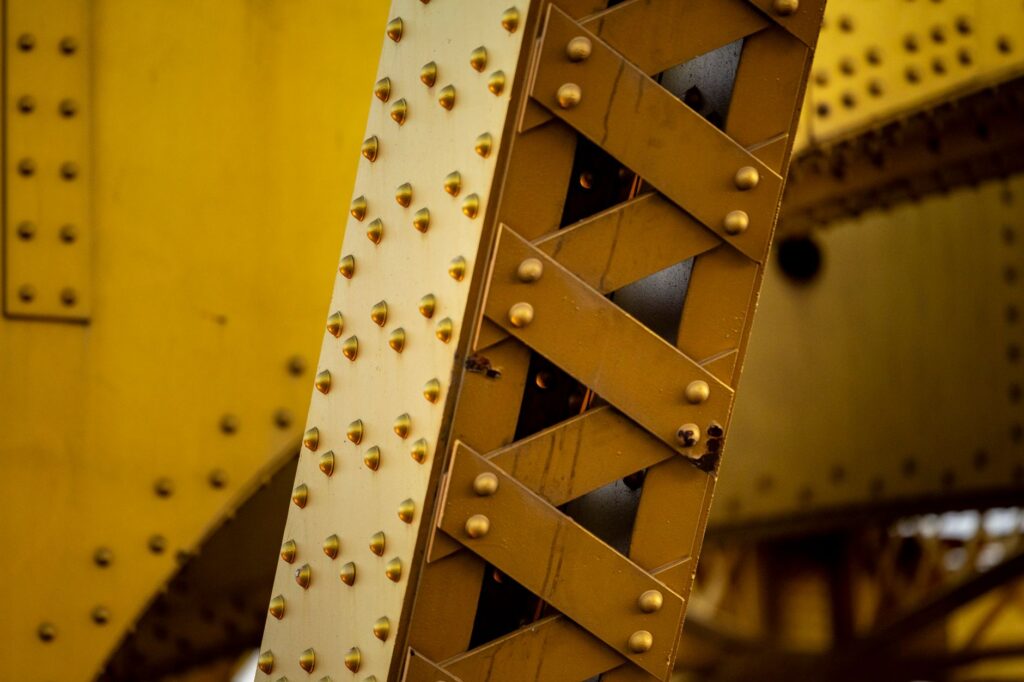
Lattice iron bridges, manufactured by British and American steelworks, deserve special mention for their structural elegance. These reticular structures, raised on imposing cyclopean concrete footings, span dizzying chasms with surprising visual lightness. A detailed examination of their rivets and joints reveals the technical rigor of an era when globalized metal prefabrication began transforming the most remote landscapes of South America, integrating peripheral local economies into global commodity markets.
The Human Factor: Communities, Machinists, and the Social Pulse of the Rail
The history of this railway is written not only with tons of freight and kilometers of steel, but with the biographies of the communities that grew alongside the tracks. Entire villages emerged around maintenance workshops, sidings, and locomotive water-supply stations. For generations of regional inhabitants, the passing train represented the sole reliable connection with the urban centers of Cali and the country’s interior, functioning as a rolling market, postal service, and improvised ambulance in areas devoid of paved roads.
Locomotive engineers and brakemen, true unsung heroes of the route, needed an intuitive and encyclopedic knowledge of every kilometer of track, anticipating nighttime landslides, flash floods, and mechanical failures amid the absolute solitude of the cordillera. Their braking skill on steep descent sections made the difference between a successful journey and a major catastrophe. Although operational staff has been drastically reduced and modern traction has replaced the legendary steam machinery, the mystique of the trade survives in the oral accounts of veterans who still remember the characteristic whistle echoing against the canyon walls.
Practical guide
How to get there: The natural starting point for exploring the historical corridor is the city of Cali, capital of the Valle del Cauca department, connected via domestic and international flights to Alfonso Bonilla Aragón International Airport. From Cali, the overland route toward Buenaventura (Route 40) runs parallel to much of the historical railway alignment, allowing for stops at key points along the Dagua canyon.
Best time to visit: The theoretically driest months correspond to the periods between July and August, as well as December and January. However, the Pacific region features a highly rainy equatorial microclimate year-round, making appropriate waterproof clothing and mountain footwear with excellent traction essential.
Safety and logistics: Much of the railway infrastructure lies within restricted operational zones or freight concession areas, meaning access to switching yards and tunnels requires special authorizations. Visitors are advised to hire local guides specialized in industrial heritage in towns such as Dagua or Loboguerrero to navigate safe and accessible sections of the track.
Accommodation and dining: Hotel offerings are concentrated primarily in Cali and the eco-tourism complexes located in the foothills of the Western Cordillera. Local cuisine highlights traditional dishes such as sancocho de gallina (chicken soup), aborrajado valluno (stuffed fried plantain), and juices made from Amazonian and Pacific fruits.
The Echo of the Whistle in the Evening Fog
When the sun dips behind the steep peaks of the Western Cordillera and thick fog begins to enwrap the iron pillars of the centuried bridges, the landscape regains a timeless dignity. The incessant bustle of heavy formations laden with coffee, or the shouts of firemen stoking coal within the engine bowels, are no longer heard. Yet the alignment remains, carved into the mountain’s skin like an indelible signature of human audacity. In every abandoned curve and every tunnel bathed in the persistent humidity of the jungle lies a chronicle of collective effort that deserves preservation not merely as industrial archaeological heritage, but as tangible proof that no geographic barrier is entirely insurmountable when the will to connect worlds turns into steel.