
Origins and Geography of an Alpine Masterpiece
High mountain ranges have always imposed their own rules on human mobility. For centuries, crossing the alpine passes between Switzerland’s Grisons canton and Italy’s Valtellina region meant contending with relentless blizzards, rockfalls, and impassable routes for more than half the year. The dawn of the Industrial Revolution in the late nineteenth century posed a radical question to the era’s engineers: was it possible to cast an iron bridge across snowy summits that would permanently and safely connect two cultures separated by geological chasms? That answer took shape in the bold alignment of the Bernina Railway, an infrastructure conceived not merely as a transport link, but as a pact of steel against winter isolation.
Built independently between 1908 and 1910 before integrating into the Rhätische Bahn network, this rail corridor defied the known limits of civil engineering. Unlike other mountain lines relying on rack systems to scale steep inclines, the designers opted for pure adhesion. Through millimeter-precise alignment and pioneering electrification for its time, the track managed to climb rocky slopes by harnessing the physics of wheel-rail friction. This approach drastically cut maintenance costs and proved that electrical technology could master the most hostile environments on the planet.

The Art of Rackless Alignment and Gradient Physics
Overcoming an elevation gain exceeding eighteen hundred meters within a few short kilometers demands exceptional geometry. The Bernina alignment eschews straight lines when confronting alpine verticality; instead, it unfolds across the terrain like a flexible ribbon winding along steep hillsides. The key to its success lies in maintaining a steady maximum gradient of 7 percent, an extraordinarily steep percentage for a train operating without the aid of a central rack. Every tight curve, every false flat, and every approach segment was calculated with mathematical precision to prevent friction failure under rain or accumulated snow.
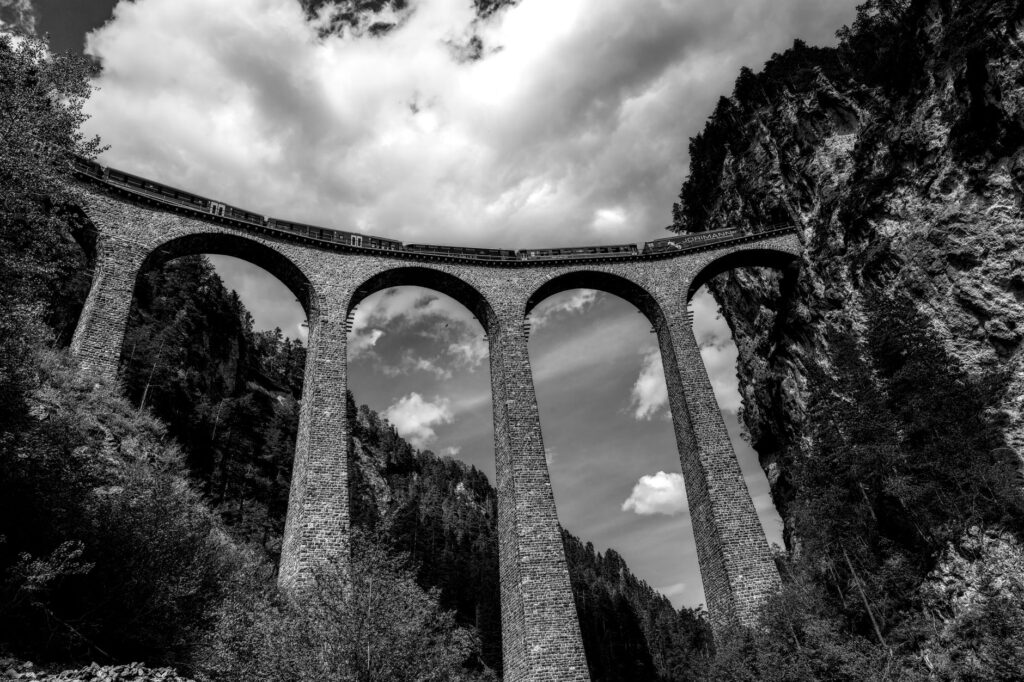
To gain altitude within constrained spaces, engineers turned to genuinely ingenious topographical solutions. The most celebrated example of this technical mastery is the Brusio helical viaduct, a circular stone structure that allows the train to gain or lose height over a very short radius by describing a complete circle upon itself. As they cross this nine-span curved bridge, the carriages pass directly over their own previous trajectory, dissipating vertical slope through a continuous inclined plane. This solution not only resolved a geographical dead end, but also became a visual icon of civil architecture harmonized with nature.
Stone and Steel Architecture Against Climatic Fury
The durability of a high-mountain railway is measured by its capacity to withstand the onslaught of weather. Winters at the Bernina pass are unrelenting, with temperatures dropping well below minus twenty degrees Celsius and snow accumulations surpassing several meters in a matter of weeks. To protect the infrastructure, kilometers of windbreak galleries and robust masonry artificial tunnels were erected in the zones most exposed to avalanches. These stone shields deflect snow and rock avalanches directly over the tracks, allowing convoys to keep rolling in total safety while the exterior remains buried beneath tons of ice.
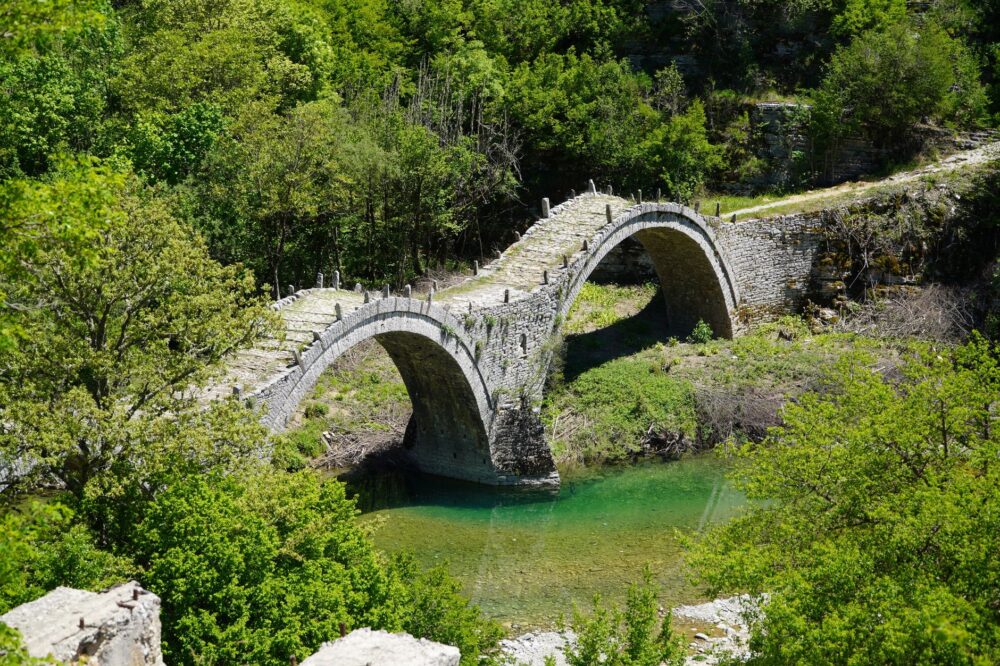
The bridges and viaducts marking the route stand as silent witnesses to early twentieth-century artisanal stonework. Built primarily from local granite quarried straight from the alpine hillsides, these arches bear not only the dynamic weight of modern trains, but also the massive thermal stresses stemming from seasonal temperature swings. Maintaining these structures demands constant effort by specialized crews who inspect every ashlar before spring thaw arrives, ensuring the integrity of the railway heritage remains unaltered after over a century of continuous service.
Winter Logistics and the Daily Combat Against the White Collapse
Keeping a railway line open at over two thousand meters of altitude during the coldest months requires a logistical deployment on par with a rescue operation. When storms lash the Bernina pass, regular passenger trains yield center stage to heavy snow-clearing machinery. The old wedge snowplows towed by powerful electric locomotives have given way to self-propelled rotary blowers capable of disintegrating compacted snow walls and casting them dozens of meters away from the trackbed.
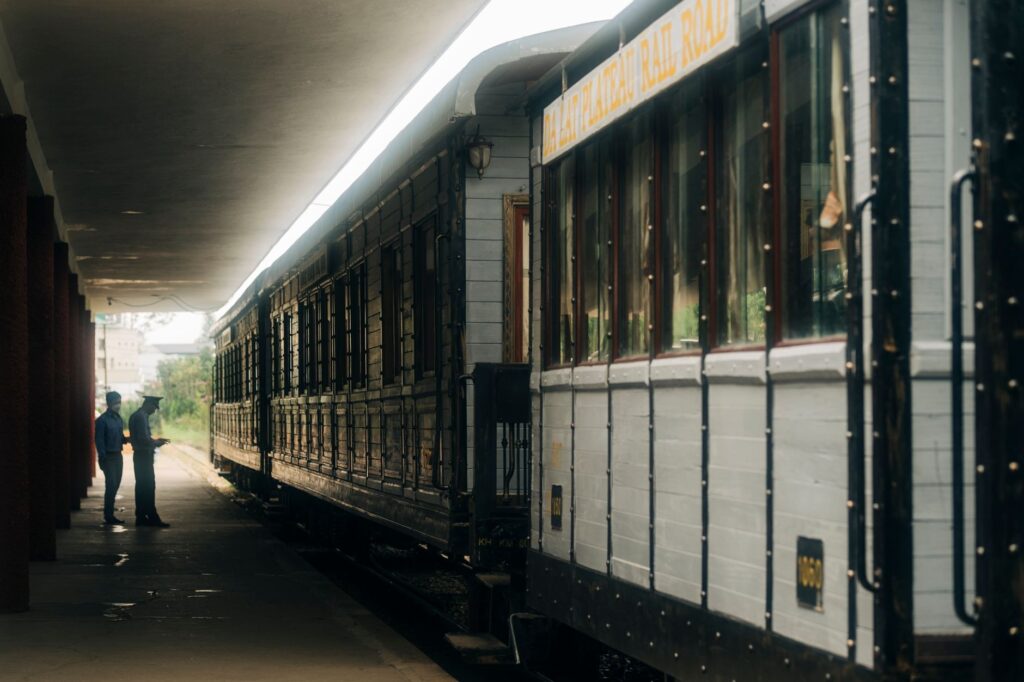
In high mountains, punctuality is never a matter of commercial timetables, but the direct result of an unrelenting maintenance discipline that defies the law of ice.
Operational coordination between valley control centers and summit track teams is absolute. Thermal sensors distributed along the route issue real-time alerts regarding ice formation on switches and critical buildup in cuttings. This continuous flow of data permits adjustments to operating frequencies and the deployment of integrated heaters within point switches, ensuring the cross-border flow of freight and passengers is not interrupted even during the most severe weather events.
Territorial Symbiosis: Connecting Linguistic and Economic Valleys
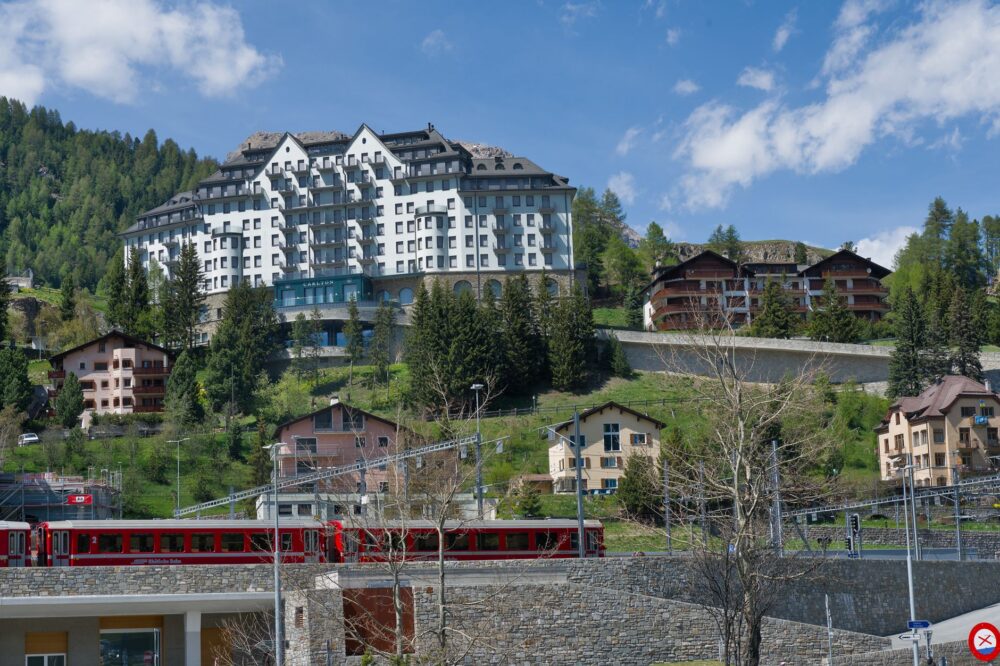
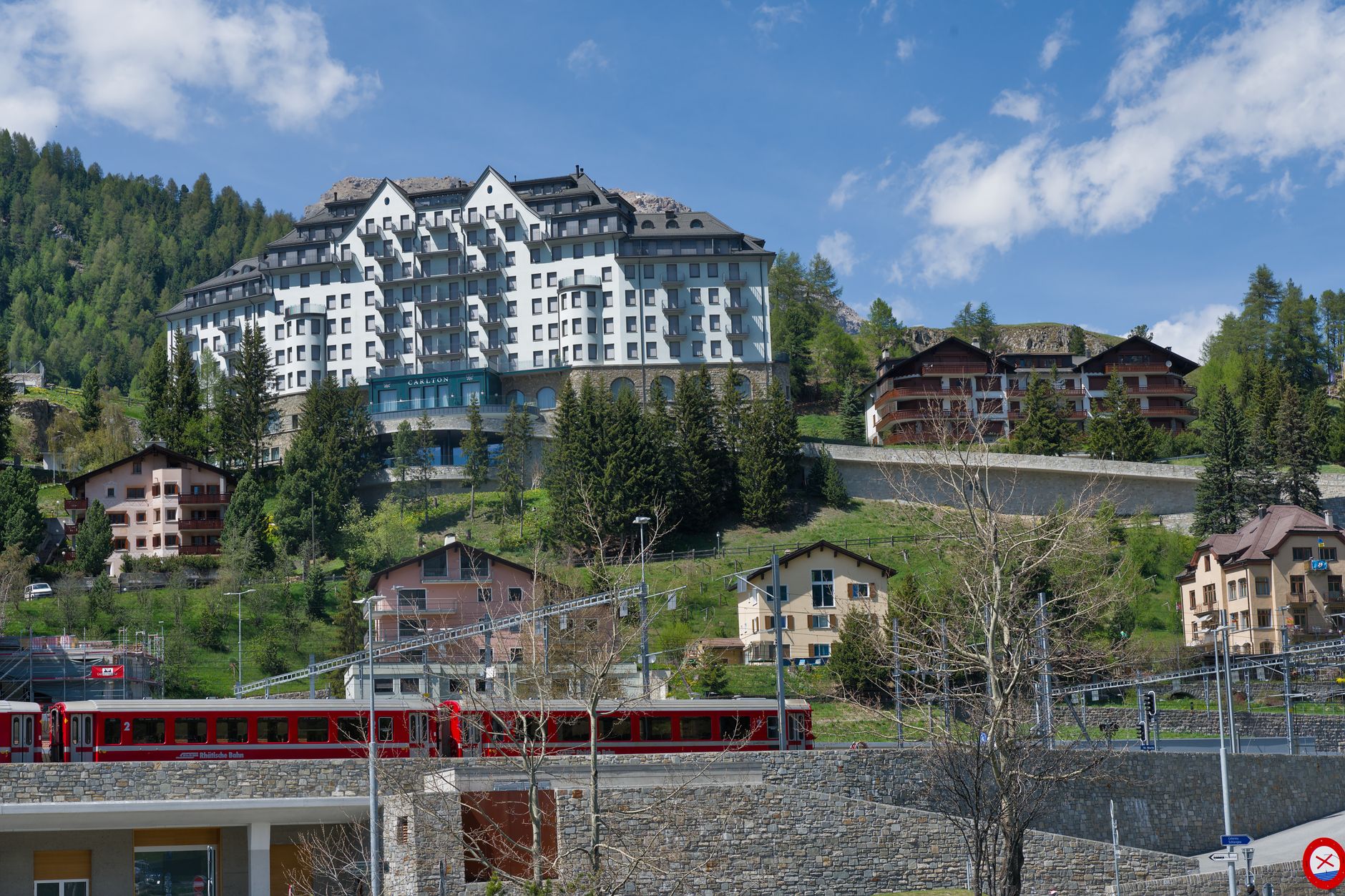
The impact of the Bernina Railway far transcends the purely technical realm of engineering; it acts as a vital connective tissue linking radically diverse human communities. Departing from the alpine resort station of St. Moritz in Switzerland’s Grisons canton, the journey traverses areas where Romansh and German predominate, gradually descending toward the Italian Valposchiavo and the town of Tirano in the province of Sondrio. Within a few kilometers, the traveler moves from Swiss alpine high society to Lombardy’s Mediterranean warmth, a cultural exchange propelled by the constancy of the rails.
From an economic perspective, the line has prevented the systemic depopulation of high-altitude valleys by integrating them into global circuits of sustainable trade and tourism. Small settlements that once relied exclusively on seasonal subsistence agriculture found in the train a rapid outlet for their dairy products, timber, and crafts toward northern European markets. Today, railway connectivity ensures local residents can access advanced healthcare and educational services without abandoning their ancestral homes, redefining habitability in extreme environments.
Energy Innovation and Sustainability on Narrow-Gauge Rails
Over recent decades, the Bernina operator has shifted its technical management toward models of maximum ecological efficiency, leveraging the terrain’s topography to optimize resource consumption. Modern trains operating on the route feature advanced regenerative braking systems. As the convoy descends from Ospizio Bernina toward the surrounding valleys, the electric motors act as dynamos, feeding clean electrical energy generated by the descent’s downward inertia back into the overhead catenary.
This recovered energy not only powers the train’s auxiliary systems but is fed back into the general grid to supply other ascending convoys. Simultaneously, the railway company draws exclusively on hydroelectric power sourced from local alpine reservoirs, achieving a carbon-neutral footprint across one of Europe’s busiest routes. This commitment establishes the corridor as a global testbed for sustainable mobility in protected mountainous zones.
Practical guide
Planning a journey along the Bernina corridor requires an understanding of the operational and seasonal dynamics of the railway infrastructure. Below are the essential logistical keys to traversing this masterpiece of alpine engineering safely and efficiently.
- Trunk Route: The complete journey stretches just over sixty kilometers between the Swiss station of St. Moritz and the Italian terminal of Tirano, crossing a total of fifty-five tunnels and nearly two hundred bridges.
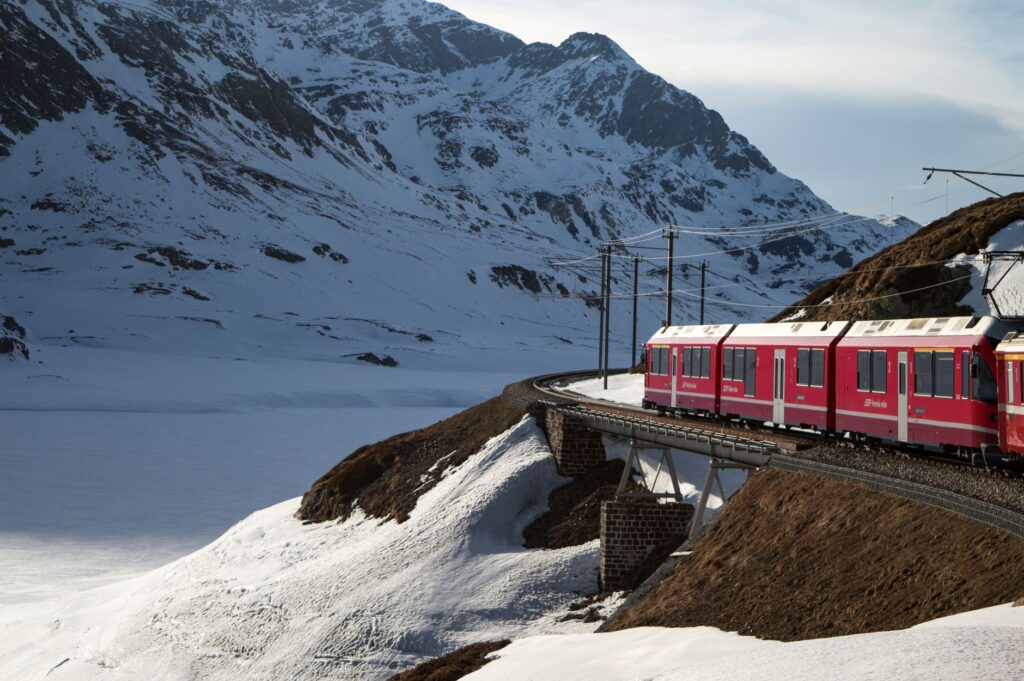
- Culminating Point: Ospizio Bernina station marks the ceiling of Europe’s adhesion railway network, situated precisely at 2,253 meters above sea level beside the partially frozen waters of Lake Bianco.
- Seat Reservations: Although regional trains run with high frequency and accept standard tickets without prior booking, the panoramic glazed carriages of the Bernina Express require a mandatory reservation fee year-round.
- Seasonal Connectivity: Service operates three hundred and sixty-five days a year. However, the most striking landscape contrasts occur between December and April, when snowy peaks visually clash with thawing alpine meadows.
- Documentation and Customs: When crossing the border between Switzerland and Italy high in the mountains, carrying a valid passport or identity card is essential, as border authorities may conduct random checks at Tirano station.
- Compatible Infrastructure: The line uses a narrow-gauge track of one thousand millimeters. No direct transshipments of standard-gauge freight exist, requiring all commercial cargo to adapt to Grisons network-specific containers.
- Photographic Tip: To capture the famous Brusio helical viaduct free of tourist crowds, taking the morning regional rail services that make brief intermediate stops along the Italian section is strongly advised.
Visual Epilogue: The White Silence of Ospizio Bernina
When the final ray of sunlight retreats from the summits and the afternoon wind begins to whistle through the high-voltage cables of the mountain pass, the high mountains reclaim their primordial status as unyielding territory. At the highest station along the route, where the white vapor of the brakes quickly dissolves in the freezing air, time seems to stand still beneath the weight of accumulated snow. The steel tracks, clean and shining thanks to the constant passage of machinery, gleam faintly under moonlight reflected across the icy surface of Lake Bianco. There are no shouts or crowds; only the distant murmur of an untamable nature that has learned to live alongside human ingenuity. In this borderland where Switzerland and Italy melt into an embrace of stone and ice, the railway quietly fulfills its promise: keeping humanity connected, carriage by carriage, across the world’s chasms.