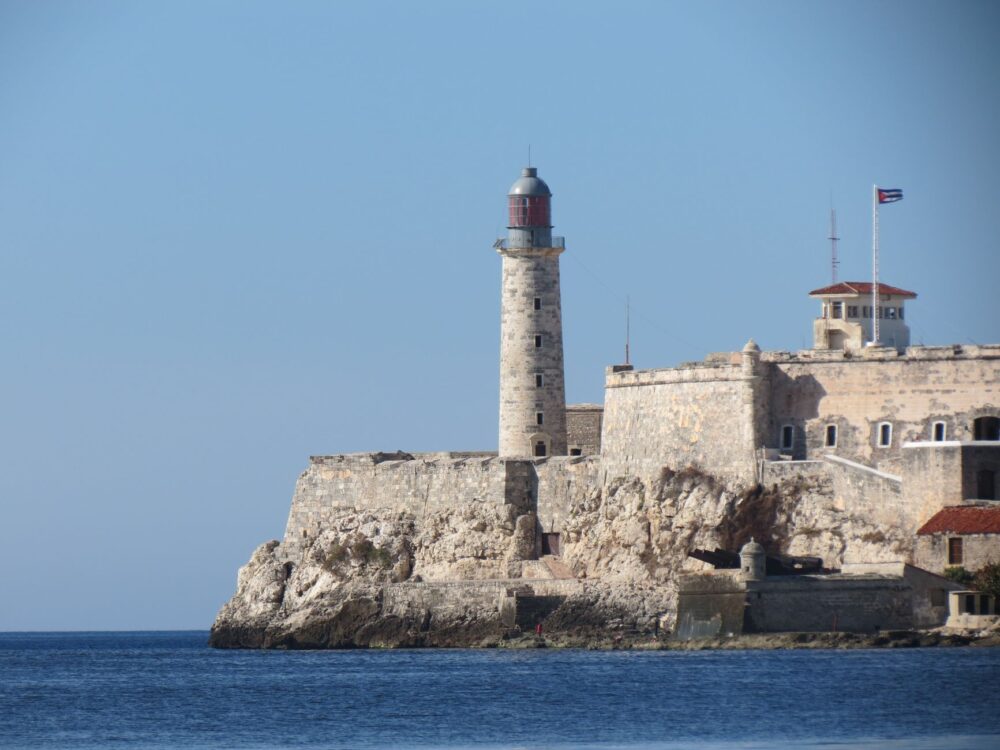
The Water Gate Between Two Worlds of Rock and Salt
The Strait of Messina is not a mere maritime expanse; it is a geographic and cultural fault line where the Ionian and Tyrrhenian seas collide in a turbulent ballet of capricious currents and unpredictable winds. Since classical antiquity, this liquid slash, barely three kilometers wide at its narrowest point, has fascinated and terrified navigators, poets, and engineers alike. Today, this liquid throat represents one of the most unique and complex intermodal transport nodes in Europe, where the territorial continuity of an entire island depends on a millimetric choreography of ships, loaded railway cars, and constant flows of passengers.
Crossing from the mainland to Sicily is not a matter of simply boarding a vehicle; it involves submitting to a logistical ritual where long-distance trains are disassembled into individual carriages to be swallowed by the bellies of ferries. This operation, which defies the logic of contemporary high-speed rail, survives as a living testament to an engineering of patience and adaptation. Throughout this report, we will examine the inner workings of this mobility system, its daily tensions, the history of its infrastructure, and the human pulse of a community that lives with its gaze perpetually fixed on the opposite shore.
The Geography of Chaos: Myths and Currents of the Channel
The waters of the strait are governed by unique oceanographic phenomena that condition every movement of the surface fleet. The interaction between the tides of the two adjacent seas generates high-intensity currents, historically known in mythology as Scylla and Charybdis. For the captains of the ferries operating twenty-four hours a day, these invisible forces demand constant expertise. Docking maneuvers in the ports of Villa San Giovanni and Messina leave no margin for error, especially when siroco or tramontana winds blow fiercely from the surrounding mountain canyons.

This hostile environment has forged a very specific maritime culture. Port workers, harbor pilots, and crews share an unwritten code based on the intuitive reading of the water. Unlike other European shipping routes where satellite technology has displaced the human factor, in Messina the expert eye of the sailor remains the last line of defense against the unpredictability of the strait. Every crossing is a reminder that nature retains ultimate control over the waterline of the Sicilian economy.
The Strait of Messina is a liquid frontier where European modernity clashes against the persistence of geological and marine rhythms.
The Dance of the Ferries: The Floating Bridge of Modernity
The backbone of mobility in the strait is composed of a mixed fleet of ferries operated primarily by the state-owned company RFI (Rete Ferroviaria Italiana) and private operators such as Caronte & Tourist. These vessels not only transport private cars, freight trucks, and foot passengers, but also possess the unique capability of embarking entire trains. The maneuver in which a railway formation arriving from Rome or Milan is fractioned and introduced into the ship’s hold is a mechanical spectacle that draws the curiosity of engineers and travelers alike.
The process requires millimetric synchronization between the hydraulic ramps on the pier and the rails welded to the vessel’s deck. Once inside, the carriages are locked using high-resistance mechanical systems to prevent any displacement during the crossing, which takes approximately thirty minutes. This logistical model, while efficient for maintaining rail connection without mandatory passenger transfers, suffers from an inherent structural vulnerability: any severe weather incident paralyzes the system, de facto isolating the island from the trans-European transport network.

The Invisible Terminal: Villa San Giovanni as a Logistical Funnel
On the Calabrian shore, the small town of Villa San Giovanni has transformed into a giant logistical funnel. All road and rail traffic descending the Italian peninsula toward Sicily converges at this narrow point. Highways flow directly into the waiting plazas of the ports, generating multi-kilometer queues during peak summer periods or long weekends that test the patience of drivers and the management capacity of local authorities.
The integration between the road network and the loading docks presents notable urban challenges. The constant flow of heavy vehicles passes through densely populated urban areas, generating environmental and acoustic tensions with residents. Port authorities have attempted to mitigate these impacts through digital ticket reservation systems and dynamic lanes, but the physical saturation of terrestrial space on the Calabrian coast remains a chronic bottleneck for the island’s economy.
The Rail Pulse: Carriages Floating on the Sea
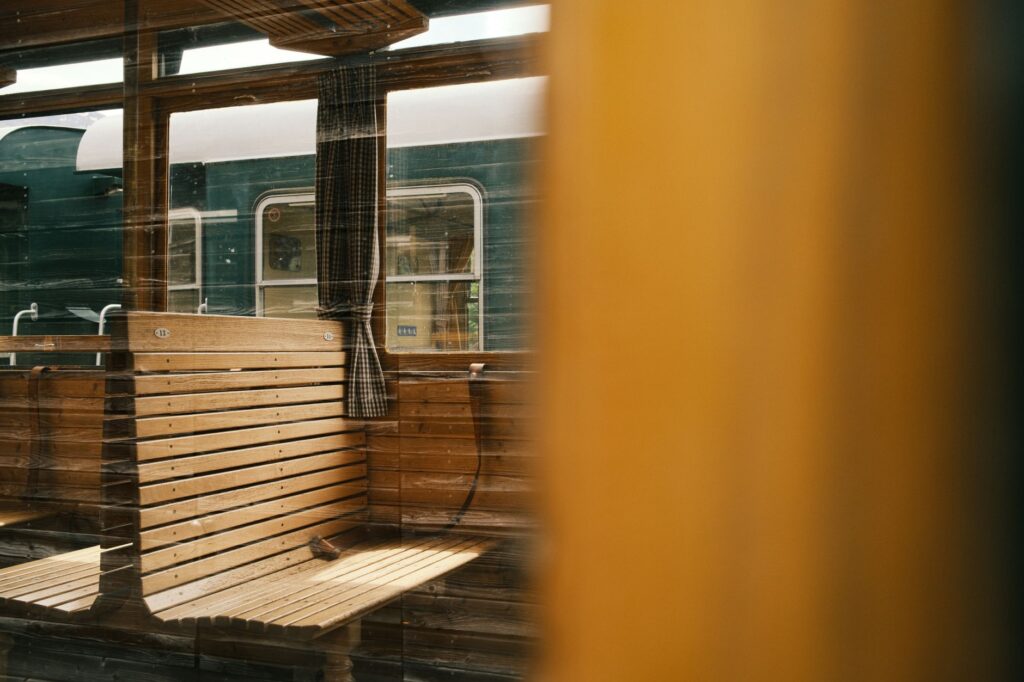
The experience of traveling by train across the Strait of Messina constitutes one of the most fascinating relics of European transport. When the convoy reaches the maritime station of Villa San Giovanni, the locomotives are uncoupled and passengers watch as the entire train disappears into the ferry’s interior. During the crossing, travelers can descend to the ship’s lounges or remain in their seats, contemplating as the coast of Calabria recedes while Messina’s waterfront draws itself in its characteristic sickle shape.
This system, however, stands at a historical crossroads. With the development of high-speed rail networks across the rest of Europe, the intrinsic slowness of the ferry crossing severely penalizes Sicily’s commercial and passenger competitiveness. A train journey from Palermo to Rome can exceed eleven hours, travel time that diminishes the appeal of rail transport compared to regional aviation, despite modernization efforts for night train fleets.
The Perennial Shadow: The Strait Bridge Project
For over a century, the debate over constructing a suspension bridge linking Villa San Giovanni to Messina has oscillated between pharaonic promise and technical controversy. Defended by successive governments as the definitive key to southern Italy’s economic integration and criticized by environmentalists, geologists, and economists due to its astronomical cost and seismic complexity in a highly active zone, the bridge remains a ghost of ink and paper.
Proponents argue that the infrastructure would reduce a journey currently consuming hours to mere minutes, boosting trade and reducing the carbon footprint of freight transport. Detractors, meanwhile, point to risks associated with strong channel winds, soil fragility, and landscape impact on a natural environment of high symbolic value. Meanwhile, the ferry fleet continues to carry the weight of political and technical uncertainty on its decks.
The Economics of Insularity: Costs and Logistical Dependency
For residents and businesses in Sicily, relying on an intermodal transport system based exclusively on maritime crossing translates into a structural cost surcharge known in the Italian economy as the insularity toll. The transport of raw materials, fresh agricultural products, and manufactured goods increases final pricing due to port tariffs and waiting times at terminals. This logistical friction limits the competitiveness of local enterprises in continental and European markets.
Likewise, the reliance on a limited number of maritime transport operators generates recurring debates on tariff regulation and public service quality. Guaranteeing territorial continuity is not merely a technical issue, but a constitutional right that the Italian state must administer through subsidies and service contracts balancing corporate profitability with citizen accessibility for a population of nearly five million inhabitants.
Insularity is not merely a geographic condition, but an economic and logistical toll that conditions every link in the Sicilian productive chain.
Practical guide
How to get there: The main overland access is via the A3 motorway (Salerno-Reggio Calabria) down to Villa San Giovanni for vehicles, or via the national rail network managed by Trenitalia. Reggio Calabria Airport (REG) is located a few kilometers from the loading docks.
Operators and frequencies: Ferries for passengers and vehicles operate 24 hours a day year-round, with frequencies varying between 20 and 40 minutes depending on the season. The main companies are Caronte & Tourist for road traffic and RFI for passenger trains.
Duration and tariffs: The crossing between Villa San Giovanni and Messina takes approximately 30 minutes. Passenger car tariffs range between 35 and 50 euros per single trip, while foot passengers pay reduced commuter rates.
Planning tips: It is recommended to avoid peak hours during summer weekends and use online booking systems to minimize waiting times at port terminals in Calabria and Sicily.
The Traveler’s Horizon: The Final Glance at the Channel
When the ferry finally docks in the port of Messina and the hydraulic gates open to release the halted flow of vehicles and travelers, the sense of arrival acquires an almost theatrical dimension. The city’s domes and the mountain slopes descending toward the sea welcome the visitor with a blend of Mediterranean melancholy and irrepressible energy. At this confluence point, where the roar of diesel engines merges with the eternal murmur of the waves, the journey ceases to be a simple geographic displacement and becomes a profound encounter with the complex and fascinating reality of southern Europe.