
The Persistence of Clay in the Mexican Highlands
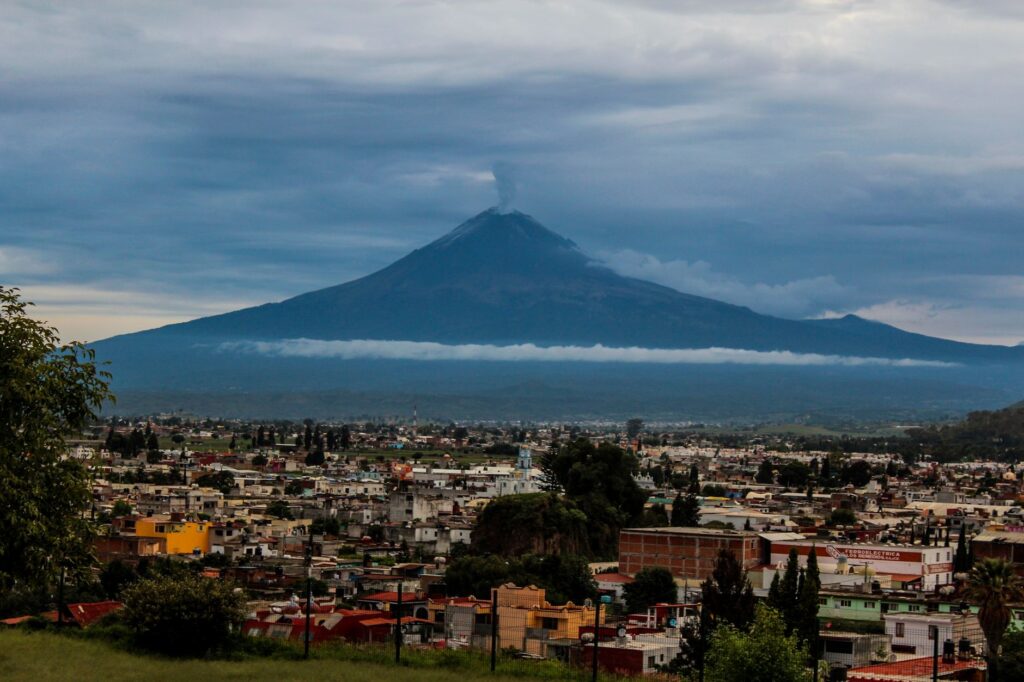
Four hours away from Mexico City, the valley of Puebla stands guarded by the Popocatépetl and Iztaccíhuatl volcanoes. In this landscape of volcanic stone and zenithal light, time seems measured in degrees Celsius and the constant rotations of traditional kilns. The city of Puebla de Zaragoza, founded in the 16th century under a Renaissance grid plan, conceals behind its tile-covered facades a secret of earth and fire that has withstood the pressures of global industrialization: authentic Talavera ceramic.
While mass production floods international markets with homogeneous imitations and industrial decals, a handful of certified workshops keeps alive a tradition recognized by UNESCO as Intangible Cultural Heritage of Humanity. Here, every piece is not a mere utilitarian object, but a hand-modeled historical document. The clay, extracted from specific regional deposits, undergoes a maturation process that can last for months before ever touching the potter’s wheel or mold.
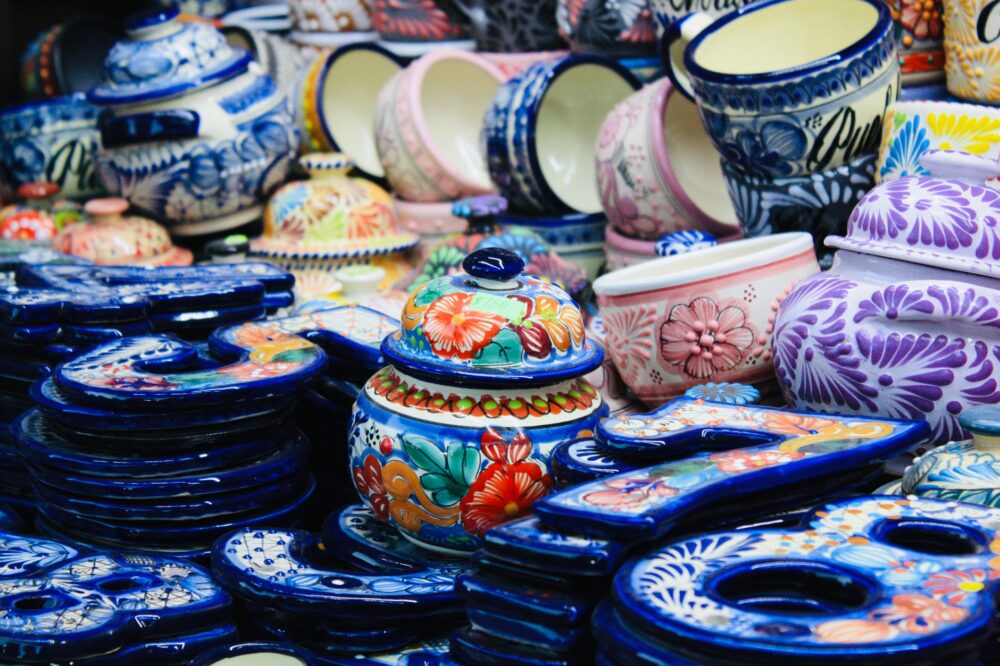
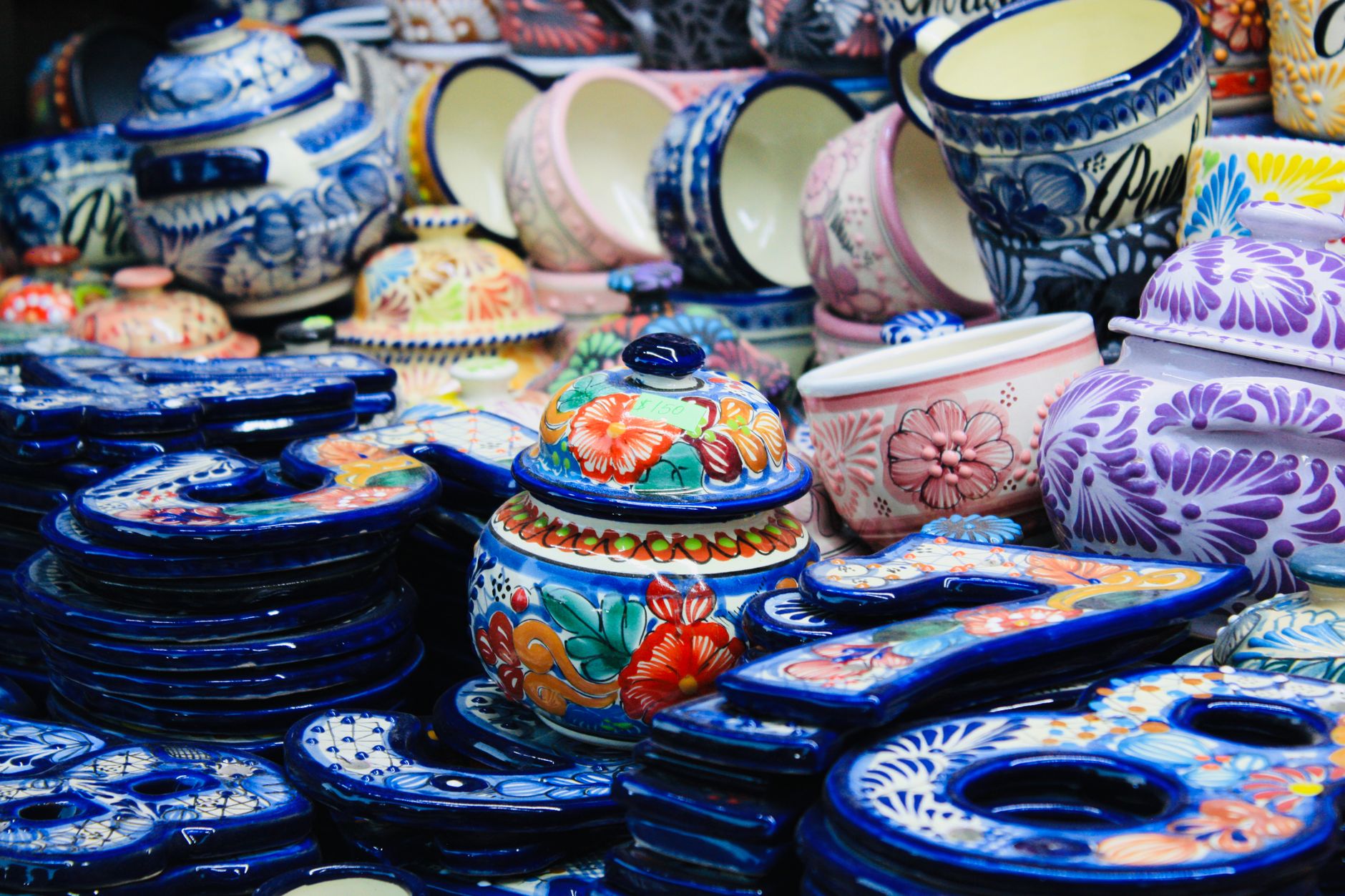
The air in the old neighborhoods smells of mineral dust, contained humidity, and the subtle smoke of chimneys burning Holm oak wood. In these spaces, craftsmanship ceases to be a picturesque trade and becomes an exercise in high scientific and artistic precision. The proportions of dark and white clays, the grinding of minerals in volcanic stone mills, and the manual application of glazes imprint an unmistakable identity onto every plate, jar, or vase.
The Alchemy of Minerals: From Oxide to Cobalt Blue
The technical heart of Puebla’s Talavera lies in its glazes and pigments, a direct legacy introduced by potters from Talavera de la Reina (Toledo) during the viceregal period, which quickly hybridized with the skill of local indigenous hands. Unlike other glazed ceramics, true Talavera requires the use of tin and lead in strict proportions to achieve that milky, opaque, and dense background that serves as a canvas for painting.
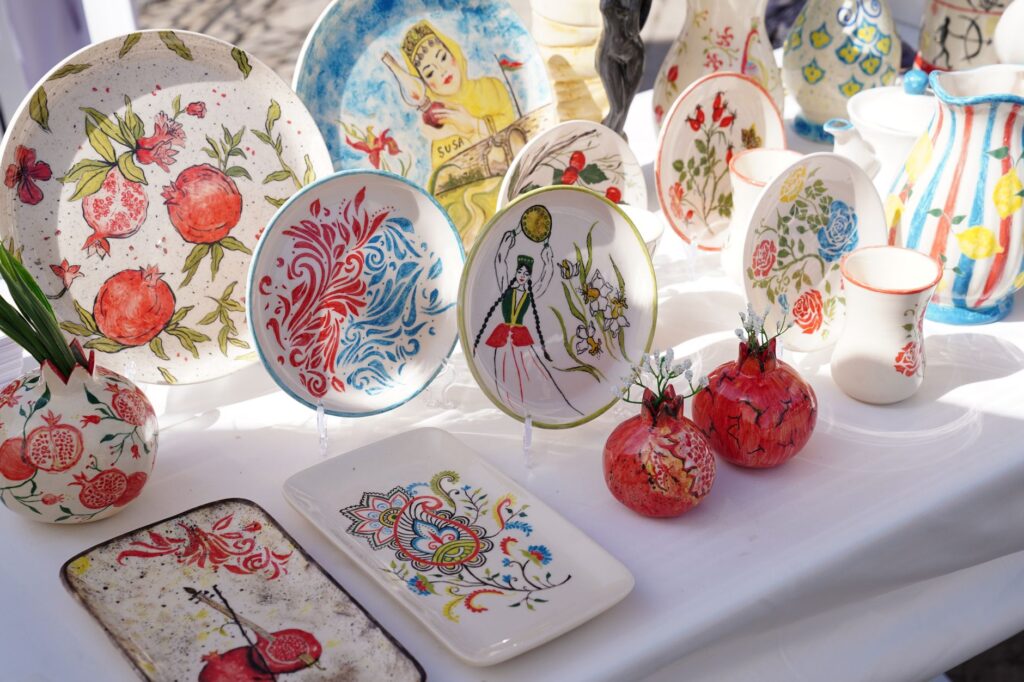
Cobalt blue is never painted in haste; it is deposited over the raw glaze knowing that any mistake will be irreversibly absorbed by the porous surface.
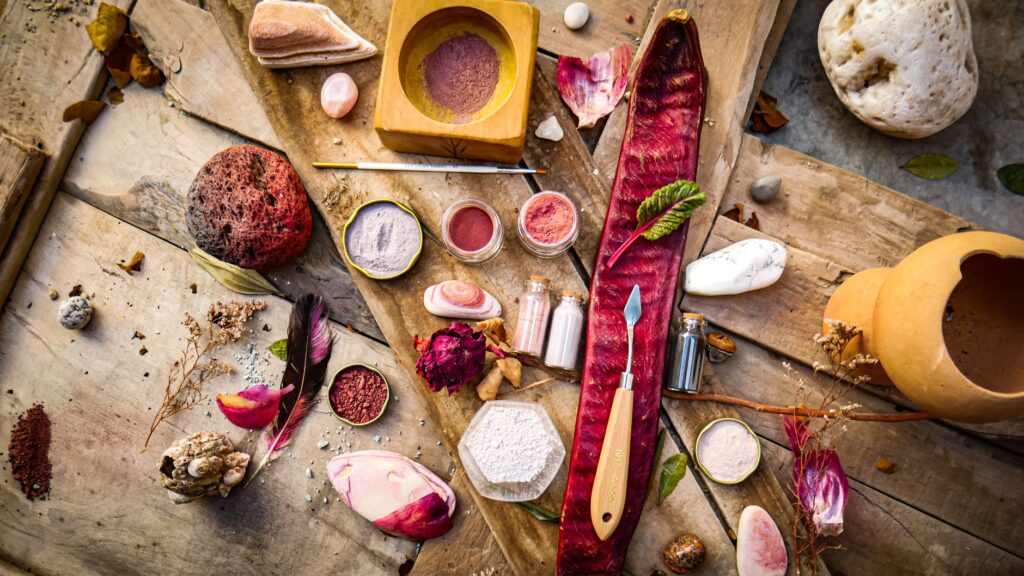
The colors permitted by the appellation of origin regulations are limited and strictly natural: cobalt blue, obtained from selected mines; black, derived from manganese oxide; green, from copper; purple, from diluted manganese; and yellow and orange, extracted from antimony and iron oxides. Each hue requires a different temperature curve inside the kiln, turning the firing process into a trial by fire where the master burner’s experience is irreplaceable.
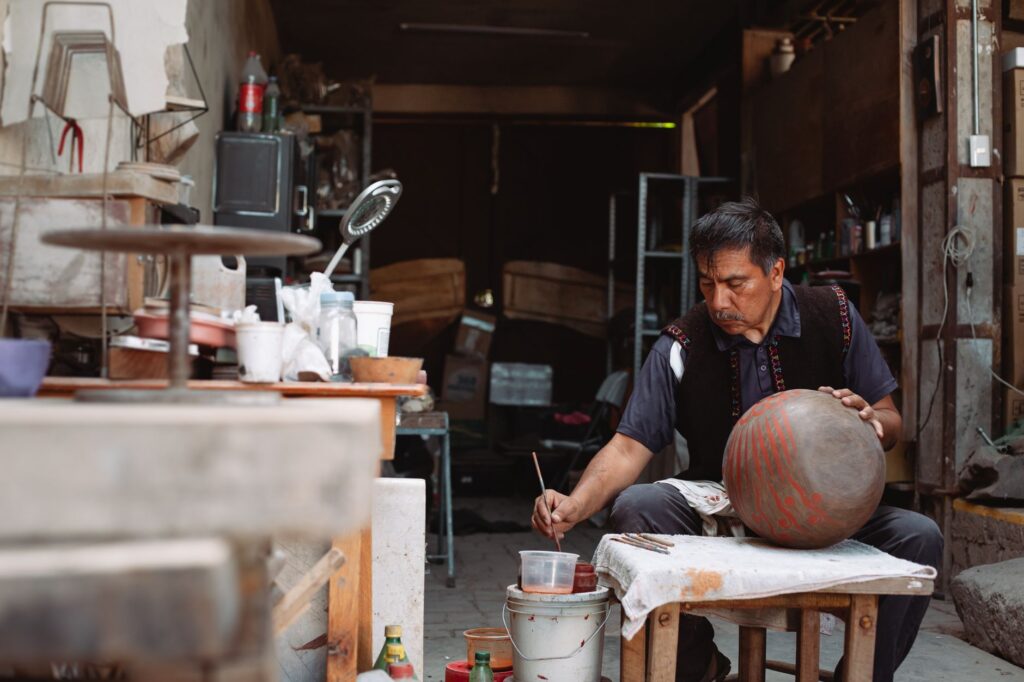
The brushes used in these workshops are true collector’s items, often made from ox-back hair or fine bristles tied to reed handles. Artisans trace geometric borders, floral motifs inspired by New Spanish flora, and zoomorphic scenes with a steady hand that defies the tremor of age. There are no printed patterns or mechanical guides; everything resides in the muscular memory accumulated over decades of apprenticeship by the workbench.
Architecture and Everyday Life: The Tile as Urban Skin
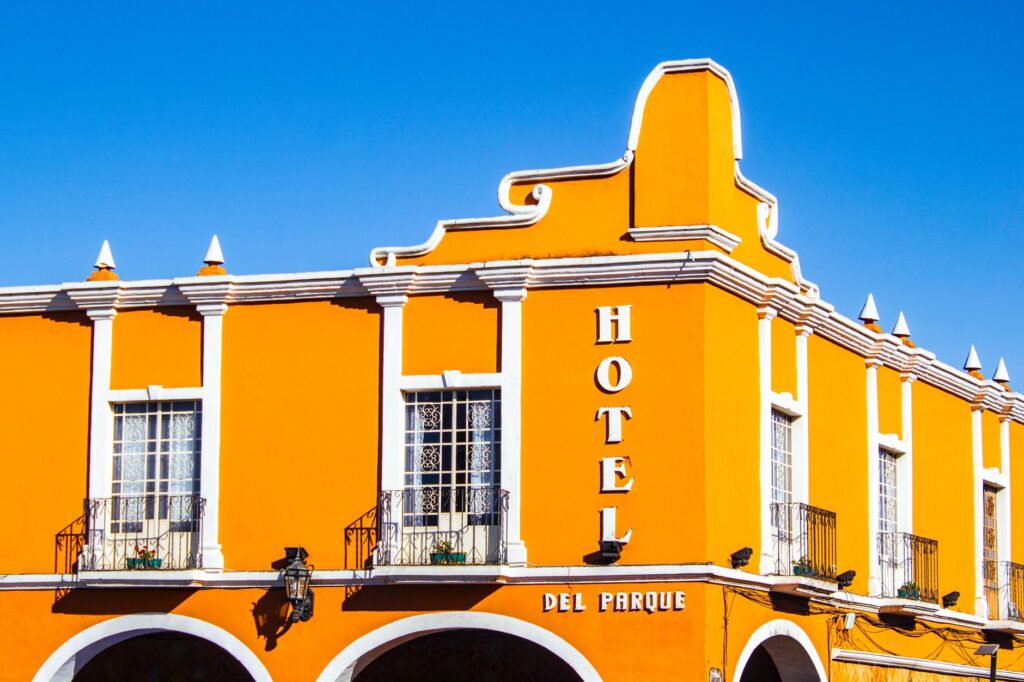
The impact of Talavera transcends the boundaries of tableware. The city of Puebla is, in itself, a living museum where ceramics fulfill a fundamental structural and aesthetic function. Entire facades of churches, convents, and stately mansions are clad in tiles that protect adobe walls against environmental humidity while reflecting the high-altitude sunlight with iridescent glints.
Monumental examples like the Chapel of the Rosary in the Temple of Santo Domingo or the facade of the Casa de los Muñecos demonstrate how ceramics were integrated into the Baroque architectural language. Each tile placed in these structures serves a dual purpose: ornamental and protective. The technique requires pieces to be cut and fitted before the second firing, calculating the millimeter contraction the clay will undergo when subjected to temperatures exceeding one thousand degrees.
Puebla’s architecture breathes through its ceramics; each facade is a thermal and aesthetic map regulating daytime heat and the cool night breeze.
Today, contemporary architects and interior designers look back to these traditional workshops to integrate custom tiles into avant-garde projects. This dialogue between viceregal heritage and modern design ensures that the kilns remain lit, adapting geometric shapes to contemporary requirements without sacrificing the purity of the original materials.
Institutional Quality Control and the Ghost of Counterfeiting
Keeping an ancient tradition alive in the 21st century is not without economic and legal tensions. The Mexican and international market has been flooded for decades by industrial products from Asia and other states of the Republic sold fraudulently under the name of Talavera, damaging the reputation of authentic workshops.
To counter this unfair competition, the Official Mexican Standard (NOM-132-SCFI-1998) was established in 1995 to regulate the Denomination of Origin for Talavera. Only a select group of workshops in Puebla holds this certification, which requires annual audits, the mandatory signature of the artisan and the workshop on each piece, and the exclusive use of traditional natural pigments. Laboratories analyze the chemical composition of the glazes to certify the absence of soluble lead at levels dangerous for food use.
This bureaucratic rigor, though complex for small family workshops, constitutes the only effective barrier against the adulteration of a cultural heritage that took five hundred years to consolidate. Buying a certified piece today is not an act of elitist consumption, but a direct contribution to the survival of a labor ecosystem where chemists, art historians, turners, and master painters coexist.
New Languages: When Contemporary Design Inhabits Clay
Far from remaining fossilized in traditionalism, Puebla’s Talavera is experiencing a deep aesthetic renewal thanks to pioneering collaborations between master artisans and contemporary creators. Industrial designers, architects, and international visual artists make regular pilgrimages to Puebla to experiment with the limitations and virtues of stanniferous glaze.
These synergies have given rise to furniture collections, lighting fixtures, and large-scale sculptural pieces that break with classic floral iconography without betraying the physical-chemical rules of the craft. The challenge consists of stretching the capabilities of clay without the piece collapsing during firing, a technical challenge that tests the complicity between the external creator and the local potter.
Recent exhibitions in museums in Mexico City, New York, and Madrid have repositioned Puebla’s ceramics in the global contemporary art circuit. However, the workshops insist that true avant-garde lies in generational transmission: ensuring that the children of current masters find in the workshop a dignified, sustainable project deeply rooted in their identity.
Practical guide
How to get there: Puebla de Zaragoza is located about two hours by bus or car from the TAPO bus terminal or Mexico City International Airport (MEX). There are frequent highway connections.
When to go: The dry season, from November to May, offers the best skies for urban photography and open-air workshop visits. Mornings are crisp and afternoons are sunny.
Recommended workshops with Denomination of Origin: Talavera de la Reyna and Uriarte Talavera are mandatory stops to understand the complete process and acquire certified pieces with guaranteed traceability.
Buying tips: Always demand the certificate of authenticity, check for the master’s unmistakable signature on the base of the piece, and verify that the tone of the white glaze exhibits slight optical irregularities characteristic of handmade work.
The Silence of the Extinguished Kiln
When evening falls over the historic neighborhoods of Puebla and the bustle of urban traffic softens, the ceramic workshops plunge into an almost monastic silence. This is the moment when the kilns, after reaching their maximum firing temperature, begin their slow and silent cooling phase. In the dim light of the workshop, surrounded by shelves filled with unglazed pieces awaiting their turn in the shadows, the raw clay seems to hold the promise of a fire that never truly dies. Master potters clean their brushes with mechanical and unhurried gestures, aware that each vessel cooling in the dark represents another link in a chain of memory that refuses to break. In their calloused hands lies definitive proof that there are forms of knowledge no screen or algorithm will ever replicate.